Four clusters,
one vision
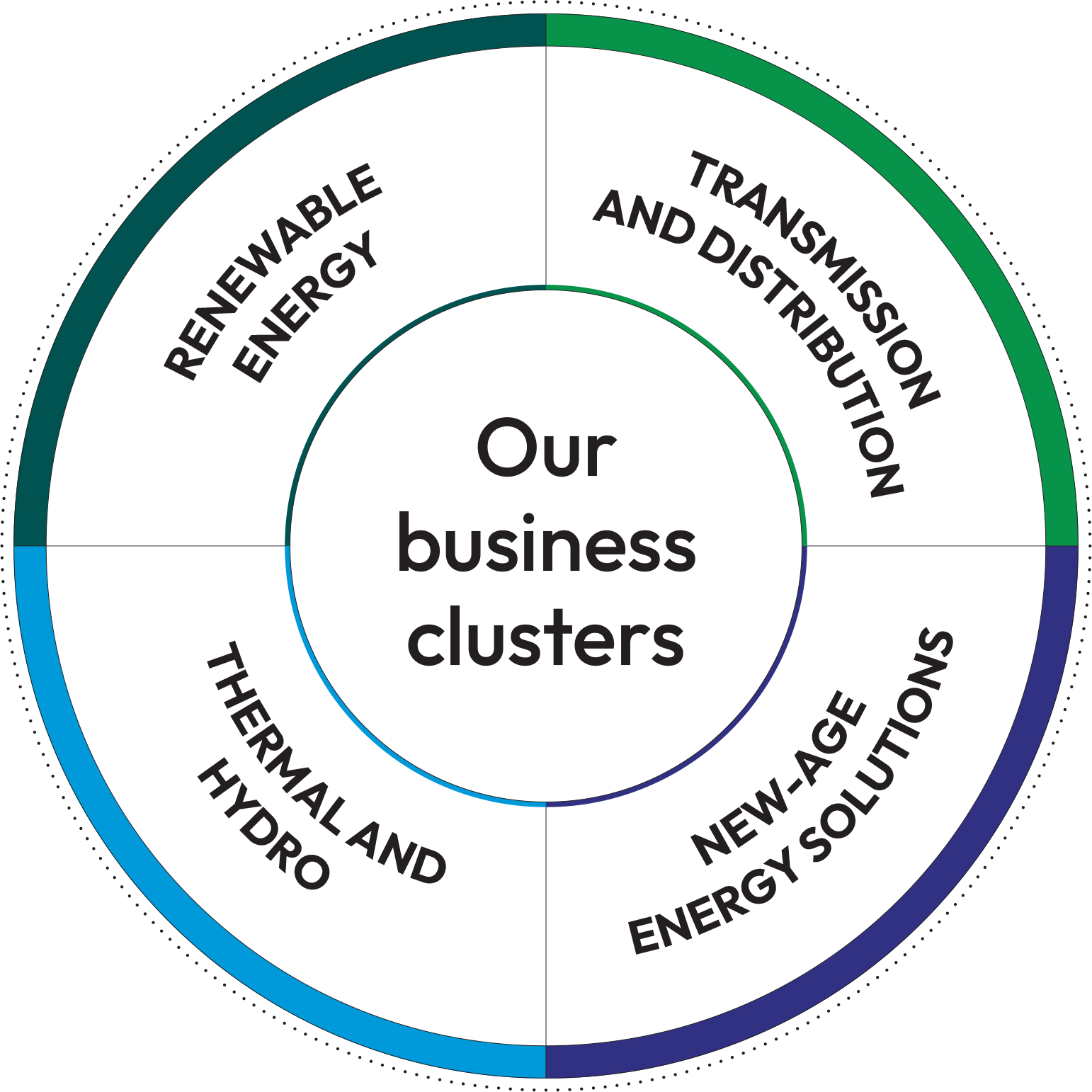
Our business portfolio is organised across four distinct clusters, each aligned to our integrated energy strategy. Together, they create a diversified and resilient platform that balances operational strength, growth potential and readiness for the evolving energy landscape.
Renewables
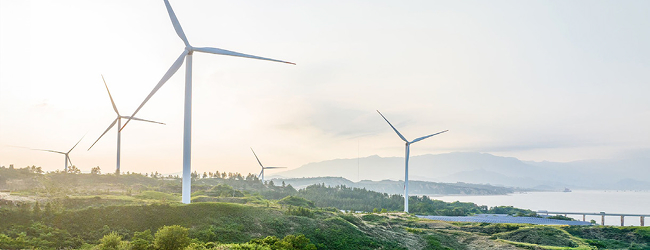
Our Renewables business is central to meeting India's rising energy needs while advancing the country's transition to cleaner sources of power. This cluster spans utility-scale solar, wind and hybrid projects, along with solar cell and module manufacturing, and solar engineering, procurement and construction capabilities.
Focus areas
- Healthy capacity build up
- Expanding margin with operational excellence
- Strengthening safety measures
- Manufacturing excellence at our 4.3 GW solar cell and module manufacturing unit in Tirunelveli, Tamil Nadu
- Optimising inventory management
- Maximising free cash flow
Key actions and enablers
- Executing the current under construction projects with best in class technology within committed budget and timeline
- Securing and building essential land resources for future growth
- Securing complex tenders for utility-scale projects and Real-Time Control Grid Connection (RTC GC) solutions tailored to meet the needs of Commercial and Industrial (C&I) clients
- Deploying cell lines and implementing efficiency-led cost optimisation initiatives across the solar cell and module manufacturing facility
- Implementing prudent inventory management practices to optimise resource utilisation and minimise wastage across our operations
- Optimising cash conversion cycles to strengthen our liquidity position and maintain sustained growth in the dynamic renewable energy landscape
Plant availability (%)
Sales (MUs)
| Category | FY22 | FY23 | FY24 | FY25 | FY26 |
|---|---|---|---|---|---|
| Solar | 3,650 | 5,573 | 6,270 | 7,938 | 8,605 |
| Wind | 1,533 | 1,496 | 1,691 | 1,686 | 1,861 |
| Total | 5,183 | 7,069 | 7,961 | 9,623 | 10,466 |
Key differentiators
- Integrated, large-scale platform across generation, EPC, and solar manufacturing, supporting both captive and external demand
- Diversified renewable portfolio (solar, wind, hybrid, FDRE) enabling balanced generation and grid-aligned supply
- Backward-integrated, policy-aligned ecosystem (DCR-compliant) strengthening supply chain resilience and execution efficiency
- Strong execution capabilities, with in-house EPC driving faster delivery and lifecycle accountability
- Stable and competitive commercial model with long-term PPAs ensuring revenue visibility and disciplined tariff outcomes
Achievements in FY26
- EPC division commissioned a 1 GW DCR solar project for SJVN in Rajasthan, marking the largest solar project executed by the Company
- Commissioned a 300 MW DCR solar project for NHPC in Bikaner
- Set up a 198 MW group captive wind project in Karur, Tamil Nadu, strengthening presence in the C&I segment
- Signed FDRE PPAs (for 80 MW with Tata Power Mumbai Distribution) integrating renewable generation with storage for dispatchable power supply
- Reflecting its growing manufacturing strength, TP Solar has been recognised in the BNEF Tier-1 manufacturers list
- Commissioned 15 MW solar plant at Domjuri under Industrial Energy Ltd (IEL)


Completion of Upstream Solar PV ingot and wafer manufacturing plant by 2029
 Business case
Building foundations for Lifelong energy security
In a decisive step towards building a future-ready and resilient solar ecosystem, we have committed ₹6,500 crore to enter the upstream Solar PV ingot and wafer manufacturing segment.
This marks more than a capacity expansion; it is a strategic move ensuring stronger and more resilient supply chains and long-term value creation. By integrating backward into a traditionally import-dependent segment, we strengthen supply chain security, reduce external risks, and enhance operational efficiency. The development of 10 GW (in two phases of 5 GW each) capacity is expected to bring scalable and disciplined growth.
The initiative offers multiple strategic advantages, including improved margins through vertical integration and secure raw material availability for downstream operations. Entry into an emerging, capacity-constrained domestic market also provides a strong first-mover advantage, backed by robust demand visibility and an expected payback of around five years.
Beyond business benefits, the investment supports India's vision of energy security and manufacturing self-reliance by building indigenous ingot and wafer manufacturing capabilities. It reduces import dependence, strengthens the domestic solar value chain, and accelerates the transition towards clean energy.
Aligned with evolving policy frameworks and government incentives, the initiative reflects our commitment to driving business growth while supporting India's ambition to become a global solar manufacturing hub.
Transmission and Distribution
Our distribution network powers customers across Mumbai, Delhi, Odisha, and Ajmer, supported by a robust transmission infrastructure spanning across Mumbai, Uttar Pradesh, West Bengal, Bihar, Rajasthan, and Haryana.
We are aligned with India's progress through the National Smart Grid Mission and support it with our smart metering project across the nation.

Focus areas
- Developing new competencies: In-house capability development
- Quality, cost, and time focus on project execution for transmission
- Policy advocacy and partnership for Public-Private Partnerships (PPP)
- Reducing AT&C losses and improving reliability at Odisha DISCOMs
- Strengthening the quality culture: TQM deployment for continual improvement
- Enhancing operational efficiency through employee skill development and centralised project monitoring
- Strengthening zero harm culture
- Leveraging cross border tie-ups to emerge as 'Energy Service Company'
- Customer-centricity
- Deployment of cutting-edge technological interventions and digitalisation initiatives
Key actions and enablers
- Develop new competencies: In-house capability development for engineering and project management for speedy execution approaches in TBCB projects
- Ensure cost and time focus in TBCB projects execution through efficient supply chain management
- Improve the quality of leads for revenue leakage through revenue protection module and signature analytics (Data Analytics platform)
- Install smart meters for all commercial and industrial consumers, and high consumption residential cases
- Deploy digital solutions for seamless customer interactions, from onboarding to complaint resolution
- Optimise O&M costs through contract consolidation, improve employee productivity and various initiatives
- Deploy technological interventions for safe and zero harm operations in TBCB project executions
- Deploy various preventive, predictive and network strengthening measures to improve reliability and availability of supply
- New technological deployments in all areas of commercial and operations for better and quality services for customers
AT&C losses (%)
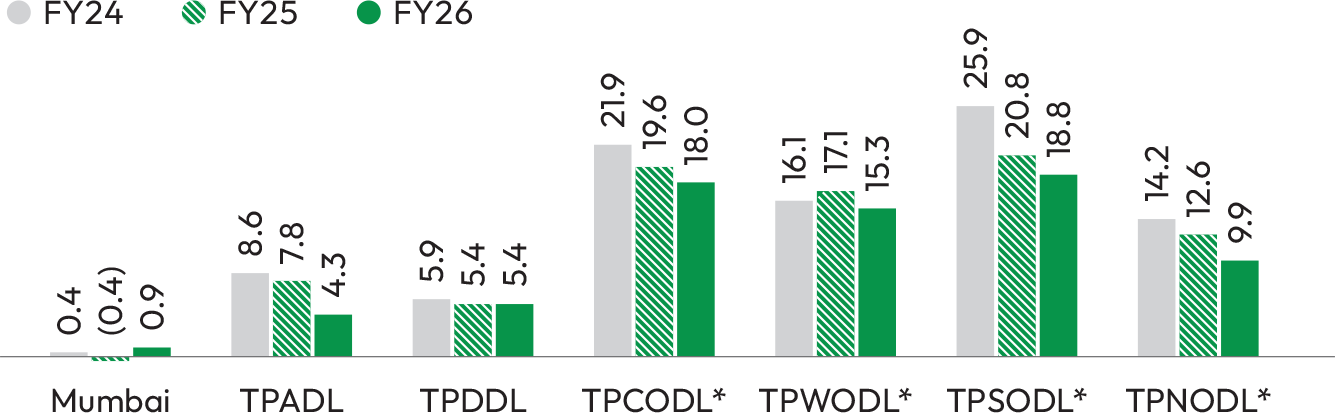
*Excluding past arrears
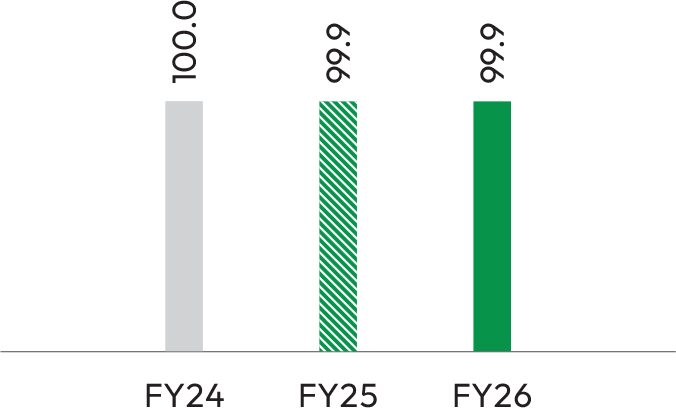
Transmission availability (%)
Key differentiators
- AI-led cable identification, acoustic sensing, and tower-in-tower designs for enhanced safety, reliability, and space efficiency
- Patents, smart grid recognition, and pioneering projects like underground substations and BESS demonstrate innovation leadership
- Digital systems and mobile-assisted GIS support faster fault resolution and operational efficiency
- Robust transmission and distribution networks enable real-time monitoring and reliable power delivery
- Accessible services, Braille bills, and all-women service centres promote inclusive customer engagement
- Deployed centralised project monitoring unit for transmission projects
Achievements in FY26
- Achieved ~40% clean energy supply mix in Mumbai distribution business, advancing decarbonisation of retail supply
- Strengthened grid reliability through infrastructure upgrades
- Commissioned 118 ckm of transmission lines under Mumbai Transmission
- Delivered 732 ckm of key lines: 765 kV Mainpuri-Bara, Mainpuri-Unnao, 400 kV Gonda-Tanda, and Tanda-Basti under SEUPPTCL
- Commissioned 77 ckm of the 400 kV Koteshwar-Rishikesh line under NRSS
- Completed Element 1 of Jalpura commissioning with 1,000 MVA Transformation capacity addition and 2 ckm transmission line
- Secured Jejuri-Hinjewadi TBCB project (LOI received) for developing 226 ckm of 400 kV lines and associated systems
- Commissioned India's first hot-line maintenance vehicle in Delhi, enabling maintenance without power shutdowns
- Installed 24+ lakh smart meters
- Initiated Cooling-as-a-Service (CaaS) business
- Launched Energy Insights Lab (with LSE & IGC)
- Enhanced operational efficiency, AT&C loss reduction, and customer-centric energy delivery
T&D portfolio as on March 31, 2026
(ckm)| Transmission | Total | Operational | Under construction |
|---|---|---|---|
| Mumbai Transmission | 1,409 | 1,409 | – |
| PTL | 2,328 | 2,328 | – |
| SEUPPTCL (JV) | 1,521 | 1,521 | – |
| NRSS (JV) | 302 | 302 | – |
| Bikaner | 692 | – | 692 |
| Jalpura | 164 | 2 | 162 |
| Paradeep | 384 | – | 384 |
| Gopalpur | 377 | – | 377 |
| Jejuri Hinjewadi | 226 | – | 226 |
| Total | 7,403 | 5,562 | 1,841 |
Distribution
(million)| Distribution (Dist.) | Business model | Customer base |
|---|---|---|
| Mumbai Distribution | Dist Licence | 0.8 |
| TPDDL | Dist Licence | 2.2 |
| TPCODL | Dist Licence | 3.4 |
| TPWODL | Dist Licence | 2.2 |
| TPSODL | Dist Licence | 2.2 |
| TPNODL | Dist Licence | 2.1 |
| TPADL | Dist Franchisee | 0.2 |
| Total | 13.1 |
Business case
Lighting up the Dubuku village
Dubuku, a tribal village in Odisha's Sambalpur District, had remained without electricity for decades. Lack of power restricted daily life, education, healthcare, and livelihood opportunities, even as rural electrification advanced in other regions. Recognising this gap, TPWODL undertook the electrification project using our own capex fund, with a clear objective of delivering reliable power access at the last mile.
Constraint
- Right-of-way resistance: Opposition from nearby electrified villages
- Execution disruption risk: Theft of materials and threat from miscreants
- Remote terrain: Difficult geography and limited transport access
Response
- Community mediation through sustained dialogue to resolve access and secure access
- On-ground safeguarding with temporary camps and overnight vigilance
- Focused delivery planning with streamlined approvals, logistics, and manpower deployment
Impact
- Replaced kerosene lamps with reliable electricity
- Enabled children to study under proper lighting
- Provided households with access to mobile charging and basic appliances
- Fostered a sense of connectivity to state and national development initiatives
Replicate
- Prioritise community-first engagement to address right-of-way and trust issues early
- Facilitate dialogue-led mediation to manage socio-political sensitivities
- Plan strategically and streamline approvals for rapid execution in remote locations
- Implement on-ground risk mitigation through temporary camps and overnight vigilance
Sustain
- Integrate ongoing infrastructure support with proactive maintenance planning
- Conduct scheduled inspections and maintenance drives to prevent technical failures
- Train local youth in basic electrical maintenance to ensure long-term operational support
- Maintain continued community interaction to resolve post-electrification concerns
Monitor
- Deploy an impact assessment framework to monitor usage and socio-economic improvements over time
- Document project learnings and workflows to guide future electrification initiatives
- Develop resource pooling and funding mechanisms for sustainable rural infrastructure maintenance
Business case
Fostering reliability in Malkangiri's hills
Malkangiri, one of Odisha's most remote districts, faces scattered habitations, difficult terrain, and seasonal stresses that historically caused recurring outages, affecting households, schools and community infrastructure.
TP Southern Odisha Distribution Limited (TPSODL) implemented targeted network strengthening interventions to improve redundancy, capacity, and last-mile reliability, creating a resilient distribution system that supports social infrastructure and tribal livelihoods.
- Added substation redundancy at K. Gumma to reduce single-transformer dependency and large-area outage risk
- Upgraded transformers to 5 MVA at Balimela and Mathili for better load handling
- Strengthened 33 kV feeders and critical connectivity, including near Chitrakonda reservoir
- Established a dedicated supply line to Khairaput school for reliable public institution power
- Extended 11 kV lines into K. Gumma, Chitrakonda, Pandripani, Bajrangi Colony, and Bandiguda for last-mile delivery and faster fault restoration
These coordinated upgrades deliver reliable electricity, enabling consistent access to education, healthcare, and income-generating activity for tribal communities including Koya, Bhumia, Paraja, Bonda, and Didayi, while strengthening the overall network against terrain and seasonal stresses.
- Reduced outage exposure at both substation and feeder levels
- Improved 33 kV backbone resilience, enabling faster fault isolation and restoration
- Better load management through higher-capacity transformers, reducing tripping incidents
- Schools, hostels and anganwadis experience more consistent power supply
- Health sub-centres receive more reliable electricity for critical services
- Agricultural pumps and small businesses benefit from steadier supply, supporting livelihoods and local economic activity
Business case
Powering inclusive growth through reliable and decentralised energy access
We continue to advance inclusive development through reliable and sustainable energy solutions across Odisha. Under Project Soura-ayan, a 6 kWp rooftop solar system at SLS Memorial Residential School in Mayurbhanj has improved access to uninterrupted electricity for students from marginalised communities.
We are also enabling energy access in remote regions such as Similipal through solar microgrids and standalone systems powering 2,400+ homes under the Biju Gram Jyoti Yojana, supporting livelihoods, entrepreneurship, and improved quality of life across tribal communities. Reliable power infrastructure is further supporting Odisha's growing economic ecosystem, including the expansion of organisations such as Deloitte in Bhubaneswar.
Through resilient grid infrastructure and decentralised renewable energy systems, we continue to strengthen access, opportunity, and sustainable development across communities.
New-age Energy Solutions
We are reimagining the consumer energy ecosystem through intelligent, sustainable solutions, from rooftop solar and smart metering to battery storage, electric mobility, and connected home technologies.
Focus areas
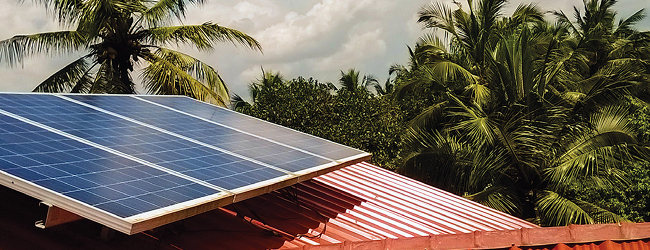
- Innovating new offerings to accelerate rooftop solar adoption among corporates, MSMEs and small commercial establishments
- Positioning Tata Power as the leading Electric Mobility Service Provider (E-MSP) and innovate next-gen EV charging solutions for homes, workplaces, fleet, and e-buses
- Exploring new models to scale the business, offering Value-Added Services such as mobile apps and EMI schemes for new microgrid connections
- Enhancing consumer convenience and reducing energy consumption through home automation systems, ultra-fast smart charging technologies, and advanced app features
- Expanding EV charging infrastructure across urban and rural India, including Tier II and III cities and towns
- Addressing range anxiety through strategic fast-charging networks along key highway corridors
- Promoting decarbonisation by transitioning charging points to green energy sources
- Integrating Renewable Energy (RE) with Battery Energy Storage Systems (BESS) for efficient charging
- Upgrading operational safety protocols
Key actions and enablers
- Driving the shift towards greener mobility and energy solutions in response to rising fuel costs and growing climate awareness
- Leveraging government support to actively promote EV and solar rooftop adoption
- Developing advanced infrastructure and energy-efficient technologies
- Build meaningful partnerships to expand the reach and impact of eco-friendly solutions
- Deploying RE-powered charging stations to support a greener EV ecosystem
- Upgrade digital platforms to improve accessibility and user engagement
Key differentiators
- 25-year warranty modules and durable, all-weather chargers ensure high quality and reliability
- Tailored system design with end-to-end service for residential, commercial, and institutional customers
- Pan-India presence with extensive partner and retailer network, plus financing options for easy adoption
- RFID-enabled cards and app interfaces enable effortless charging and user convenience
- Digitally integrated network connecting home, public, and fleet charging for a seamless experience
- Digital platforms provide visibility, control, and operational efficiency for users and fleet operators
Achievements in FY26
- Crossed over 3.7 lakh installations. In FY26 rooftop solar installations stand at 1.7 GWp; rolled out affordable rooftop solar solutions to drive mass adoption, including 'Ghar Ghar Solar' and lifestyle solutions (MySine, Solar Roof Design Spaces)
- Expanded EV charging ecosystem with MegaCharger Hub launch, partnerships with Tata Passenger Electric Mobility
- Advanced Energy-as-a-Service (EaaS) offerings and secured 120 MWh Battery Energy Storage System (BESS) project with NHPC Limited
- Collaborations with Salesforce and Tata Capital to scale rooftop solar, EV charging, energy management, and innovative SunSmart Flexi EMI solutions for commercial & industrial clients
 Business case
Enhancing charger uptime and utilisation
We undertook focused initiatives to improve the uptime, reliability, and utilisation of our public charging network during the reporting year.
Through proactive maintenance, real-time monitoring by the 24x7 Network Operations Centre (NOC), predictive diagnostics, and improved availability of critical spares, the Company reduced downtime and enabled faster fault resolution. Enhancements in software reliability, payment systems, connectivity, and first-time charging success rates further strengthened customer experience.
Business case
Building next-generation energy storage capability
In FY26, we secured our first standalone Battery Energy Storage Purchase Agreement (BESPA) from NHPC Limited for Kerala State Electricity Board Limited. The project involves the development of a 30 MW/120 MWh battery energy storage system in Kerala and marks a significant milestone in our energy storage journey.
Designed to support peak demand management, strengthen grid flexibility and enable deeper renewable energy integration, the project reinforces the growing role of battery storage in enabling reliable round-the-clock clean power. The project will be implemented under a 12-year BESPA framework and is scheduled for commissioning within 15 months.
Business case
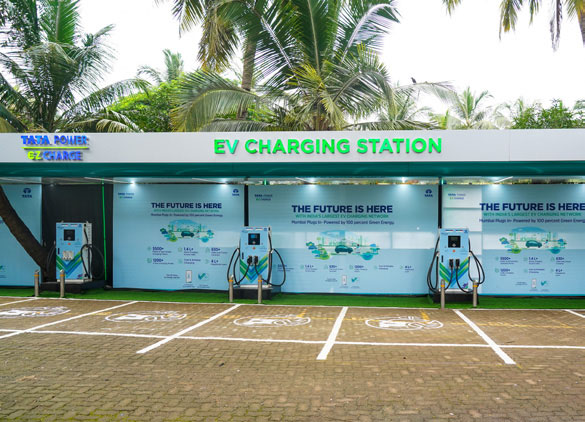
India's first TATA.ev MegaCharger Hub – driving electric mobility at scale
In partnership with Tata Passenger Electric Mobility Ltd., we have launched India's first co-branded TATA.ev MegaCharger hub. This is a strategic milestone in our electric mobility roadmap, strengthening charging infrastructure, enabling large-scale EV adoption, and demonstrating our leadership in providing sustainable, future-ready energy solutions.
- Location: Near Terminal 2, Chhatrapati Shivaji Maharaj International Airport, Mumbai – a high-traffic corridor connecting business, travel, and logistics hubs
- Launch date: World EV Day, September 9, 2025
- Primary users: Private vehicles, taxis, ride-hailing fleets, and logistics operators
Optimal location for maximum impact
By situating the hub in a high-footfall corridor, we provide reliable, convenient charging for a wide range of users, ensuring everyday utility for fleet operators and private EV owners alike.
High-capacity charging infrastructure
Our hub features eight fast DC chargers delivering up to 120 kW and 16 charging bays, allowing multiple vehicles to charge simultaneously and significantly reducing wait times during peak periods.
The hub runs entirely on renewable energy, reinforcing our commitment to green mobility powered by clean energy and aligning with our broader sustainability and Net Zero objectives.
- Cementing our position as a leader in EV infrastructure development
- Accelerating EV adoption across urban and commercial segments
- Establishing a replicable model for future MegaCharger hubs, supporting India's transition to clean, reliable, and scalable energy solutions
 Business case
Enhancing EV mobility through digital innovation
During FY26, we enhanced the Tata Power EZ Charge app with customer-centric features to deliver a smarter and more seamless charging experience.
The newly introduced Auto-charge feature enables charging sessions to begin automatically once the charger is plugged into the EV, eliminating the need for manual app authentication across a majority of DC chargers. In addition, the Trip Planner feature allows customers to identify charging stations along their route and navigate seamlessly to selected locations, improving convenience during long-distance travel.
Business case
Enabling consumer choice through green energy
We are enabling wider renewable energy adoption through our Green Tariff programme, allowing consumers to source part or all of their electricity from renewable plants at a premium of 25 paisa per unit. The initiative has been adopted by over 50,000 consumers in Mumbai, helping reduce approximately 251 kilotonnes of CO₂ emissions annually while ensuring reliable power supply.
We are also supporting businesses through green tariff solutions, open access models, and transparent carbon tracking. In 2023, we enabled the transition of Indian Hotels Company Limited's Taj Lands End Hotel to green power. This move is expected to reduce nearly 22.9 million kilograms of CO₂ emissions annually.
- 50,000+ consumers enroled under the Green Tariff programme in Mumbai
- ~251 kilotonnes annual CO₂ emissions reduction enabled
- Green power solutions supporting both households and enterprises
- Open access and carbon tracking solutions helping businesses advance sustainability goals
Business case
Scaling residential Rooftop Solar under PM Surya Ghar Yojana
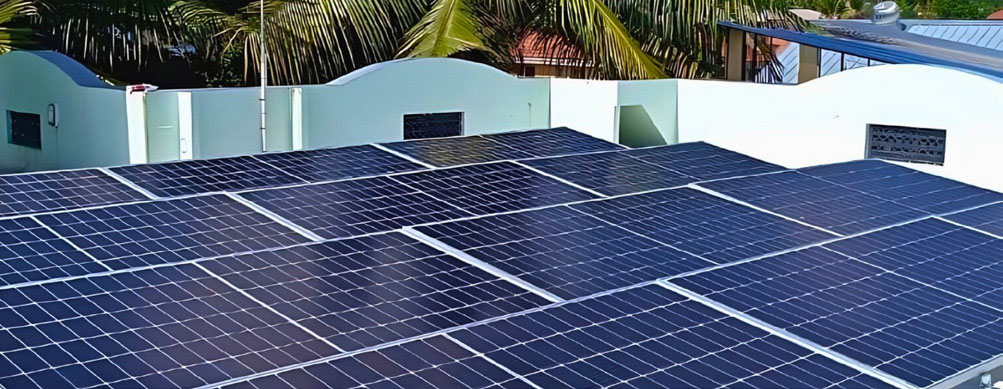
With the rollout of PM Surya Ghar Muft Bijli Yojana, the residential rooftop segment has gained significant momentum, targeting solar adoption across one crore households by 2027. In this evolving landscape, we have continued to build on our early leadership in rooftop solar, leveraging a retail-led approach to scale adoption across India.
- Partnered with 16 financiers across PSUs, RRBs, private banks, and NBFCs under PMSGY
- "Ghar Ghar Solar" campaign expanded adoption through on-ground outreach across key cities
- "Meri Roof, Meri Takat" initiative showcased real customer success stories
- Strengthened dealer ecosystem through MD Club recognition event and Tirunelveli facility visits
- 25-year solar module warranty supported by nationwide service network
- Installed 3,70,000+ solar rooftops with 4.8+ GWp installed capacity
- Targeting expansion of dealer network to 5,000+ partners through continued investments in marketing, partnerships, and digital innovation
Innovation and strategy

Expanding access at scale
We have strengthened our on-ground presence by building a wide distribution ecosystem comprising 650+ channel partners, 3,000+ retailers, and 265+ authorised service centres. This expansion enables deeper penetration into Tier-2 and Tier-3 markets, bringing rooftop solar closer to customers.

Sustainable energy integration
Recognising variations in rooftop structures across regions, we offer customised module mounting solutions. A network of regional fabricators supports these requirements, ensuring flexibility without compromising execution speed.

Building trust through digital and financing solutions
We strengthen customer confidence through AI/ML-enabled instant warranty generation and integrated digital systems. Financing access is expanded through partnerships with 16 institutions, supported by tools such as EMI calculators, CRM integration, and bundled offerings like solar insurance.

Standardising solutions, reducing timelines
We have developed a structured portfolio of rooftop solar kits (1–10 kW), with 50+ SKUs spanning on-grid and MySine (BESS) solutions. This standardisation, combined with process efficiencies, enables a turnaround time of approximately 7 days from inquiry to installation.

Strengthening last-mile delivery
To improve fulfilment and service proximity, we have established six strategically located warehouses. Alongside, we have digitised logistics and material management systems to enhance operational visibility and reduce delays.
Market activation

Driving awareness and demand
We have extended our reach to over 3.14 crore households, generating 3.29 crore impressions through a mix of mass media and digital campaigns. Our targeted digital efforts, including 50+ campaigns, have generated over 2.3 lakh qualified leads, supported by platforms such as Salesforce and WhatsApp for seamless engagement.

Deepening local presence
We have participated in 600+ residential expos and conducted over 3,000 canopy activities to strengthen on-ground visibility. Additionally, branding across 8,500+ customer sites reinforces local awareness and trust.

Enabling channel partners
We engage closely with our partners through recognition platforms, facility visits, and zonal meets to strengthen alignment. Ongoing training and capability-building initiatives continue to support partner performance and conversion efficiency.
Our integrated approach, spanning access, standardisation, customisation, and financing, has enabled a more streamlined and scalable residential solar model. By addressing both supply-side and demand-side barriers, we continue to support the acceleration of rooftop solar adoption in alignment with national priorities.
 Story in focus
MySine: Powering independence, simply and reliably
Power in India is no longer just about access; it is about assurance. Frequent outages, voltage fluctuations and rising electricity costs are pushing households and small businesses to seek greater control over how energy is produced, managed and used.
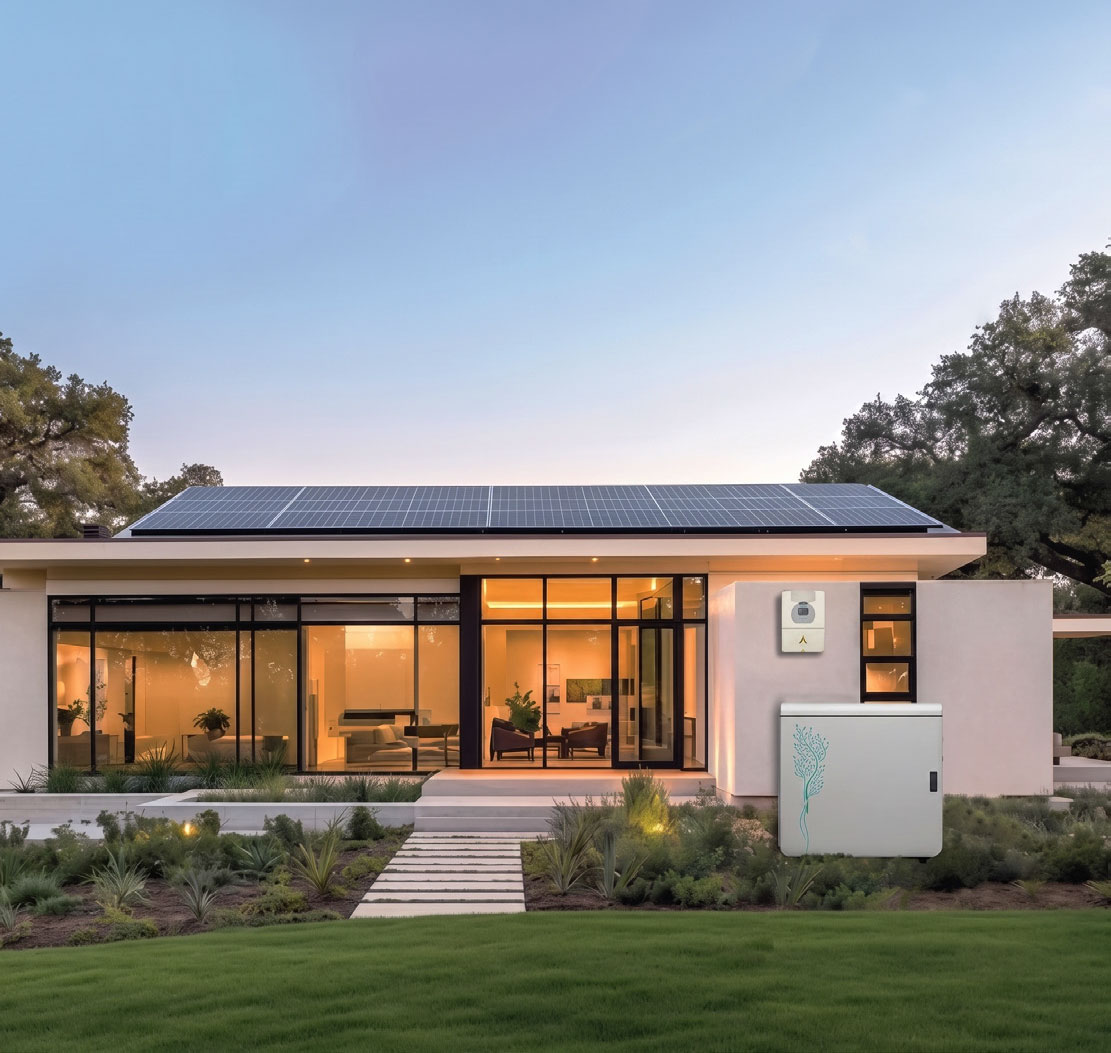
A smart leap towards energy independence
In response, we introduced MySine, an integrated solar rooftop and battery storage solution designed for homes, shops, and small businesses seeking dependable backup, lower bills, and greater energy independence.
Built for Indian conditions, MySine draws power from rooftop solar or the grid, stores it intelligently, and ensures seamless backup during outages, peak demand, or weak supply. Replacing traditional inverter systems, it is a compact, low-maintenance solution for clean and reliable power. It powers everyday essentials, from fans and refrigerators to billing systems and security equipment, while switching between solar, grid, and stored energy in milliseconds. A mobile app enables real-time monitoring and control.
operation
The promise of everyday reliability
MySine makes energy simple and dependable. It ensures uninterrupted power for daily life and work, helping users reduce dependence on the grid while improving cost efficiency and energy resilience. Its intelligent hybrid system automatically manages energy flow between solar, grid, and storage, ensuring continuity without disruption, even during outages or voltage fluctuations.
A practical step towards clean energy
Aligned with India's clean energy transition, MySine makes rooftop solar more usable by adding storage and flexibility. It helps households and small businesses lower electricity bills while also advancing a cleaner energy system.
One system, multiple benefits
MySine brings together energy storage, smart control, and solar integration in a single solution, making clean energy practical, reliable and accessible for everyday use.
Thermal and Hydro
We operate 10,183 MW of conventional and hydropower assets across North, West, and East India, focused on delivering reliable and affordable power through safe and competitive operations. As the energy landscape evolves, we are continuing to support India's growing energy needs through sustainable and efficient generation with lower environmental impact.

Focus areas
- New capacity addition in Hydro and PSP
- Ensuring generation availability and reliability in alignment with the flexibilisation mandate
- Maximising merchant generation and fly ash sales
- Improving operational efficiency
- Reducing operational and maintenance costs
- Leveraging digital technologies and data analytics
- Maintaining regulatory and environmental compliance
- Exploring participation in Small Modular Nuclear Reactors (SMNRs) generation
- Maintaining strong financial discipline by optimising capital allocation
- Skilled workforce and organisational capability
- Sustainability and ESG integration
Key actions and enablers
- Execute new PSP/Hydro projects within defined cost and timelines
- Drive asset reliability, maximise generation, and reduce planned and unplanned downtime
- Invest in R&D, digitalisation, and operational efficiency improvements
- Optimise fuel sourcing and merchant sales through market intelligence and forecasting
- Reduce O&M costs and eliminate redundancies
- Strengthen emission compliance monitoring and reporting
- Invest in talent, safety, leadership, sustainability, and community development
- Supplementary PPAs, and modernisation initiatives ensure long-term sustainability for Mundra plant
Generation availability (%)

Plant load factor (%)

*Temporarily suspended operations since July, 2025 till March, 2026.
Key differentiators
- Provides stable, round-the-clock power for industrial, commercial, and residential demand
- Optimised plant operations through advanced monitoring, PLF improvements, and structured fuel management
- HCV-MCV coal blending, long-term coal linkages, and cost-management initiatives ensure competitive generation costs
- Strong long-term PPAs stabilise revenue and support predictable cash flows
- Digital tools for thermal monitoring, diagnostics, and predictive maintenance improve performance and reduce outages
- Fly ash gainful utilisation, emission control initiatives, and water conservation practices minimise environmental impact
- Supplementary PPAs, and modernisation initiatives ensure long-term sustainability
Achievements in FY26
- Capitalisation of the Flue Gas Desulphurisation (FGD) project
- Mundra SPPA signed with GUVNL; engagement with other procurers progressing towards finalisation
- Clean energy collaboration with DGPC - new project identified for 404 MW Nyera Amari I & II Integrated Hydropower Project
- Bhivpuri PSP (1,000 MW): All major Electro-Mechanical package, GIS, and GT packages have been awarded and key approvals secured
- Shirwata PSP (1,800 MW): Preliminary activities commenced
- Strategic investment in the 1,125 MW Dorjilung Hydro Project, Bhutan, supported by a $515 million financing agreement with World Bank
- Construction commenced for the 600 MW Khorlochhu Hydro Project, Bhutan; financing secured with ₹500 crore received from Power Finance Corporation (PFC)
Business case
Exploring the future of clean energy through SMRs
Tata Power is progressing its foray into nuclear power in collaboration with NPCIL, with land identified across three states and requisite water allocations underway. Detailed site-specific geotechnical studies and DPR preparation for proposed 2×220 MW small modular units are in progress. The Company expects to complete DPRs for select locations in the near term, while continuing discussions with NPCIL to finalise project frameworks.
Business case
Energy without borders: Bhutan (Dorjilung Project)
Our Memorandum of Understanding with Druk Green Power Corporation is aimed at developing a diversified portfolio of clean energy projects in Bhutan. The partnership is structured to support long-term capacity creation and aligns with Bhutan's national renewable energy ambitions.
- 5,533 MW clean energy portfolio
- Hydro and pumped storage
- Assets spanning execution, development and evaluation stages
Under-construction
- Construction started for Khorlochhu HPP (600 MW)
- Pre-construction initiated for Dorjilung HPP (1,125 MW)
Project pipeline
- Solar project (500 MW)
- DPR in progress for Gongri HPP (740 MW) and Jeri Pumped Storage project (1,800 MW)
- Pre-feasibility completed for Chamkharchhu-IV HPP (364 MW)
- New project identified - Nyera Amari I & II Integrated HPP (404 MW)
We are implementing the 1,125 MW Dorjilung Hydropower Project on the Kurichhu River in Bhutan in partnership with Druk Green Power Corporation (DGPC). The project is structured as a joint venture, with DGPC holding the majority stake and we participating as the private partner. Designed as a run-of-the-river scheme, it comprises six generating units of 187.5 MW each. This project represents one of the largest private-public hydroelectric initiatives in Bhutan and reinforces our strategic focus on clean energy and regional cooperation.
A significant portion of the power generated is earmarked for export to India, contributing to long-term energy security and optimised capacity utilisation. The Dorjilung project benefits from robust financial structuring and international support. Upon commissioning, it will enhance our hydropower portfolio and deliver sustainable value to stakeholders through stable long-term returns.
 Leveraging our strategic presence in the Western Ghats to enable round-the-clock
(RTC) green energy solutions
Leveraging our strategic presence in the Western Ghats to enable round-the-clock
(RTC) green energy solutions
As India accelerates its clean energy transition, the need for Round-the-Clock (RTC) Renewable Power is becoming increasingly important to ensure both energy security and decarbonisation. While solar and wind capacities continue to expand rapidly, their intermittent nature creates challenges for grid stability and reliable power supply. Addressing this challenge requires large-scale energy storage solutions capable of converting variable renewable energy into firm, dispatchable power.
Our long-standing presence in the Western Ghats provides us with a strategic advantage in advancing Pumped Storage Projects (PSPs), leveraging the region's favourable hydro-geographical characteristics. Building on this advantage, we are progressing large-scale PSP developments in Maharashtra with an estimated investment of approximately ₹13,000 crore. This includes two projects with a combined planned capacity of 2,800 MW: the 1,800 MW Shirwata PSP and the 1,000 MW Bhivpuri PSP.
Enabling reliable renewable energy integration
As renewable energy penetration increases, ensuring grid flexibility and reliability becomes critical. PSPs play an important role in balancing renewable generation by storing surplus energy during periods of high generation and supplying power during peak demand. These projects provide large-scale, long-duration energy storage, support grid balancing, improve renewable integration, and enhance system reliability through rapid response capabilities.
By utilising the natural elevation and reservoir potential of the Western Ghats, our PSPs are designed to operate as efficient, long-life energy storage assets that support the transition towards a cleaner and more resilient energy system.
We are strategically integrating PSPs with our solar and wind portfolio to deliver firm and reliable green power. This integrated renewable energy-storage model enables us to store surplus renewable energy during off-peak periods and optimise dispatch during peak demand hours, while reducing renewable curtailment and improving asset utilisation. Supported by advanced scheduling and energy management systems, the model helps convert variable renewable generation into stable, grid-quality power supply.
Progress on key projects
We have made significant progress on both flagship PSPs.

Bhivpuri PSP (1,000 MW)
- Environmental clearance received and construction underway
- Major civil works contract awarded
- Electro-mechanical equipment order placed
- Target commissioning: CY 2029
Shirwata PSP (1,800 MW)
- Key regulatory clearances received
- Approval processes underway
Creating long-term value
RTC Renewable Power is becoming increasingly important for commercial and industrial customers seeking reliable and sustainable energy solutions. Our integrated RE-PSP model supports customers through reliable clean power supply, reduced exposure to peak power costs and tariff volatility, and accelerated progress towards sustainability and net-zero goals.
For utilities and grid operators, PSP-integrated renewable solutions enhance grid resilience by providing peak load and balancing support, supporting frequency regulation and reserve management, and enabling higher renewable energy integration at the system level.
Through our PSP-led renewable energy strategy, we are strengthening our portfolio of firm and dispatchable green energy while supporting India's broader clean energy ambitions. Beyond enabling decarbonisation and energy security, these projects are also expected to contribute to regional economic development, employment generation, and long-term infrastructure creation.
By leveraging our strategic footprint in the Western Ghats, we are enabling scalable RTC green power solutions that balance reliability, affordability, and sustainability, reinforcing our commitment to building a resilient and low-carbon energy future.