Planet first,
always
What matters to our environment
Material topics
Capital linkage
SBOs
UN SDGs
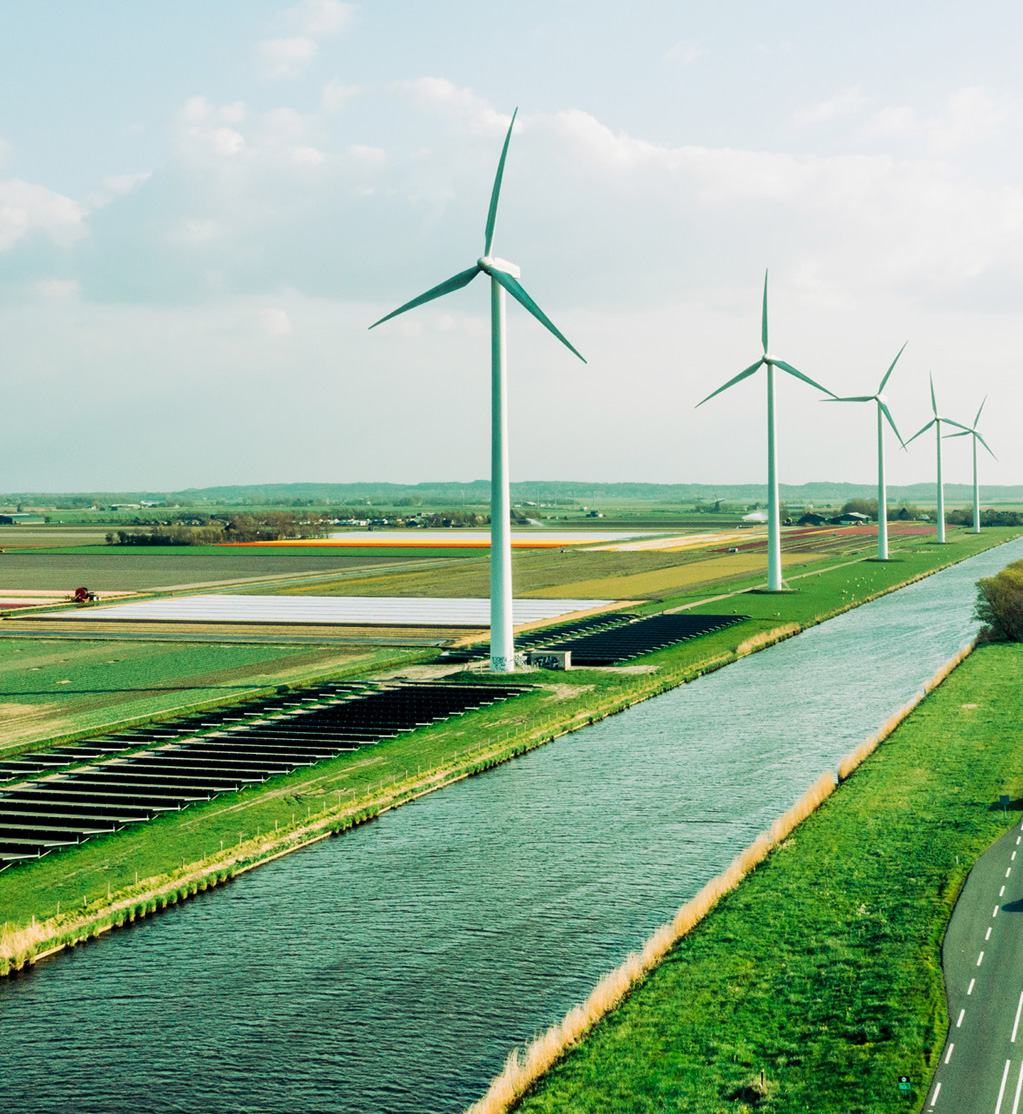
As we progress towards becoming a future-ready energy leader, we are integrating sustainability across every facet of our operations. By balancing conventional energy with renewables, scaling EV charging infrastructure, expanding smart grids and digital solutions, and optimising energy efficiency, we are reducing our carbon footprint, strengthening grid resilience, and supporting a cleaner and more inclusive energy future.
ESG ratings
| Rating agency | 2021 | 2022 | 2023 | 2024 | 2025-26 |
|---|---|---|---|---|---|
| CDP – Climate Change | C | B | B | B- | B* |
| CDP – Water Security | B | B | B | B- | B* |
| S&P – CSA (Higher score is better) | 67 | 67 | 67 | 68 | 77 |
| MSCI | BB | BBB | BBB | A | A |
| Sustainalytics (Lower score is better) | 38.6 | 41.2 | 38.5 | 37.4 | 40.2 |
*Dates of published ratings: CDP – January 2026; S&P-CSA – October 2025; MSCI – April 2026; Sustainalytics – February 2026. Common rating is provided since 2024 cycle for CDP; ESG ratings (as on March 31, 2026).
Sustainability aspirations
Our aspiration is to lead environmental performance within the global power sector, with a vision to deliver Clean and Green energy consistently for the next 100 years.
Environmental excellence recognition
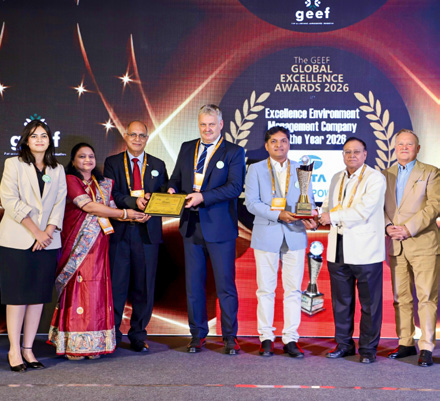
Tata Power has been recognised as the ‘Global Excellence Environment Management Company of the Year 2026 – Power Utility Category’ at the GEEF Global Environmental Excellence Awards 2026.
The recognition reflects the Company’s continued commitment to environmental stewardship and sustainable value creation through clean energy transition, climate action, circular economy initiatives, biodiversity conservation, water sustainability and responsible business practices.
The award was presented at the Global Energy Leaders Summit 2026 held on
May
22, 2026 at ITC Maurya.
Our approach to environmental management

Focus area
Environmental management framework
- Integrating environmental considerations across the asset lifecycle, supported by structured Environmental Due Diligence (EDD) and risk assessments
- Establishing a robust Environmental Management System (EMS) aligned with international standards for performance and compliance
- Enabling sustainable resource planning through environmental screening and water risk assessment
- Committing to long-term goals, including Net Zero, Water Neutrality, Zero Waste to Landfill and biodiversity conservation
Corporate environmental and climate change functions
- Embedding environmental governance through policies, strategy integration, and regulatory alignment
- Enabling enterprise-wide monitoring through ESG data systems and disclosures
- Ensuring consistent execution and oversight via dedicated teams, independent assessments and cross-functional coordination
Initiatives and progress during FY26
- Implemented structured Environmental Due Diligence (EDD) to assess risks near sensitive ecosystems, eco-sensitive zones and groundwater-stressed areas
- Strengthened operational efficiency through heat rate optimisation, auxiliary power consumption reduction and resource productivity improvement
- Deployed advanced pollution control, water conservation and waste management systems to exceed regulatory standards
- Enhanced ESG data systems for real-time tracking of emissions, water and waste
- Operationalised Climate Change Policy for risk management, resilience and low-carbon energy transition
- Ensured adherence to regulatory requirements and internal environmental performance standards, through dedicated environmental professionals across operational sites, supported by independent third-party assessments and structured internal governance processes
Sustainable project development
Focus area
- Integrating environmental considerations across the entire project lifecycle, from design to decommissioning
- Assessing location-specific risks, including biodiversity sensitivity, land use, and water availability
- Ensuring strict adherence to regulatory and statutory requirements across all operations
- Deploying advanced pollution control and waste management systems to limit environmental impact
- Driving resource efficiency through reduced consumption and optimised processes
- Promoting environmental awareness and accountability among employees and stakeholders
Initiatives and progress during FY26
- Integrated environmental assessments at planning and site selection stages to enable informed decision-making and early risk avoidance
- Embedded sustainability into Engineering, Procurement, and Construction (EPC) through resource-efficient design and practices
- Deployed advanced pollution control and waste management systems to reduce environmental impact
- Strengthened monitoring and governance mechanisms to ensure compliance and performance oversight
- Integrated climate considerations into strategy, risk and investment decisions
ESG data management system
Focus area
Strengthening ESG transparency and environmental performance
- Complying with SEBI-regulated ESG rating providers under the CRA framework; only SEBI-registered ERPs are recognised for reporting
- Leveraging CDP as a voluntary global disclosure platform for climate and water performance, aligned with ISSB/TCFD standards
Benefits
- Enhanced transparency, regulatory compliance and stakeholder confidence
- Real-time monitoring of environmental, social and governance metrics
Enterprise-wide data management
- Deploying a cutting-edge ESG Data Management System for streamlined data capture
- Integrating ESG data across all business clusters, divisions and offices
- Institutionalising ESG analytics for internal goals and external reporting
Initiatives and progress during FY26
- Received CDP ‘B’ rating for Climate Change and Water Security, reflecting climate risk and water stewardship management
- Strengthened ESG monitoring and disclosure frameworks to improve transparency and stakeholder confidence
- Tracked, validated and reported GHG emissions, water usage, and waste metrics for all operational units
GHG emissions
(million tCO2e)
| Emission category | FY24 | FY25 | FY26 |
|---|---|---|---|
| Scope 1 | 40.202 | 41.352 | 26.067 |
| Scope 2 | 2.886 | 3.202 | 2.587 |
| Scope 3 | 24.934 | 26.677 | 26.569 |
| Total | 68.022 | 71.231 | 55.223 |
Note: FY25 – Scope 3, Category 11 – Use of sold products – Values restated due to the inclusion of bus chargers. Also for below categories — Category 1: Purchase of goods and services; Category 2: Capital goods; Category 3: Fuel and energy-related activities; Category 4: Upstream transportation and distribution; Category 5: Waste generated in operations; Category 6: Business travel; Category 7: Employee commuting; Category 9: Downstream transportation and distribution; Category 11: Use of sold products; Category 12: End-of-life treatment of sold products; Category 14: Franchises.
Achieving Net Zero
Focus area
- Leading India’s transition to a greener energy future as an integrated power utility
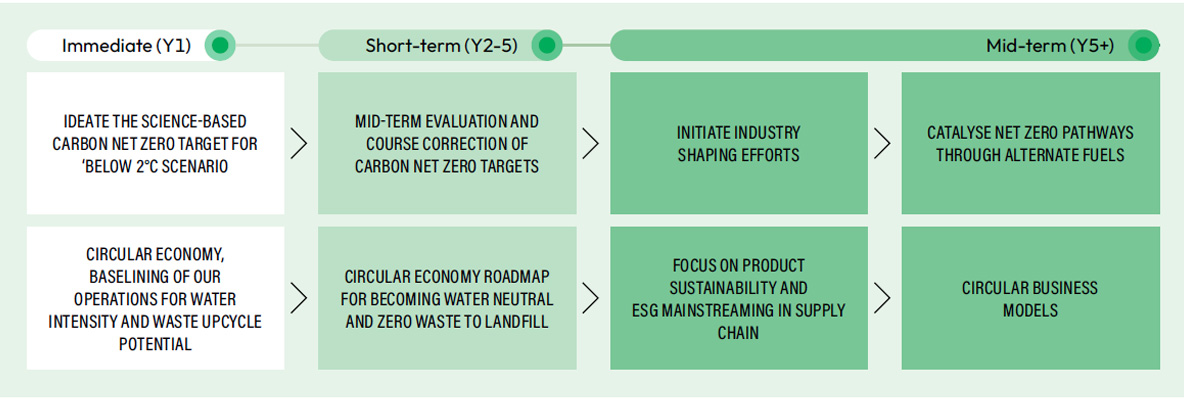
- Committing to achieving Carbon Neutrality before 2045, becoming one of the first Indian power utilities to do so
- Advancing sustainability through the 3Ds — Decarbonisation, Digitalisation and Decentralisation
Net Zero by 2045: 3D framework
Decarbonisation
Progressively phase down coal-based capacity by 2045, aligned with asset life and contractual obligations, while accelerating renewable energy scale-up.
Digitalisation
Advance ESCO-led solutions leveraging SCADA, DER integration, AI/ML, IoT, and smart metering to drive efficiency, cost optimisation and intelligent operations.
Decentralisation
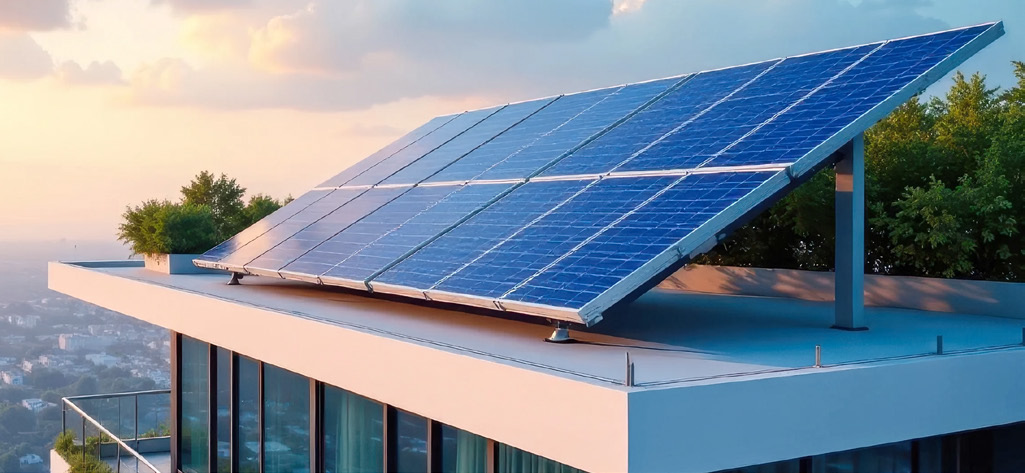
Enable distributed energy adoption through rooftop solar, microgrids, storage solutions and home automation, empowering consumers towards climate-conscious living.
TCFD signatory
As a TCFD signatory, integrating climate-related risk and opportunity assessment into strategy, with structured mitigation and resilience planning.
SBTi validation
Aligned with SBTi, advancing science-based pathways to accelerate decarbonisation and embed sustainability into core business operations.
We are the first integrated power company in India with validated Science-based Target initiative (SBTi) targets, aligning with the well-below 2°C trajectory.
Setting modern and long-term goals for ‘Leadership in Sustainability’
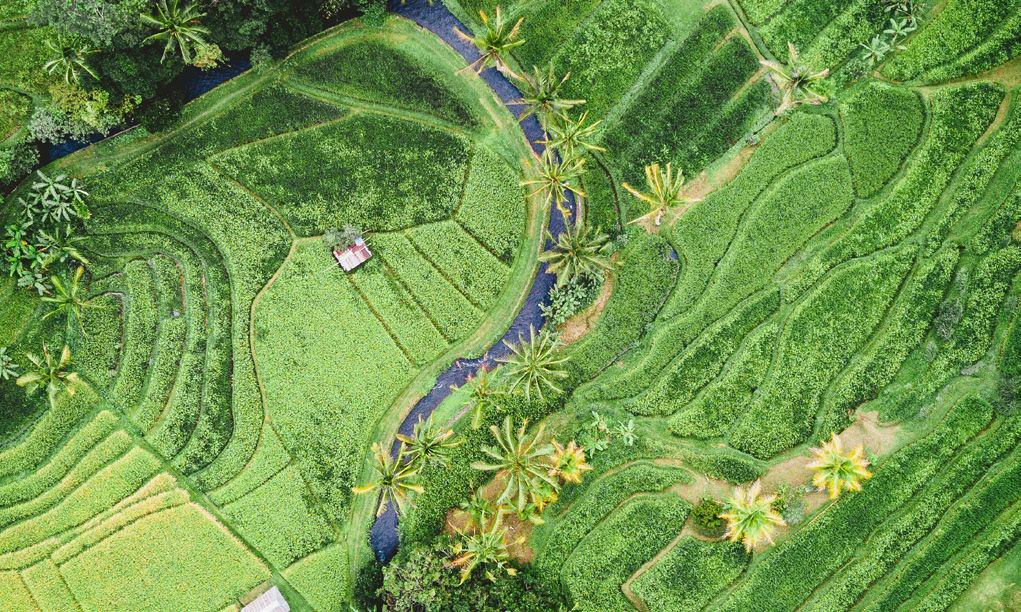
- Establishing biodiversity baselines and identify priority impact areas across operations
- Developing a roadmap to drive nature-positive outcomes and strengthen ecosystem resilience through nature-based solutions
- Enhancing ESG disclosures and align with recognised frameworks to improve transparency, comparability, and investor relevance
- Strengthening external benchmarking through participation in leading ESG indices
- Advancing innovation in low-carbon technologies, including carbon capture, green hydrogen and energy storage solutions
GHG emissions
- Integrating climate risks into strategy and investments
- Reducing carbon intensity Particulate Matter
Initiatives and progress during FY26
- Operationalised GHG monitoring systems across generation and renewable units
- Integrated renewable energy with conventional operations to optimise emissions intensity
- Implemented climate governance and decarbonisation strategies aligned with Net Zero ambitions
- Progressed biodiversity assessments to inform a structured nature-positive strategy
- Enhanced ESG disclosure quality and alignment with recognised reporting frameworks
- Advanced the development of clean and future-ready technologies supporting decarbonisation
- Received the ‘Excellence in Environment Management’ award at the CII ITC Sustainability Awards, reinforcing environmental governance and sustainability performance
Green construction with sustainable buildings
Focus area
- Advancing sustainability through IGBC Gold and Platinum certified buildings that reduce environmental impact and enhance occupant well-being
- Ensuring green certification for all GIS constructions, with a focus on energy-efficient designs and sustainable construction practices
- Integrating renewable energy systems, water conservation measures and eco-friendly materials
- Promoting innovation and inclusive design, including new-age solutions such as robotic cleaning
Initiatives and progress during FY26
- Implemented energy-efficient designs in new constructions
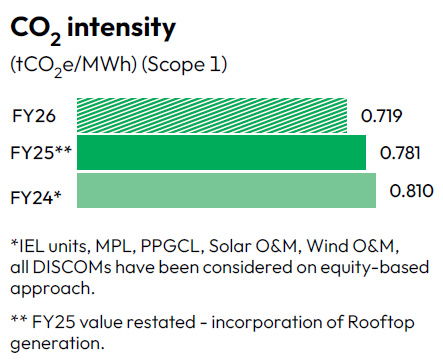
- Reduced CO2 intensity across projects through optimised material and energy use
Air emissions
Focus area
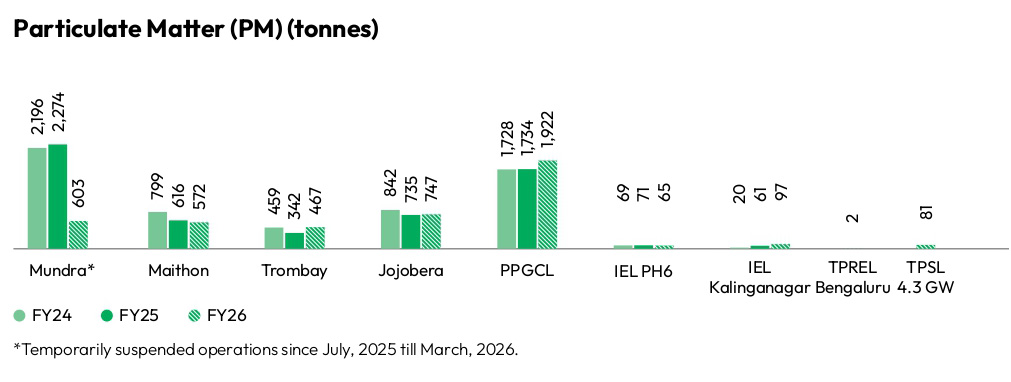
- Monitoring and managing non-GHG pollutants, including SOx, NOx and particulate matter
- Deploying advanced emission control technologies to minimise pollutants at source and ensure effective pre-discharge treatment
- Continuously improving emission control systems and optimising operational parameters
- Strengthening monitoring and reporting to enhance environmental performance and support cleaner air
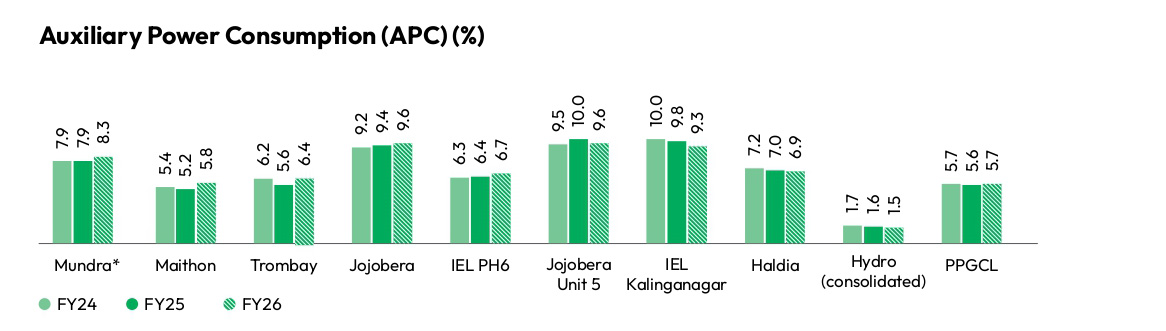
Auxiliary Power Consumption (APC)
- Reducing internal power consumption through efficient equipment use and optimised operations
- Transitioning to energy-efficient systems to strengthen overall operational efficiency
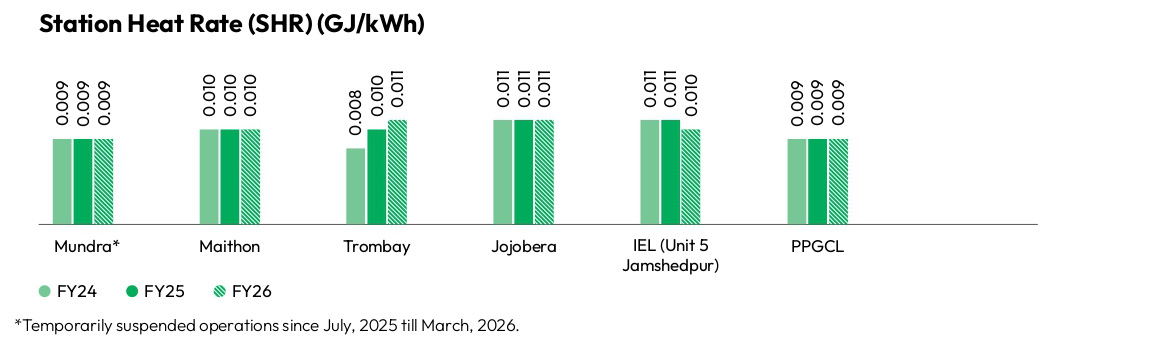
Station Heat Rate (SHR)
- Enhancing plant efficiency to maximise output per unit of fuel
- Reducing fuel consumption, emissions and operating costs
Initiatives and progress during FY26 — Air emissions
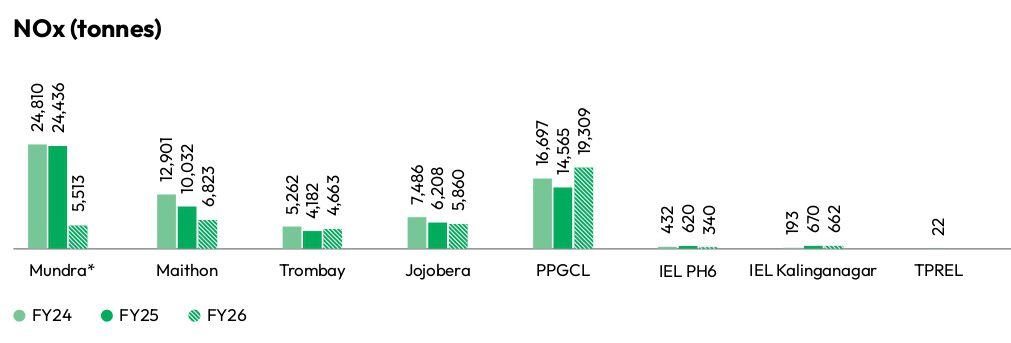
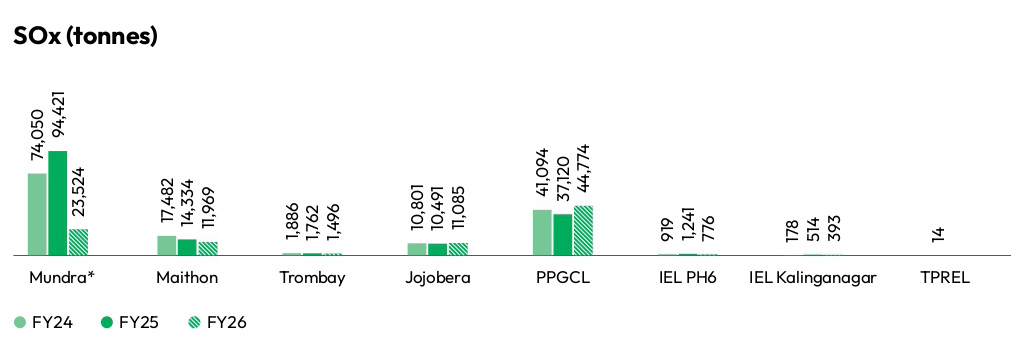
- Monitored NOx, SOx and Particulate Matter emissions to ensure regulatory compliance
- Improved APC and SHR metrics, reflecting enhanced operational and environmental efficiency
- Deployed emission control systems across thermal units
- Implemented comprehensive dust and emission control systems across thermal generating stations, including wind barriers, mist systems, sprinklers, road sweeping mechanisms, real-time monitoring systems, Electrostatic Precipitators (ESP), Flue Gas Desulphurisation (FGD) systems, low-NOx burners, Over Fire Air (OFA) systems, and De-NOx technologies
- Achieved over 98% real-time emission monitoring compliance, exceeding statutory requirements, while significantly reducing Particulate Matter and NOx emissions through proactive environmental management practices
Water management
Focus area
- Advancing a structured water stewardship framework aligned with national guidelines and best practices
- Progressing towards Water Neutrality through reduction, recycling, reuse and recharge strategies
- Integrating water conservation into planning, design and operations
Approach
- Calculating water footprint
- Arriving at a reasonably possible level to reduce the existing water footprint
- Reaching the residual water footprint
- Offsetting by making a reasonable investment
- Adopted a comprehensive framework encompassing water risk assessment, demand reduction, and water replenishment strategies
- Aligned water stewardship practices with national guidelines and certification standards to ensure consistency and accountability
Long-term focus
- Developing a roadmap to reduce freshwater consumption through efficient design and optimised O&M practices
- Strengthening water capture, treatment and reuse to maximise utilisation of treated wastewater
Specific water consumption
- Optimising water intensity in line with regulatory benchmarks and operational efficiency goals
- Improving process efficiency to reduce freshwater dependency across operations
Rainwater harvesting
- Scaling rainwater harvesting and groundwater recharge to strengthen Water Security
- Embedding RWH systems into infrastructure design and operational planning
- Promoting sustainable recharge practices to maintain groundwater balance
Initiatives and progress during FY26
- Achieved Water Neutrality – Aspiring (Scope 1) certification for thermal and renewable operations, showcasing our progress towards the goal of achieving water neutrality across operations and certification under the CII Water Institute’s Scope Certification framework across these operations
- Reduced freshwater utilisation and optimised water use at key plants including Mundra, Haldia
- Tracked water withdrawn and consumed by source: surface, groundwater, third-party and seawater
- Aligned with NITI Aayog Water Neutrality Guidelines and advanced the Water Neutrality Initiative across the generation business, covering thermal units, renewable energy clusters, manufacturing facilities, and solar O&M sites
- Increased use of treated water, wastewater recycling, and reduced reliance on freshwater sources and enhanced reuse of treated wastewater across operations
- Implemented Zero Liquid Discharge (ZLD) systems at water-intensive locations
- Integrated water stewardship into broader sustainability and operational frameworks
- TPSL: Recycled 62% of water consumed in manufacturing processes through in-house treatment systems, with recycled water consumption maintained consistently across operational months
- TPSL: Recovered 120–160 KLD of condensate water from HVAC operations, resulting in savings of approximately 50 million litres of freshwater annually
- Trombay: Implemented circular water systems and DM plant recovery projects to reduce freshwater intake, minimise wastewater generation, and improve water reuse efficiency
- TPSL: Undertook rejuvenation of the 650-acre Gangaikondan pond by clearing ~196 acres of invasive Prosopis juliflora, removing nearly 250 tonnes of biomass, and installing chain-link fencing to prevent contamination and encroachment
Specific water consumption
- Improved operational efficiency through targeted initiatives such as leak detection and repair (Haldia)
- Continued optimisation of process performance to reduce water intensity across plants
- MPL: Maintained specific water consumption at 2.26 m³/MWh, significantly below the CPCB benchmark of 3.5 m³/MWh through water efficiency and reuse measures
- Deployed water-efficient technologies and optimised processes to reduce freshwater withdrawal
Rainwater harvesting
- Undertaken rainwater harvesting and catchment-level replenishment projects to support long-term water security
- Implemented a structured Rainwater Harvesting (RWH) Policy across operations
- Expanded RWH infrastructure across facilities, including deployment at multiple receiving stations
- Enabled digital monitoring of RWH systems through app-based tracking tools
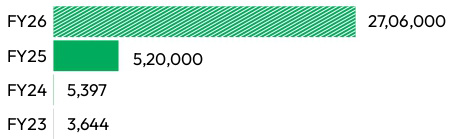
- Strengthened groundwater recharge and reduced pressure on freshwater resources through integrated RWH planning
- TPSL: Channelled stormwater collected at the facility to recharge the Gangaikondan pond located 2 km from the plant
- MPL and Trombay: Implemented rainwater harvesting and groundwater recharge initiatives to strengthen long-term water security and reduce dependence on external water sources
Rainwater recharge (kL)
Water withdrawn and consumed by source (million litres)
| Source of water withdrawal | Plant | FY25 | FY26 | ||
|---|---|---|---|---|---|
| Water withdrawn | Water consumed | Water withdrawn | Water consumed | ||
| Surface water | Maithon | 16,364 | 16,364 | 15,869 | 15,869 |
| Bhira | 7,51,390 | 16 | 7,26,878 | 6 | |
| Bhivpuri | 2,74,640 | 57 | 2,80,590 | 10 | |
| Khopoli | 2,28,790 | 31 | 2,21,509 | 38 | |
| PPGCL | 27,678 | 27,678 | 27,376 | 27,376 | |
| Solar O&M | 14 | 14 | 6 | 6 | |
| Total surface water | 12,98,876 | 44,159 | 12,72,228 | 43,305 | |
| Groundwater | Wind O&M | — | — | 1 | 1 |
| Solar O&M | 24 | 24 | 9 | 9 | |
| T&D | — | — | 4 | 4 | |
| Total groundwater | 24 | 24 | 14 | 14 | |
| Third party | Trombay | 783 | 712 | 779 | 700 |
| Jojobera | 8,918 | 8,918 | 8,492 | 8,492 | |
| IEL PH6 | 2,587 | 2,392 | 2,298 | 2,047 | |
| IEL Kalinganagar | 2,916 | 2,322 | 3,579 | 2,970 | |
| Haldia | 2,257 | 1,746 | 2,110 | 1,627 | |
| Wind O&M | 1 | 1 | 2 | 2 | |
| Solar O&M | 181 | 181 | 194 | 194 | |
| TPREL Manufacturing, Bengaluru | 68 | 59 | 64 | 54 | |
| TPSL 4.3 GW | — | — | 1,113 | 1,113 | |
| T&D | 220 | 220 | 172 | 172 | |
| Total third party water | 17,931 | 16,552 | 18,803 | 17,371 | |
| Source of water withdrawal | Plant | FY25 | FY26 | ||
|---|---|---|---|---|---|
| Water withdrawn | Water consumed | Water withdrawn | Water consumed | ||
| Rainwater consumption | Trombay | — | 6 | — | 5 |
| IEL Kalinganagar | — | 7 | — | 12 | |
| IEL PH6 | — | 7 | — | 2 | |
| Jojobera | — | 2 | — | 2 | |
| TPREL Bengaluru | — | 1 | — | 1 | |
| Solar O&M | — | — | — | 3 | |
| PPGCL | — | 2,760 | — | — | |
| T&D | — | 1 | — | — | |
| Haldia | — | 5 | — | 35 | |
| Total Rainwater | — | 2,788 | — | 59 | |
| Total Freshwater | — | 63,524 | — | 60,749 | |
| Waste water from own organisation | Maithon | — | 41 | — | 38 |
| Trombay | — | 31 | — | 35 | |
| Jojobera | — | 579 | — | 451 | |
| PPGCL | — | — | — | 2,266 | |
| IEL PH6 | — | 42 | — | 250 | |
| TPSL 4.3 GW | — | — | — | 1,858 | |
| TPREL Bengaluru | — | 36 | — | 57 | |
| Total wastewater generated and used by the organisation | — | 730 | — | 4,956 | |
Seawater (million litres)
| FY25 | FY26 | ||||
|---|---|---|---|---|---|
| Withdrawn | Consumed | Water Withdrawn | Water Consumed | ||
| Seawater* | Mundra** | 46,51,363 | 1,82,988 | 15,88,678 | 68,442 |
| Trombay | 6,57,533 | 54,117 | 8,24,841 | 1,32,065 | |
| Total seawater | 53,08,896 | 2,37,106 | 24,13,519 | 2,00,507 | |
*Seawater is used for cooling purposes only at Trombay, and seawater is treated to meet the freshwater requirements at Mundra. **Water stress area.

Note: Restated FY25 value for Jojobera, IEL Kalinganagar and Haldia. *Temporarily suspended operations since July, 2025 till March, 2026.
Raw material management
Focus area
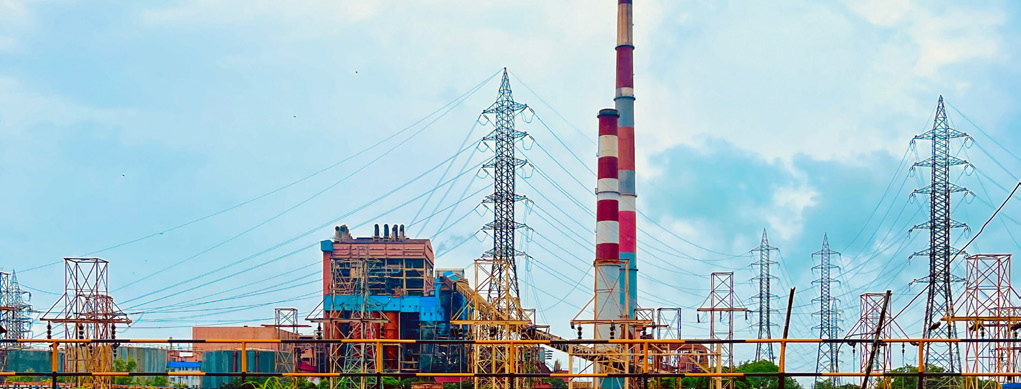
Ensuring the responsible use of coal, oil, natural gas and by-product fuels.
Advancing innovation in low-carbon technologies, including carbon capture, green hydrogen and energy storage solutions.
Initiatives and progress during FY26
- Efficient utilisation enhanced cost competitiveness and reduced environmental footprint
- Transparently reported material consumption and resource use
- Trombay: Developed innovative bottom ash-based applications such as pre-stressed concrete electric poles and tetrapods, enabling up to 100% replacement of natural sand, supporting resource conservation, cost savings, and patent development initiatives
- Trombay: Established a biogas plant that converts approximately 30 kg/day of kitchen waste into usable fuel, promoting waste-to-resource conversion, renewable energy generation, and avoidance of methane emissions from organic waste disposal
Raw material consumption in FY25 and FY26
| Division (FY25) | Coal (million tonnes) | Light diesel oil (kL) | Heavy furnace Oil (kL) | Natural gas (million tonnes) | BFG (million m³) | COG (million m³) | LDG (million m³) |
|---|---|---|---|---|---|---|---|
| Mundra | 10 | 2,569 | 1,941 | — | — | — | — |
| Maithon | 4 | 564 | 763 | — | — | — | — |
| Trombay | 2 | 194 | 1,690 | 0.24 | — | — | — |
| Jojobera (U#1-U#4) | 2 | 735 | — | — | — | — | — |
| Jojobera-U#5 | 1 | 208 | — | — | — | — | — |
| PPGCL | 8 | 2,771 | — | — | — | — | — |
| IEL-Kalinganagar | — | 1,749 | — | — | 1,890 | 88 | — |
| IEL-PH6 | — | 1,141 | — | — | 2,113 | 21 | 278 |
| Division (FY26) | Coal (million tonnes) | Light diesel oil/LSHS (T) | Heavy furnace Oil (T) | Natural gas (million tonnes) | BFG (million m³) | COG (million m³) | LDG (million m³) | Wood (T) | Plastic (T) |
|---|---|---|---|---|---|---|---|---|---|
| Mundra* | 3 | 1,435 | 571 | 0.00 | — | — | — | — | — |
| Maithon | 4 | 1,099 | 484 | 0.00 | — | — | — | — | — |
| Trombay | 2 | 552** | — | 0.21 | — | — | — | — | — |
| Jojobera (U#1-U#4) | 2 | 652 | — | — | — | — | — | — | — |
| IEL (U#5) | 1 | 699 | — | — | — | — | — | — | — |
| PPGCL | 7 | 1,605 | — | — | — | — | — | — | — |
| IEL-Kalinganagar | — | 55 | — | — | 3,258 | 117 | — | — | — |
| IEL-PH6 | — | 1,439 | — | — | 1,992 | 17 | 272 | — | — |
| TPSL - 4.3 GW | — | — | — | — | — | — | — | 10,458 | 667 |
*Temporarily suspended operations since July, 2025 till March,
2026.
**Trombay-LSHS.
Waste management
Focus area
- Advancing a circular economy approach through waste reduction, reuse, recycling, and resource recovery
- Progressing towards Zero Waste to Landfill (ZWTL) across operations by 2030
- Improving waste inventory mapping and segregation across all business segments
- Promoting responsible disposal and utilisation of by-products, including fly ash
- Optimising resource efficiency and circularity across generation, transmission, distribution, renewables and manufacturing operations
Initiatives and progress during FY26
- Achieved 100% ash utilisation in line with regulatory requirements, with fly ash repurposed across cement, RMC, infrastructure, and other applications
- Progressed ash pond stabilisation through utilisation of legacy ash in compliance with regulatory guidelines
- Secured ‘Platinum’ certification under ZWTL for Prayagraj Power Generation Company Limited (PPGCL), recognising best-in-class waste management practices
- Scaled circular waste management practices across operational locations to improve resource efficiency and minimise landfill dependency
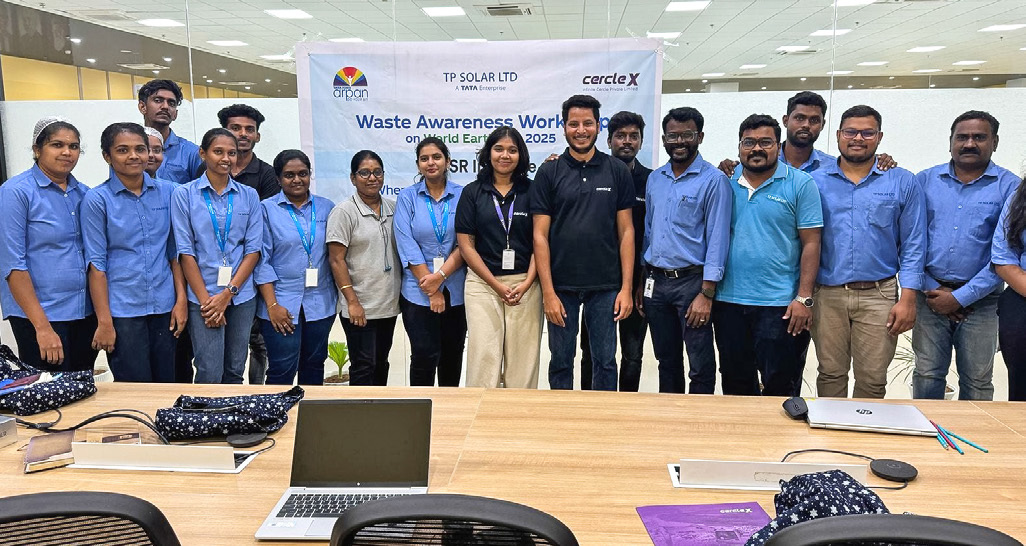
- TPSL - 4.3 GW: Introduced reusable Expanded Polypropylene (EPP) boxes for cell packing, reducing packaging material consumption and waste generation by 31%
- TPSL - 4.3 GW: Replaced wooden pallets with metal pallets in raw material procurement, reducing nearly 150 tonnes of wood waste generation
- TPSL - 4.3 GW: Reused brown paper and carton boxes generated from packaging operations as raw material in the paper manufacturing industry, with 2,029 tonnes of paper and 782 tonnes of carton boxes channelled into circular economy applications
- All thermal generation locations: Advanced circular economy and Zero Waste to Landfill initiatives through the utilisation of fly ash in cement manufacturing, reuse of bottom ash in construction, landscaping, gardens and coastal structures, and routing of plastic, paper, and hazardous waste to authorised recyclers
Type of division-wise waste generated and diverted from disposal
| Division | Type of waste | FY25 | FY26 | ||
|---|---|---|---|---|---|
| Generated (MT) | Diverted from disposal (MT) | Generated (MT) | Diverted from disposal (MT) | ||
| Mundra* | Hazardous | 89 | 88 | 108 | 128 |
| Non-hazardous | 9,47,271 | 9,93,201 | 1,75,462 | 1,75,635 | |
| Maithon | Hazardous | 15 | 15 | 29 | 29 |
| Non-hazardous | 18,56,488 | 18,59,432 | 17,48,008 | 19,11,454 | |
| Trombay | Hazardous | 10 | 10 | 30 | 30 |
| Non-hazardous | 71,773 | 72,009 | 78,280 | 78,281 | |
| Jojobera | Hazardous | 10 | 10 | 34 | 28 |
| Non-hazardous | 9,46,202 | 10,86,372 | 11,66,062 | 10,47,766 | |
| PPGCL | Hazardous | 62 | 62 | 20 | 20 |
| Non-hazardous | 24,04,336 | 29,58,926 | 23,85,086 | 22,30,074 | |
| IEL PH6 | Hazardous | — | — | — | — |
| Non-hazardous | — | — | — | — | |
| IEL Kalinganagar | Hazardous | 61 | 61 | 13 | 13 |
| Non-hazardous | 117 | 115 | 32 | 32 | |
| Haldia | Hazardous | 3 | 3 | 11 | 9 |
| Non-hazardous | 32 | 19 | 20 | 20 | |
| Bhira | Hazardous | 14 | 14 | — | — |
| Non-hazardous | 778 | 761 | 28 | 28 | |
| Bhivpuri | Hazardous | 31 | 31 | 5 | 5 |
| Non-hazardous | 20 | 20 | 61 | 61 | |
| Khopoli | Hazardous | — | — | — | — |
| Non-hazardous | 88 | 88 | 3 | 3 | |
| Solar O&M | Hazardous | — | — | — | — |
| Non-hazardous | — | — | — | — | |
| Wind O&M | Hazardous | — | — | — | — |
| Non-hazardous | — | — | — | — | |
| TPREL Bengaluru | Hazardous | 103 | 4 | 39 | 18 |
| Non-hazardous | 1,210 | 1,154 | 987 | 987 | |
| TPSL - 4.3 GW | Hazardous | — | — | 14,257 | 14,257 |
| Non-hazardous | — | — | 10,879 | 10,879 | |
| T&D | Hazardous | 924 | 795 | 446 | 458 |
| Non-hazardous | 3,234 | 3,239 | 5,213 | 5,212 | |
| Total | Hazardous | 1,322 | 1,093 | 14,991 | 14,995 |
| Non-hazardous | 62,31,549 | 69,75,336 | 55,70,122 | 54,60,433 | |
| Total H & NH | 62,32,871 | 69,76,429 | 55,85,113 | 54,75,428 | |
*Temporarily suspended operations since July, 2025 till March, 2026.
Waste diverted from disposal
| FY25 | FY26 | |||||
|---|---|---|---|---|---|---|
| Onsite (MT) | Offsite (MT) | Total (MT) | Onsite (MT) | Offsite (MT) | Total (MT) | |
| Hazardous waste | ||||||
| Reuse | — | — | — | — | — | — |
| Recycling | — | 1,093 | 1,093 | — | 14,995 | 14,995 |
| Other recovery options | — | — | — | — | — | — |
| Total | — | 1,093 | 1,093 | — | 14,995 | 14,995 |
| Non-hazardous waste | ||||||
| Reuse | 995 | 29,55,600 | 29,56,595 | 1,254 | 17,03,327 | 17,04,581 |
| Recycling | — | 40,18,741 | 40,18,741 | 3,288 | 37,52,564 | 37,55,852 |
| Other recovery options | — | — | — | — | — | — |
| Total | 995 | 69,74,341 | 69,75,336 | 4,542 | 54,55,891 | 54,60,433 |
Biodiversity
Focus area
- Integrating biodiversity considerations into project planning and operations through science-based assessments and GIS-enabled mapping and structured ecosystem management frameworks
- Committing to ‘No Net Loss of Biodiversity by 2030’ through structured impact assessment and mitigation strategies
- Aligning with global frameworks TNFD to manage and disclose nature-related dependencies, impacts, risks and opportunities
- Embedding biodiversity governance through a formal policy and a commitment framework anchored in the mitigation hierarchy (avoid, minimise, restore, and offset), aligned with the Tata Group’s Aalingana framework and relevant global and national principles
- Developing and implementing location-specific Biodiversity Action and Management Plans
- Driving ecosystem restoration and habitat conservation across operational landscapes
- Strengthening collaboration with communities and conservation partners
- Promoting employee and youth engagement in biodiversity conservation
Initiatives and progress during FY26
- Continued the flagship conservation programme Act for Mahseer, supporting species revival and aquatic ecosystem restoration
- Strengthened elephant conservation through human–elephant conflict mitigation measures in collaboration with the Odisha Government and SNEHA NGO
- Scaled afforestation and ecological restoration initiatives, including Tree Mittra, Project GhanVan, and rewilding across hydro locations, with a focus on native species, in partnership with ICICI Foundation and Bombay Natural History Society
- Advanced wetland conservation, greenbelt development, and invasive species management across operational sites
- Strengthened partnerships with leading conservation organisations, including International Union for Conservation of Nature, Wildlife Trust of India, World Wide Fund for Nature, Bombay Natural History Society, Confederation of Indian Industry, SNEHA NGO, and ICICI Foundation to enhance biodiversity outcomes
- Deepened community and employee engagement through Club Enerji, Climate Crew, and structured volunteering and awareness programmes across locations
- Published a TNFD-aligned disclosure on the TNFD platform, becoming one of the first in India’s electric utilities and power generation sector to do so
Biodiversity knowledge and awareness initiatives
Published a series of books on Western Ghats flora and fauna to promote biodiversity conservation and ecological awareness.
- ‘Secret Life of Otters’ – Highlights the ecology, distribution, and conservation significance of otters in the Northern Western Ghats
- ‘Mahseer Conservation: A Saga of Success – Tata Power Legacy (1970–2021)’ – Chronicles long-term conservation efforts with detailed taxonomy and archival insights
- ‘Amphibians of Northern Western Ghats’ – First photographic guide covering 52 amphibian species of the North Western Ghats
- ‘Birds of Lonavala & Khandala’ – Pocket guide covering ~200 bird species, including endemic and threatened species
- ‘Reptiles of Northern Western Ghats’ – First photographic guide documenting 118 reptile species of the North Western Ghats
- ‘Wild Orchids of Northern Western Ghats’ – Covers 99 orchid species, including endemic and threatened varieties, with distribution mapping
- ‘Conservation of the Mighty Mahseer of India’ – Documents conservation efforts for the endangered Mahseer and its habitat
Strengthening nature governance and alignment with global standards
We are strengthening our nature governance framework by aligning with globally recognised standards and embedding biodiversity considerations into enterprise-wide decision-making. As an official adopter of the Task Force on Nature-related Financial Disclosures (TNFD), we have published our TNFD-aligned disclosure, reinforcing transparency on nature-related dependencies, impacts, risks and opportunities. This marks a significant step in integrating natural capital into our risk management, strategy and long-term value creation.
Tata Power is the first company in India’s Electric Utilities & Power Generators sector to publish a TNFD-aligned disclosure on the TNFD platform and is among the first 11 companies in India to do so.
Additionally, we are advancing our Nature-based Solutions (NbS) approach through deeper alignment with international benchmarks. We conducted a self-assessment using the IUCN Global Standard for NbS for key conservation initiatives, demonstrating strong alignment with global criteria while identifying opportunities for further strengthening.
Key enablers
Global framework alignment
We adopt TNFD to strengthen nature-related disclosures and governance
Science-based assessment
We evaluated flagship initiatives against IUCN NbS standards
Continuous improvement
We enhance project design, monitoring and governance based on assessment insights
Future-ready integration
We embed NbS principles at the planning stage of new interventions
Strategic integration
We integrate biodiversity and natural capital into enterprise risk management and business strategy
Safeguarding the mighty Mahseer
The Mahseer, known as the ‘Tiger of the Freshwater’, is an ecologically and culturally significant species facing extinction risks due to habitat degradation and overexploitation.
We initiated the Mahseer conservation programme in 1970, making it one of India’s largest and longest-running corporate-led conservation efforts. With technical support from the Central Institute of Fisheries Education, we established a breeding centre at Walwhan, Lonavala for the conservation and propagation of Deccan Mahseer.
By 1986, we began breeding the Golden Mahseer through a dedicated hatchery with a capacity of more than five lakh eggs at a time. We also introduced cage culture and ranching programmes to support large-scale conservation.
Our approach
- Scientific breeding through hatchery infrastructure
- Cage culture and ranching for habitat-based conservation
- Capacity building through training and national workshops
- Collaboration with state fisheries departments
Impact
- Over 55 years of sustained conservation efforts
- 15 million fish hatchlings produced and distributed across India
- 325 fisheries scientists trained and five national workshops conducted
- Deccan Mahseer moved from endangered status to ‘Least Concern’ on the IUCN Red List
- Continued focus on the conservation of the Golden Mahseer, classified as Endangered on the IUCN Red List
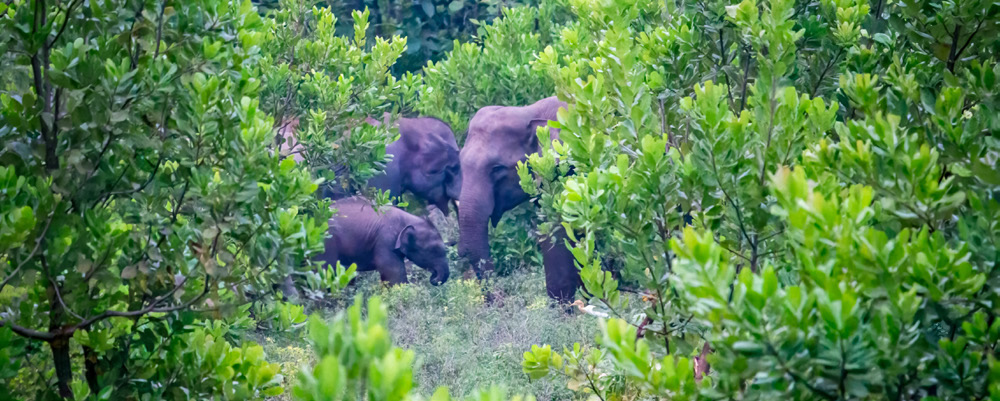
Gaja Sanrakshana Project – Odisha
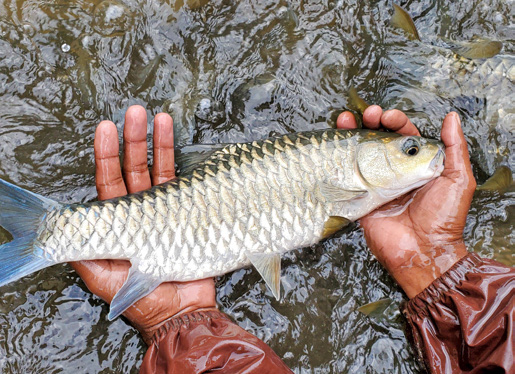
Tata Power, in partnership with the Odisha Government and SNEHA NGO, implements the Gaja Sanrakshana initiative to mitigate human–elephant conflict and promote safe coexistence. The project combines technology, community engagement, and risk mitigation strategies to protect elephants while reducing risks to local communities.
Received the 2025 Chief Minister’s Award for Wildlife Conservation for the Gaja Sanrakshana project, recognising efforts in human–elephant conflict mitigation in Odisha.
Key interventions and progress during FY26
Technology-enabled early warning systems
- Installed 15 app-based early warning systems and 75 proximity sensors with hooters in high-conflict zones
- Enabled real-time monitoring of elephant movement and timely alerts for nearby communities
Identification and mitigation of electrical threats
- Mapped 2,731 electrocution threat locations (live-wire poaching points, sagging power lines, open transformers, hazardous electric fencing)
- Facilitated targeted mitigation to reduce elephant mortality
Strengthening community participation
- Trained and mobilised 3,827 Gaja Saathis (village volunteers) to coordinate community response, disseminating early warnings, preventing harmful practices, and ensuring safe elephant movement
- Trained and built the capacity of 2,105 Gram Panchayat officials, District level officials and VSS members to support participatory conservation and local governance
Awareness and education initiatives
- Implemented 172 wall paintings and 555 street plays across conflict-prone villages
Project expansion – Phase II
- Conducted a state-level workshop on the Gaja Sanrakshana Project (November 2025) in Odisha, bringing together key stakeholders including the Forest Department, Tata Power Odisha DISCOMs, and conservation partners such as WWF, Wildlife Trust of India, and SNEHA NGO to strengthen coordination, share technical insights, and scale human–elephant conflict mitigation across high-risk regions
- Expanded geographic coverage to 21 forest ranges across eight districts in Odisha
- Strengthened landscape-level management of human–elephant conflict through integrated interventions
Impact and alignment
- Enhanced human-elephant coexistence and biodiversity protection
- Supports Tata Group’s Aalingana sustainability goals through community-driven wildlife conservation
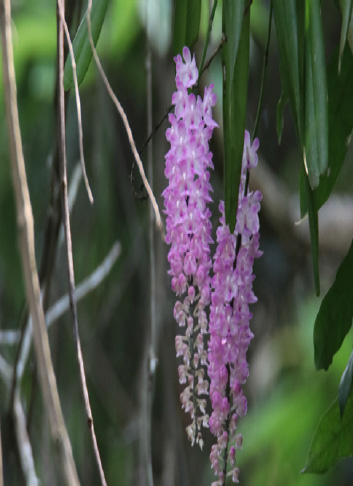
Orchid conservation initiative
We are conserving native orchid species of the Northern Western Ghats through ex-situ propagation and reintroduction into natural habitats.
In collaboration with the Agharkar Research Institute, we are micro-propagating rare and native orchid species, including the Foxtail orchid (Rhynchostylis retusa) to address risks from habitat loss and over-exploitation.
The initiative focuses on restoring threatened orchid populations while strengthening long-term species survival through scientific conservation methods.
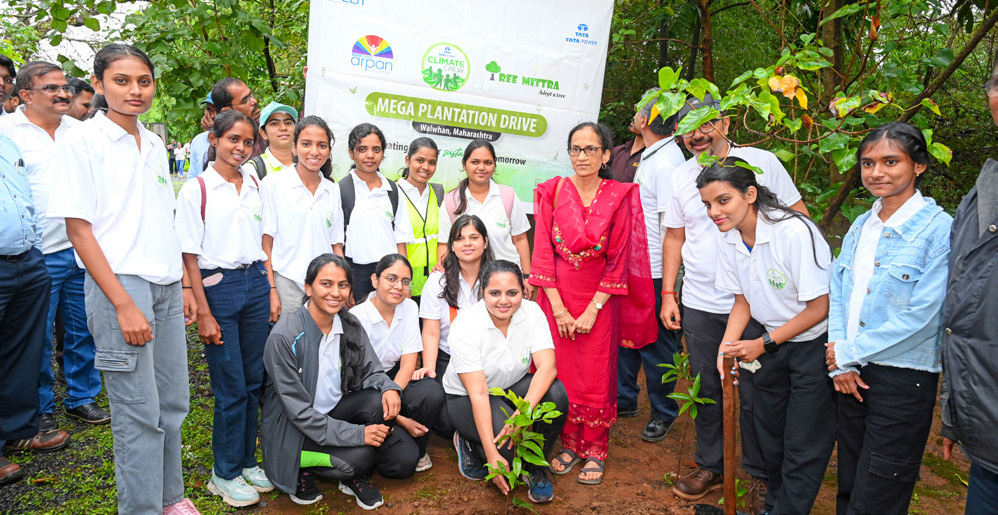
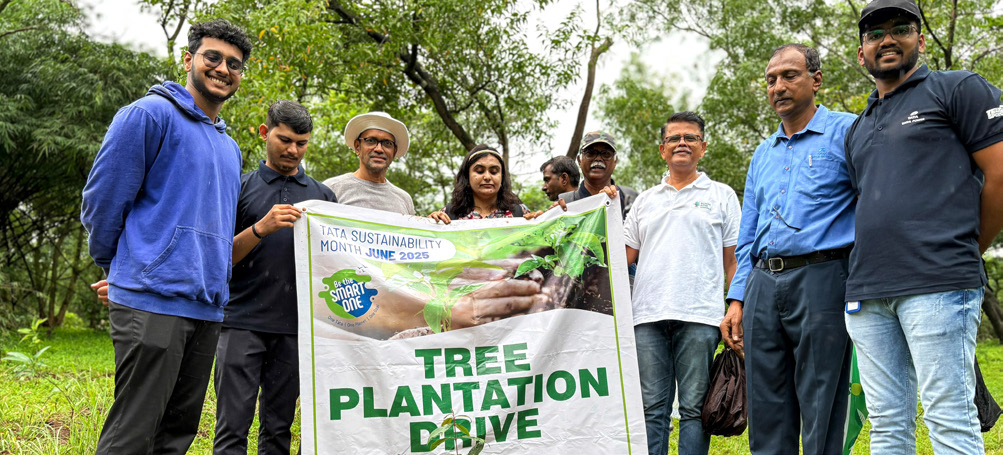
‘Tree Mittra’ – scaling afforestation efforts
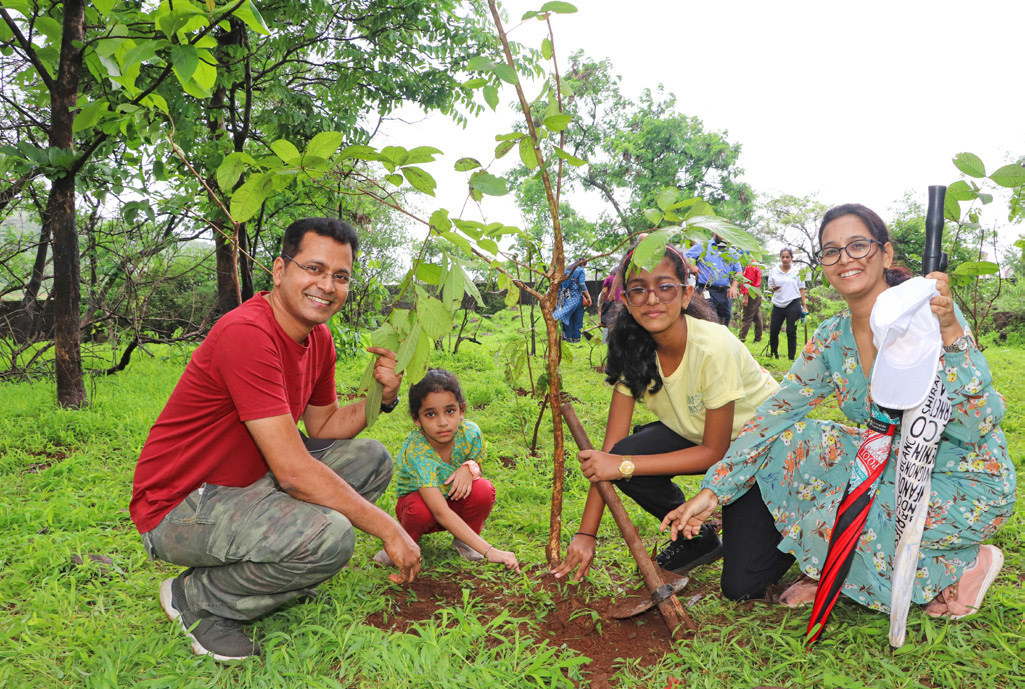
We have been driving afforestation through the Tree Mittra initiative since 1972, as a volunteering initiative, focusing on planting of native and indigenous species to support ecological restoration.
The programme also enables virtual volunteering, engaging employees, families, customers, and stakeholders in large-scale plantation and awareness efforts.
Since 1979, in collaboration with the Maharashtra Forest Department, we have undertaken plantation drives to address soil erosion and improve forest cover, supporting the return of local biodiversity.
Environmental education programmes with Bharati Vidyapeeth further promote conservation awareness among children and communities.
Impact
- Native saplings and seeds planted with ~30% survival rate
- Strengthened green cover and biodiversity restoration
- Broad-based stakeholder participation
Mass tree plantation at hydros – GhanVan and rewilding
We implement large-scale afforestation initiatives around our hydro power installations in the Western Ghats, Maharashtra, through Project GhanVan and rewilding of Hydros, aimed at ecosystem restoration, biodiversity enhancement, and climate resilience.
Project GhanVan – integrated afforestation and watershed management
In partnership with ICICI Foundation, Project GhanVan focuses on planting native indigenous species across the Bhivpuri, Khopoli, and Bhira catchment areas.
Key features
- Integrated watershed and agro-ecological approach, including native trees, vegetables, bamboo, spices, and medicinal plants
- Sustainable water management via recharge pits, farm ponds, and solar-powered drip irrigation
- Soil improvement through enhanced structure, moisture retention, and nutrient quality
Impact
- Survival rate: >98%
- Planted 35 species of native trees
- Strengthened long-term ecological resilience and replicable climate-resilient afforestation model
Rewilding of hydros – ecological restoration
Implemented in collaboration with BNHS, this initiative focuses on catchment-level ecological restoration around Bhira Hydro Power facilities using Miyawaki plantations.
Key features
- Currently planting in the Maval and Mulshi lake catchments
- 50,000 indigenous trees planted
- Planted 54 species of native trees
Impact
- Enhances biodiversity and ecosystem resilience
- Supports habitat restoration around hydro installations
- Strengthens habitat continuity and catchment ecological integrity
Carbon intelligence for greener landscapes
We conducted a GIS-based survey in Maharashtra’s hydro generation region, in collaboration with the Ela Foundation, to assess biodiversity and carbon sequestration potential.
Located near the North-Western biodiversity hotspot, the region reflects the impact of sustained conservation efforts over several decades.
The insights from this study are being used to guide targeted interventions for enhancing forest cover and strengthening carbon sequestration outcomes, supporting both ecological balance and community well-being.
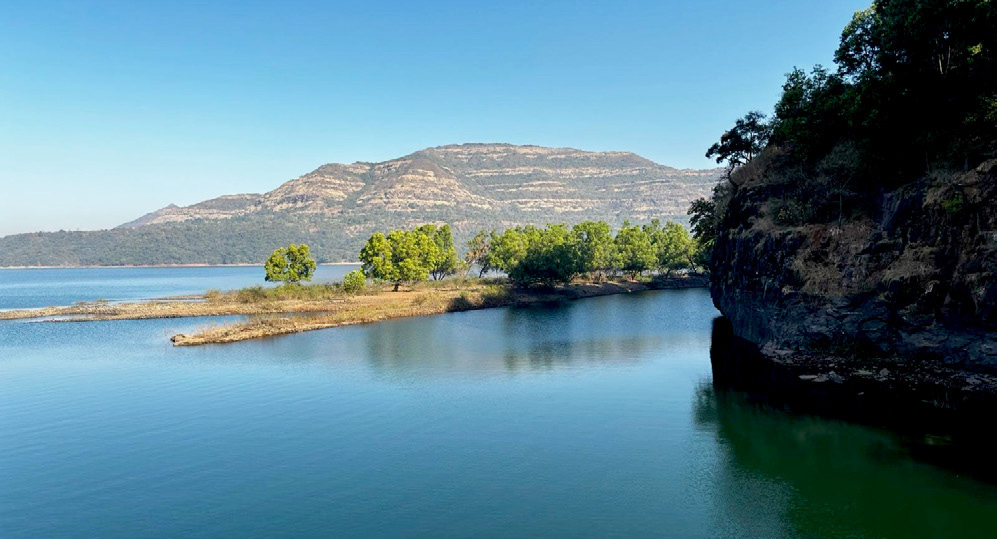
Wetland conservation
We are conserving the wetlands downstream of the Walwhan Dam and upstream of Lonavala Lake—an important monsoon-fed ecosystem in the Western Ghats.
By minimising human interference over time, we have enabled the natural regeneration of this habitat. The area now supports diverse shrubs and seasonal herbs, strengthening the local ecosystem.
These wetlands serve as critical feeding and breeding grounds for migratory and resident bird species, supported by abundant natural food availability during key seasonal cycles.
The initiative is sustained through collaboration with local communities, environmentalists, nature enthusiasts, and government authorities to ensure long-term ecological stability.
Restoring balance at Mundra
We are strengthening ecological resilience at the Mundra Power Plant through structured greenbelt development and targeted plantation initiatives.
A 453.04-hectare greenbelt has been established since inception to mitigate operational impacts and enhance the surrounding ecosystem. During FY26, plantation efforts focused on native species, boundary greening, and reclamation of ash pond areas to support dust control and land restoration.
These interventions contribute to improved site stability, reduced environmental impact, and long-term ecosystem regeneration within an industrial setting.
Impact
Expanding greenbelts at Maithon
We are enhancing ecological balance at the Maithon Thermal Power Plant through structured greenbelt development using native species.
Approximately 101 hectares within the plant area have been developed as green belt, supported by systematic plantation, protection, and irrigation practices. Saplings are safeguarded through fencing and sustained using treated water from the Effluent Treatment Plant (ETP), ensuring resource-efficient maintenance.
These initiatives support carbon sequestration, improve air quality, and strengthen local biodiversity within an industrial ecosystem.
Impact
Advancing green cover at Prayagraj
We are strengthening ecological balance at the Prayagraj Power Plant through sustained greenbelt development and dense afforestation initiatives.
Plantation efforts are being scaled through structured programmes, including the adoption of the Miyawaki technique to create dense native forests. Water requirements for the greenbelt are met using treated wastewater from the Effluent Treatment Plant (ETP), reinforcing circular resource use.
These initiatives support biodiversity enhancement and long-term environmental resilience within the plant ecosystem.
Impact
Trombay Bund – a haven for urban biodiversity
We are fostering biodiversity at the Trombay site in Mumbai by integrating ecological habitats within an industrial landscape.
The site supports diverse species, including butterflies, resident and migratory birds, through thoughtfully designed habitats such as butterfly gardens and recycled nesting structures made from scrap materials. Seasonal migration further highlights the site’s ecological value, with large flocks of flamingos using the bund area as a feeding and roosting ground.
Environmental measures to control fugitive emissions have also been implemented, including natural wind barriers (bamboo supported by agro-net), native creepers, and a three-metre-wide green belt of dust-mitigating shrubs and trees.
Impact
- ~30 butterfly species supported within the site
- Thriving sparrow population supported through artificial nesting structures
- 10,000+ migratory greater and lesser flamingos recorded annually
- Integrated green barriers supporting both dust control and biodiversity
Ecosystem restoration at TP Solar, Tirunelveli
We are integrating ecosystem restoration with our manufacturing operations at our Tirunelveli site through water body rehabilitation, afforestation, and habitat protection.
Restoration of the Gangaikondan Pond focused on improving water flow, removing invasive species, and enhancing ecological functionality. Greenbelt development and native plantation efforts are strengthening on-site biodiversity.
In collaboration with the District Forest Department, we are also supporting habitat protection at the Gangaikondan Deer Sanctuary through infrastructure and water provisioning interventions.
Impact
- Enabled restoration by clearing solid waste from ~196 acres of the Gangaikondan pond area
- Removed over 200 kg of solid waste from the pond
- Improved water flow and quality, enhancing water availability for agriculture from the pond
- Cleared ~60 acres of invasive species (Prosopis juliflora) within the pond area
- Planted 8,583 native trees as part of greenbelt development
- Strengthened habitat quality and improved water access for wildlife at the Gangaikondan Deer Sanctuary
Biodiversity risk assessment for renewable projects
We conducted a comprehensive biodiversity risk and gap assessment across renewable energy sites, aligned with the TNFD LEAP framework.
The assessment evaluated nature-related dependencies and risks, including habitat loss, soil erosion, invasive species, freshwater stress, and impacts on migratory species, across solar, wind, and hydro projects.
Based on risk prioritisation, we developed phase-wise mitigation strategies spanning site selection, construction, operation, and decommissioning to embed nature-positive practices across project lifecycles.
Impact
- 83 renewable sites assessed (solar, wind, hydro)
- Risk classification enabling prioritised mitigation
- Site-specific biodiversity and habitat management plans developed
- Integration of nature-positive principles into project development