
Introduction
Did you know Uttar Pradesh aims to add over 10,000 MW of solar capacity in the next few years? Thanks to generous solar subsidy in UP schemes from the central and state governments, this solar energy dream is becoming a reality for many. These subsidies cut down the cost of installing rooftop solar panels, making it easier for homeowners and farmers across the state to switch to clean, affordable power. Programs like the PM Surya Ghar Muft Bijli Yojana and support from UPNEDA boost the reach of solar panel subsidy in Uttar Pradesh, even in remote areas. With the right solar panel subsidy in UP, residents can enjoy lower electricity bills while helping build a sustainable future. To fully benefit, it’s important to know the types of solar incentives available and the equipment that qualifies.
What is covered in solar equipment subsidies in UP?
The solar subsidy in UP focuses on helping you save on the main equipment needed for a reliable solar system. Here’s a breakdown of what qualifies for subsidies:
- Solar panels: The largest part of the subsidy usually goes to high-quality solar panels that meet government specifications. This ensures better performance and durability.
- Solar inverters: These convert sunlight into usable electricity. Solar inverter subsidy in UP generally covers these crucial components to make the system efficient.
- Mounting structures: The frames that hold your panels securely in place also qualify, and this solar structure subsidy helps reduce overall installation costs.
- Batteries: For off-grid or hybrid solar systems, solar battery subsidy in UP can provide partial support for batteries used to store energy, depending on the scheme.
- DC wires: In addition, components such as DC wires, essential for connecting various parts of your solar setup, may also be eligible under certain subsidy programs.
Eligible systems:
- Rooftop solar systems with capacity up to 10 kW for residential consumers qualify for subsidies. For residents with 20 kW system, the subsidy caps at the same amount as applicable for 10 kW systems.
- Systems must be grid-connected to avail net-metering benefits and subsidies.
- Off-grid and hybrid systems may qualify for partial subsidies, especially in rural or agricultural applications like solar pumps.
- Equipment must meet technical standards set by the government, including certified solar panels and inverters.
Subsidies aim to lower the upfront investment on these key parts and systems so you get a long-lasting, quality solar setup that delivers savings over time. Knowing both what equipment and systems qualify is important because subsidy amounts vary based on components included and system type.
Who is eligible for solar subsidy in UP?
Before applying, it’s important to understand the solar subsidy eligibility criteria to know if you qualify for the benefits. Not everyone is eligible, so knowing which applicants and systems are covered can help you make the most of these subsidies.
Eligible applicants:
- Residential consumers: Homeowners with electricity connections under categories like domestic or residential use.
- Small businesses and institutions: Some subsidy programs extend support to small commercial businesses switching to solar energy.
- Applicants must have a valid electricity connection from the local DISCOM in Uttar Pradesh.
The goal of these eligibility criteria is to encourage widespread adoption of solar power while ensuring quality installations that benefit users over the long term.
Residential rooftop subsidy in UP: Slabs, net-metering rules, and savings
For homeowners, installing a rooftop solar system is made more affordable thanks to clear subsidy slabs and the benefit of net-metering in UP.
What are the subsidy slabs for homeowners in UP?
In Uttar Pradesh, rooftop solar subsidies are designed to favor smaller installations, offering the most financial support for systems up to 3 kW. While subsidies are available for systems as large as 10 kW, the benefit gradually decreases as the system size increases, ensuring fair access while optimizing government resources. For example:
- Up to 2 kW: ₹30,000 per kW (central subsidy) + ₹15,000 per kW (state top-up)
- 2 kW to 3 kW: Similar rates apply but with capped total subsidy
- 3 kW to 10 kW: Subsidy is fixed or capped, ensuring broad access while managing government funds efficiently
What is net-metering?
Net-metering is a key feature that helps homeowners save more. It allows you to feed excess electricity generated by your solar panels back into the grid and earn credits against your future electricity consumption. This means your electricity bills can significantly drop, often offsetting the system’s cost over a few years.
Net-metering rules for homeowners in UP:
- The rooftop solar system must be grid-connected to be eligible for net-metering.
- Excess units fed into the grid are credited to your electricity account, which can be adjusted against your future bills, usually on a monthly or annual basis.
- The net-metering system uses a bi-directional meter installed by the local DISCOM (distribution company).
- Credits from net-metering can be carried forward for up to 12 months; unused credits beyond this period may be adjusted or forfeited as per DISCOM policies.
- Net-metering is available only to residential consumers with valid electricity connections under the domestic category.
- The total capacity of the rooftop solar system must comply with limits set by the DISCOM, typically not exceeding 10 kW for residential users.
How much can you save with a solar subsidy in UP?
By combining the subsidy and net-metering benefits, many residents in UP see their solar installation pay for itself in 4 to 6 years. After that, the electricity you generate is essentially free, reducing your monthly bills and protecting you from rising electricity prices.
This combination of financial incentives and smart energy management makes rooftop solar a smart choice for UP households. If you’re wondering how much you can save, book a consultation with Tata Power now.
Comparison of system costs before and after UP solar subsidy
Understanding the cost of solar systems before and after subsidies helps homeowners and businesses plan their investments better. Here’s a look at typical price points for rooftop solar systems in Uttar Pradesh:
These prices include different types of high-quality solar panels, inverters, and mounting structures eligible for the solar system subsidy in UP. Additionally, net-metering can further reduce electricity bills, increasing your overall savings.
Keep in mind that exact costs vary based on the vendor, location, and system specifications. However, with government subsidies, installing solar in Uttar Pradesh becomes a financially smart choice.
If you’re wondering how to finance your solar journey, here’s a quick guide to get you started.
How to apply for solar subsidy in UP: Step-by-step process
Applying for the solar subsidy in UP has become easier thanks to streamlined online portals and clear guidelines. A crucial part of the process is completing your solar panel registration in UP, which officially records your system details with the authorities and ensures your eligibility for the subsidy. Here’s a simple step-by-step guide to help you get your subsidy smoothly.
Step 1: Check eligibility and choose your system
Before applying, make sure your solar system and installation vendor meet government standards. Systems typically must be between 1 kW and 10 kW for residential subsidies.
Step 2: Register your solar panel system
To start, visit the official Uttar Pradesh solar portal, such as PM Surya Ghar, or UPNEDA’s website. Here you can complete your solar panel registration in UP by providing details about your property, system capacity, and vendor.
Step 3: Upload required documents
Prepare documents like identity proof, electricity bill, Aadhaar card, and the technical specifications of your solar equipment. Upload these on the portal to support your application.
Step 4: Application submission
Fill out the application form carefully, ensuring all details match your documents. Submit the form online for faster processing.
Step 5: Verification and inspection
After submission, the concerned authorities will verify your application and may conduct a site inspection to confirm installation compliance.
Step 6: Subsidy approval and disbursement
Once approved, the subsidy amount is directly transferred to your bank account or credited against your electricity bill, depending on the scheme.
Documents required:
- Aadhaar card of the applicant
- Recent electricity bill
- Property ownership proof or NOC from landlord (if rented)
- PAN card or bank passbook (for bank details)
- System design and technical specifications
- Installation agreement with empaneled vendor
- Photograph of the applicant
Tips for a smooth solar subsidy process
- Choose authorized installers, like Tata Power, to avoid delays.
- Keep all documents ready and updated.
- Regularly check the status on the portal.
By following these steps, you can efficiently access the solar panel subsidy in Uttar Pradesh and make your solar investment more affordable.
Other central government solar subsidies applicable in UP
Beyond the residential rooftop subsidies, the central government offers several important solar subsidy schemes that residents, farmers, and businesses in Uttar Pradesh can benefit from. These programs help make solar energy more affordable and promote widespread adoption across different sectors.
1. PM Surya Ghar Muft Bijli Yojana – Free rooftop solar for rural homes
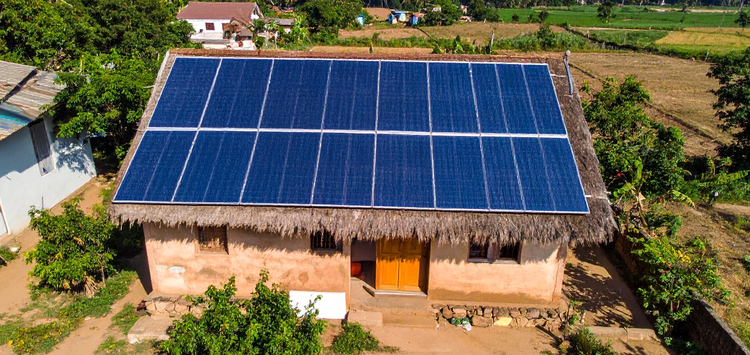
This central government initiative aims to provide free or highly subsidized rooftop solar systems to eligible rural households, especially in remote and underserved areas of Uttar Pradesh. You can avail the PM Surya Ghar Muft Bijli Yojana in 5 simple steps online.
Eligibility criteria:
- Must be a rural household without reliable grid electricity access.
- Priority given to low-income families and households under government welfare schemes.
- Beneficiary must have a valid electricity connection or be eligible for one.
Subsidy structure:
- Subsidy covers the full or major part of the cost of rooftop solar panel installation.
- Designed to reduce electricity bills or provide power where grid access is limited.
How to apply for PM Surya Ghar Muft Bijli Yojana in UP?
- Registration: Apply through the official PM Surya Ghar portal or state-authorized centers
- Document submission: Upload identity proof, address proof, and electricity connection details
- Vendor selection: Installation by government-approved vendors
- Installation and inspection: System installed and inspected by authorities
- Subsidy disbursement: Subsidy is credited directly to vendors or beneficiaries based on scheme norms
Step 1: Apply through PM Surya Ghar official portal or state-authorized centers.
Step 2: Upload identity proof, address proof, and electricity connection details.
Step 3: Select a government-approved vendor for installation.
Step 4: Installation and inspection by DISCOM or UPNEDA authorities.
Step 5: Subsidy disbursed directly to vendor or applicant’s account as per scheme rules.
Documents required:
- Aadhaar card of the household head
- Proof of rural residence (ration card/voter ID)
- Latest electricity bill (or proof of eligibility for new connection)
- Bank account details (passbook copy)
- Proof of inclusion under government welfare schemes (if applicable)
- Photograph of applicant
- Vendor agreement (from approved list)
2. PM KUSUM Scheme – Solar Pump Subsidy
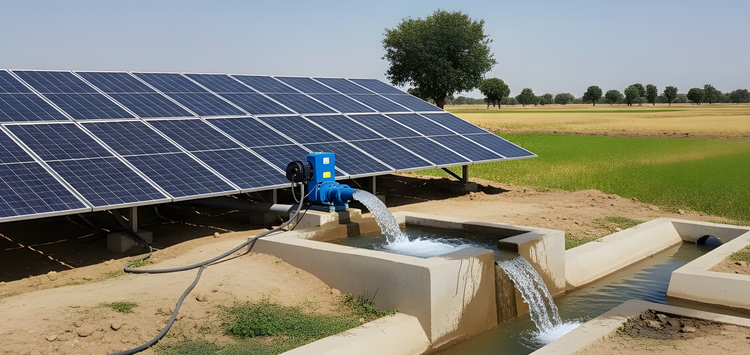
The PM KUSUM Scheme aims to provide farmers with solar-powered irrigation solutions, reducing their dependence on conventional energy sources and promoting sustainable agriculture. To avail more information about the central scheme, you can also visit the PM KUSUM Portal.
Eligibility criteria:
- Farmer status: Must be a farmer with cultivable land.
- Land ownership: Must own land with a functional borewell or open well.
- Pump capacity: Subsidies are available for pumps ranging from 3 HP to 10 HP.
- Caste category: Additional subsidies are available for farmers from Scheduled Tribes, Vantangiya, and Musahar communities.
Subsidy structure:
- For Scheduled Tribes, Vantangiya, and Musahar Farmers: 100% subsidy on the solar pump.
- For other farmers: 30% subsidy from the central government, 60% from the state government, and the farmer contributes 10% of the total cost.
How to apply for PM KUSUM solar pump subsidy scheme in UP?
Step 1: Apply through UPNEDA’s official KUSUM portal
Step 2: Upload required documents (Aadhaar, land proof, etc.)
Step 3: Choose an MNRE-approved vendor for pump installation
Step 4: Pay 10% farmer contribution online (if applicable)
Step 5: Installation and inspection by UPNEDA officials
Step 6: Subsidy disbursed to the vendor as per scheme guidelines
Documents required:
- Aadhaar card of the farmer
- Proof of land ownership (Khatauni, land records)
- Recent photograph
- Bank account passbook
- Existing electricity connection number (if available)
- Caste certificate (if applying under SC/ST/Vantangiya/Musahar quota)
- Details of existing well/borewell
3. PM KUSUM Scheme – Component C-2 (Feeder level solarization)
This component focuses on solarizing agricultural feeders to provide reliable power supply to farmers.
Eligibility criteria:
- Farmer status: Must have a functional agricultural feeder connection.
- Location: Applies to areas identified for feeder-level solarization.
How to apply for PM KUSUM Component C-2?
Step 1: Apply through UPNEDA’s official KUSUM website
Step 2: Upload required land ownership, feeder connection, and identity documents
Step 3: Participate in the selection/allocation process as per MNRE and state bidding rules
Step 4: Await installation and connection at feeder level
Step 5: Final approval and commissioning by authorities
Documents required:
- Aadhaar card
- Agricultural electricity feeder connection details
- Land documents
- DISCOM NOC (if required)
- Farmer consent form
- Any additional project-specific documentation (as requested by DISCOM or UPNEDA)
4. Solar subsidy for commercial and industrial sectors
Commercial and industrial units can also avail subsidies through central government initiatives encouraging larger solar projects.
Eligibility Criteria:
- Entity type: Registered commercial or industrial entity.
- Project size: Larger installations beyond residential scale.
How to apply for commercial and industrial sector solar subsidy in UP?
Step 1: Apply through the MNRE portal or UPNEDA (for local facilitation)
Step 2: Upload company documents, project proposals, and financials
Step 3: Wait for project assessment and approval from MNRE/state nodal agency
Step 4: Installation through MNRE-approved EPC vendors
Step 5: Inspection and subsidy release as per C&I scheme terms
Documents required:
- Company registration certificate
- PAN card and GST details
- Power consumption records (last 6–12 months)
- Land ownership or lease agreement
- Detailed project proposal and site layout
- Financial statements or bank solvency proof
- Board resolution (if applicable)
By combining these central government schemes with UP’s state subsidies, solar power becomes more accessible and affordable for a wide range of users.
Empowering Uttar Pradesh with rooftop solar solutions
Tata Power is leading the charge in Uttar Pradesh's solar revolution through its ambitious Ghar Ghar Solar, Tata Power ke Sang initiative. Launched in July 2024 from Varanasi, this campaign aims to provide every home in the state with clean, affordable, and sustainable energy solutions.
Key highlights:
- Significant subsidies: Homeowners can avail up to ₹1,08,000 in subsidies for rooftop solar installations. This includes ₹78,000 from the central government and an additional ₹30,000 from the state government for systems up to 3 kW.
- Advanced technology: Tata Power employs high-efficiency bifacial solar panels that capture sunlight on both sides, maximizing energy generation even in limited spaces.
- Quick turnaround: The company ensures a swift installation process, with typical setups completed within seven days from inquiry to commissioning.
- Extensive reach: With a vast network of channel partners, Tata Power is well-equipped to handle installations across Uttar Pradesh, making solar energy accessible to a broader audience.
Financial benefits: A 3 kW rooftop system can generate approximately 12 units of electricity daily, leading to annual savings of up to ₹27,000 on electricity bills. Additionally, net metering allows homeowners to sell excess power back to the grid, further enhancing savings.
Tata Power also supports customers through the entire subsidy application process, making it easy and hassle-free to benefit from the solar subsidy in UP.
Ready to make the switch to clean, affordable solar energy? Visit now!
Bottom line
Here is the big picture: sunlight is free, and now the path to using it is simple. With the solar subsidy in Maharashtra, a rooftop system costs less, pays back faster, and shields you from bill shocks. You get cleaner power, steady comfort during outages, and the quiet pride of making your own electricity. The steps are straightforward. Check the MNRE portal, review your DISCOM checklist, and talk to a trusted installer. One small start today can unlock years of savings and a lighter footprint. Say yes to a roof that earns its keep and a future that runs on sunshine.
<h2 id="accordion-heading">Frequently asked <span class="dark-teal">questions</span></h2>
<p> The frequently asked questions section is a reliable source for unlocking answers to some of the most crucial inquiries. Please refer to this section for any queries you may have. </p>
Sources
https://pmsuryaghar.gov.in/#/
https://amplussolar.com/blog/solar-system-price-subsidy-in-uttar-pradesh/#:~:text=The%20National%20Portal%20for%20Rooftop%20Solar%20is,the%20online%20processing%20and%20disbursement%20of%20subsidy.
https://amplussolar.com/blog/solar-system-price-subsidy-in-uttar-pradesh/
https://upnedasolarrooftopportal.com/
https://upneda.org.in/
https://sunsure-energy.com/solar-panel-subsidy-in-uttar-pradesh-2024/
https://solariumenergy.in/residential/solar-in-uttar-pradesh/
https://solar.upneda.in/
https://www.india.gov.in/spotlight/pm-surya-ghar-muft-bijli-yojana
https://freyrenergy.com/solar-subsidy-in-up-eligibility-criteria-and-application-process/
https://www.india.gov.in/spotlight/pm-surya-ghar-muft-bijli-yojana#:~:text=The%20subsidy%20has%20been%20capped,to%20Discoms%20under%20PM%20Suryagha
https://pmsuryaghar.gov.in/#/
https://sunsure-energy.com/solar-panel-subsidy-in-uttar-pradesh-2024/#:~:text=Both%20the%20central%20and%20state%20governments%20provide%20subsidies%20on%20solar,for%20installing%20a%20solar%20system.
https://www.smartprix.com/bytes/uttar-pradesh-solar-subsidy-in-2025-a-complete-guide/