Introduction
How much can one national rooftop scheme change in two years? By 12 August 2026, PM Surya Ghar Muft Bijli Yojana had commissioned 14.8 GW of rooftop solar capacity across India, according to the Press Information Bureau. That scale turns a government subsidy into something far more tangible: homes generating part of the electricity they use.
For a household considering rooftop solar, the important question is what comes next. From eligibility and subsidy to DISCOM approval, installation and commissioning, understanding the journey before you begin can make the move to solar far easier to navigate.
What is PM Surya Ghar Muft Bijli Yojana?
PM Surya Ghar Muft Bijli Yojana is a Government of India scheme that supports eligible residential consumers in installing rooftop solar systems through Central Financial Assistance (CFA).
The scheme aims to bring rooftop solar to one crore households across India. Launched in February 2024 with an outlay of ₹75,021 crore, it is available to residential consumers with a grid-connected electricity connection. Through rooftop solar, eligible households can access up to 300 units of free electricity a month. The scheme will continue through FY 2026–27.
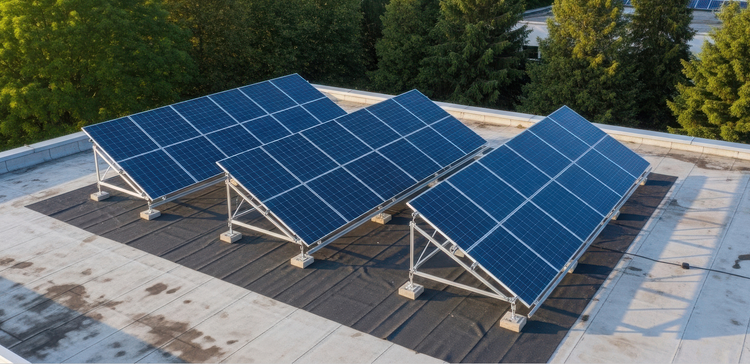
<p class="image-caption">Making rooftop solar affordable with PM Surya Ghar Muft Bijli Yojana</p>
What are the benefits of the PM Surya Ghar Yojana?
A key benefit of the PM Surya Ghar Yojana is the financial support it provides for installing rooftop solar. The subsidy varies by solar system size, which households can choose based on their electricity consumption and energy needs.
A key benefit of the PM Surya Ghar Yojana is the financial support it provides for installing rooftop solar. The subsidy varies by solar system size, which households can choose based on their electricity consumption and energy needs.
The scheme also makes the remaining investment easier to finance. Eligible households can access collateral-free loans from nationalized banks at repo rate plus 50 basis points, which stood at 5.75% per annum in July 2026, with a tenure of up to 10 years. The applicable rate may change with the repo rate.
Rooftop solar can also create value beyond lower electricity purchases. Subject to applicable state and DISCOM regulations, households can export surplus electricity to the grid. In FY2024-25, more than 12 lakh households earned ₹421 crore collectively from surplus power sales under the scheme.
Who is eligible for the PM Surya Ghar Yojana?
Before applying for the PM Surya Ghar Yojana, check whether your household meets the key eligibility requirements -
Citizenship
The applicant should be an Indian citizen.
Residential property
The applicant should own a house with a rooftop suitable for installing solar panels.
Electricity connection
The household should have a valid grid-connected electricity connection with the local DISCOM.
Previous subsidy
The household should not have already availed another government subsidy for rooftop solar.
Aadhaar requirement
Beneficiaries are now required to undergo Aadhaar authentication or furnish proof of possession of an Aadhaar number. An individual who has not yet been assigned an Aadhaar number must apply for enrolment as prescribed under the notified requirements.
What documents are required for PM Surya Ghar Yojana?
The documents and details you need can vary depending on the stage of your application and your DISCOM’s requirements. Keep these key items handy as you move through the process -
- Valid electricity Consumer Account Number
- Aadhaar details, as applicable
- Bank account proof, such as a cancelled cheque, passbook or bank e-statement
- Required geo-tagged photographs before and after installation
- Applicable metering agreement and related DISCOM documents
Some of these are required only after the rooftop solar system has been installed.

<p class="image-caption">Solar-powered savings under PM Surya Ghar Yojana</p>
How can you apply for the PM Surya Ghar Yojana subsidy?
Applying for the subsidy is simple when you know what to do and have the right details ready before you begin.
Register and apply on the National Portal
Use your valid electricity consumer account details to register on the PM Surya Ghar National Portal and submit the rooftop solar application. The portal generates an application ID and provides tools to help consumers understand suitable system configurations.
Choose a registered solar vendor
Select a vendor registered on the National Portal and finalize the system design, components, capacity and commercial terms. For systems up to 10 kW, technical feasibility is deemed accepted under the revised framework. Where the provision is not yet operationalized by the relevant regulator or DISCOM, existing state requirements may still apply.
Get the rooftop solar system installed
The registered vendor installs the system according to the scheme’s technical and safety specifications. For CFA eligibility, the installation must comply with the applicable Domestic Content Requirement.
Update the portal and complete DISCOM verification
After installation, system details and required documents, including prescribed geo-tagged photographs, are uploaded to the portal. The DISCOM physically inspects the system, completes the applicable metering process, and approves the application for CFA. The government has also simplified the process by integrating the net-metering agreement into the National Portal application.
Redeem the CFA
Once the required documents and DISCOM verification are complete, the eligible CFA amount is activated through the portal’s e-token mechanism. The consumer redeems it through the portal after providing valid bank details and supporting bank account proof. Current guidelines provide for CFA processing within 15 days of DISCOM approval.
Why can a PM Surya Ghar subsidy application get rejected?
Small errors can hold up an otherwise eligible application. Tata Power’s detailed rejection guide identifies documentation, installation and verification issues that applicants should check before submitting or resubmitting a claim.
1. Mismatched details across electricity, identity or banking records
2. Selecting an ineligible or non-registered vendor
3. Using equipment that does not meet scheme requirements
4. Missing or incorrect installation documents and photographs
5. Errors found during DISCOM inspection or commissioning
6. Incorrect bank details that delay CFA processing
For a detailed breakdown of the causes and possible fixes, see Tata Power’s guide to 13 reasons a PM Surya Ghar application may be rejected.
The Tata Power advantage
A government subsidy can reduce the initial cost of rooftop solar, but the system still needs the right design, installation, and long-term support. Tata Power shows how its rooftop ecosystem has expanded alongside India’s residential solar market.
1. 4.8+ GWp of total solar rooftop installed capacity, including 1.7 GWp installed during FY26
2. 3.7 lakh+ rooftop installations completed across customer segments
3. Presence across 700+ cities and towns
4. An on-ground network of 650+ channel partners, 3,000+ retailers and 265+ authorized service centres
5. Partnerships with 16 financial institutions to widen access to rooftop solar financing
6. 25-year module warranty, along with tailored system design and end-to-end service for customers
Bottomline
PM Surya Ghar changes the rooftop from unused square footage into something more useful: an energy asset. The subsidy may lower the entry barrier, but the bigger opportunity is giving households a greater role in producing the electricity they consume.
Making that transition involves more than receiving financial assistance. Choosing a suitable system size, keeping documentation accurate, working with a registered installer and completing the required installation and verification steps can help set up the rooftop solar system for the years ahead.
The subsidy may begin the solar journey. Its real value is measured in every electricity bill that comes after.

Thinking of making the switch to solar?
<h2 id="accordion-heading">Frequently asked <span class="dark-teal">questions</span></h2>
Sources
1. PM Surya Ghar: Muft Bijli Yojana – National Portal, Ministry of New and Renewable Energy (MNRE)
2. MNRE – Guidelines for PM Surya Ghar: Muft Bijli Yojana
3. MNRE – Operational Guidelines for Central Financial Assistance to Residential Consumers
4. MNRE – Amendment to CFA Guidelines for Residential Consumers, July 2025
5. PIB, 25 March 2026 – PM Surya Ghar Yojana Drives Energy Transition
6. PIB, 28 July 2026 – PM Surya Ghar Makes Rooftop Solar Accessible with Subsidy Support and Low-Interest Financing
7. PIB, August 2026 – Solar Power: Scaling Up, Reaching More People
8. Tata Power Integrated Annual Report 2025-26 – Business Cluster Review
9. PM Surya Ghar application rejected: 13 reasons and fixes