Materiality assessment
Reassessing what
matters most
Sustainability remains integral to our long-term vision of enabling a clean, reliable, and inclusive energy future. Materiality assessment is a cornerstone of our sustainability and strategic planning process. Conducted once every three years, it enables us to systematically identify, evaluate, and prioritise Environmental, Social and Governance (ESG) topics that are most relevant to our business success and stakeholders.
As part of strengthening our ESG strategy and aligning with evolving stakeholder expectations, we undertook a comprehensive Double Materiality Assessment (DMA) during the year. DMA is a framework that assesses sustainability topics from both an impact and financial perspective, enabling a holistic view of material ESG issues.
Our approach was informed by leading global sustainability standards and frameworks, including the European Sustainability Reporting Standards (ESRS), Global Reporting Initiative (GRI), Sustainability Accounting Standards Board (SASB), and other benchmarks such as DJSI, MSCI and Sustainalytics. Peer benchmarking within the utilities and energy sector further ensured a robust and forward-looking outcome.
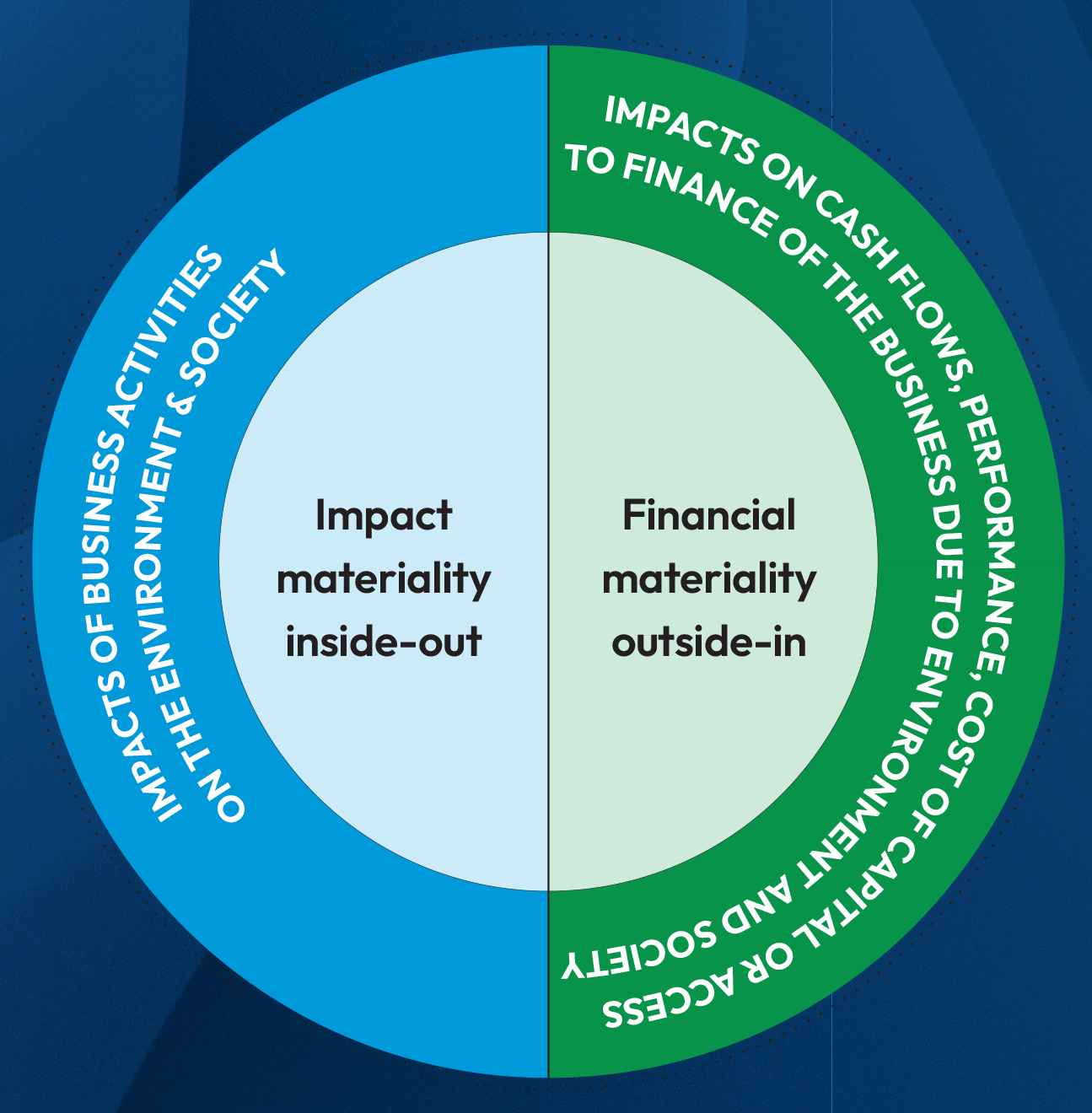
Double materiality reflects two complementary dimensions:
- the impact of our operations on the environment and society (impact materiality), and
- the impact of sustainability-related factors on the Company’s financial performance (financial materiality).
This dual lens has enabled us to deepen our understanding of how our business both influences and is influenced by the broader sustainability landscape, particularly in the context of the global energy transition.
Assessment process
To ensure a comprehensive and structured approach, we followed a multi-step methodology:
Identification of topics
A broad range of ESG topics relevant to operations was identified through regulatory review, global sustainability trends, prior assessments, peer disclosures, and recognised ESG frameworks./p>
Double materiality evaluation
Each topic was assessed across financial and impact dimensions to identify key risks, opportunities, and external impacts on environment and society.
Identification of Impacts, Risks and Opportunities (IROs)
For each material topic, the Company systematically evaluated associated impacts, risks, and opportunities, including environmental and social impacts as well as financial implications arising from transition risks, regulatory changes, market dynamics, and emerging energy sector opportunities.
Stakeholder engagement
Engagement was undertaken with employees, customers, investors, suppliers, and community representatives to incorporate diverse perspectives and expectations.
Scoring and prioritisation
A structured scoring methodology was applied to evaluate and prioritise topics based on relative significance.
Materiality matrix development
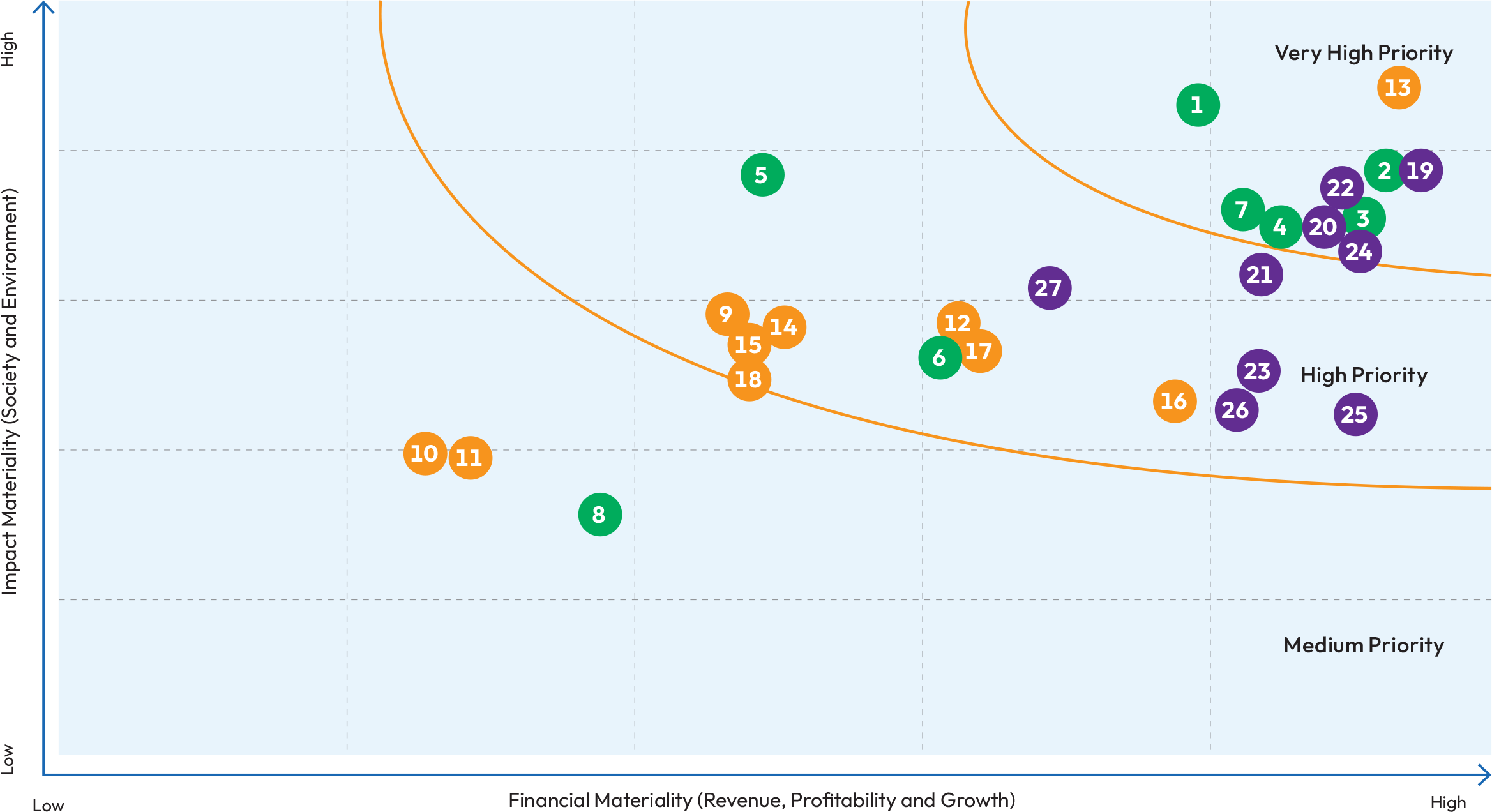
Outcomes were consolidated into a double materiality matrix, providing a visual representation of topic importance from both financial and impact perspectives.
Leadership concurrence
The outcomes of the double materiality assessment, including the prioritised ESG topics and identified Impacts, Risks and Opportunities (IROs), were reviewed by CSO. The findings were further presented to the apex leadership under the ESG and sustainability governance agenda for validation and strategic alignment. This review ensured that the identified material topics are consistent with the Company’s long-term vision, risk management priorities, and sustainability commitments, and were formally approved for integration into business strategy, disclosures, and decisionmaking processes.
Assessment outcomes
Based on the latest assessment, material topics have been refined to better reflect evolving risks, opportunities, and stakeholder priorities. During the year, two new material topics were identified: Product Design & Lifecycle Management and Access and Affordability, strengthening the focus on sustainable product stewardship and inclusive energy access.
In addition, select material topics have been renamed to better reflect their scope and intent. Socially Responsible Employer has been revised to Responsible Employer, underscoring the Company’s commitment to upholding its legacy of trust, ethics, and people-centric values while fostering a safe, inclusive, and supportive workplace for a diverse and multi-generational workforce. As a responsible employer, the Company prioritises employee well-being through strong health, safety, and environmental management practices that safeguard employees from occupational and environmental risks.
Similarly, Digitalisation and Cyber Security has been updated to Digitalisation, Data Privacy and Cyber Security to explicitly recognise the importance of protecting personal and operational data of employees, customers, partners, and other stakeholders. This expanded scope reflects evolving regulatory expectations and reinforces the Company’s commitment to responsible data governance, confidentiality, and resilience against cyber threats.
These updates reflect changing industry dynamics, regulatory developments, and alignment with stakeholder expectations.
Internal stakeholders
External stakeholders
Double materiality matrix
Our material topics
- 1. Climate strategy
- 2. Emissions management
- 3. Energy management
- 4. Continuous and affordable green power
- 5. Safeguarding biodiversity
- 6. Hazardous and toxic waste management
- 7. Water and effluent management
- 8. Product design and lifecycle management*
- 9. Access and affordability*
- 10. Diversity and Inclusion in workplace
- 11. Responsible employer
- 12. Employee retention, engagement and talent development
- 13. Occupational Health and Safety
- 14. Labour management
- 15. Human rights
- 16. Customer relationship management
- 17. Building sustainable communities
- 18. Responsible supply chain
- 19. Creating economic value
- 20. ESG governance
- 21. Risk management and BCDMP (Business Continuity & Disaster Management Plan)
- 22. Ethical business conduct
- 23. Transparency and accountability
- 24. Digitalisation, data privacy and cyber security
- 25. Regulatory compliance and landscape
- 26. New business opportunities
- 27. Innovation and collaborations
*ESG topics newly added based on the 2025-26 double materiality assessment.
Impact, risk and opportunities of very high priority issues
| Material issues | Impact | Upstream / Operation / Downstream | Risk / Opportunity | Timeframe |
|---|---|---|---|---|
| Climate strategy |
Upstream: High
Own operation: High
Downstream: High
|
|
||
| Emissions management |
Upstream: High
Own operation: High
Downstream: Low
|
|
||
| Energy management |
Upstream: Medium
Own operation: High
Downstream: Low
|
|
||
| Continuous and affordable green power |
Upstream: Low
Own operation: High
Downstream: High
|
|
||
| Water and effluent management |
Upstream: Medium
Own operation: High
Downstream: Low
|
|
||
| Occupational Health and Safety |
Upstream: High
Own operation: High
Downstream: Low
|
|
||
| Creating economic value |
Upstream: NA
Own operation: High
Downstream: NA
|
|
||
| ESG governance |
Upstream: NA
Own operation: High
Downstream: NA
|
|
||
| Ethical business conduct |
Upstream: NA
Own operation: High
Downstream: NA
|
|
||
| Digitalisation, data privacy and cyber security |
Upstream: NA
Own operation: High
Downstream: Medium
|
|
Alignment of material issues with SBOs and UN SDGs
| Material topics | How are we responding | SBO mapping | UN SDG alignment |
|---|---|---|---|
| M1: Environment — Climate Change | |||
|
|
S1
S2
|
|
| M2: Environment — Environmental Stewardship | |||
|
|
S2
|
|
| M3: Social & Governance — Customer Engagement | |||
|
|
S4
S5
|
|
| M4: Social — Workforce Well-being | |||
|
|
S6
|





|
| M5: Social — Social Responsibility | |||
|
|
S6
|
|
| M6: Social — Supply Chain | |||
|
|
S2
|
|
| M7: Governance — Corporate Governance | |||
|
|
S2
S8
|

|
| M8: Governance — Future Readiness and Business Continuity | |||
|
|
S1
S2
S3
S4
S5
S7
S8
|
|