I am looking for

Badge of honor

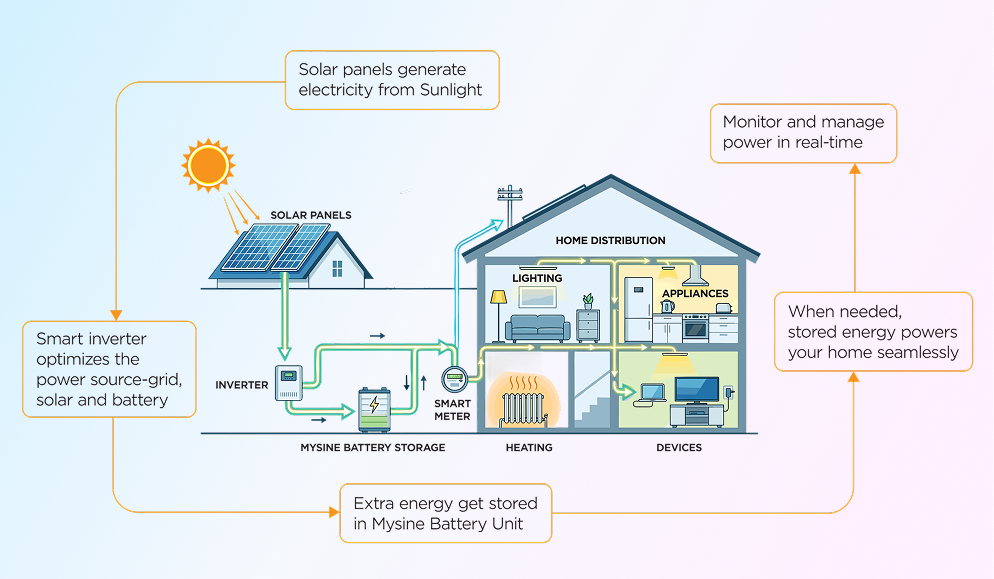
Dual charging using both solar and the grid
Automatic storage of excess solar energy
Instant backup & seamless switching during power cuts
Introducing a battery energy storage system for power on demand

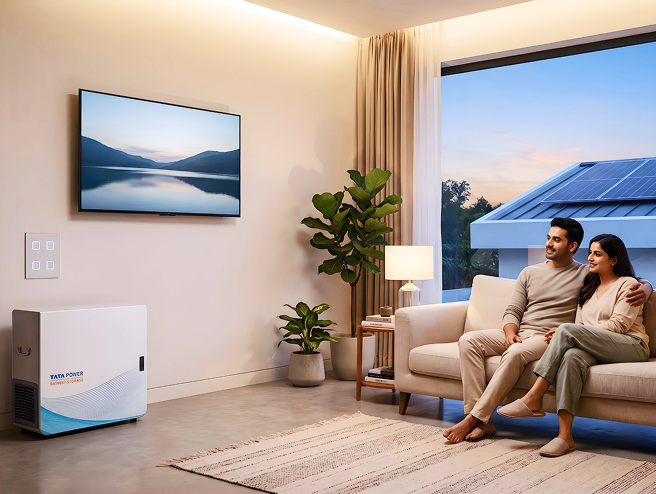
An energy storage system built for power on cue
Think solar clocks out at sunset? Tata Power’s battery energy storage system (BESS) keeps homes, industries and utilities power-ready for peak demand and unexpected outages
Battery energy storage systems for every space and scale
Store surplus power for when demand rises with energy storage systems built for high efficiency and intelligent energy management
- MySine
- Powerhub
- Prime
- Prime Plus
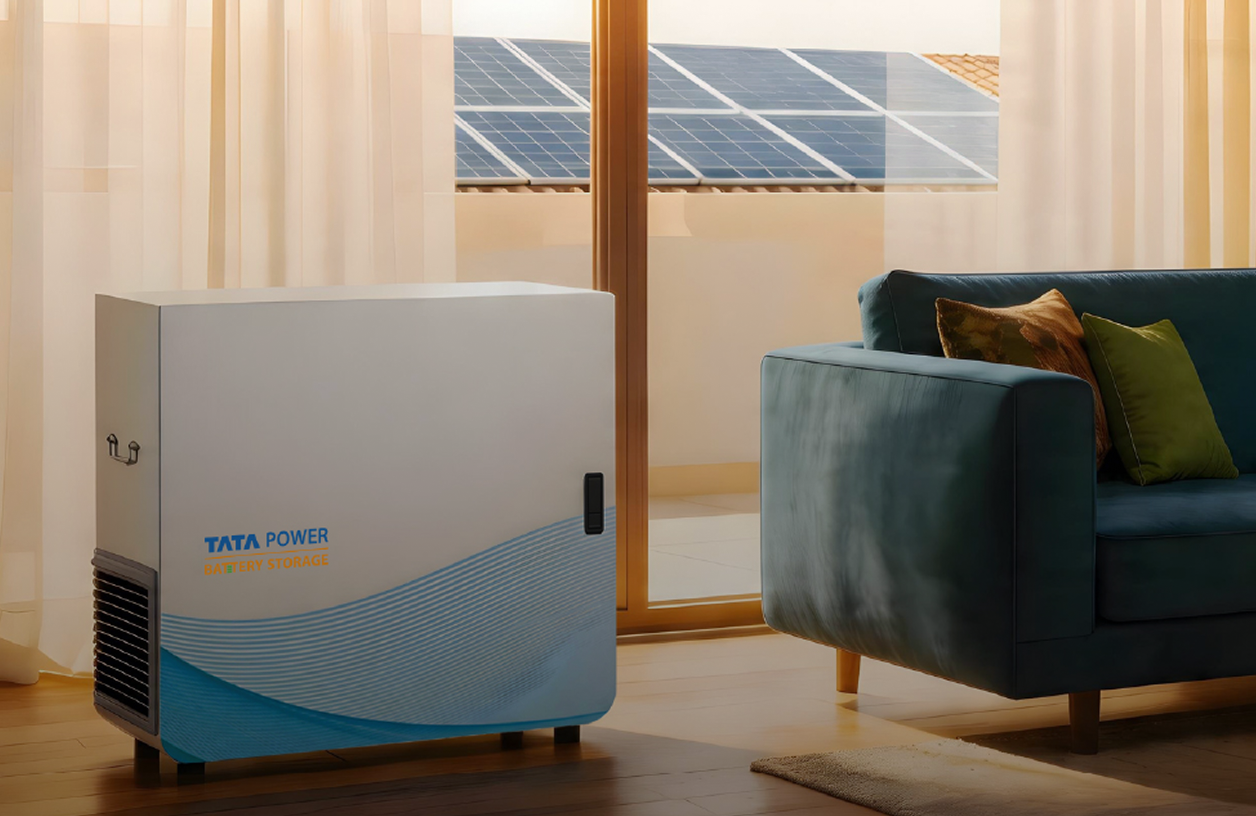
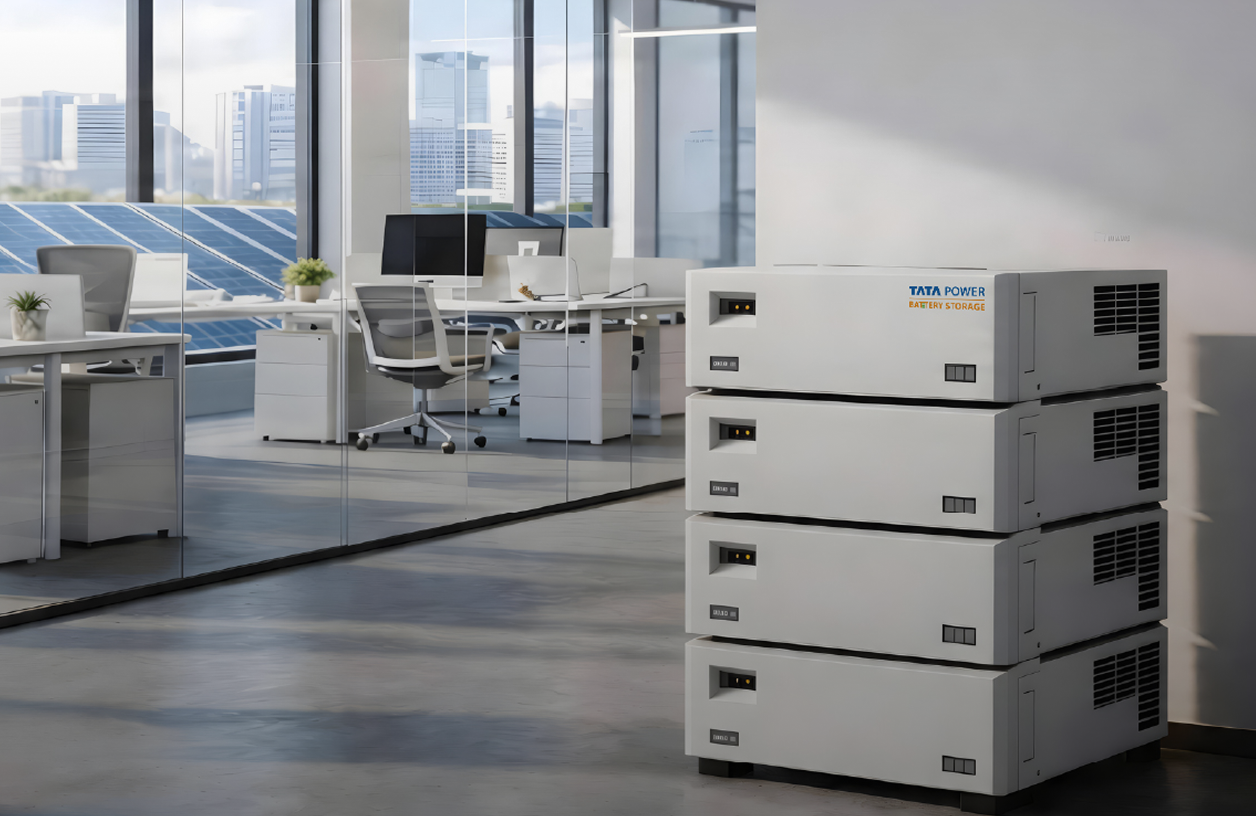
- Xtreme - Commercial
- Max - Industrial
- Ultra - Utility
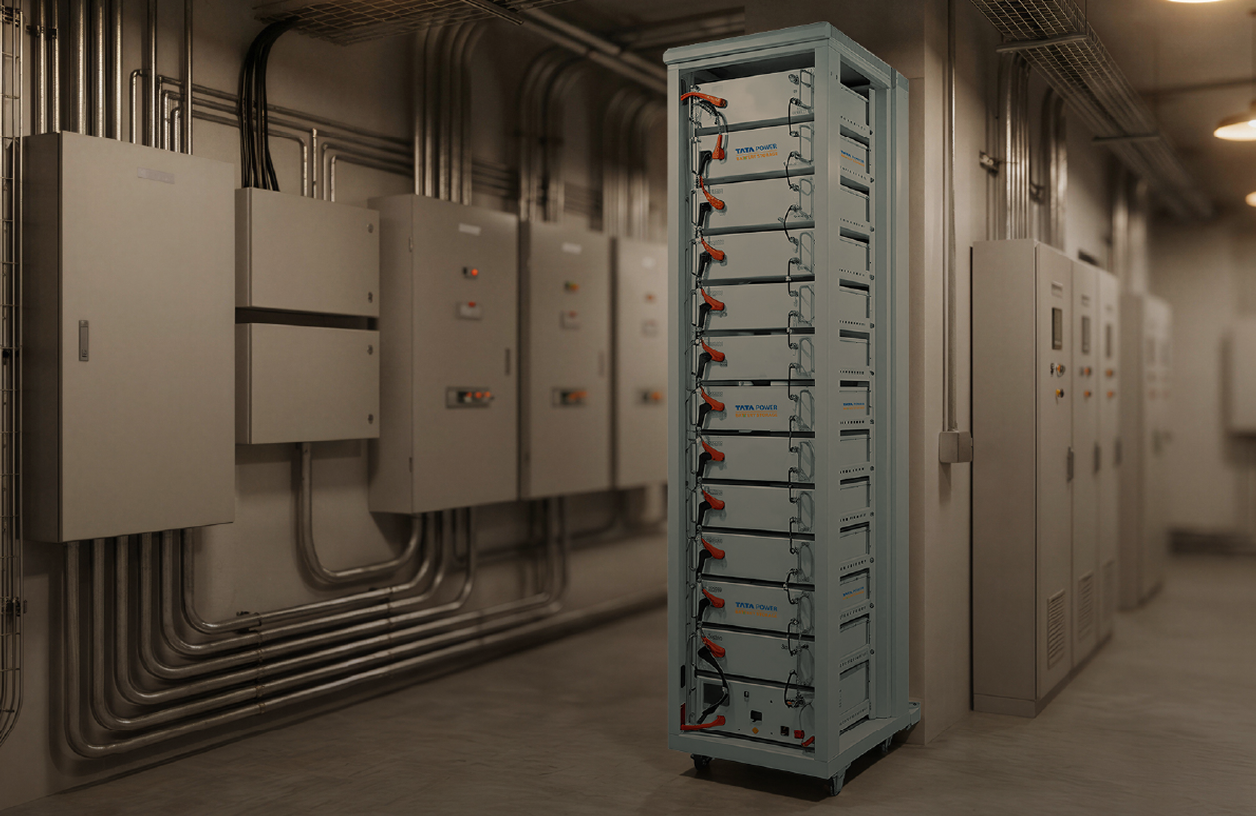
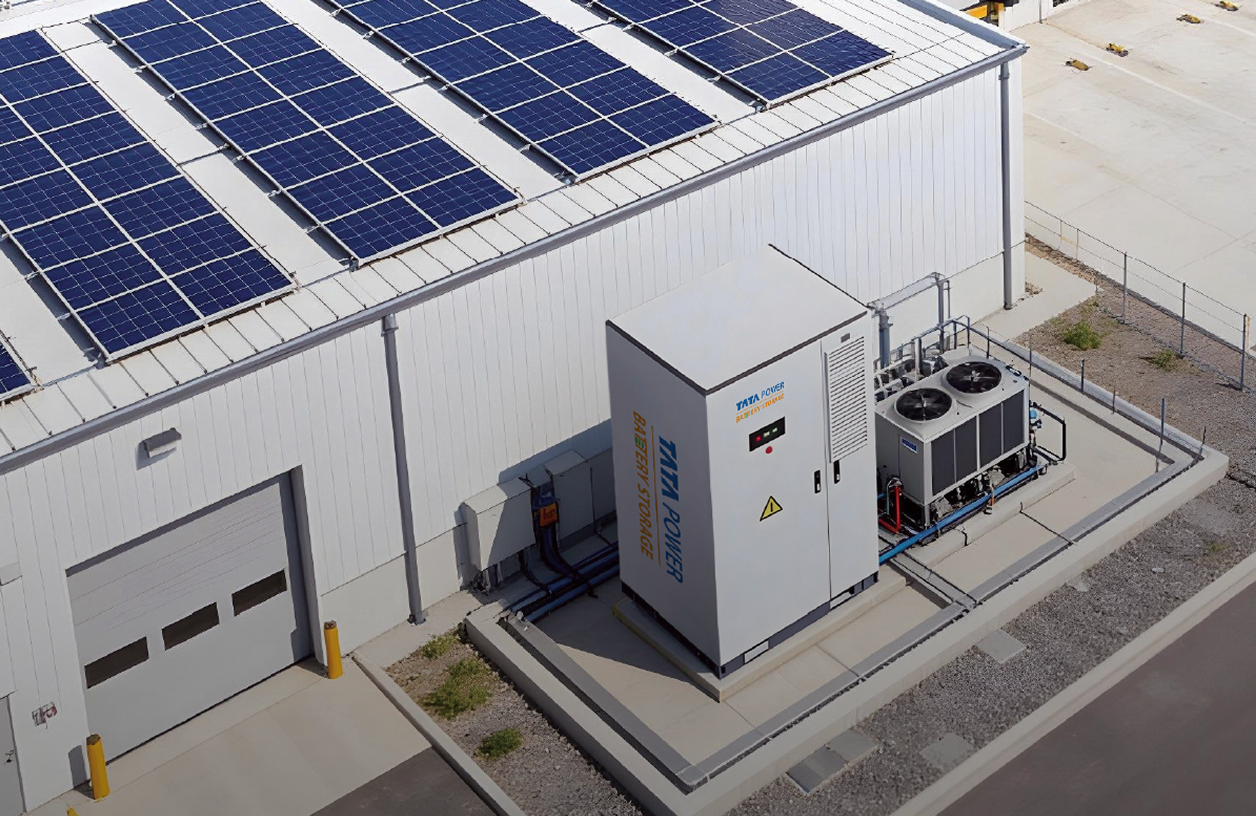
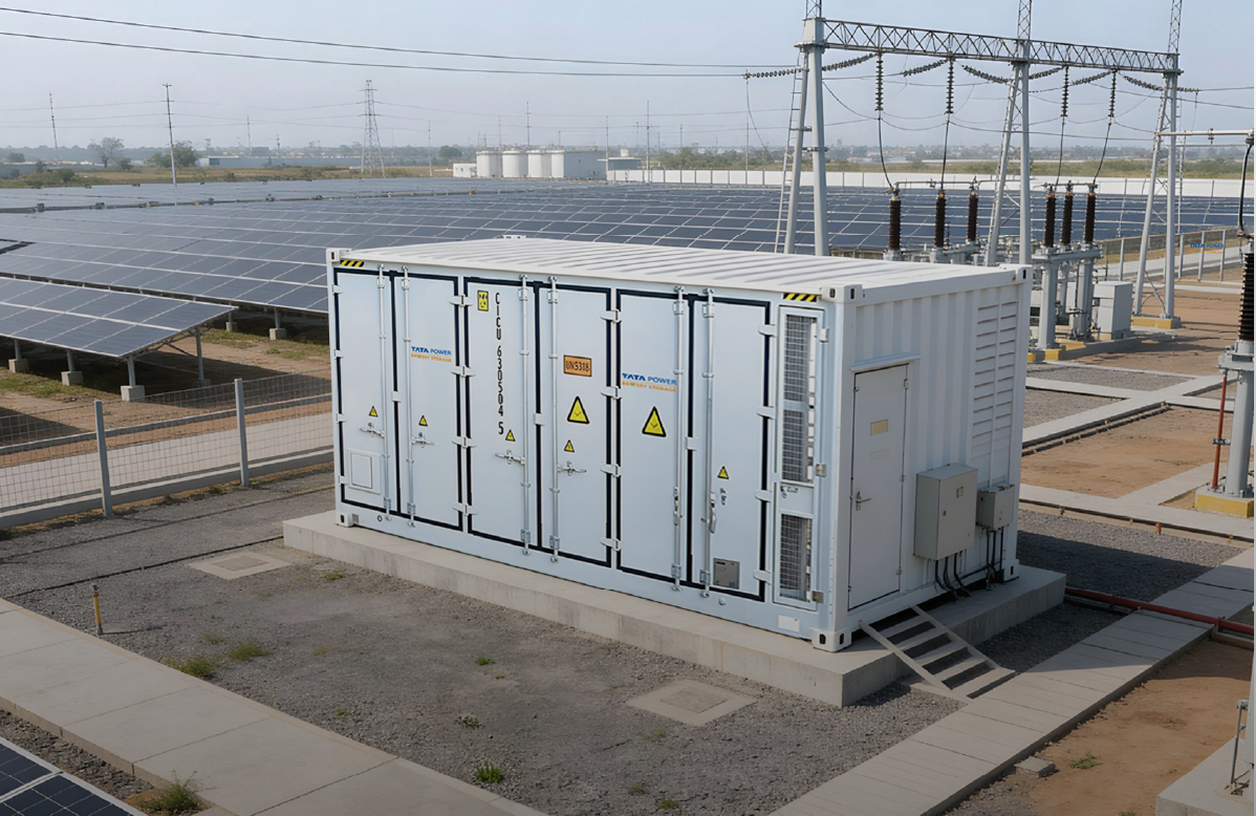
How does BESS store and supply electricity?
Solar battery storage that puts daylight on standby, keeping your home powered through unexpected grid interruptions
Built for performance. Designed for reliability
A smart battery energy storage system designed for consistent performance and long-term dependability, with zero maintenance and greater savings on energy bills

Power anytime

Instant switch

Expandable for growth

Run heavy-duty appliances seamlessly

Full control on mobile

Zero maintenance

Save big on bills

Handles off-grid & unstable supply
Power anytime
Instant switch
Expandable for growth
Run heavy-duty appliances seamlessly
Full control on mobile
Zero maintenance
Save big on bills
Handles off-grid & unstable supply
Discover the BESS advantage
Choosing the right battery goes beyond backup. It can mean longer life, better performance and more value from stored energy
| Features | LFP battery advantage | Traditional power backup |
|---|---|---|
| Battery type | LFP (Lithium Iron Phosphate) | VRLA (Lead Acid) |
| Switchover time | Instant, less than 10 ms | Slower, 10 to 20 ms |
| Battery life | Long. 8-10 years (6,000+ charge cycles) | Short. 3-5 years (2,000 charge cycles) |
| Energy storage | 3x more storage in the same space | Much lower storage |
| Size & weight | Compact & light | Bulky & heavy |
| Usable energy per cycle | 85–90% | 50–70% |
| Maintenance | Zero maintenance | Regular water top-up and checks needed |
| Charging time & efficiency | Fast – 2 to 4 hours | Slow – 6 to 9 hours |
| Eco-friendliness | Safe, non-toxic, recyclable | Contains toxic lead and acid |
| Battery protection | Intelligent battery protection (BMS enabled) | None |
Why are businesses moving beyond standalone energy solutions?
Commercial battery storage solutions help businesses navigate rising costs, power disruptions, peak demand and sustainability goals
Rising electricity costs
Unpredictable grid tariffs impacting margins
Downtime risk
Power disruptions affecting operations
Peak demand charges
High penalties during load spikes
ESG mandate
Sustainability compliance to reduce carbon footprint
Why choose Tata Power Solaroof
Enjoy reliable backup, lower electricity bills, app-based monitoring, scalable storage, and expert support across 700+ cities and towns with our LFP-powered battery energy storage system

37+ years of EPC expertise
Deep industry experience delivering reliable solar solutions across India

4 lakh+ customers
Trusted by homeowners and businesses across India

4.3+ GW rooftop installations
Proven scale and capability in solar rooftop execution

700+ channel partners
Strong on-ground presence ensuring seamless service and reach

Nationwide service network
Reliable support wherever you are

Easy financing options
Flexible plans to make switching to solar simple and affordable
Frequently asked questions
The frequently asked questions section serves as a reliable source for unlocking answers to some of the most crucial inquiries. Please refer to this section for any queries you may have
- General
Yes. A BESS (Battery energy storage system) can store surplus electricity generated by rooftop solar panels and supply it after sunset, during low-sunlight periods or during a power cut. This solar battery storage capability helps households and businesses use more of the clean energy they generate and rely less on grid power. The battery capacity must be matched to the solar system, electricity consumption and required backup duration, since some energy is lost during charging and discharging.
A BESS can charge during solar or lower-demand hours and discharge when electricity demand and grid draw increase. By supplying part of the load during these periods, the battery storage system helps reduce peak demand. This can lower demand charges or avoid costlier peak-hour electricity for businesses and industries, depending on their state, DISCOM, consumer category and tariff structure. The potential benefit should be assessed using the facility’s load profile and applicable Time-of-Day tariff.
Yes. BESS can be scaled and configured for different applications in India. A residential battery energy storage system can increase solar self-consumption and provide backup for essential home loads. Commercial battery storage systems can support business continuity and manage peak demand, while an industrial battery storage system can serve larger loads and critical operations. The required capacity, power output, backup duration and controls should be selected according to each site’s consumption pattern and operating priorities.
LFP stands for lithium iron phosphate, the cathode material used in this type of lithium-ion battery. It is widely used in a battery energy storage system (BESS) because it offers strong thermal stability, long cycle life and reliable performance across repeated charging and discharging. LFP generally has lower energy density than nickel-based lithium-ion chemistries, but stationary BESS applications often prioritise durability, safety and cost over having the smallest possible battery footprint.
Choosing the right battery energy storage system in India starts withunderstanding how and when you use electricity. Consider -
- Purpose: Solar storage, backup power or peak-demand management.
- System size: Required kWh capacity, kW output and backup duration.
- Site requirements: Sanctioned load, consumption pattern, availablespace and Indian weather conditions.
- Compatibility and safety: Existing solar system, inverter, DISCOMrequirements and certified components.
- Long-term value: Battery chemistry, efficiency, cycle life, monitoring,scalability, warranty, service support and lifecycle cost.
*Eligible for only residential systems as per the applicable State guidelines.


