



 CONTACT US


What sets us apart in solar EPC across India
A trusted solar EPC ecosystem that offers tailored project delivery, quality engineering, and sustainable, cost-efficient outcomes for long-term value

Unwavering trust
Offering reliable, efficient, and cost-effective solar solutions you can trust.

Customized approach
Identifying your requirements and goals, and finding the best solar solution for you.

Revolutionary innovations
Delivering innovative and effective solar solutions focused on quality engineering.

Quality engineering
Ensuring that our solar modules are built using the latest technologies for optimal performance and durability.

Eco-friendly solutions
Contributing to a greener environment and a reduced carbon footprint with meticulously planned solutions.

Substantial savings
Maximizing energy generation and contributing to reduced electricity bills.
Solar EPC footprint in India
From large-scale plants to rooftop systems, from domestic production to global module shipments, our solar EPC projects combine scale, quality, and sustainability to deliver real-world energy impact
12,000 MW
Total Renewable Utility Capacity
7400+ MWp
(*Executed & Under Pipeline) Third party EPC large projects
5,200+ MWp
Rooftop Projects Capacity
1,300 MW
Operational Wind Capacity
3,000 MW
Modules shipped globally
4,900 MW
Modules and cells production capacity

End-to-end solar EPC services
Our scope of solar EPC services covers site design, sourcing, installation, and commissioning, delivering turnkey solar infrastructure with proven workmanship and reliability

Engineering
We deliver complete engineering design for utility and distributed solar projects as part of the awarded scope. This includes full project design, electrical engineering and system planning required for large scale solar deployment.

Procurement
Procurement is backed by our in-house module manufacturing capability and established vendor ecosystem. Public EPC orders confirm procurement of modules, inverters, structures and all required solar project materials as part of turnkey delivery.

Commissioning
We handle testing, installation and commissioning activities before handing over the plant for commercial operation, ensuring reliable outcomes under our solar EPC services.

O&M
We also provide O&M services for commissioned solar plants, including performance monitoring and maintenance activities.

BoS Supply
As part of EPC procurement, we supply and integrate critical BoS components including module mounting structures, inverters, wiring and electrical systems. This is supported by publicly available EPC scopes mentioning supply and installation of complete solar PV project materials.
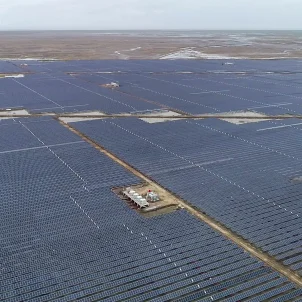
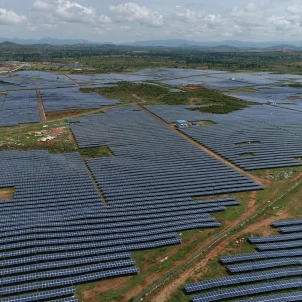
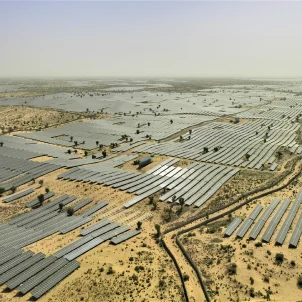
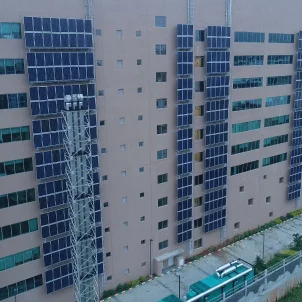
Engineering India’s largest solar EPC projects
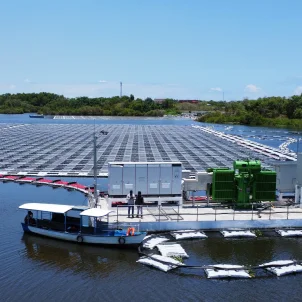
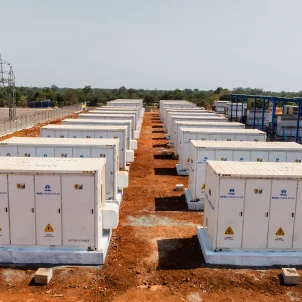
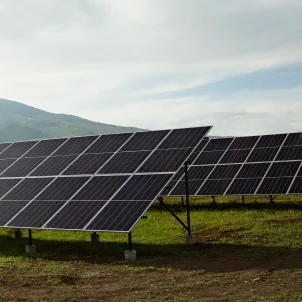
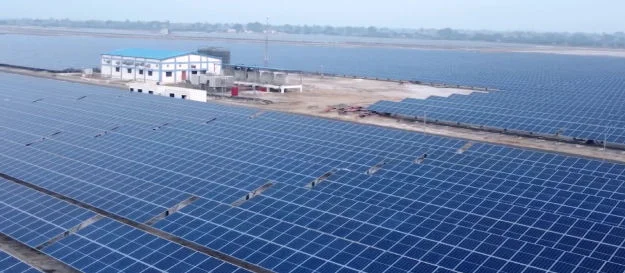
Our legacy is defined by large-scale EPC solar projects that accelerate India’s shift to renewable energy through robust ground-mounted infrastructure and dependable project delivery



Frequently asked questions
The frequently asked questions section is a reliable source for unlocking answers to some of the most crucial inquiries. Please refer to this section for any queries you may have.
- FAQ
Solar EPC means “Engineering, Procurement and Construction” for solar energy projects. Under a solar EPC setup, a single company takes charge of designing the solar installation (engineering), procuring all required equipment (procurement), and executing the installation including civil works, electrical wiring and final commissioning (construction). This model simplifies the process for clients because one contractor handles everything from start to finish. It reduces coordination hassles and ensures accountability through a single contract, which is why Solar EPC matters - it makes solar adoption faster, more reliable, and more cost-effective for businesses and consumers alike.
Reference - https://www.kpigreenenergy.com/blog/top-solar-epc-companies-india
Businesses across commercial and industrial sectors use solar EPC services. Companies with large rooftops such as factories, warehouses, office buildings or institutions often opt for commercial solar EPC to install rooftop systems. Industrial facilities needing high-capacity power generation choose industrial solar EPC for ground-mounted or large-scale solar plants. Leading firms like Tata Power Solar have served both commercial and industrial customers across India with such solutions
The timeline for a solar EPC project depends on its size and complexity. For a standard commercial rooftop installation in India, the process from initial site survey to final commissioning often completes in about 2–3 months. For larger ground-mounted or utility-scale solar plants (for example around 1 MW), project completion typically takes 4–6 months. Time taken can vary based on factors such as permitting delays, equipment delivery schedules, weather conditions, and grid-connection approvals.
Yes, many solar EPC companies in India offer operations and maintenance (O&M) services after installation. For example, Tata Power Solar provides ongoing support that includes -
- Remote performance monitoring through a state-of-the-art Network Operations Centre (NOC). This allows live tracking of plant performance and early detection of issues.
- Regular maintenance and upkeep of rooftop solar and other solar installations which includes routine inspections, solar panel cleaning, prompt repair, etc.
- Help and service support via their nationwide service network for both residential and commercial/industrial customers.
Solar EPC projects can qualify for subsidy schemes offered by Ministry of New and Renewable Energy (MNRE) when they involve rooftop solar installations under PM Surya Ghar Muft Bijli Yojana. Under this scheme residential rooftop solar systems are eligible for central financial assistance (CFA) up to specified limits. State-level policies can add further incentives depending on local regulations. For example, under the Delhi Solar Energy Policy subsidized rooftop solar installations also get state-capital subsidy
Solar EPC firms in India deliver a range of solar EPC solutions -
1. You can choose utility-scale solar EPC for large grid-connected power plants.
2. For open land projects there are ground mount solar power plants with ground mounted solar panels.
3. For water bodies there is floating solar EPC which installs panels on reservoirs or lakes.
4. For mixed needs hybrid solar EPC combines solar with other energy sources or storage for stability and flexibility.
Here are the key documents usually needed to begin a solar EPC project in India -
1. Proof of identity (e.g. Aadhaar, PAN, passport or other government-issued ID)
2. Proof of address and electricity connection (recent electricity bill or DISCOM consumer number)
3. Ownership or occupancy proof for the site (e.g. property deed, roof-ownership certificate or land lease documents)
4. Bank account details (passbook copy or cancelled cheque) for subsidies or payment transfer if applying under subsidy programmes
5. Technical specification documents of solar panels and inverters planned for installation, and any required grid-clearance or net-meter application certificates from local DISCOM.
Solar EPC firms follow strict solar EPC quality standards and solar EPC safety practices when delivering a project. They use only modules and inverters approved under Ministry of New & Renewable Energy (MNRE) and conform to national technical specifications for grid-connected rooftop and utility solar installations. Contractors also follow structural safety checks, proper earthing, surge protections, certified wiring standards, and mandatory quality-control protocols before commissioning the plant. By adhering to regulatory and technical norms they ensure safety, reliability and regulatory compliance for the solar EPC project requirements.
Solar EPC companies ensure solar EPC approvals and solar EPC regulatory compliance by obtaining all required state and local permissions before starting work. They register with the relevant electricity distribution company or nodal agency under rules issued by Ministry of New and Renewable Energy (MNRE) for grid-connected solar. They secure clearances such as grid-interconnection approval, net-metering consent, local building or land-use permits, and environmental or land-use clearances when needed especially for large ground-mounted or solar-park projects. Their compliance process follows national technical standards for modules and installation as per MNRE guidelines.
Utility-scale EPC refers to large solar power plants, typically ground-mounted projects with capacity of several megawatts and above. These installations feed power directly into the grid for widespread distribution. Commercial solar EPC serves businesses, industries or institutions and generally involves rooftop or ground-based installations sized to meet the energy needs of that facility. The main difference lies in scale, ownership and end customer: utility-scale supplies the grid at large while commercial solar EPC delivers energy for a specific enterprise or facility.
Yes, many EPC companies in India now offer hybrid solar EPC solutions that combine solar power with energy storage. These hybrid solar EPC packages typically integrate solar PV installation along with battery energy storage systems (BESS) so power is available beyond daylight hours. Such integrated solar plus storage projects follow the standards set by Ministry of New and Renewable Energy (MNRE) under its energy storage guidelines.
Floating solar EPC refers to an Engineering, Procurement and Construction contract specifically for solar power projects where photovoltaic panels are mounted on floating structures over water bodies (like reservoirs, lakes or ponds) instead of on land. A floating solar EPC project covers the design, supply of floats and panels, anchoring/ mooring system, electrical wiring, and installation of a floating solar power plant. Such floating solar systems are gaining ground in India to optimise water-body use, save land, and improve efficiency because water helps cool panels, boosting performance.
This is how you can pick the best solar EPC company -
1. Check experience and track record - Review number and type of past projects to ensure the company has successfully delivered projects similar to yours.
2. Verify technical expertise and design capabilities - Ensure the partner has in-house engineering, procurement and construction teams (not just outsourced work) and technical know-how for correct system design.
3. Confirm compliance and certifications - Confirm that the EPC company uses components that meet standards (for example under Ministry of New and Renewable Energy (MNRE) guidelines) and follows regulation-compliant installation and safety practices.
4. Review financial stability and project management capacity - A financially stable EPC partner is more likely to deliver on time, manage procurement and supply-chain smoothly, and handle project costs without delays.
5. Check transparency, warranties and after-sales support - Confirm clarity in contract terms, warranty offerings, and availability of operations and maintenance or monitoring support post-installation.