


 Contact us
We will continue to write new stories. One where technology empowers, sustainability thrives, and the future gleams with endless possibilities. It is after all not just about our commitment to progress, it is about our commitment to you.


A vision for the love of India
In the early 1900s, India's industrial dreams flickered to life in the far-out hinterland of rural Maharashtra. Visionary Jamsetji Tata, during one of his visits to the Western Ghats, witnessed natural conduits of rainwater in the hills. It was then that, amidst the raw power of nature, the spark for Tata Power ignited. He saw in those cascading waterfalls a potential far greater than mere aesthetics—a chance to harness the energy of hydroelectricity to power schools, factories, homes, and hospitals in the city of Mumbai.
Jamsetji wasn't drawn to the fleeting fame of headlines. He wanted a different kind of legacy—a quiet hum behind the scenes that would go on to power the nation's growth. Every flick of a switch, every whirring machine, is his quiet contribution to igniting a nation's potential.
 Jamsetji Tata
A vision for a hydro-powered India
In the 1900s, hydroelectricity relied solely on natural waterfalls. But we envisioned a grander scheme. We wanted to carve artificial reservoirs high up in the mountains that would supply water down the pipes to the powerhouses nestled below. But the terrain was unforgiving and troubled with engineering challenges.
Years of tireless work followed. Days blurred into nights, uninterrupted by the clang of hammers and the roar of makeshift engines. Slowly but surely, the vision began to take shape
In 1915, the Khopoli plant, India's first clean energy station, hummed to life.
In 1922, six generating sets were commissioned for the Bhivpuri plant. Today, the plant transmits power over 110 kV transmission lines to industries and licensees in the Mumbai metropolis.
Completed in 1927 was the Bhira hydro plant. Its maximum output capacity is nominally 300 MW, generated by 6 x 25 MW Pelton turbines and a 150 MW pumped storage generator.
In the late 1990s, a new chapter unfolded when a Pump Storage Unit in Bhira (BPSU), the largest in Asia at the time, was engineered by a team of experts to meet the city's surging electricity needs. The BPSU was a unique blend of experience and cutting-edge technology.
 Bhivpuri plant
A vision for India's secure energy future
As Mumbai swelled into a bustling metropolis, the electricity demand outpaced the capabilities of the hydro plants. Given this need, we proposed to the government to set up a plant at Trombay. This move forged our entry into power generation through conventional resources. Over the next four decades, various locations transformed. New units, each more powerful than the last, rose from the ground, navigating the intricate landscape with a keen eye on both energy security and environmental responsibility.
In 1956, Trombay became the heart of Mumbai's power supply with the commissioning of the first thermal power station with a 62.5 MW capacity. Subsequently, between 1960 and 1997, eight more thermal units, ranging in capacity from 62.5 MW to 500 MW, were also set up at Trombay.
In 1984, India’s first 500 MW generating unit with multi-fuel burning capacity was commissioned. For its functioning, a 150m high chimney, the tallest at the time, was built. Today, the Trombay plant has an installed generation capacity of 930 MW, providing power to a majority of consumers (bulk and retail) in Mumbai.
In 1997, we acquired a 67.5 MW coal-based power plant in Jharkhand, named the Jojobera plant. This acquisition marked the beginning of Tata Power's expansion beyond Maharashtra.
In 2000, Tata Power Company Limited was formed with the amalgamation of Tata Hydro-Electric Co. Ltd., Andhra Valley Power Supply Co. Ltd., and Tata Power Co. Ltd. Additionally, in the same year, as Jojobera continued to grow, a second unit of 120 MW was commissioned to meet the increasing demand from Tata Steel. As a result, four more units of 120 MW were set up at Jojobera in the years 2000, 2001, 2005, and 2010, respectively.
In 2011, India’s first PPP (public-private partnership), the Maithon Mega Power Project, was commissioned. It ushered in the entry of 525 MW of subcritical boiler technology into the country. The project, thus, not only met the growing power needs but also prioritized environmental responsibility and minimized greenhouse gas emissions by up to 15%. Today, the project supplies power to four states, namely New Delhi, Jharkhand, West Bengal, and Kerala.
In 2012, we achieved another milestone by setting up India's first 4,000 MW private power project near Mundra Port, Gujarat. This behemoth of a plant, boasting supercritical technology, is the country's most energy-efficient thermal plant. Currently, the plant fulfills 2% of the country’s total power needs. It supplies electricity to the five states of Gujarat and Maharashtra in western India and Haryana, Rajasthan, and Punjab in the north.
 Trombay - heart of Mumbai’s power supply
A vision for a renewable India
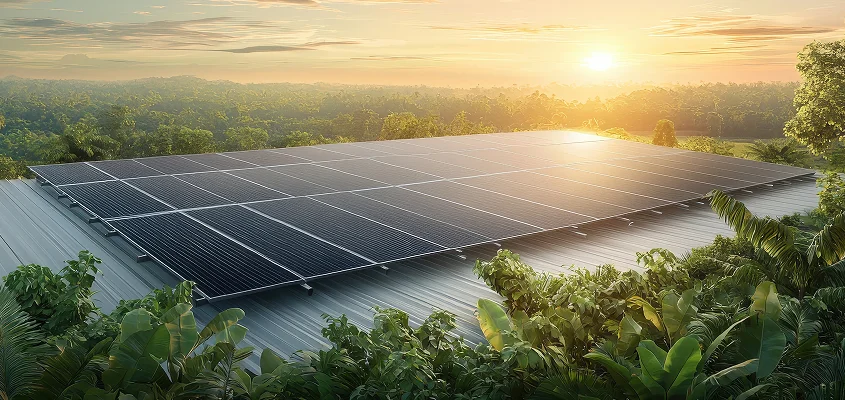
Interestingly, long before solar panels became ubiquitous on rooftops, we were already gazing towards the sun. A pioneering spirit crackled in the air as we commissioned the first solar power plant in 1996, a modest 110 KW nestled amidst the scenic hills of Walwhan, Lonavla. It was a small spark, but one that re-ignited a vision for a cleaner future. Today, with 30 years of expertise, our renewables portfolio is on a meteoric rise. Being a prominent player in India's solar energy landscape, we are not just setting up large-scale solar farms across the country but also powering every corner of the country with wind energy, no matter how remote.
In 2008, as the 50.4 MW Khandke Wind Farm Project neared completion, a 3 MW Mulshi Solar Plant was also commissioned and stabilized in Maharashtra.
In 2010, we turned our own Mumbai office into an experiment. Atop the building, a 60.48 KWP rooftop solar panel was installed. The panels weren't just generating clean energy; they were a silent declaration that solar energy could power the very heart of a metropolis.
In 2013, a 15 MW solar plant at Belampally, Telangana, came to life, officially entering the realm of commercial solar power generation.
In 2016, the renewable portfolio strengthened as the 44 MW Lahori Wind Farm project in Madhya Pradesh added its voice to the growing chorus of green energy.
In 2018, we achieved a remarkable feat as the installation of the world's largest solar rooftop was completed at the renowned Cricket Club of India, Mumbai.
In 2020, our renewable microgrid project celebrated a groundbreaking milestone with the commissioning of our 100th solar microgrid project in Ratnapur, Uttar Pradesh.
 World's largest solar rooftop - Cricket Club of India, Mumbai
A vision for an India ensuring efficient power delivery
Our story started with harnessing the power of our rivers, which continues to this day. Even today we envision innovative solutions that aren't just convenient but empowering. The arrival of the smart meter is the newest buzz in innovation. Real-time cost management, which enables people to simplify bills and even prepay for electricity, just like they would with phone plans, means that confusing bills are a thing of the past. As technology gallops forward, we adapt. Tired of meter tampering? We have partnered with a tech company to develop the first groundbreaking spoof-detection logic in our smart meter reading device (SMRD). Our AI identifies fraudulent practices with hawk-like precision, enhancing protection in energy consumption for both the company and its customers.
 Empowering India with innovative solutions
A vision for a sustainable India
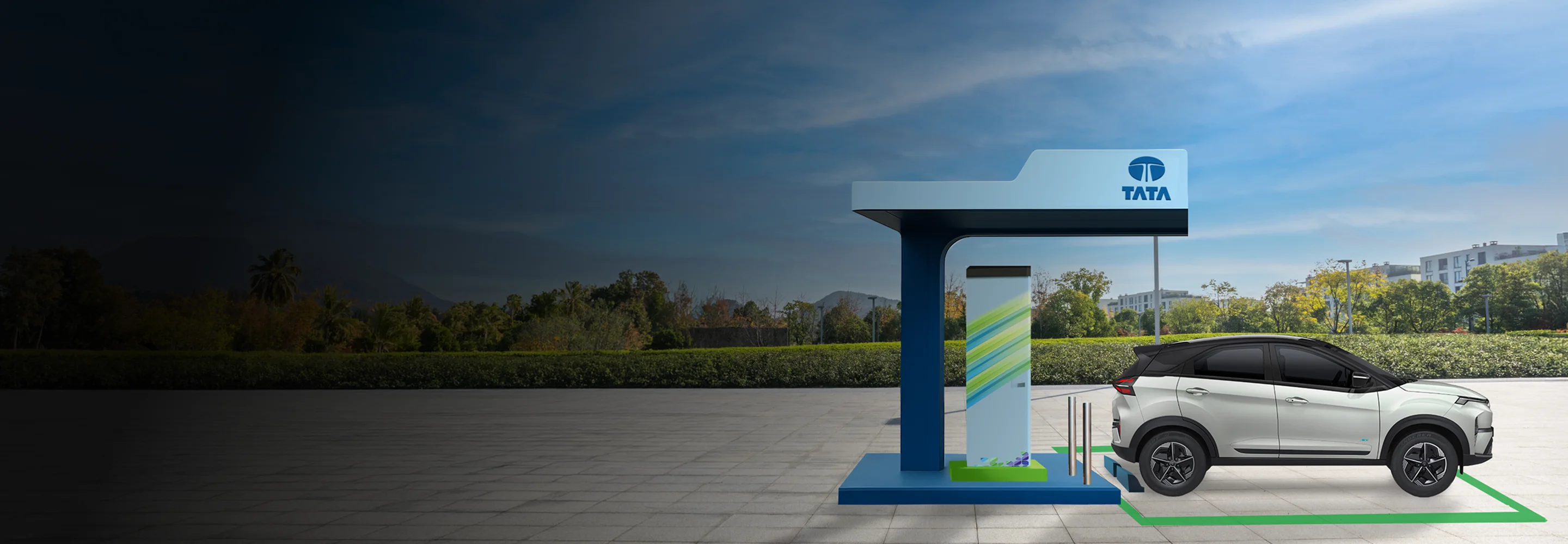
As we usher in a new era of renewable energy, we also place a high value on the coexistence of nature and intelligent technologies. EZ HOME and EZ CHARGE are the pinnacles of our dedication to informed, eco-friendly living. EZ HOME allows for precise energy management, from managing appliance schedules to optimizing thermostat settings, while EZ CHARGE provides a strong network for charging electric vehicles, giving people the chance to adopt eco-conscious habits. Even if they are small, these adjustments can have a big effect. We are in a unique position to further this environmentally responsible project because of our vast experience in power generation.
 EV charging revolution with EZ CHARGE
A vision for an innovative India
Our journey may go back decades, but innovation is not just a spark for us. It is a generations-long saga woven right into our inception. This has allowed us to lead the way in clean energy. But our relentless pursuit hasn't been a solitary venture. We have turned possibilities into reality through collaboration with over 230 global technology partners, across 172 industries and 39 academic institutions. Together we are not only bringing efficiencies to our licensed areas but are also working towards sectoral sustenance and building a future-proof Industry.
The fruits of our labor can be seen in our work on smart grids that optimize energy distribution, battery storage that unlocks the potential of renewables, and even revolutionary smart metering to empower consumers. The power of deep technology and data science are the invisible pillars that guide our research towards early-stage innovation that predict future possibilities.
With smart technologies at our fingertips and an ethos of innovation that inspires others to follow our lead, we are ready to torch ahead into a new era. Our investment in groundbreaking technologies is reflected in our commitment to fueling robust R&D initiatives that tackle challenges like power quality and distributed energy resources.
Our efforts to innovate will never cease. We are continually strengthening our green energy portfolio by actively reducing the burden of carbon generation and excessive power supply. This makes us future-ready to thrive in the energy sector and set a benchmark that inspires generations to come.
 Creating a better tomorrow with next-gen solutions
Our vision continues…..
Keep reading...
View all