


 Contact us
| Business cluster | Strategic role |
|---|---|
| Renewables | Growth engine driving clean energy leadership |
| Thermal and Hydro | Reliability anchor ensuring uninterrupted energy security |
| Transmission and Distribution | Stability backbone delivering infrastructure and cash flows |
| New-Age Energy Solutions | Consumer frontier capturing India's future energy markets |


Sections
- Introduction
- Why does Tata Power's integrated model matter for India's energy future?
- What did Tata Power's most significant achievements and milestones look like in FY26?
- How is Tata Power using AI and digital technology across its energy business?
- What is Tata Power's Vision 2030 and how will it drive long-term growth?
- Bottomline
Introduction
Tata Power spent FY26 doing what most energy companies only plan for: executing simultaneously across renewable energy, grid infrastructure, conventional generation, and consumer clean energy solutions. From commissioning India's largest ever solar project at 1 GW to bringing electricity to tribal communities that had waited decades for it, this was a year that turned ambition into evidence across one integrated platform and four business engines.
The FY26 Integrated Annual Report is where the full picture lives. What follows is the story behind it, and why it truly matters.
Why does Tata Power's integrated model matter for India's energy future?
India's energy transition is genuinely complex. It demands clean generation at scale, a grid capable of handling intermittency, last-mile distribution that reaches every corner of the country, and consumer solutions that make clean energy accessible and affordable. Most energy companies are built to solve one of these problems. Tata Power has spent over a century building the capability to solve all four simultaneously.
The architecture behind that capability is four business clusters, each carrying a distinct strategic weight, each reinforcing the others:
Renewable generation feeds a smarter grid. A smarter grid enables better consumer energy products. Consumer adoption deepens the investment case for more renewable capacity. The platform is not just diversified. It is self-reinforcing, and that is what makes it structurally resilient across market cycles, policy shifts, and demand patterns.

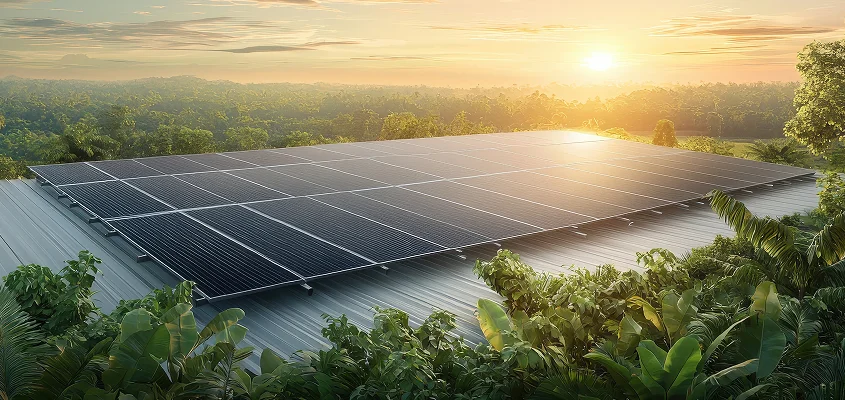
Tata Power's Solar business goals in 2026, built for scale and impact
What did Tata Power's most significant achievements and milestones look like in FY26?
Across every cluster in FY26, Tata Power closed the gap between strategy and delivery. If the company's integrated model is the architecture, FY26 was the year that architecture came alive on the ground. Its achievements fell across three interconnected areas: executing energy infrastructure at scale, expanding access to reliable and clean power for more Indians, and building the consumer-facing energy solutions that will drive future growth. Together, they show how Tata Power is translating long-term strategy into measurable outcomes. Here is what that looked like on the ground.
Execution at scale
The question every investor asks is whether a company can actually build what it promises. In FY26, Tata Power answered that convincingly.
In Renewables,
The year was defined by large-scale project execution and a manufacturing ramp-up that most peers cannot match. Tata Power is not simply a renewable energy developer. It is one of the very few companies that has built a fully integrated clean energy value chain, from manufacturing solar cells and modules at its 4.9 GW facility in Tirunelveli, Tamil Nadu, to developing utility-scale projects, to installing rooftop solar on homes, to putting EV chargers on highways. That end-to-end integration is a structural moat. It gives Tata Power control over project costs, execution timelines, and quality in ways that pure-play developers cannot replicate.
FY26 milestones:
- Commissioned the largest solar project in Tata Power's history, a 1 GW DCR solar plant in Rajasthan
- Executed a 300 MW DCR project for NHPC in Bikaner and a 198 MW group captive project in Karur, Tamil Nadu
- Signed FDRE PPAs with NTPC covering 80 MW, 200 MW, and 70 MW projects
- Tirunelveli plant ramped to near full capacity, 95%+ yields, nearly 50% localised supply chain
- Total renewable portfolio: 11.6 GW including under-construction, 6.3 GW operational, 5.3 GW under construction, 5.1 GW solar, 1.2 GW wind
- Clean and green sources now account for approximately 66% of post-completion capacity
In Thermal and Hydro
The focus was on operational excellence and strategic expansion into grid flexibility. As renewable penetration rises, dispatchable flexible power becomes more valuable, not less. Tata Power's conventional assets are not being wound down. They are being repositioned as the grid's reliability backbone.
FY26 milestones:
- Prayagraj Thermal Plant achieved 98%+ availability
- Construction commenced on the 1,000 MW Bhivpuri Pumped Hydro Storage Project in Maharashtra, backed by Rs. 11,000+ crore investment
- Pre-construction progressed on the 1,125 MW Dorjilung Hydropower Project in Bhutan, joint venture with Druk Green Power Corporation, commissioning targeted early 2030s
- Bhutan clean energy pipeline stands at 5,100 MW spanning Gongri HPP 740 MW, Khorlochu HPP 364 MW, Chamkharchu IV HPP 600 MW, and Jeri Pumped Storage 1,800 MW
In Transmission and Distribution
The network grew purposefully with:
- Total portfolio reached 7,403 ckm, 226 ckm of new transmission projects won
- 14 lakh+ smart meters installed across Odisha Discoms
- AT&C losses in Odisha reduced by 1%
- Mumbai and Delhi Discoms maintained their track record of reliable, uninterrupted power supply
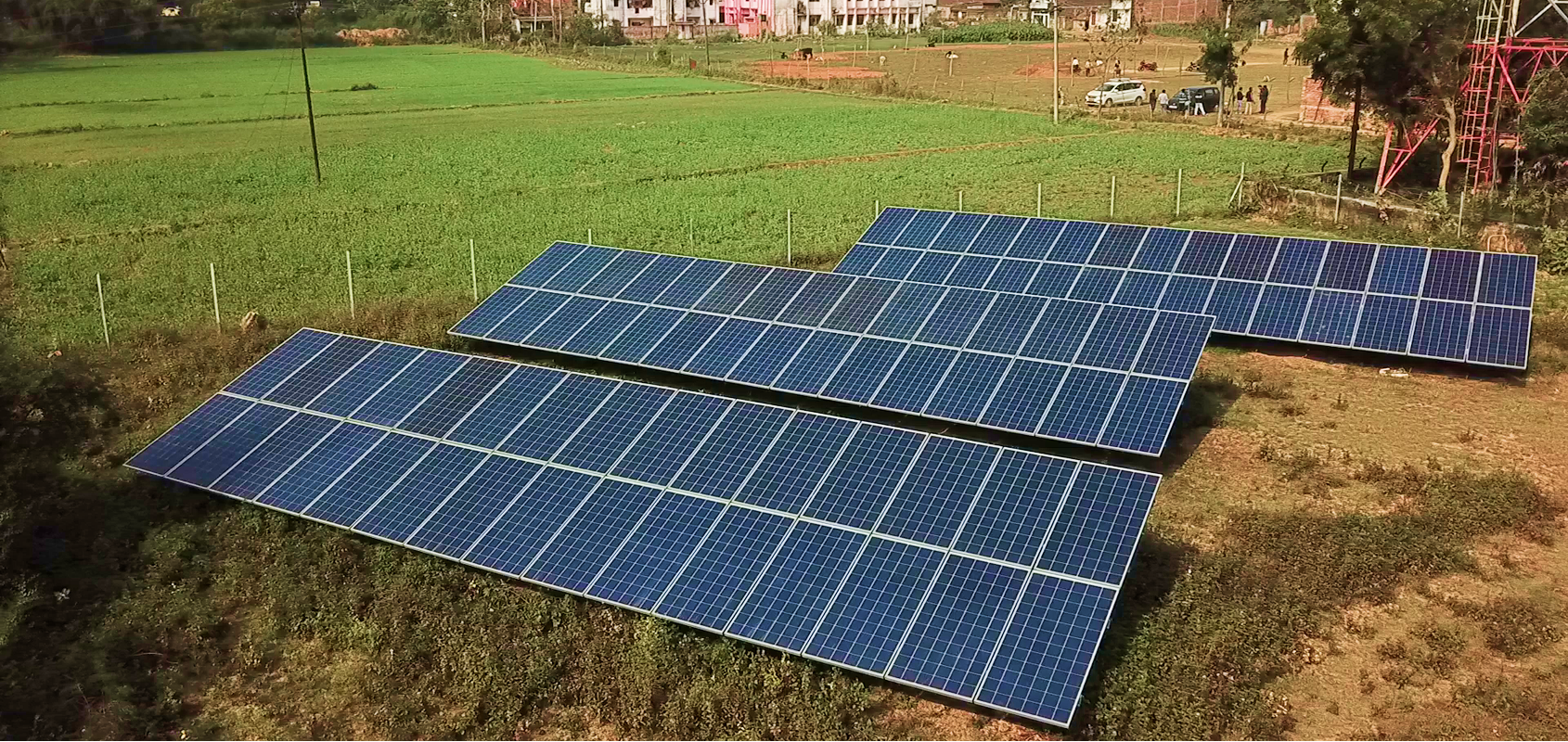
Tata Power integrated report 2026: solar projects in action
Reaching every Indian
Scale means nothing if it does not reach the people who need it most. Two stories from FY26 capture what Tata Power's distribution mission actually means beyond the balance sheet.
Dubuku, Odisha: A tribal village in Sambalpur district that had lived without electricity for decades. In FY26, Tata Power completed rural electrification here, navigating difficult terrain, political resistance, and logistical constraints. For families that had never had reliable power, it meant access to education, healthcare, and economic activity that had simply not been possible before.
Malkangiri Hills, Odisha: One of India's most remote districts, home to Koya, Bhumia, Paraja, Bonda, and Didayi tribal communities. Coordinated grid upgrades delivered consistent electricity across the region, enabling schools, health sub-centres, and agricultural livelihoods to function reliably for the first time.
These are not footnotes to a financial story. They are evidence that execution at scale and service to the underserved are not competing priorities at Tata Power. They are the same priority.
On rooftop solar, FY26 marked a genuine step-change:
- Residential rooftop solar grew 245% year-on-year, contributing 65% of total rooftop solar business, up from 45% in FY25
- Approximately 2.4 lakh households enabled to adopt rooftop solar
- India's number one rooftop solar EPC company for eleven consecutive years
Among the leading implementers of PM Surya Ghar Muft Bijli Yojana, targeting one crore households by 2027
Building tomorrow's revenue streams
The most telling indicator of a company's future is where it is placing its bets today. In FY26, Tata Power made moves that will define its consumer energy franchise for the next decade.
On electric mobility:
- India's first MegaCharger Hub launched at Terminal 2, Chhatrapati Shivaji Maharaj International Airport, Mumbai, on World EV Day, September 9, 2025, in partnership with Tata Passenger Electric Mobility
- 8 fast DC chargers delivering up to 120 kW across 16 charging bays, running entirely on renewable energy
- Designed as a replicable model for high-traffic corridors across India
- EV ecosystem: 2.14 lakh+ home chargers, 6,700+ public and fleet charging points, 1,200+ e-bus charging stations, 61.39 crore green kilometres facilitated
On consumer energy solutions:
- Rooftop solar residential installations crossed 1 GWp in the current year
- 4+ lakh total rooftop installations, cumulative capacity 4.5 GW
- MoUs signed with BCC&I and UCO Bank to expand rooftop solar financing access
- 1.20 MWh BESS project secured with NHPC, advancing energy storage capabilities
The thread running through all three themes is the same: the gap between what Tata Power commits to and what it delivers is not theoretical. FY26 made that concrete.
How is Tata Power using AI and digital technology across its energy business?
Technology at Tata Power is not a support layer. It is a structural advantage being built deliberately across every cluster, one that improves margins, accelerates execution, deepens customer relationships, and raises the barrier to entry for anyone seeking to compete at this scale.
The company's AI and Agentic framework, anchored by a Centre of Excellence and an enterprise-wide data platform, is delivering measurable outcomes across four domains:
Renewables and generation
- AI and ML driving Right First Time rooftop installations and predictive solar and wind asset maintenance
- Renewables Data Lake and unified analytics platform RBS 2.0 for real-time portfolio performance tracking
- Boiler Digital Twin predicting real-time plant behaviour and flagging risks before they materialise
- Construction Digital Twin tracking project progress and enabling proactive course correction
Transmission and Distribution
- OCR image-based analytics detecting theft and tampering across the network
- Advanced Distribution Management System enabling dynamic supply-demand balancing
- Distributed Energy Resource Management System for grid stability and renewable integration
- Pattern-based fault detection reducing unplanned outages before they occur
Customer experience
- My Tata Power Plus platform integrating billing, solar monitoring, EV charging, and service requests across web and mobile
- WhatsApp AI agents, Voice AI, and Generative AI powering customer interactions at scale
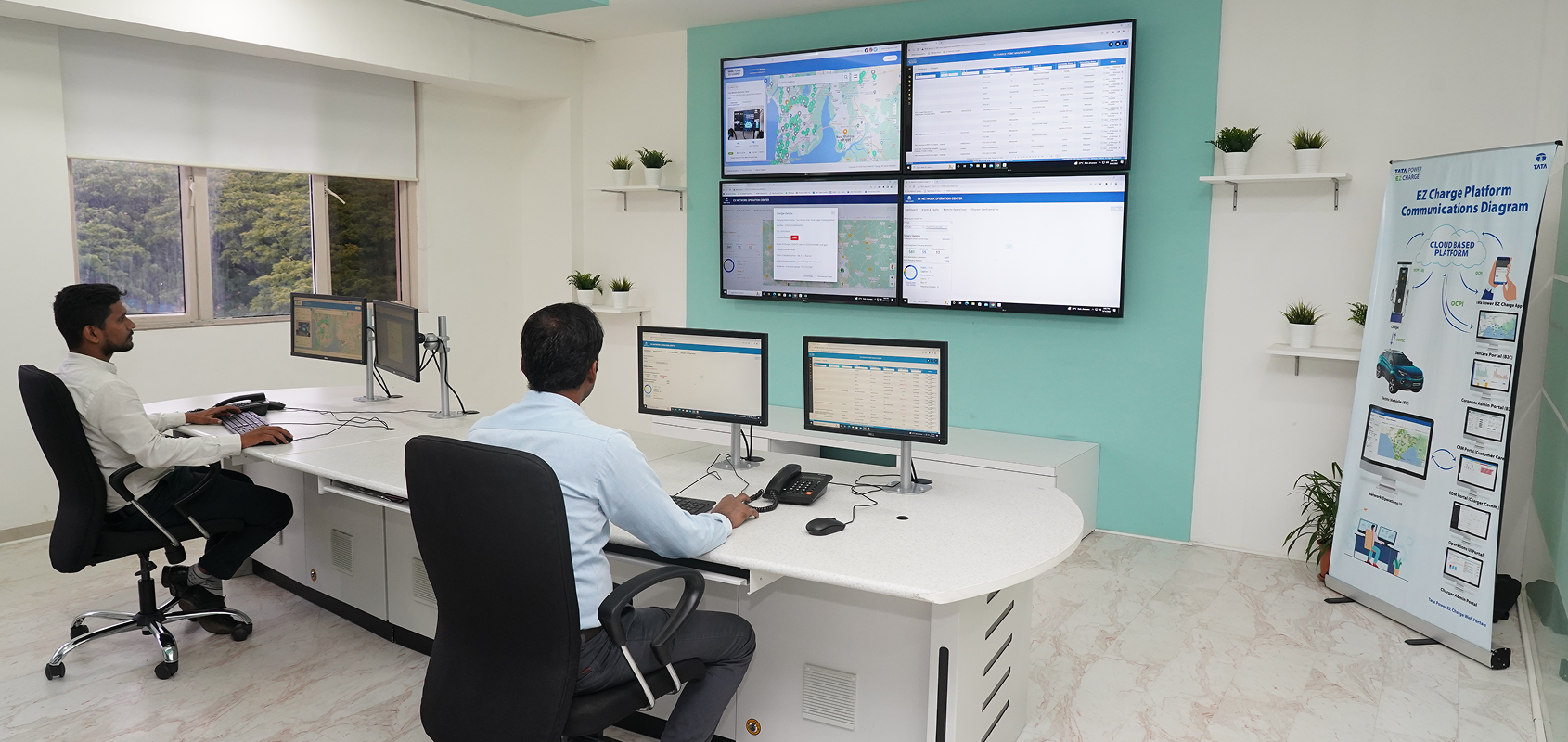
- EZ CHARGE platform at 5.64 lakh registered users, 30.22 lakh charging sessions delivered
AI at Tata Power, powering enterprise-wide transformation
Cybersecurity
In a sector where operational failures carry national consequences, cybersecurity is a core business capability, not a compliance function.
- 24/7 Security Operations Centre spanning IT and OT environments
- Zero trust architecture with IT-OT segmentation and controlled remote access
- Business continuity and disaster recovery frameworks ensuring uninterrupted critical operations
The data advantage Tata Power is accumulating across generation assets, grid infrastructure, and consumer touchpoints is not easily bought or built overnight. Every year it compounds. That is the moat.
What is Tata Power's Vision 2030 and how will it drive long-term growth?
Every company has targets. Fewer have the track record, platform depth, and financial discipline to make those targets credible. Tata Power's road ahead is defined by three growth vectors, each grounded in execution capability that FY26 has already demonstrated.
Building India's clean energy future
The ambition is unambiguous and the pipeline to support it is already in motion:
- More than 20 GW clean and green capacity by 2030
- 70% operational capacity clean and green by 2030, 100% before 2045
- 5,100 MW clean energy portfolio under active development in Bhutan
- Bhivpuri Pumped Storage and Dorjilung Hydropower as long-duration flexibility assets anchoring a renewable-heavy grid
Scaling the consumer energy franchise
The consumer energy market Tata Power is building is one of the most significant long-term revenue opportunities in the Indian energy sector:
- 3 million households served with rooftop solar by FY28
- More than Rs. 30,000 crore in rooftop solar revenue over the next five years
- 7.5 lakh+ home chargers and 10,000+ EV charging points within five years
- Advanced Energy-as-a-Service offerings and BESS solutions expanding the addressable market further
Strengthening the grid and maintaining financial fitness
Growth without discipline is not a strategy. Tata Power's infrastructure ambitions are matched by an equally clear financial commitment:
- More than 40 million distribution customers by FY30
- More than 10,000 ckm transmission capacity in next five years
- Phased thermal exit post contractual obligations
- Disciplined capital allocation focused on maximising shareholder return
As Dr. Praveer Sinha, CEO and Managing Director, Tata Power company Limited, puts it: "In the current geopolitical climate, it is clear that energy security is the need of the hour. This is why our shift to clean and green energy solutions is now more relevant than ever."
The targets are large. The platform to deliver them is already built. And the management team executing against them has spent FY26 proving exactly what delivery looks like. And if you are looking to invest in India's energy future or bring clean energy home, Tata Power has a solution built for you. What makes this roadmap meaningful is not the scale of the ambition, but the accessibility of the solutions behind it. The technologies and capabilities powering Tata Power's growth are already helping customers participate in India's energy transition today.

Don't just watch the transition
Be among the first to power your future with next-generation energy solutions
Bottomline
Tata Power is not transitioning. It is executing, simultaneously across renewables, conventional generation, grid infrastructure, and consumer energy, with technology threading through all of it and a management team that has demonstrated it can deliver at scale. The integrated platform it has built over a century is now precisely the kind of asset India's energy transition demands: diversified enough to absorb shocks, focused enough to move fast, and purposeful enough to leave no Indian behind.
Keep reading...
View all