


 Contact us
IoT lets you enjoy connected living with a tap of a button


Introduction
A smarter home isn't about having more gadgets. It's about spending less time thinking about everyday tasks. From heating water before your shower to turning off appliances while you're away, IoT helps smart home devices work smarter for you. This blog explores 11 practical ways IoT helps connected devices automate routines, improve energy efficiency, enhance safety, and make everyday living simpler.
As per Fortune Business Insights, the global smart home market is projected to grow from USD 180.12 billion in 2026 to USD 848.47 billion by 2034, at a CAGR of 21.4%. The more relevant question for any homeowner today isn't whether smart home technology works. It's what it can actually do inside their home, on an ordinary day.
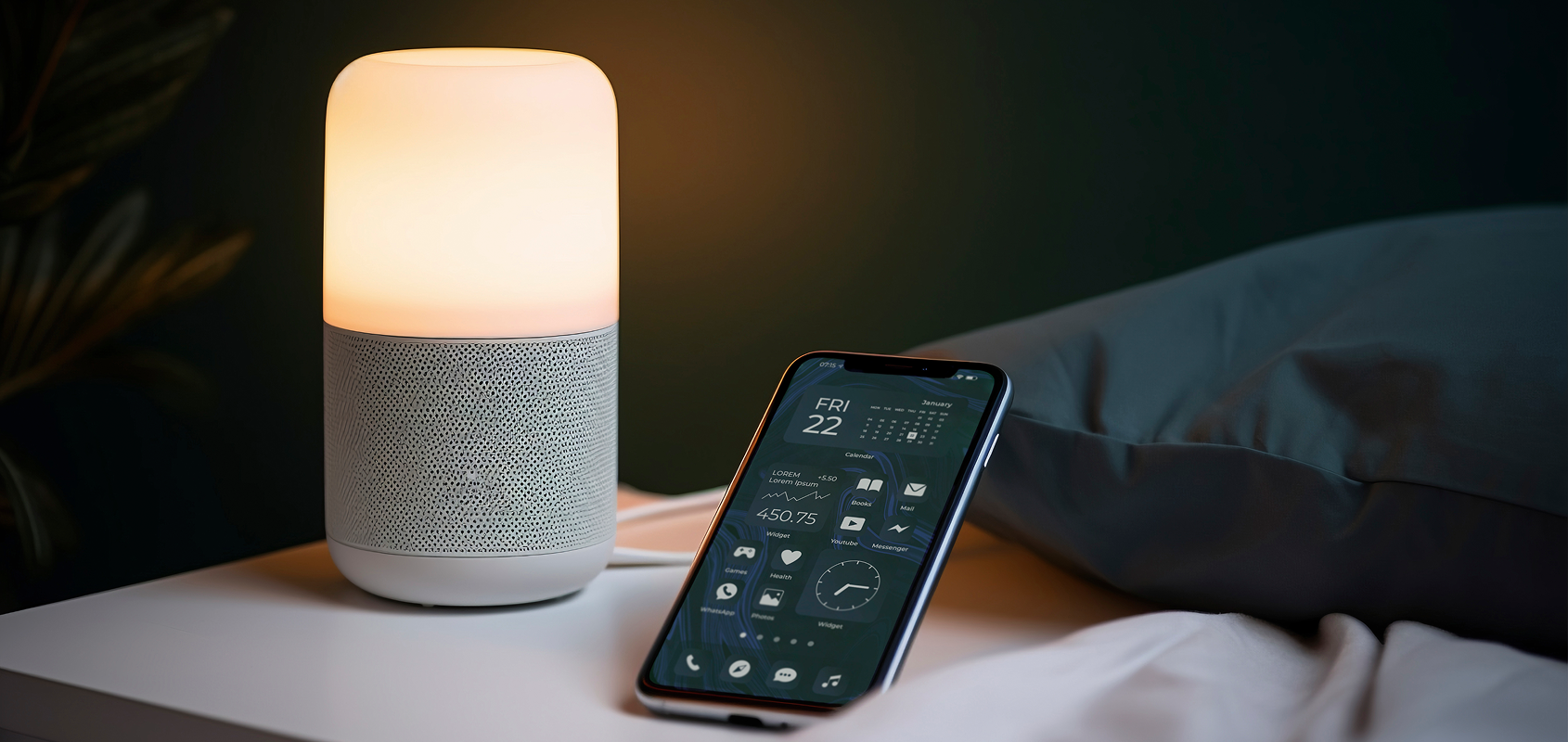
11 ways IoT helps control smart home devices
IoT devices give homeowners real-time control over lights, fans, appliances, and security, all from a single app or voice command. Today's smart home technology works quietly in the background, making everyday life run more smoothly without demanding more effort from the people living in it.
| Feature | What it does | Best for |
|---|---|---|
| Scene control | Triggers multiple devices simultaneously with one command | Simplifying daily routines |
| Scheduling | Automates appliances to run at set times | Consistent, hands-off home management |
| Delay timer | Keeps appliances running for a set duration before switching off | Geysers, exhaust fans, decorative lighting. |
| Voice control | Operates connected devices through spoken commands | Hands-free and accessible living |
| Remote access | Controls home appliances from anywhere via app | Traveling homeowners and peace of mind |
| Energy monitoring | Tracks appliance-level electricity consumption in real time | Reducing energy bills |
| Motion-based automation | Activates devices based on occupancy | Corridors, outdoor lighting, unused rooms |
| Overload protection | Detects voltage anomalies and cuts power automatically | Appliance safety and reliability |
| Power-on switch status | Restores device states automatically after a power outage | Homes with frequent power interruptions |
| SOS panic button | Sends instant alerts to contacts with a single press | Elderly residents and personal safety |
| Curtain and IR control | Extends automation to curtains and IR-based appliances | Whole-home connected ecosystems |
1. Scene control: Multiple actions, one tap
Managing multiple devices individually can quickly become inconvenient. Scene control allows homeowners to trigger several actions simultaneously through a single command, built around how they actually live.
Customized scenes can include:
- Movie Mode: Dim the lights, switch on the television, turn off unnecessary appliances
- Good Night: Power down all lights and devices throughout the house in one tap
- Welcome Home: Lights and fans activate before you step inside
Instead of adjusting devices one by one, scene control turns everyday routines into seamless experiences.
2. Scheduling: Automation that runs on time
Scheduling allows connected devices to operate according to predefined routines without manual intervention.
This can include:
- Lights switching on automatically in the evening
- AC turning off after you leave for work
- Geyser heating water before your alarm goes off
Instead of relying on memory, homeowners can trust their homes to follow a routine consistently and use appliances only when they are actually needed.
3. Delay timer: Smart control with built-in intelligence
Not every appliance needs to switch off immediately. Delay timers allow devices to run for a set duration and stop automatically.
Where delay timers make a difference:
- Geyser shutting down 30 minutes after a shower
- Exhaust fan running after cooking, then cutting on its own
- Decorative lighting switching off after a set time in the evening
It is a small feature that removes a surprisingly common source of oversight.
4. Voice control: Hands-free living
With compatibility with Amazon Alexa and Google Assistant, connected devices respond to simple spoken commands, no app or switch required.
What voice control enables:
- Turning lights on or off without moving
- Activating scenes through a single phrase
- Operating appliances while multitasking
For households with elderly members or young children, hands-free control adds a layer of practicality that adds a layer of convenience that quickly becomes second nature.
5. Remote access: Control your home from anywhere
Remote access allows homeowners to stay connected to their home regardless of location.
What remote access allows:
- Checking whether appliances have been left on
- Switching devices off while traveling
- Turning lights on before arriving back home
The concern of "did I leave something running?" stops being a recurring thought.
How Tata Power enables this: All EZ Home smart switches and touch panels are compatible with both Google Home and Alexa. The EZ Home app gives homeowners real-time visibility and control over every connected device from anywhere with a data connection.
6. Real-time energy monitoring: See exactly where your electricity goes
Most households know how much electricity they consume each month. Few know which appliances are responsible for it. Real-time energy monitoring offers appliance-level consumption data directly on your phone.
What this makes possible:
- Identifying appliances drawing more power than expected
- Adjusting usage habits based on actual data
- Tracking how small changes reflect on monthly bills
Energy monitoring is just one aspect of this capability, but the real value comes from bringing connected devices together into one seamless ecosystem.
7. Motion-based automation: Rooms that respond to occupancy
Motion sensors ensure devices operate only when a space is actually occupied.
How this works in practice:
- Corridor lights turn on when someone walks in and off when the space empties
- Fans in unused rooms cut automatically after a set period
- Outdoor lights activate only when movement is detected
Within the Tata Power EZ Home ecosystem: Real-time energy monitoring is built into the EZ Home app. The EZ Home PIR Motion Sensor and Microwave Motion Sensor, with detection spans of up to 12 meters, automate lighting and appliances based on real occupancy.
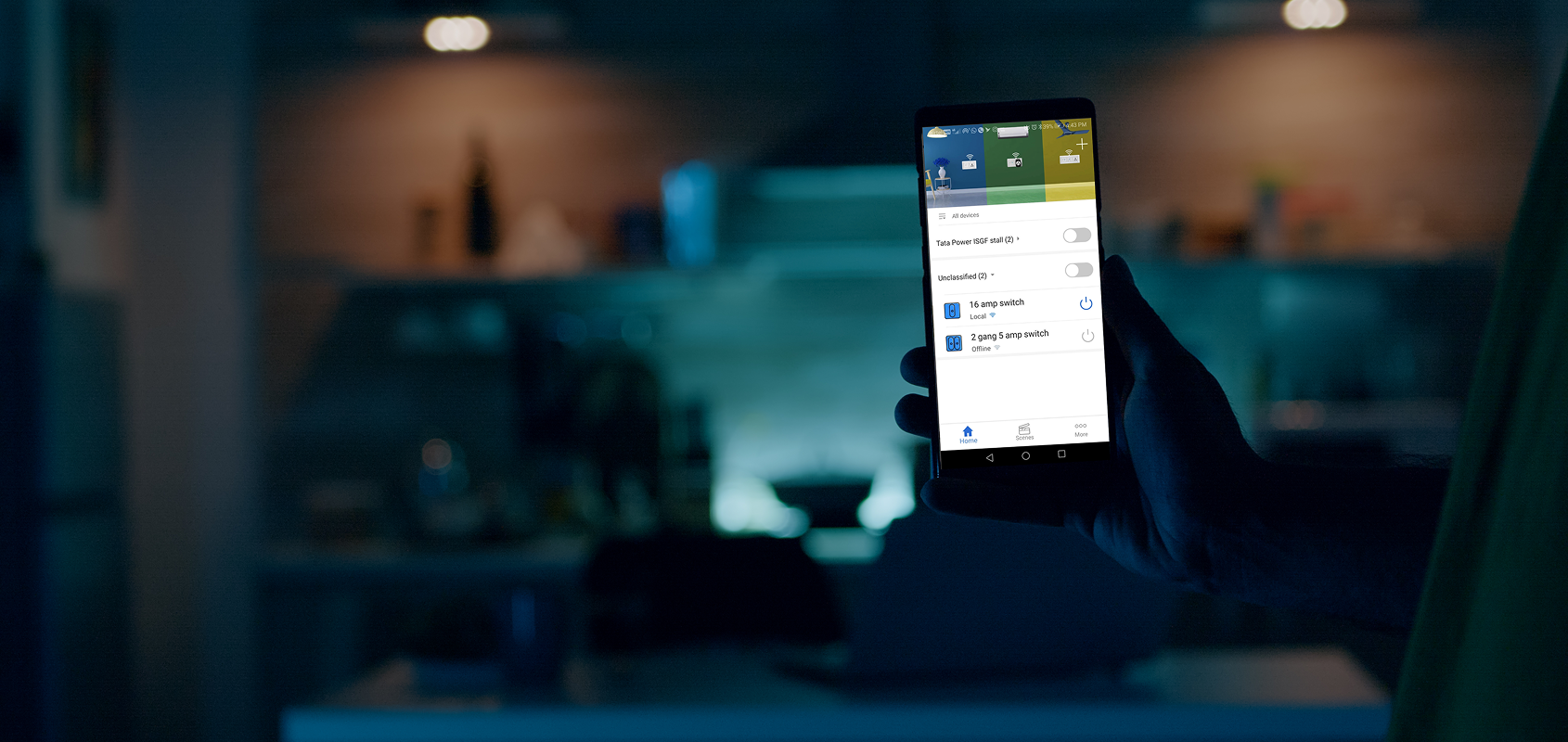
Monitor and manage devices with your phone
8. Overload protection: Safety wired into the system
Smart switches detect voltage anomalies and cut power before appliances are damaged.
Benefits include:
- Protection against unexpected voltage fluctuations
- Automatic power cutoff before damage occurs
- Real-time alerts even when you are away from home
In homes where power quality can be inconsistent, this kind of passive protection matters considerably.
9. Power-on switch status: Continuity after a cutoff
Power-on switch status memory restores each device to its last known state automatically when electricity returns.
The practical advantages:
- No manual intervention after an outage
- Automated routines pick up without interruption
- Basic controls continue working even without an active internet connection
10. SOS panic button: Safety when it counts
A dedicated SOS panic button gives any member of the household a direct line to help with a single press.
Where this matters most:
- Elderly residents living alone or with limited mobility
- Households where a medical emergency may require immediate response
- Situations where reaching a phone quickly is not possible
11. Curtain and IR control: Whole-home automation without the gaps
Smart home automation extends beyond switches to motorized curtains and IR-controlled appliances, the devices that traditional setups cannot reach.
What this brings into the ecosystem:
- Motorized curtains opened or closed via app or voice command
- ACs, TVs, and set-top boxes managed through a single smart IR device
- Full integration with scenes and schedules alongside every other connected device
Instead of managing disconnected technologies, homeowners gain a single control environment for the entire home.
How Tata Power EZ Home makes it possible: The EZ Home Wi-Fi Smart Curtain Controller and IR Blaster Universal Remote bring curtains and IR appliances into the same ecosystem as every other connected device, controllable through the app, Alexa, or Google Assistant.
What starts as a single smart switch can quickly become a home that anticipates your morning and looks after itself while you are away. Tata Power EZ Home retrofits into existing homes without rewiring, scaling from one smart switch to full home automation.

Enter the era of smart living
Explore unparalleled comfort and ease with home automation solutions, built just for you
Bottomline
The value of an IoT smart home is measured by the everyday problems it quietly solves. From simplifying routines to improving safety and making energy consumption visible, IoT technology for homeowners is changing the way people interact with their living spaces through practical, lasting improvements.
Frequently asked questions
The frequently asked questions section is a reliable source for unlocking answers to some of the most crucial inquiries. Please refer to this section for any queries you may have.
- FAQ
The best IoT devices for home automation include smart switches, touch panels, motion sensors, smart plugs, curtain controllers, IR blasters, and smart convertors for appliances like ACs and geysers. Together, these connected devices automate everyday tasks, enable remote access, improve energy efficiency, and create a seamless smart home experience that can grow over time.
Yes, IoT technology for homeowners can help reduce electricity consumption by giving users greater visibility and control over how appliances are used. Features like energy monitoring, scheduling, motion-based automation, and automatic shut-off ensure devices operate only when needed, helping minimise unnecessary power usage and lower electricity bills.
Yes, you can control your smart home devices from anywhere using a mobile app connected to your IoT smart home system. Whether you want to switch off forgotten appliances, turn on the lights before you arrive, or check the status of connected devices, remote access keeps you in control even when you're away.
Yes, many IoT smart home devices are designed to retrofit into existing homes without requiring extensive rewiring. Smart switches, convertors, and wireless controllers can be installed gradually, allowing homeowners to start with a single connected device and expand to a complete home automation system at their own pace.
Learn more about upgrading an existing home with smart home technology in our detailed blog. Read here!
Yes, most IoT smart home systems are designed to be scalable, allowing you to start with a single smart device and expand over time. You can begin with a smart switch or touch panel and gradually add sensors, smart plugs, curtain controllers, and other connected devices as your needs evolve.
An IoT smart home system can connect a wide range of everyday appliances, including lights, fans, air conditioners, geysers, televisions, set-top boxes, curtains, and other compatible electrical devices. Depending on the devices you choose, you can control them remotely, automate schedules, integrate them into custom scenes, or operate them using voice commands.
Keep reading...
View all