


 Contact us

- The Energy Insights and Innovation Lab (EIIL) will leverage data, behavioural science, and AI for smarter power solutions.
- The MoU sets roadmap for demand-side management, and consumer-centric innovation
Mumbai/ National, 19th December,2025 : Tata Power, one of India’s largest vertically integrated power companies, has launched the Energy Insights & Innovation Lab (EIIL) today at its Mumbai based headquarters. This strategic research initiative is designed to harness cutting-edge research, data and experimentation to support India’s clean energy transition while improving the quality, reliability, and affordability of electricity services for consumers across India.
The EIIL is a collaboration with the London School of Economics and Political Science (LSE), and the International Growth Centre (IGC), a global research centre based at LSE. The Lab aims to address pressing challenges in India’s power sector. These range from managing peak electricity demand to enabling deeper renewable energy integration in a way that is reliable, affordable, and aligned with India’s net-zero goals.
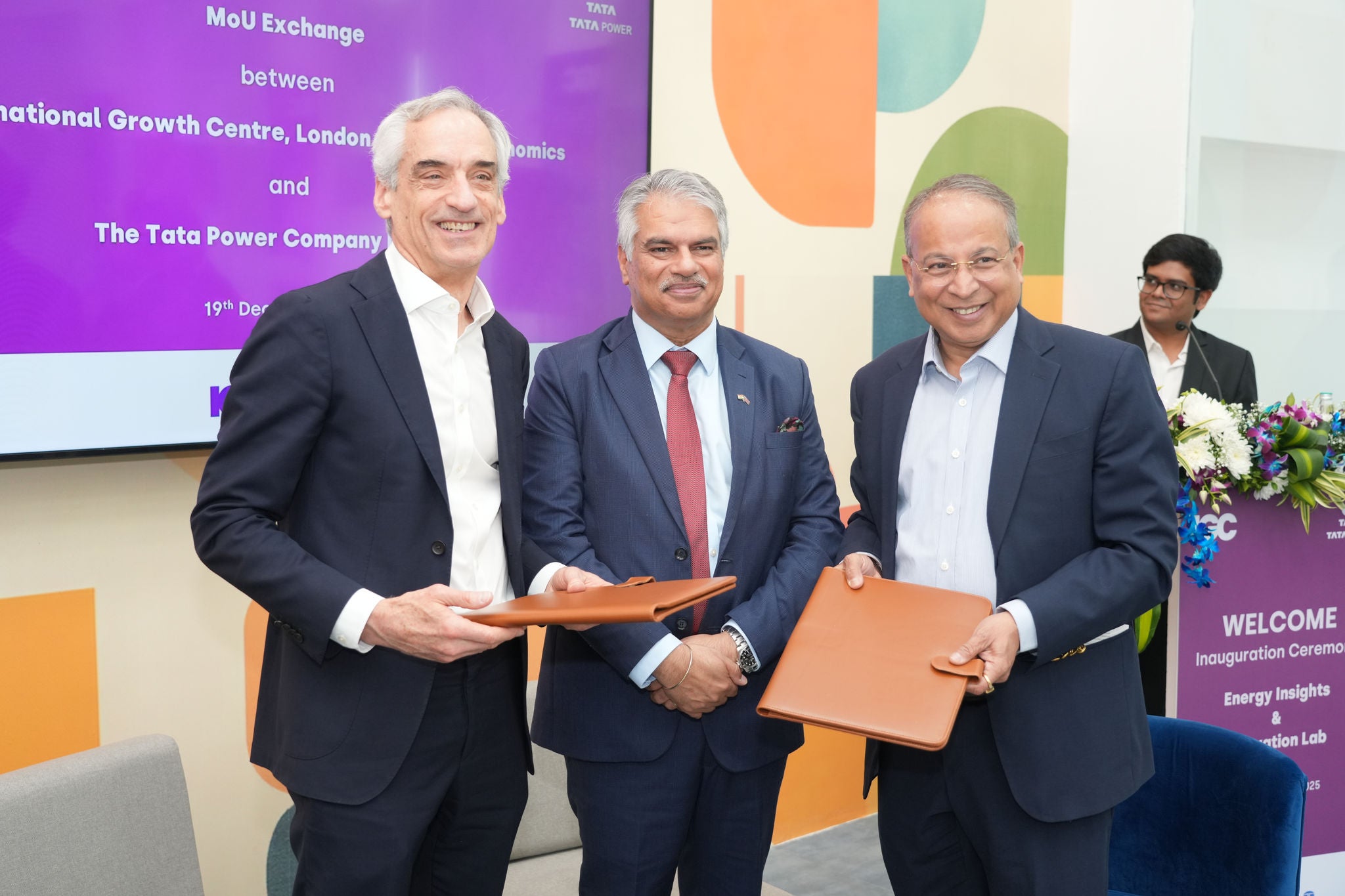
The Lab was inaugurated by Dr Praveer Sinha, CEO & MD, Tata Power; Prof. Robin Burgess , Professor of Economics and Director of IGC and EEE Research Program, LSE; Dr. Jonathan Leape, Executive Director, IGC in the august presence of HM Harjinder Kang, Trade Commissioner for South Asia and British Deputy High Commissioner for Western India. Also, present at the ceremony, Dr. Chetan Ghate, Professor, ISI and IGC ISGH.
The inaugural ceremony also marked the signing of an MoU between Tata Power, LSE and IGC to co-develop scalable solutions for the power sector through evidence-based approaches and global best practices.
System-level modelling + consumer-level insight
The Lab will leverage consumer behavioural science, data analytics, and energy systems modelling to test practical solutions at scale. It will focus on applied pilots that use smart meter and IoT data to improve demand-side management and grid resilience.
The initiative will explore how advanced analytics, and behavioural insights can help shift or smooth peak electricity demand in urban households, reducing stress on local networks while maintaining consumer comfort.
The partnership aims to expand the Lab into a full-scale innovation hub with enhanced funding, institutional partnerships, and a broader mandate - including support in tariff designing for regulatory approvals, consumer flexibility, distributed renewables, and energy equity.
Notes for Editors:
India’s electricity demand is surging, driven by industrial growth, lifestyle requirements (cooling and heating requirements), digital infrastructure like data centres, electric mobility et al. In such a scenario, efficiency and system flexibility are increasingly critical to lower procurement costs and facilitate renewable energy integration. The EIIL is designed precisely for this moment. It brings together consumer behavioural science, data analytics, and systems modelling, to test real-world interventions, measure what works, and help utilities and governments turn those insights into scalable and sustainable energy solutions and strategies.
New UK–India research partnership - how it works
EIIL will have a dedicated analyst team co-located at Tata Power’s Mumbai headquarters, working closely with LSE and IGC researchers. The collaboration reflects a model of UK–India partnership where global academic expertise is integrated with on-the-ground industrial capability to solve shared development challenges. LSE and IGC bring international research expertise, while Tata Power contributes operational capabilities, a diverse customer base, and a strong commitment to innovation and sustainability.
About the IGC
IGC is global research centre with a network of world-leading researchers, country teams across Africa, South Asia, and the Middle East, and a set of global policy initiatives. Based at LSE and in partnership with the University of Oxford, we are majority funded by the UK Foreign, Commonwealth and Development Office (FCDO).
About Tata Power:
The Tata Power Company Limited, a leading integrated power company and a part of the Tata Group, India's largest multinational business conglomerate, owns a diversified portfolio of 15.9 GW. This portfolio spans the entire power value chain, from renewable and conventional energy generation to transmission, distribution, trading, storage solutions, and solar cell and module manufacturing. As a pioneer in India's clean energy transition, Tata Power has 7.0 GW of clean energy generation, constituting 44% of its total capacity. Committed to achieving Net Zero by 2045, Tata Power has successfully partnered with public and private entities across India's generation, transmission, and distribution sectors, serving ~13 million customers nationwide.
Disclaimer:
The following press release/announcement may contain forward-looking statements within the meaning of applicable securities laws and regulations. These statements are based on management's current views, expectations, assumptions, and projections regarding the Company's future performance, business plans, growth prospects, competitive and regulatory environment, and other related matters. Such forward-looking statements are subject to various risks and uncertainties, which may cause actual results to differ materially from those expressed or implied in the statements. Factors that could cause actual results to differ materially from those contemplated in the forward-looking statements are not limited to changes in economic conditions affecting demand/supply and price conditions in the domestic and overseas markets in which the Company operates, alterations in the business environment, fluctuations in Government regulations, laws, statutes, judicial pronouncements, and other incidental factors. The Company does not undertake any obligation to publicly update or revise any forward-looking statements based on subsequent events, information, or developments, except as required by applicable laws and regulations.
Keep reading...
View all