
Introduction

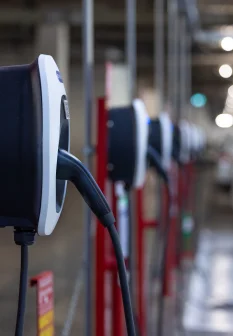
The benefits of workplace EV charging are becoming increasingly relevant as electric mobility expands across India. While most EV discussions focus on public charging networks, workplaces are emerging as one of the most practical charging locations. Vehicles typically remain parked at offices for six to eight hours every day. This creates a natural window for charging without disrupting daily routines.

For businesses, this shift presents a meaningful opportunity. Installing charging infrastructure is no longer just a sustainability initiative. It unlocks measurable EV charging benefits for companies, from improving employee experience to strengthening corporate ESG performance. As India accelerates its transition to cleaner transportation, organizations that invest early will also gain several long-term corporate EV charging advantages.

Power Your Knowledge!

Choose correct statement.

LEARN MORE

7 key benefits of workplace EV charging

The EV charging benefits for companies go far beyond simply providing a place to plug in vehicles. From improving employee experience to supporting sustainability goals, these advantages make EV charging a smart addition to corporate campuses.

1. Convenience that fits the workday

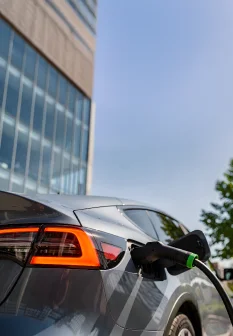
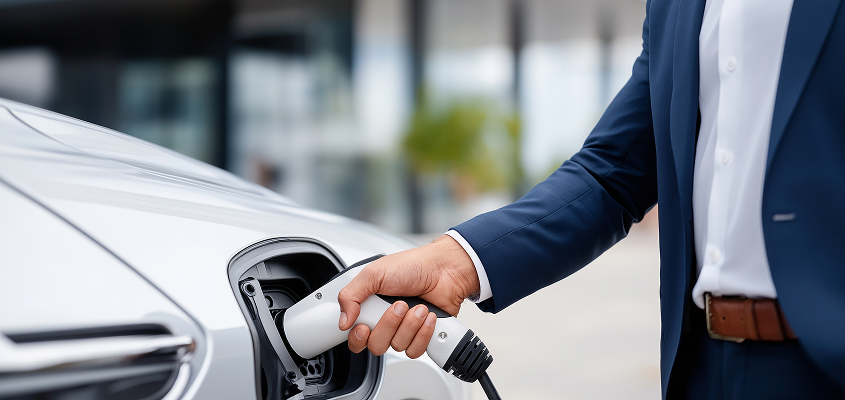
One of the most immediate benefits of workplace EV charging is simple convenience. Employees can plug in their vehicles when they arrive at work and return to a charged car at the end of the day. There is no need to search for public chargers or adjust travel schedules around charging stops.

This ease of access reduces range anxiety, which remains a major concern for new EV owners. Industry insights also show that workplace charging significantly improves the daily usability of electric vehicles.

For organizations, these EV charging benefits for companies translate directly into better employee experience and smoother commuting patterns.

2. A powerful tool for talent retention

Workplace amenities are evolving. Today’s workforce increasingly values sustainability-focused benefits alongside traditional perks. EV charging infrastructure is becoming one such differentiator.

Providing charging access demonstrates that a company understands changing mobility preferences. Employees who already own EVs find it convenient, while others see it as a signal that the organization supports cleaner transportation.

Government platforms also highlight that workplace charging can help attract and retain employees who want access to reliable charging during office hours.

These corporate EV charging advantages strengthen employer branding and contribute to long-term employee retention.
3. Supporting corporate sustainability commitments

Corporate sustainability is no longer limited to reporting targets. Stakeholders increasingly expect measurable action.

Encouraging electric mobility within the workplace directly contributes to reducing commuting emissions. When employees shift from conventional vehicles to EVs, the overall carbon footprint associated with daily travel declines.

This creates meaningful ESG benefits that EV charging can deliver. Companies can demonstrate progress toward environmental goals while supporting the broader transition to cleaner transportation systems.

In this sense, the benefits of workplace EV charging extend well beyond infrastructure. They become part of a company’s long-term sustainability strategy.

4. Strengthening corporate reputation

Sustainability initiatives are increasingly visible to customers, investors, and employees. Installing EV chargers sends a clear message that the organization is preparing for a cleaner energy future.

For businesses in the energy, technology, and infrastructure sectors, this alignment is particularly important. Charging infrastructure reinforces a brand’s credibility in the clean mobility ecosystem.

These corporate EV charging advantages build trust among stakeholders and demonstrate that the company is willing to invest in forward-looking solutions rather than short-term optics.

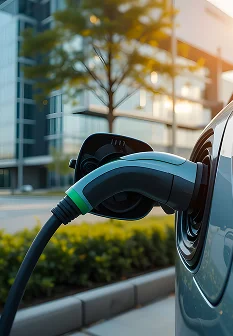
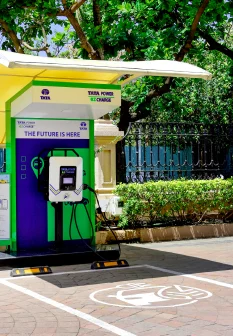
EV charging station at office for sustainability

The benefits of workplace EV charging drive better workplace experiences

5.  Accelerating EV adoption

Charging accessibility remains one of the biggest barriers to EV adoption. Workplace charging helps remove this uncertainty by allowing employees to charge their vehicles during office hours instead of relying entirely on public infrastructure.

Industry insights show that easy access to charging significantly improves EV adoption within organizations. At the same time, India’s EV policies encourage the expansion of workplace charging infrastructure, making it easier for businesses to participate in the growing electric mobility ecosystem.

Together, these factors make workplace infrastructure one of the most impactful EV-charging benefits for companies, while supporting the broader shift toward cleaner transportation.

6. Unlocking new revenue opportunities

Charging infrastructure can also create business opportunities. Companies may choose to allow visitors, fleet operators, or nearby businesses to access their charging stations.

Modern charging platforms enable flexible pricing models. Organizations can charge users per unit of electricity, per session, or through subscription-based access.

While revenue may not always be the primary objective, these corporate EV charging advantages can help offset installation and operational costs over time.

7.  Preparing businesses for the future of electric mobility

Electric vehicle adoption in India is expected to rise steadily over the coming decade. As adoption grows, the need for reliable charging infrastructure will increase across cities and workplaces.

Corporate campuses already host hundreds or even thousands of parked vehicles each day. This makes them ideal locations for decentralized charging networks. Organizations that invest early gain operational readiness and strategic positioning within the evolving EV ecosystem.

In the long run, these forward-looking investments deliver the most durable benefits of workplace EV charging.

To understand how to plan, install, and scale workplace EV charging effectively, explore our end-to-end EV charging guide

Where convenience meets corporate responsibility

Make daily commutes easier, affordable, and sustainable with workplace EV charging

Bottomline

The shift to electric mobility is already underway, and workplaces are perfectly placed to be part of that momentum. Installing chargers is not just about powering cars. It is about powering a smarter way of getting to work.

The benefits of workplace EV charging show up in everyday moments. An employee arrives in the morning, plugs in their EV in the office parking lot, and heads into work. By the end of the day, the car is ready for the commute home without requiring a stop at a public charger. Meanwhile, companies quietly move closer to their sustainability goals without making a big fuss about it.

For organizations that like staying a step ahead, this is a simple move with lasting impact. Sometimes the smartest upgrades are the ones that fit seamlessly into daily life. Workplace EV charging does exactly that.

Get EV charging solutions suited to your needs

Frequently asked questions

The frequently asked questions section is a reliable source for unlocking answers to some of the most crucial inquiries. Please refer to this section for any queries you may have.


Workplace EV charging stations increase convenience for employees and promote eco-friendly transportation to work. Giving staff the ability to charge at work cuts down on the need to find charging stations elsewhere. Businesses can enjoy our proven EV charging benefits for businesses, like happier employees and a better sustainability report.


Reduced commuting emissions and better climate targets alignment are two ESG benefits of EV charging. Supporting electric mobility is one way businesses can show tangible action toward sustainability. That translates to more credibility with investors, regulators, and consumers.


Yes. Access to charging is one of the largest determinants for EV adoption. The ability for employees to charge at work eliminates range anxiety and makes owning an EV a feasible option. As such, workplace charging becomes a key enabler for the EV economy.


Installing charging facilities at workplaces is seldom expensive, especially with AC chargers, which are most used for offices and commercial buildings. In India, each AC charger (Level 2 type recommended for workplaces) would cost approximately ₹1.25 lakh – ₹5 lakh, depending upon power capacities and other infrastructure needs. Overheads such as upgrading electrical lines, cabling, and installation would be extra. Policies have been eased as EV charging stations do not require any special kind of license to be deployed.


The Indian government has eased the guidelines for businesses to set up EV chargers. The power ministry issued directives that categorize EV charging as a de-licensed activity. Organizations don't require a separate license for electricity distribution to set up charging stations at offices, commercial buildings, or any private premises. Businesses can set up chargers following all technical and safety norms issued by the Government of India & Central Electricity Authority.


The optimal number of EV chargers to install at a workplace is contingent on two factors. These include the total parking capacity as well as the expected rate of EV adoption. Some building policies in India have advised developers to adopt one EV charging point for every five parking spots during the construction of commercial buildings.

Sources

1. The Real Cost of EV Charging Stations in India - A Comprehensive Guide

2. Workplace EV Charging: Business Benefits and Considerations for Success

3. EV Charging Station Installation

4. Workplace EV charging in India: The role of Industrial Parks, SEZs, and offices

5. India’s next EV Opportunity: Unlocking Workplace charging in offices, SEZs & Industrial Parks

6. EV Chargers for Business: The Smart Investment for 2025

7. Alleviating range anxiety with ‘Enroute’: A real-time mobile solution and infrastructure innovation for electric vehicle users

8. Part 2: Scaling Workplace EV Charging in India: Global Case Studies, Business Models, and Investment Opportunities

9. Tata Power encourages employees to adopt zero-emission mobility to fight air pollution in Delhi NCR