Introduction

Somewhere between a 70-year-old coal plant where flamingos nest undisturbed and a mission-control room tracking solar fields across a continent-sized grid, India's energy future is quietly, seriously taking shape. Dr. Praveer Sinha, MD and CEO of Tata Power, has spent the better part of a decade at the centre of that effort. In a wide-ranging conversation with The BroadView, he spoke with the kind of clarity that only comes from someone who has actually had to solve the problem, not just describe it.

What follows is not a corporate story. It is a serious answer to a serious question: what does it actually take to power 1.4 billion people without leaving reliability, affordability, or sustainability behind?

The three things India cannot afford to get wrong

India's economy is growing at 7 to 8 percent a year. Manufacturing corridors are coming alive. Data centres are multiplying. Hundreds of millions of Indians are, for the first time, buying air conditioners, refrigerators, and washing machines. The energy needed to support all of this isn't incremental. It is civilizational in scale. And it needs to be available not just on sunny afternoons but at 2 am in July, on a still and cloudy day, in the middle of a heatwave when the grid is under maximum stress.

That is the real challenge, and it has three dimensions that must be solved together: reliability, affordability, and sustainability. Solve for one and ignore the others, and you haven't really solved anything. 

"When we talk about giving clean power, it's not only just giving clean power, but also which is affordable and economical... there is a much better certainty of availability as well as control in the way the cost of power you can have for next 25 years."


-Dr. Praveer Sinha, MD and CEO, Tata Power

Twenty-five years of cost certainty. That is not a product pitch. That is what serious, long-term thinking about a nation's energy sounds like.

Can clean energy ever be truly reliable?

Solar power costs have fallen dramatically, from around 14 to 15 rupees a unit a decade ago to roughly 3.5 to 4 rupees today. That progress is real. But it comes with a catch that doesn't get spoken about enough: solar only works when the sun shines, and wind only works when the wind blows. For a country where reliable power is a lifeline for hospitals, factories, and cold chains carrying food and medicine, intermittency is not a footnote. It is the central engineering challenge of the entire transition.

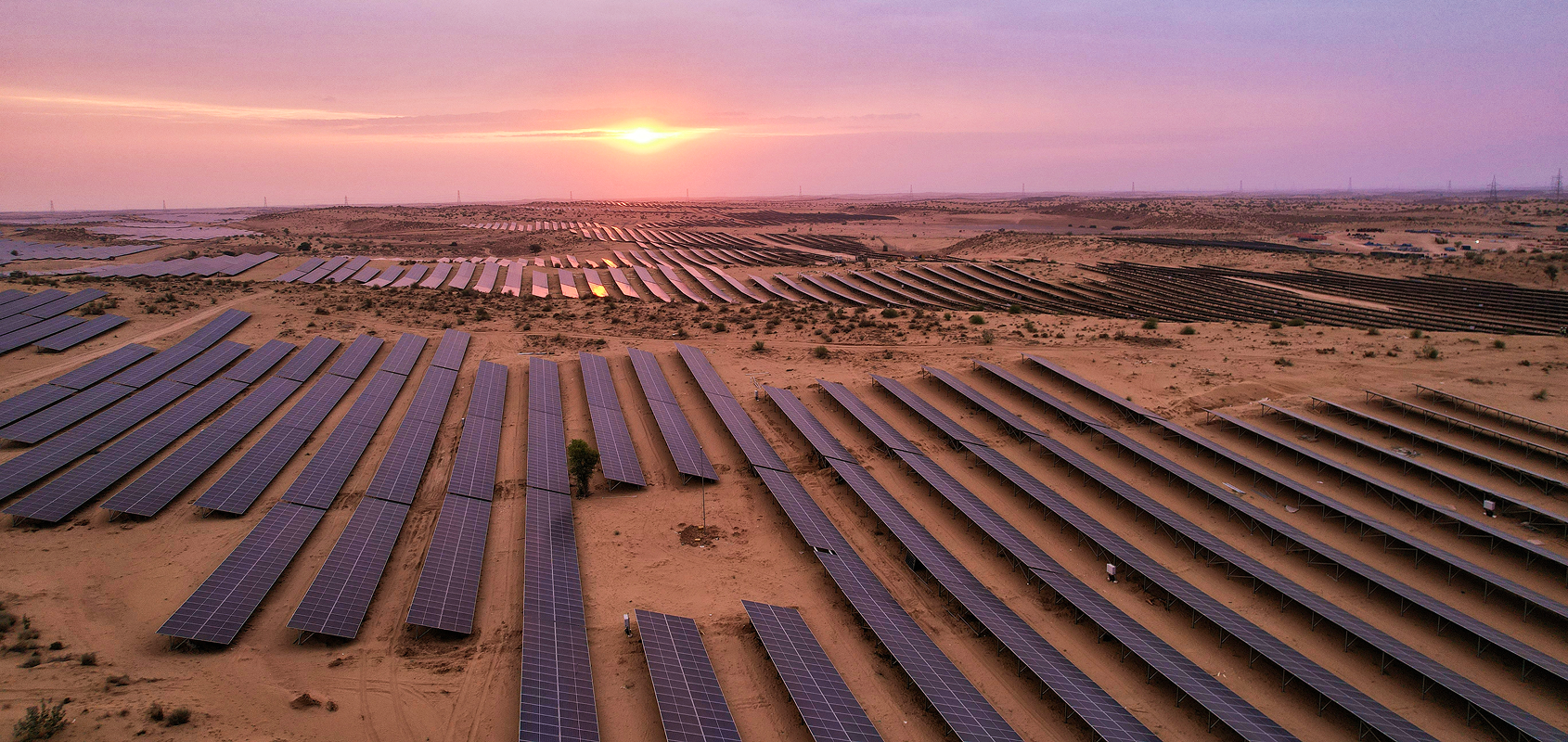
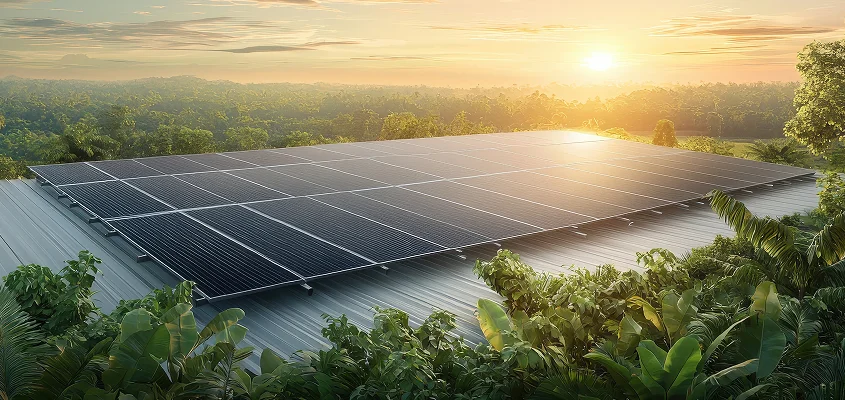
Rajasthan solar energy power generation facility

Solar is transforming energy economics. Integrated solutions are transforming reliability

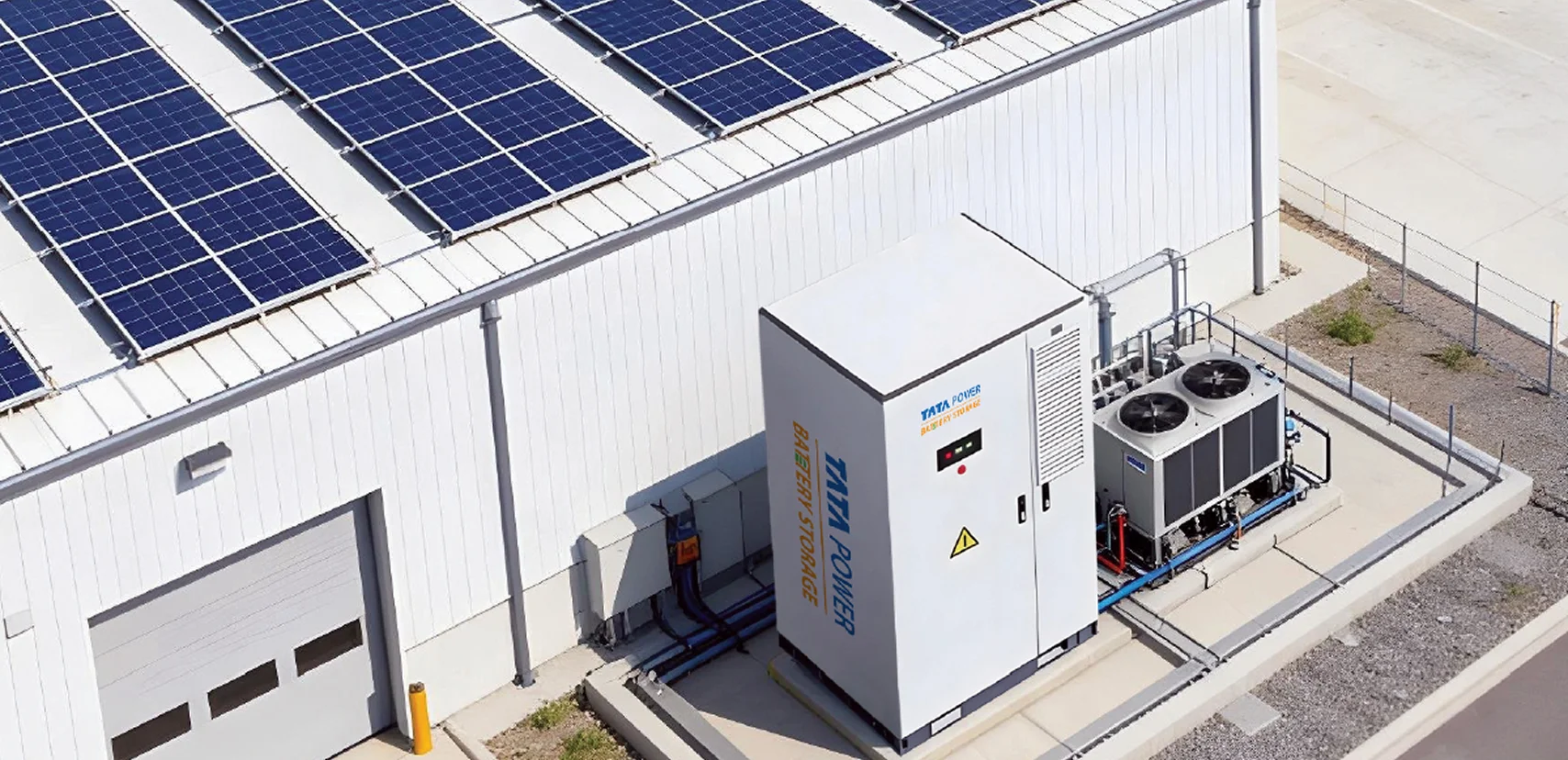
Hybrid solutions combining solar and wind can already deliver renewable power for roughly 70 percent of daily time slots. That is meaningful, but the remaining 30 percent still needs a serious answer. "Intermittent power, if we have to make it firm, we need storage — whether it is battery storage, pump storage, or any other type of thermal storage," says Dr. Sinha. Tata Power is currently building two pumped hydro projects: a 1,000 MW plant at Bhivpuri already underway, and an 1,800 MW plant beginning construction later this year. Bundled with wind and solar, pumped hydro can push reliable renewable supply up to 90 to 95 percent of the time. That changes the equation entirely.

To understand why that matters, it helps to look at where India's energy infrastructure actually comes from, and what it has quietly been doing for the past seven decades.

What does a 70-year-old power plant still have to teach us?

On the eastern waterfront of Mumbai, Tata Power has been generating electricity since 1955. The Trombay plant is an unusual place. The sea beside it is clean. Flamingos nest nearby. The sky above is clear. For a coal-based power plant, none of that is what you'd expect.

As Dr. Sinha explains, “We use one of the cleanest coal which is available. The ash of this coal is 1–2%. The normal ash of any domestic coal-based plant is between 30 to 40 percent. That’s why the coal that we get is washed coal. There are no fugitive emissions from this coal and that’s why you see the sky is very clear. We have flamingos on the other side. We take pride in saying that this is one of the cleanest plants in the country.”

The plant's history runs deeper than its environmental record. When ONGC discovered gas at Bombay High, Tata Power was their first customer. That relationship has held for decades, giving Trombay access to natural gas that most other plants can only source as expensive imported LNG.

Three units still operate here, generating close to 930 MW and supplying roughly 5 percent of Mumbai's total power, around the clock, without interruption. “What is important is how these workhorses are supporting the financial capital of Mumbai by providing 24x7 power,” says Dr. Sinha. “These plants normally run continuously for 400 to 500 days without any maintenance. They are really solid in terms of how dependable power can be supplied to Mumbai city.”

Teams work through weekends and late nights so the city's hospitals, homes, and businesses never notice the effort behind the lights staying on.

Dr. Sinha is clear-eyed about where thermal sits in the long arc: “Thermal will be there, but its usage will come down drastically.” Older plants will eventually be decommissioned, while the most efficient ones will continue operating at lower utilization as part of a cleaner and more balanced energy mix.

That is not retreat. That is a responsible handover. But before that handover could happen, the sector itself needed to be put back on solid ground.

How did India's power sector find its footing again?

Ask anyone who worked in Indian energy between 2013 and 2018 and they will tell you it was a bruising period. Plants had been built without long-term supply agreements, leaving them exposed to a merchant market that had collapsed. Distribution companies were struggling to pay their bills. Private capital had largely stopped flowing in. For those inside the sector, it wasn't just a financial problem. It was a question of whether the entire model of private participation in Indian energy was viable at all.

Two things changed that. 

  • A 2022 rule tied power scheduling directly to payment discipline: if a DISCOM didn't pay on time, it simply wouldn't be scheduled power. No DISCOM, especially during peak summer months, could afford that.
  • And Tata Power's most pressing challenge, its Mundra plant, moved toward resolution through a supplementary power purchase agreement that worked for all parties involved. 

"I do feel that today the power sector's financial health, because of the support they get from the state government and financing agencies, they are in a position to pay," says Dr. Sinha. The stress of that earlier period, he is careful to note, is no longer visible in the same way. The foundation has been repaired.

Is India ready for what comes after coal?

A few miles from Trombay, in a room that looks nothing like a power station, the next chapter of Indian energy is already being written. Large screens track generation in real time across more than 60 solar sites and nearly 24 wind sites spread across the country. Weather pattern shifts are monitored continuously, because a change in cloud cover over Rajasthan or a drop in wind speed in Tamil Nadu has immediate consequences for output. This is not a company that installed solar panels and called it a transition. This is a company that built the nervous system to manage a vast, distributed energy portfolio in real time.

The contrast with the Trombay control room down the road is intentional. One watches coal move into a boiler. The other watches sunlight and wind translate into electrons across a continent-sized grid. Both are being run with the same standard of care. That continuity of discipline across very different technologies is perhaps the most underappreciated thing about what Tata Power has built. It also points to something bigger: the question of how all this energy gets managed once it reaches the consumer. This is where EnerUni steps in to change the game.

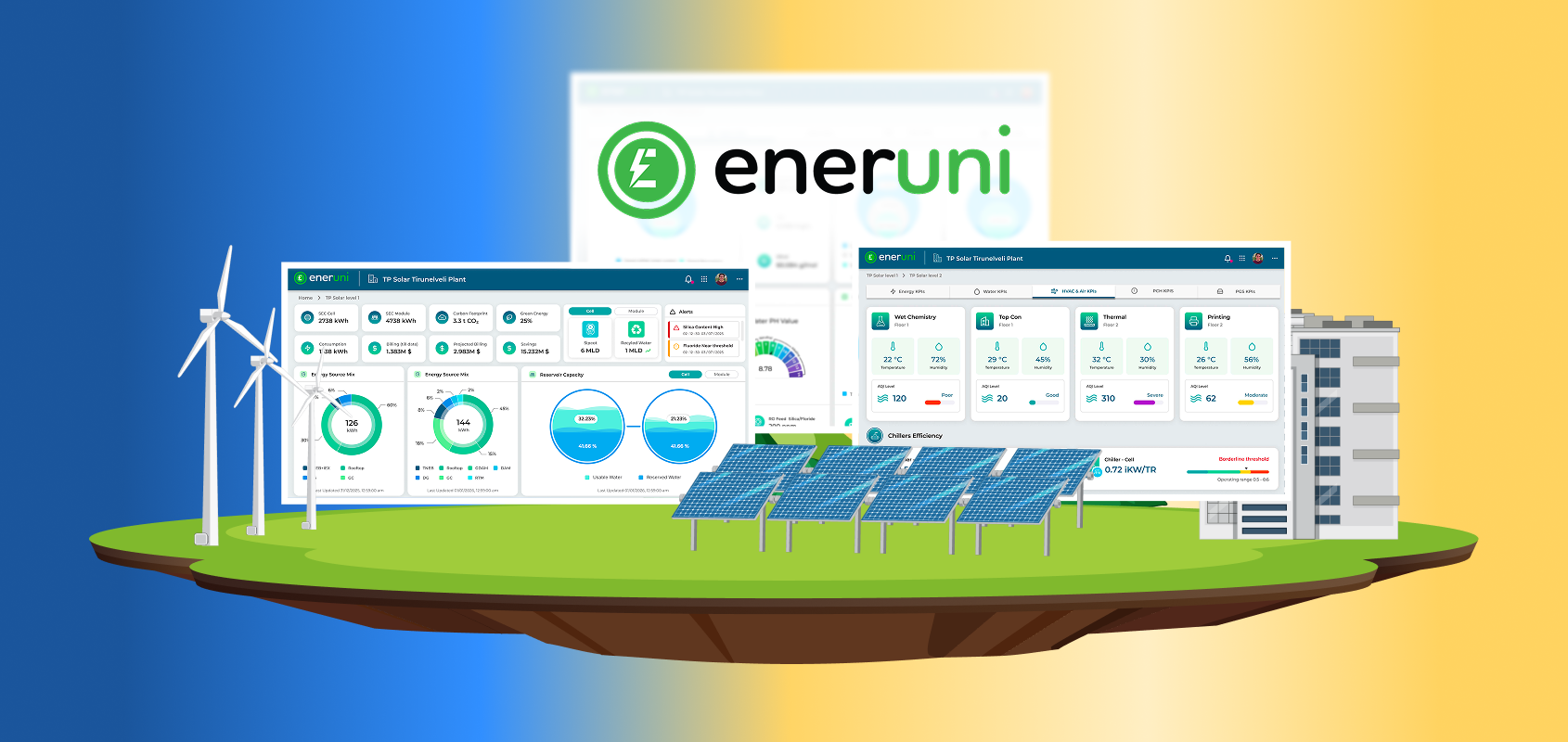
EnerUni smart energy management platform by Tata Power

One platform to monitor, optimize, and manage your entire energy ecosystem

What Is EnerUni and why does it matter?

Most energy platforms tell you how much power you have used. EnerUni, Tata Power's new platform developed with TCS, does something more fundamental. It tells every kind of user, residential, commercial, industrial, or utility-scale, how to produce power and how to consume it, in real time.

Dr. Sinha describes it as a solution the market genuinely needed: "I feel that there was a need for such a solution — and it integrates energy management as well as energy production and usage." What that means in practice is a shift in the relationship between a power company and the people it serves. The consumer stops being a passive recipient of electricity and becomes an active participant in how energy flows through the grid. In a country adding renewable capacity at scale, where demand management will become as important as supply, that is not a feature. It is a new category of product entirely.

The ambition behind EnerUni is consistent with a broader pattern: Tata Power doesn't just build energy assets. It builds the infrastructure around them. Nowhere is that more visible than in how the company is approaching the manufacturing backbone of India's solar future.

The next era of energy is here now

Stay ahead of the curve with future-ready solutions for homes, businesses, and beyond

Who will survive India's solar manufacturing race?

India's solar manufacturing sector is expanding fast, but not all of it is built to last. Dr. Sinha breaks the supply chain into four layers, and the story at each level is different:

Solar modules: Adequate capacity exists, with several large players in the market.

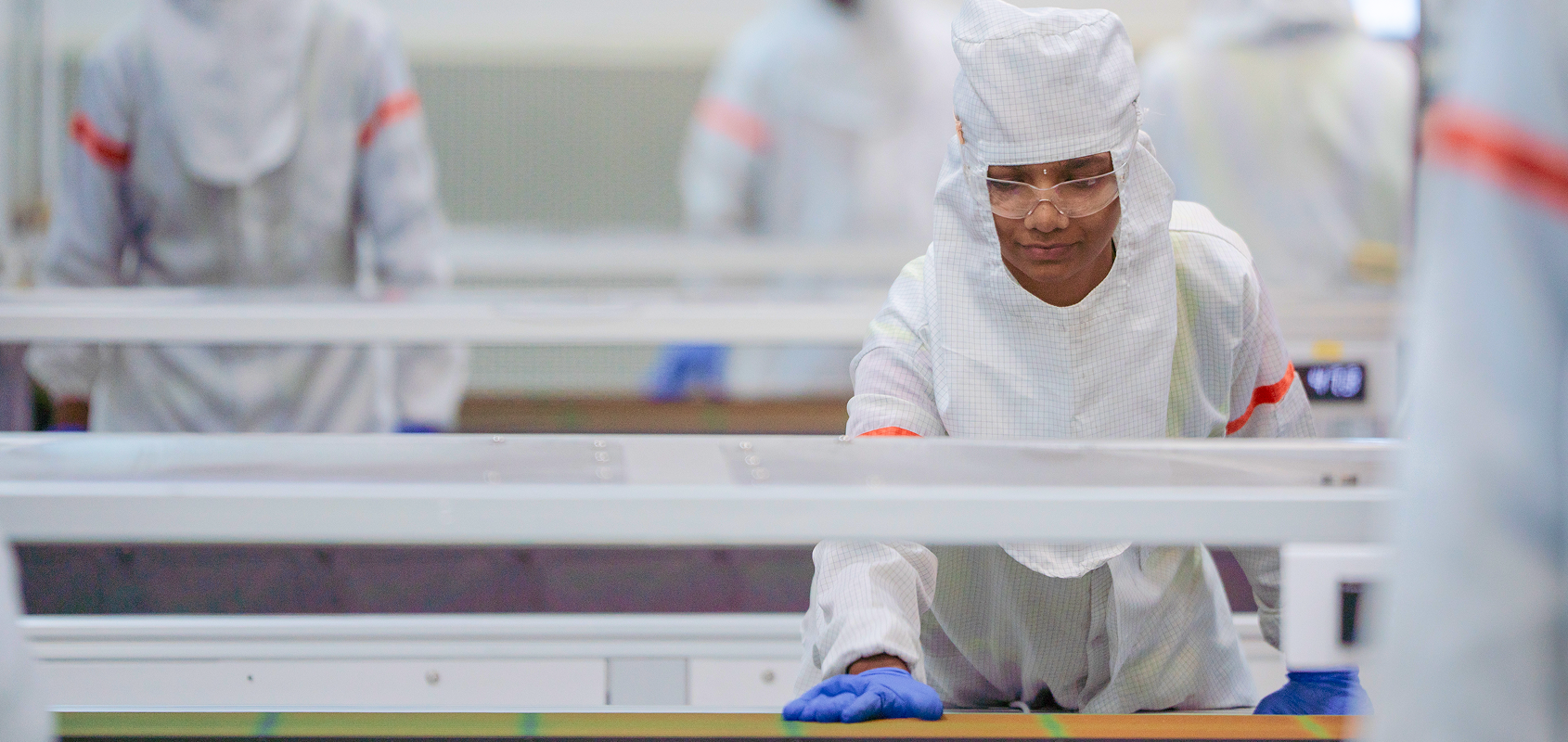
Solar cells: Many plants have been built, but most run at 60 to 70 percent efficiency. Tata Power's cell plant operates at 94 to 95 percent, a gap that compounds significantly over time.

Ingots and wafers: Currently 100 percent imported. Tata Power is setting up domestic manufacturing capacity, targeting readiness at least six months ahead of the government's June 2028 deadline.

The policy trigger: From June 2026, all solar modules sold in India must use domestically made cells. Companies without backward integration will find themselves unable to source cells, as larger players prioritize their own captive needs first.

Tata Power vision driving India’s future energy growth

The next phase of India's energy transition will be built on manufacturing excellence

The result, Dr. Sinha expects, is consolidation. "Absolutely, because from 1st June 26, you have to use Indian cell. So if you're not having the backward integration, you cannot make the modules and you will be choked because of that." Scale, supply chain control, and quality discipline will separate those who remain from those who don't. The same qualities, it turns out, that have defined Tata Power's own trajectory over the past decade.

How far does Tata Power's vision actually go?

The financial transformation since 2018 gives a sense of what disciplined execution looks like in practice:

  • Twenty-four consecutive quarters of profit, through COVID, commodity shocks, and sector-wide stress
  • Profit grown nearly 5X, from roughly 1,000 crores annually to close to 5,000 crores
  • What used to take a full year in earnings now happens in a single quarter
  • EBITDA has more than doubled
  • Operating assets stand at 16 gigawatts, with nearly 10 more gigawatts under implementation
  • Distribution customers grown from 2.5 million in 2018 to 12.5 million today, with a target of 40 million by 2030
  • Four transmission projects already commissioned, with HVDC projects now being explored

And then there is nuclear. Tata Power is moving toward it carefully, grounded in the same culture of operational discipline that has defined everything else the company has built. "We do hope in the next 6 to 9 months we will come up with a clear plan of setting up nuclear plants in the country. We are very confident that the type of domain knowledge, experience, and the discipline of operating thermal plants for the last 60 years will help us to set up the plant as well as to operate it — not only successfully, but with all safety." That emphasis on safety is not incidental. It is the entire argument, and it is one only a company with six decades of operational credibility can make.

Harvard Business School has written one case study on Tata Power's energy transition. A second is in progress. Dr. Sinha receives that acknowledgment and moves on: "What you are seeing is just half full. The best is yet to come." For a country that needs its energy future to work, that is exactly the kind of confidence worth paying attention to.

Bottomline 

India's energy future will not be built by those who picked one technology and bet everything on it. It will be built by those who understood the full complexity of the problem and were willing to hold the tension between what works today and what the country will need tomorrow. Tata Power has spent six decades doing exactly that, running coal plants beside nesting flamingos, building solar cells at efficiencies the industry struggles to match, and now drawing up plans for nuclear energy. None of it is accidental. It is the product of institutional discipline, a genuine sense of public responsibility, and a leadership team that measures success not in quarters but in decades. The work is well underway. And by their own honest reckoning, it is only half done.

Frequently asked questions

The frequently asked questions section is a reliable source for unlocking answers to some of the most crucial inquiries. Please refer to this section for any queries you may have.


Pumped hydro works like a gravity-powered battery: water is pumped uphill when surplus energy is available, then released through turbines to generate power on demand. Bundled with solar and wind, it can push reliable clean power supply up to 90 to 95 percent of the time, effectively solving renewable energy's intermittency problem


From June 2026, all solar modules sold in India must use domestically made cells, which means companies without their own cell manufacturing will be unable to source supply as larger players prioritize their own needs first. The likely result is significant consolidation, leaving only the most backward-integrated manufacturers standing


Thermal remains essential as a baseload source while renewables and storage solutions scale up, but its share of India's energy mix is expected to fall from around 60 percent today to 30 to 40 percent over the next two decades. Older plants will be decommissioned; only the most efficient will continue operating, at lower utilization


Unlike conventional platforms that simply track consumption, EnerUni tells every kind of user, from a household to a large utility, how to produce and consume power in real time. It is the first platform of its kind globally to integrate energy management with energy production and usage simultaneously


Authorized recyclers help ensure that waste is handled safely, legally, and responsibly. This is especially important for regulated waste streams such as e-waste, used oil, or hazardous materials. Working with approved partners gives organizations better traceability and compliance confidence. It also helps ensure that material recovery does not create hidden environmental or social risks elsewhere.