

 Contact us
A solar microgrid generates electricity from sunlight


Sections
- Introduction
- What is a solar microgrid?
- How does a solar microgrid work?
- What are the core components of a solar microgrid?
- What are the benefits of a solar microgrid?
- The real-world uses of a solar microgrid
- Real stories, real power: Tata Power’s solar microgrid impact
- Solar microgrids in India: Policies, projects, and prospects
- The future of solar microgrids
- Bottomline
- FAQs
Introduction
A solar microgrid is a pocket-sized power network that stands on its own when the nearest grid line is miles away. Picture solar panels feeding smart batteries and inverters to create a clean, local flow of microgrid solar energy. Because this solar powered microgrid can unplug from the shaky central lines, it keeps lights on in places the main grid forgets or where outages are routine. In one stroke, the renewable energy microgrid reduces carbon footprint, ends generator noise, cuts long transmission losses, and turns sunlight into reliable energy.
The payoff is real. Homes glow after dusk; a village-scale water-purification unit runs all day, giving everyone safe drinking water, and smart solar streetlights guide travelers, unlocking possibilities all around. These are the very microgrid benefits we explore below. You will learn how a solar microgrid works, what sits under the hood, and why this solar microgrid solution points to a smarter, brighter future.
What is a solar microgrid?
A solar microgrid is a localized, small-scale power grid that operates on solar energy, often with battery storage and occasionally other renewables. Acting as a mini network for a community or facility, it can sync with the national grid or “island” to run independently when outages strike, keeping lights on. The system delivers solar power through its own distribution lines and control systems, supplying clusters of homes, businesses, or institutions with reliable, clean electricity.
How does a solar microgrid work?
A solar microgrid system works by generating electricity from sunlight and distributing it through a localized network. The process involves several steps and components working together -
Solar panels capture sunlight
High-quality solar panels (usually mounted on rooftops or open land) convert sunlight into direct current (DC) electricity. These microgrid solar panels are the primary power source, soaking up energy whenever the sun is out.
Charge controller regulates power
The DC output from the panels flows into a solar charge controller. This device prevents overcharging of batteries and regulates voltage/current to protect all connected equipment. It’s like a gatekeeper, ensuring the power is “just right.”
Combiner box and safety
In many setups, the wiring from multiple panels goes through a combiner box. This box consolidates incoming solar power; houses fuses or breakers for safety and makes it easier to monitor the system’s performance. It essentially ties all panel outputs into one managed feed.
Inverter converts DC to AC
Most home and business appliances use alternating current (AC). So, the microgrid uses an inverter to turn the DC solar power into AC power. A microgrid solar inverter is a critical piece. It synchronizes and smooths the electricity to match standard power quality so that fans, lights, and machines can use it.
Battery storage kicks in
If the solar panels produce more power than is immediately needed (for example, in the afternoon), the excess can charge a battery bank. These batteries store energy so the microgrid can supply power at night or during cloudy days. In a solar powered microgrid, battery storage is often key to providing 24/7 electricity. At night, the batteries discharge to keep the lights on.
Power distribution to loads
After inversion (and storage as needed), the AC electricity travels through the microgrid’s own distribution network - essentially wires and poles (or cables) that connect to houses, schools, pumps, or whatever loads are part of that microgrid. Each user typically has a meter to measure their consumption, just like on the main grid, to allow proper billing or sharing of costs.
Smart control and management
A control system oversees the whole microgrid, balancing generation and demand. It may automatically switch the battery charging on or off, start up a backup generator if included, or isolate the microgrid from the main grid when a blackout on the main grid is detected. Advanced microgrids use smart controllers and software to optimize performance and ensure stability.
Grid connection
Some solar microgrids are grid-tied microgrids, meaning they have a link to the main utility grid via a control switch. In normal conditions, they might exchange power with the grid (feeding surplus solar power out or drawing power in if needed). But if the main grid fails or if it’s advantageous, the microgrid can disconnect and run in “island mode” autonomously. This grid-interactive capability provides flexibility and extra reliability. In remote off-grid microgrids, this step doesn’t apply since there is no external grid to connect to.
What are the core components of a solar microgrid?
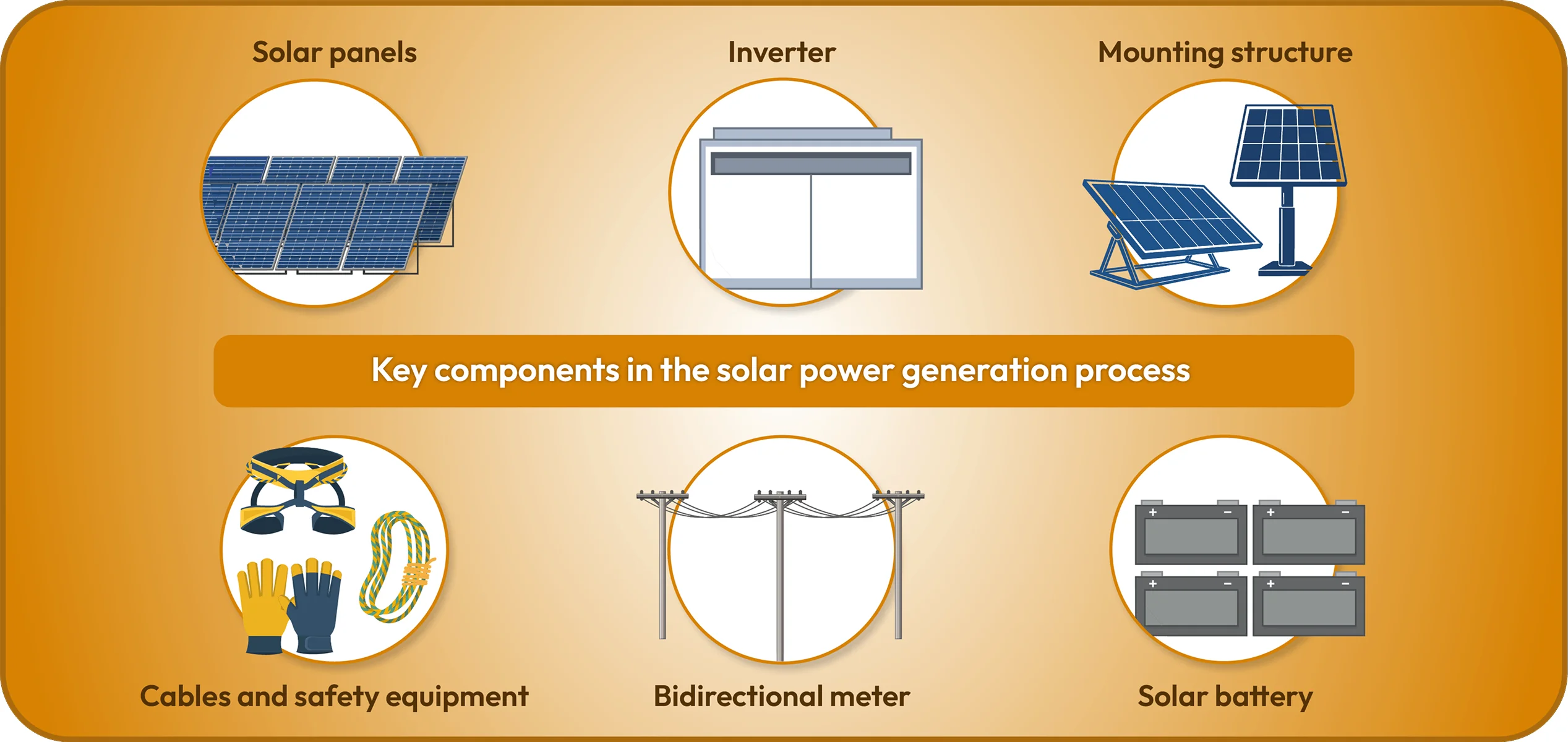
Building a solar microgrid involves putting together several core components, each with a specific role in generating, storing, and delivering power. Here are the main parts of a solar microgrid solar design:
Solar panels
The most visible component - photovoltaic (PV) solar panels convert sunlight into electricity. They are typically mounted on rooftops or ground frames where they get maximum sun. Solar panels are the power generators of the microgrid, sizing from a few kilowatts in a village up to hundreds of kW for larger installations on a solar farm.
Energy storage (Batteries)
Batteries store excess energy generated by solar panels. In daytime, if not all solar power is consumed, the surplus charges the batteries; later, when solar output drops (evening or cloudy periods), the batteries discharge to supply electricity. Commonly, lithium-ion or advanced lead-acid batteries are used. Adequate storage is essential for a solar microgrid to deliver reliable power 24/7. The capacity of the battery bank is designed based on expected loads and how many non-sunny hours need to be covered.
Inverter / Power conditioning unit (PCU)
The inverter (often part of an integrated PCU) is the device that converts the DC output from the solar panels into AC power, which is used by most appliances. It also often serves as the charge controller for batteries and the interface that maintains power quality. A microgrid solar inverter is critical for synchronizing with any external grid and for maintaining stable voltage and frequency for the microgrid. Modern inverters in microgrids are often smart, handling both grid-interactive functions and battery management (hence sometimes called hybrid inverters).
Control and management system
A control system or energy management system oversees the operation of the microgrid. It includes controllers, sensors, and sometimes software algorithms. The controller monitors generation, battery state, load demand, and (if connected) the status of the main grid. The management system can automatically balance supply and demand, shed non-critical loads, or start a backup source. Advanced microgrid setups might include remote monitoring, smart meters for users, and software that optimizes when to use stored energy vs. solar direct.
Distribution network
The microgrid has its own mini power distribution system, i.e. cables, poles, transformers (higher voltage and longer distance) to distribute power. The network connects the microgrid’s solar panels and power source (panels/inverter) to each home or building, often through service connections and meters. Smart meters may be installed at each home or business to track usage. Though not unique hardware like an inverter, these wires and connections are fundamental components because they define the microgrid’s physical reach (what can be powered).
Backup sources
Some solar microgrids include backup power sources to enhance reliability. This could be a diesel generator or a biomass generator that can supplement power on unusually cloudy weeks, during maintenance, or if the demand exceeds what solar and batteries can supply. Increasingly, cleaner backups like green hydrogen fuel cells are being explored. For example, in 2024, a Ladakh microgrid project used hydrogen fuel for storage and backup. While the goal is to minimize fossil fuel use, having a backup can enhance reliability, acting as a safety net for critical needs.
Support structures & balance of system
These include mounting structures for panels, junction boxes, wiring, switches, surge protectors, and grounding equipment. They aren’t often talked about, but without proper mounting frames or safety switches and fuses, the microgrid wouldn’t be stable or safe. For instance, solar microgrid design involves planning proper mountings to withstand wind and including protection devices to handle lightning strikes or power surges.
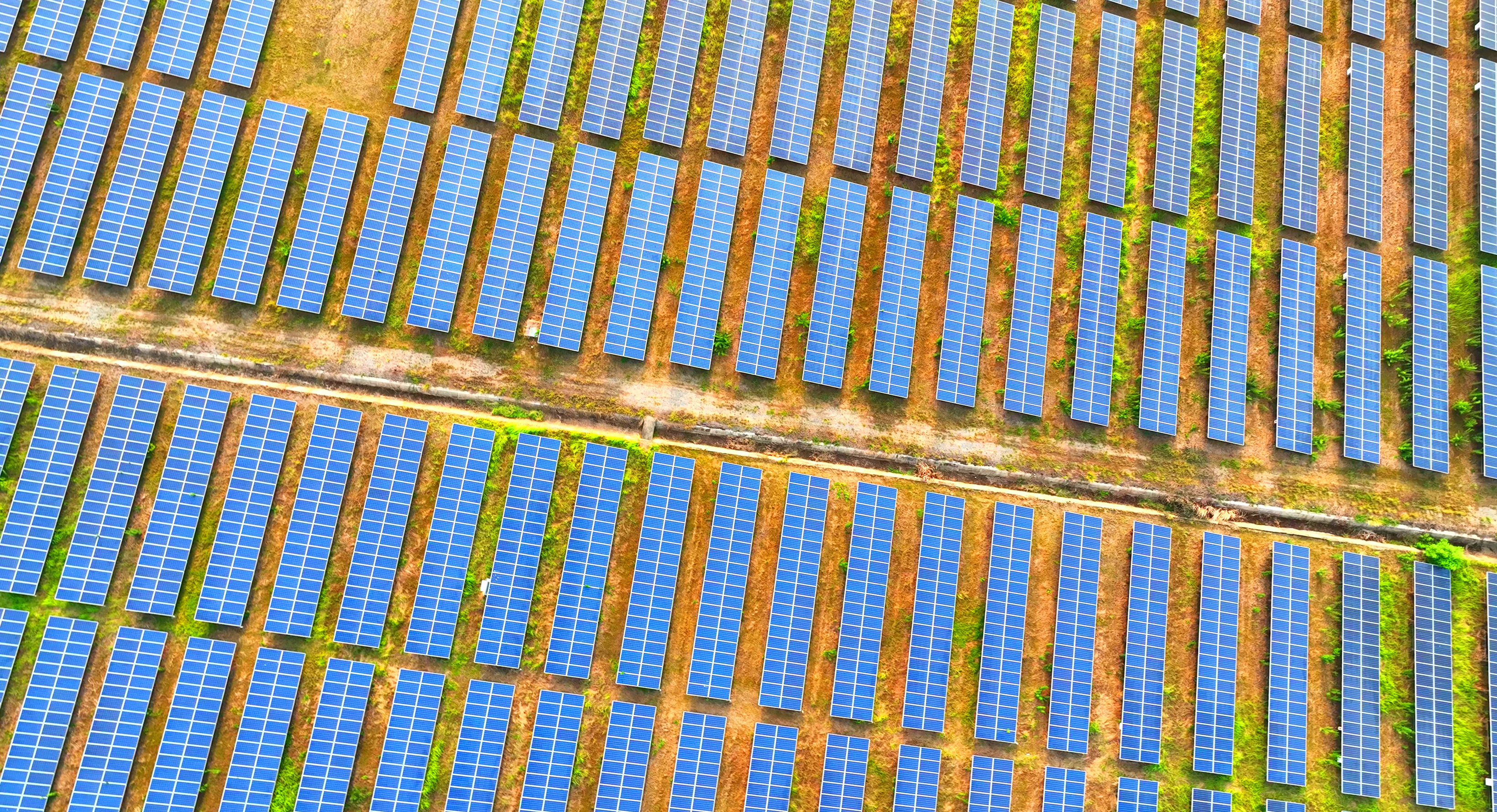
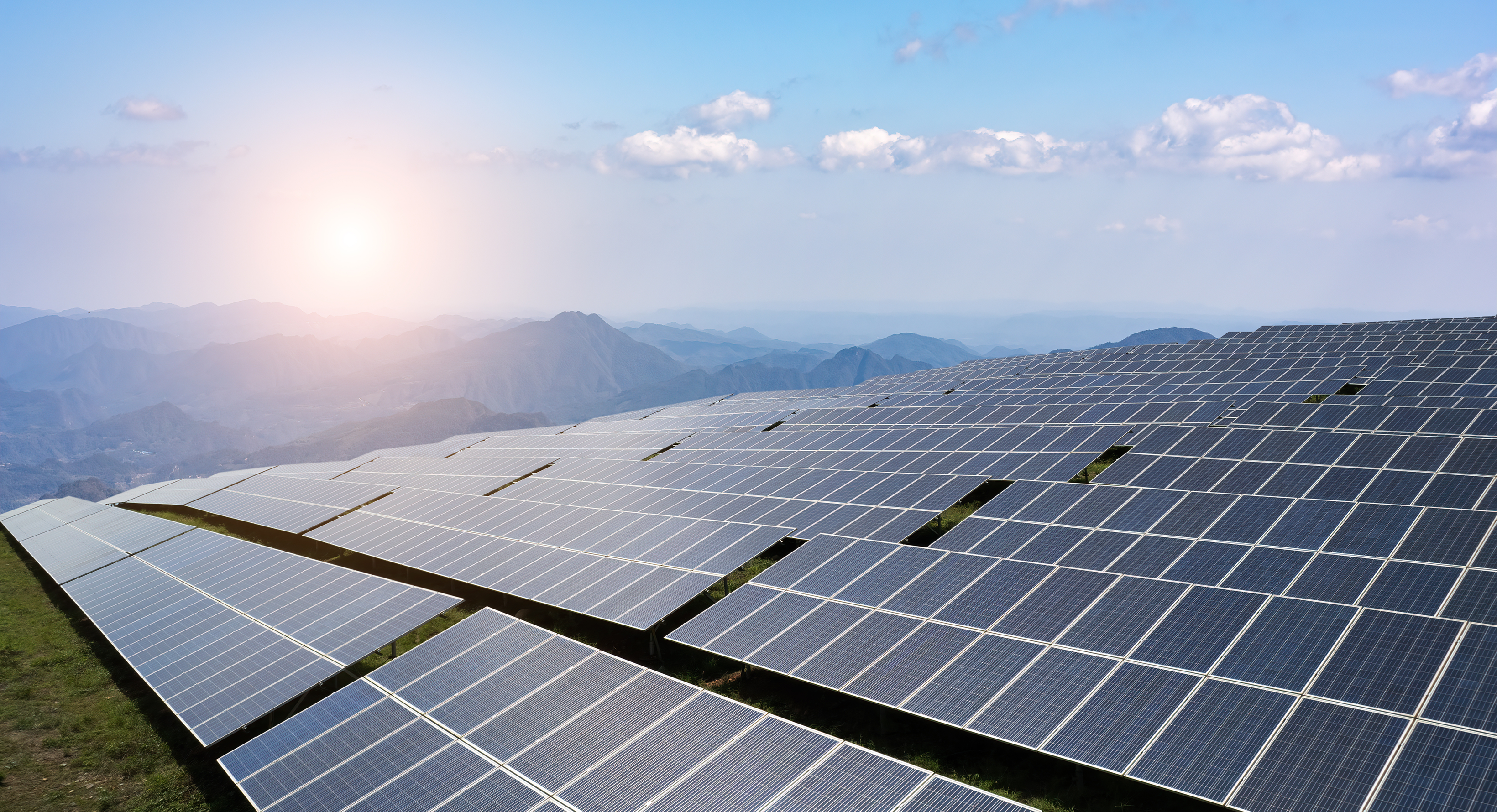
A solar powered microgrid distributes electricity through a localized network
What are the benefits of a solar microgrid?
Adopting a solar microgrid system can yield numerous benefits for communities, businesses, and the environment. Here are some of the standout advantages:
Reliable power and energy access
Perhaps the biggest benefit is providing electricity in areas where extending the main grid is difficult or where the power supply is unreliable. A solar microgrid can bring lights and power to a remote village, an island, or a hilly hamlet without waiting for long transmission lines, as they provide round-the-clock power (battery storage). Moreover, microgrids improve reliability – they keep working even if the central grid fails, isolating themselves (islanding) to supply critical loads. In disaster-prone or off-grid areas, a solar microgrid can be a lifeline. For example, in the Sundarbans of West Bengal, when Cyclone Amphan knocked out the conventional grid for weeks, a community solar microgrid stood strong and continued serving essential needs.
Energy independence
A solar microgrid allows communities to be more self-reliant regarding energy. Rather than depending on a far-off power station and grid company, the community can partly own or manage their own generation. This local empowerment can build capacity and responsibility. For instance, village energy committees often manage microgrid operations and revenue collection. It can also insulate communities from electricity price fluctuations since their fuel (sunlight) is free. In a broader sense, widespread microgrids contribute to energy security for the country by decentralizing production and ensuring protection from grid failures. They make the overall grid more resilient by localizing issues.
Environmental benefits
Solar microgrid environmental benefits are significant. By using solar energy and cutting out diesel generators or coal power, microgrids reduce greenhouse gas emissions and air pollution. Replacing a diesel genset with a solar+battery microgrid, for instance, avoids carbon emissions, soot, and local air pollutants. On a larger scale, India’s planned microgrids could avoid millions of liters of diesel consumption. In fact, the Tata Power microgrid initiative alone is estimated to eliminate up to 1 million tons of CO₂ and save 57 million liters of diesel annually by switching rural consumers to clean power. In environmentally sensitive areas (like forests or islands), microgrids provide power with a minimal ecological footprint. All of this helps fight climate change and contributes to the key green benefits of solar microgrids.
Cost savings and economic benefits
While microgrids need upfront investment, they deliver long-term savings and boost local economies. They cut the need for costly grid extension to remote areas and reduce transmission losses (since power is generated on-site). Local generation avoids the 5–10% losses that happen when electricity travels over long lines. Efficient energy management in a microgrid lowers peak demand charges and reduces electricity bills. Reliable local power lets businesses stay open longer and run more smoothly, raising their incomes. Studies in India have found that villages with solar mini grids saw small businesses grow and incomes rise, while out-migration slowed as local opportunities improved.
Resilience and energy security
Decentralized microgrids enhance overall system resilience. During cyclones or grid failures, a solar microgrid sustains essential services such as healthcare centers or emergency shelters independently. This backup capability strengthens disaster preparedness. If storms sever transmission lines, communities with microgrids retain lighting and communications. As extreme weather events become more common, this local energy security proves vital. By isolating faults, microgrids also limit the scope of outages.
Social development and quality of life
Electrification via solar microgrids delivers clear social benefits. Reliable power lets children study after dark under bright lights, boosting learning. Villages gain access to safe drinking water through solar-driven pumps and purification systems. Streetlamps make evenings safer, and phone charging and telecom towers bridge the digital divide. In one solar microgrid project, in Sundarbans, India, the introduction of electricity led to night markets emerging and literacy rates improving. Overall, solar microgrids raise living standards by bringing modern amenities and economic opportunities to places once in darkness.
What are the real-world uses of a solar microgrid?
Solar microgrids are incredibly versatile in applications. Essentially, anywhere that needs a reliable, independent power source and has access to sunlight is a candidate. Some notable real-world uses are -
Rural village electrification
One of the most impactful uses is bringing electricity to off-grid or remote villages. In states like Uttar Pradesh, Bihar, Jharkhand, Odisha, and Chhattisgarh, solar microgrids are lighting communities that previously relied on kerosene lamps. These systems power homes (lights, fans, phone charging, TVs), small shops, and community facilities. For example, Tata Power’s Renewable Microgrid initiative has been installing microgrids in villages and even aims to deploy 10,000 solar microgrids to support rural consumers across India. Each microgrid turns “powerless” villages into electrified ones, often for the first time – dramatically improving quality of life and enabling new economic activities.
Agriculture and irrigation
Solar microgrids support agriculture by powering irrigation pumps, rural food processors like grain mills, and cold storage. In some villages, farmers use solar pumps under schemes such as PM KUSUM to irrigate crops by day, boosting yields and cutting diesel costs. Local processing of rice or flour adds value close to home. These productive activities often accompany microgrid projects to drive rural growth. With reliable solar power, places see fewer people moving to cities as farms and small businesses become more sustainable.
Islands and remote regions
Geographically isolated areas like islands, mountain hamlets, and forest villages often benefit from solar microgrids. For example, the Sundarbans in West Bengal, a cluster of islands, saw an 110-kW solar microgrid installed in Indrapur in 2011. This system serves about 10,000 residents and includes a two-day battery backup to handle alternating sunny and cloudy days. Today Indrapur enjoys 24-hour electricity, energizing the local fishing industry and lifting living standards for residents who once had no power. These examples underscore that solar microgrids can thrive where extending conventional grid lines would be technically difficult or exorbitantly costly.
Community facilities and institutions
Solar microgrids are used to power important public service centers in areas with unreliable power. These solar systems with battery backup guarantee power during grid outages, creating self-reliant facilities. Remote telecom towers rely on microgrid solar systems instead of diesel generators. Urban utilities are piloting them too: In Delhi, BYPL tested solar PV microgrids at four locations to support the grid and ease peak demand. In many rural areas a single microgrid serves a clinic, school and community hall, keeping vaccine fridges cold, lights on and computers running. Such setups strengthen public services and can even save lives.
Commercial and industrial parks
Though less common than rural projects, solar microgrids are also being employed in commercial or industrial settings to manage energy costs and reliability. For instance, an industrial estate might use a solar microgrid to power its units during peak daytime hours and island itself during grid disruptions. This concept, sometimes called C&I microgrids, is growing. They offer businesses a way to ensure continuity, avoiding losses from production downtime, and to save electricity by generating their own cheaper solar power.
Military and strategic applications
Defense establishments in remote posts benefit greatly from microgrids. They reduce the need to haul diesel across difficult terrain and provide more reliable, silent operation. Remote radar stations, border outposts, and any strategic facilities off-grid can use solar microgrids often with advanced storage like hydrogen fuel cells as being tested to ensure energy security. For example, NTPC partnered with the Indian Army to install a Solar Hydrogen-based Microgrid in Chushul, Ladakh. This not only cuts costs but also improves logistical security (less dependency on fuel supply lines). The fact that the Ministry of Defence in India is partnering on such projects shows the confidence in this technology’s ability to serve strategic needs.
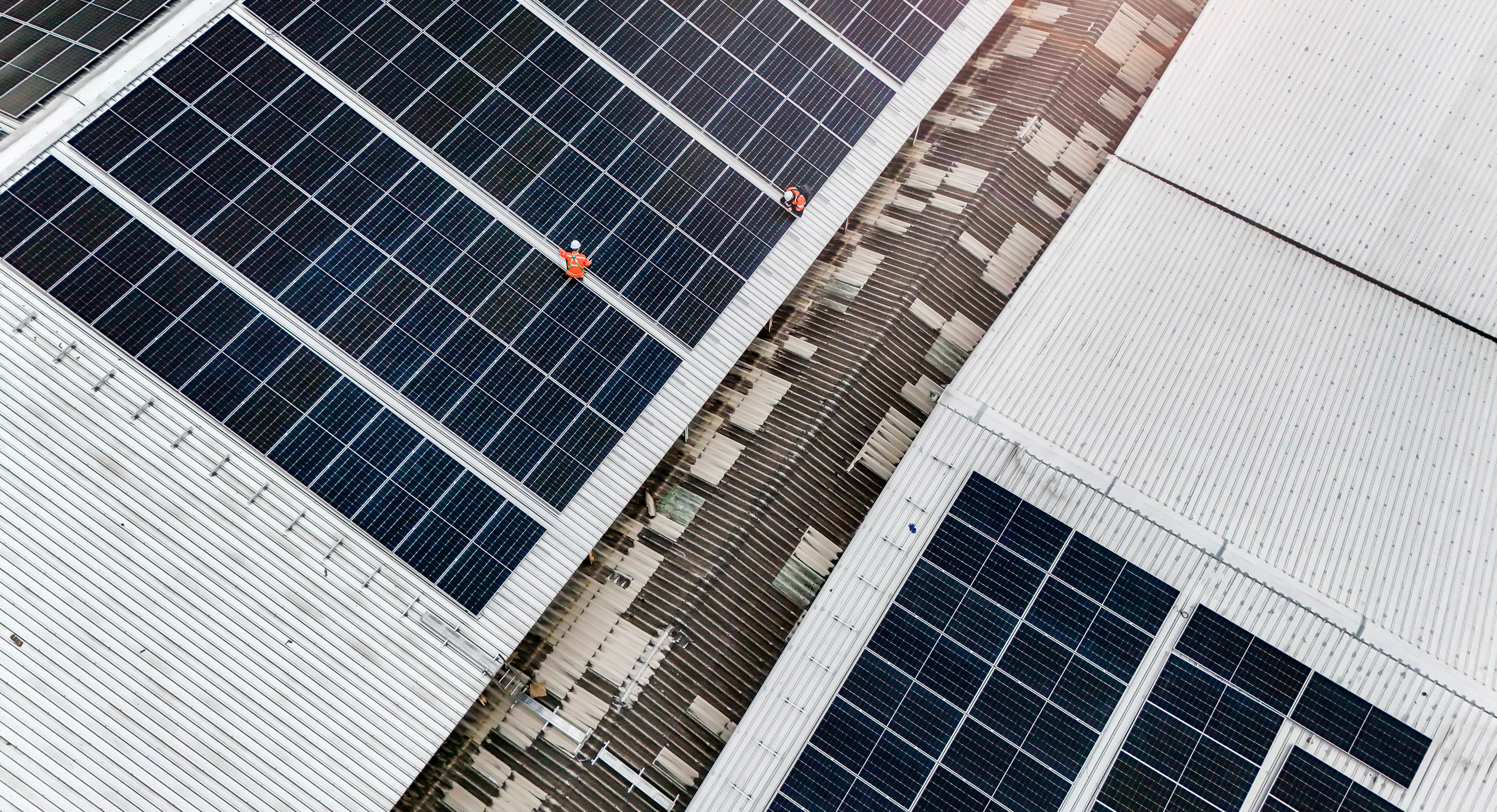
Solar microgrids are versatile in real-world uses and applications
Real stories, real power: Tata Power’s solar microgrid impact
To truly appreciate the impact of solar microgrids, let’s look at an inspiring story. This real-life case shows how Tata Power’s solar microgrid initiative has changed lives, spurring entrepreneurship and empowering women in rural India
Women skilling & empowerment through microgrid
In Rawana village of Lakhimpur district, Uttar Pradesh, 55-year-old Ram Devi discovered a new opportunity through a Tata Power Renewable Microgrid. With no formal schooling, she had spent her life helping her husband in the fields while her daughter dreamed of learning tailoring. When the solar microgrid arrived, it powered a stitching center run by Usha Silai School. Trainers invited both women to join. At first Ram Devi felt shy, but trainer Meera Tripathi showed her how to use the electric machine. She mastered a few stitches and soon enrolled in the three-month course alongside her daughter.
Over the following weeks, Ram Devi transformed her routine. She finished chores early, attended morning classes, helped on the farm at midday, and returned for evening practice. Her husband noticed her new purpose and began adjusting farm tasks to drive her to class. Her skills grew, and she often stayed late to refine her work. By the end of the course, she had earned a certificate and fresh confidence.
Today Ram Devi runs a home tailoring business, stitching blouses, salwar suits and children’s clothes for nearby villages. Her modest earnings add a few thousand rupees each month and fill her with pride. Neighbours now see her as a symbol of local empowerment. Her story shows how reliable solar power and practical training can transform lives in rural communities.
Each village microgrid becomes more than an infrastructure project; it becomes a platform on which lives can improve, and communities can thrive.
Solar microgrid solution in India: Policies, projects, and prospects
National microgrid policy efforts
In 2016, MNRE released a draft National Policy on renewable energy microgrids and mini grids. It proposed setting up at least 10,000 renewable microgrids and mini grids with a combined 500 MW capacity by 2022, aiming to reach roughly 237 million people who lacked reliable electricity. The plan encouraged private sector and public-private partnerships. Although the 500 MW target was later shelved and the draft never became law, it signaled strong intent by the government to come up with a solar microgrid solution in India. Work on updated guidelines and new targets continues.
Government support schemes
Under MNRE’s Off-Grid and Decentralized Solar Applications Programme, rural microgrids receive capital subsidies up to 30 percent of project cost. Subsidy rates are ₹105 per watt for 10 kW DC microgrids and ₹90 per watt for systems from 10 kW to 250 kW. These grants have funded 63 solar microgrids so far. National schemes such as Saubhagya also recognize off-grid microgrids as valid interim solutions. The PM-KUSUM scheme supports renewable plants up to 2 MW that can feed local microgrids or nearby grids.
State policies and projects
Several states have launched mini-grid policies and pilot projects. Uttar Pradesh’s 2016 Mini-Grid Policy offers tariff incentives and grid interconnection assurances to attract private developers. Jharkhand’s 2022 Solar Policy targets 110 MW of mini and microgrid capacity for rural electrification. Odisha is now exploring grid-connected mini grids after learning from earlier off-grid trials. North-Eastern and hilly states, where terrain makes grid extension difficult, have also piloted solar microgrids with support from IREDA and international donors.
Private sector and PPP initiatives
India’s private sector has been active in microgrid deployment, often in public-private ventures. In late 2019 Tata Power partnered with The Rockefeller Foundation to launch TP Renewable Microgrid (TPRMG), aiming to deploy 10,000 microgrids by 2026. These systems are expected to reach 5 million households (about 25 million people) and cut 1 million tons of CO₂ each year. By mid-2023 Tata Power had installed hundreds of these microgrids. Other firms such as Mera Gao Power, DESI Power, Gram Oorja and Husk Power operate solar or hybrid microgrids on pay-as-you-go models, using smart meters, IoT and mobile prepaid payments.
Impact on jobs and economy
Widespread microgrid rollout supports India’s green growth and rural development goals. Studies suggest scaling mini and microgrids in states like Odisha to hundreds of megawatts could generate tens of thousands of constructions, maintenance and productive-use jobs. The Tata-Rockefeller programme alone anticipates creating 10,000 green jobs and supporting 100,000 rural enterprises. These figures show microgrids not only bring electricity but also drive rural industrialization and lasting economic benefits.
The future of solar microgrids
Looking ahead, the future of solar microgrids appears both promising and dynamic. Several trends suggest that these decentralized power systems will assume greater importance globally and in India -
Integration with smart grids
Future microgrids will act as smart cells inside the wider power system. With advanced inverters and real-time controls, they can buy low-cost renewable energy from the grid, feed surplus solar back, and provide services such as voltage support and fast backup. Pilot projects already show that this “grid of microgrids” keeps lights on when a fault hits one part of the network while lowering bills for users.
Energy trading and blockchain
Secure, community-level energy markets are on the horizon. Blockchain platforms will let homes or neighboring microgrids trade power in seconds: one roof sells excess midday solar to a nearby shop, paid by an automatic smart contract. Mobile apps will track these energy credits, turning every consumer into a small-scale producer and cutting wasted green power.
Advanced storage and hybrid systems
Microgrids will move beyond today’s lithium batteries. Flow batteries, ultra-capacitors, reused electric-vehicle packs and even green-hydrogen fuel cells can store energy from hours to weeks. Many sites will run true hybrids, mixing solar with wind, small hydro or biomass. This spreads generation through more hours and trims the size of the battery bank needed, a clear benefit in regions with strong summer sun and monsoon rivers for a solar microgrid design to be implemented.
IoT and AI for optimization
Tiny sensors on panels, batteries and meters will feed data to cloud tools that forecast weather, predict demand and tune equipment minute by minute. AI can top up batteries before a cloudy spell, flag a failing cell or schedule cleaning when output drops, cutting downtime and letting one control room manage hundreds of remote microgrids.
Lower costs and higher efficiency
Solar module prices have plunged, and lithium batteries now sell for under $200 per kWh in some markets. Better PV cells, efficient inverters and smart energy software mean each system delivers more usable kilowatt-hours. Analysts expect tens of thousands of new microgrids worldwide by 2030, and research shows India’s market could grow nearly 20 percent a year. Falling costs will push microgrids from donor projects to solid commercial ventures, even in low-income areas.
Policy support and scaling up
Government backing is growing. National and state plans now mention microgrids, pairing climate and energy goals with capital subsidies, incentives and links to utility planning. Standard rules are being drafted, giving private firms and investors more confidence. Banks and green lenders may soon treat microgrids as safe, high-impact assets. Training drives like the National Smart Grid Mission are building technicians and operators, setting the stage for microgrids to dot villages like cell phone towers.
Greater community ownership and innovative business models
As microgrids spread in developing regions, new finance and ownership ideas grow. Villagers may form cooperatives to own and maintain their grid. Pay-as-you-go plans with smart meters and mobile payments improve revenue in low-income areas, a model proven in Africa. Public-private tie-ups are rising, government offers viability gap funds or subsidies, while firms build and operate systems, as seen in Tata Power’s work with CSCs. Sector clusters could appear, like farm irrigation grids or clinic networks.
Global collaboration and climate goals
On the world stage, achieving sustainable development and climate goals will likely necessitate a massive deployment of microgrids. With the SDG7 target (affordable, reliable, sustainable energy for all by 2030), microgrids are a key solution for the hardest-to-reach populations. We can expect more funding flowing from climate finance, international aid, and impact investors into microgrid projects. The World Bank, for example, has launched initiatives to fund mini grids in several countries. India could leverage some of that too for remaining unelectrified places or to pilot new technologies. This global cooperation can accelerate improvements like sharing best practices on how to keep microgrids sustainable in the long run, how to involve communities, etc.

Bottomline
Solar microgrids are rewriting the energy playbook. A well-planned solar microgrid system blends microgrid solar panels, batteries and smart controls into a self-reliant power hub. The result? Tangible microgrid benefits: steady electricity, lower fuel bills and new jobs that keep talent in the village. People who once asked “what is a solar microgrid” now see farms running pump sets and clinics keeping vaccines cold, all from a renewable energy microgrid. The formula works everywhere, from isolated hamlets to bustling campuses, proving that a solar powered microgrid is more than a gadget - it is a clean, local growth engine.
Frequently asked questions
The frequently asked questions section is a reliable source for unlocking answers to some of the most crucial inquiries. Please refer to this section for any queries you may have.
- FAQ
A rooftop solar system powers one building and leans on the main grid when the sun sets. A solar microgrid system links many users through its own wires, microgrid solar panels, batteries and a microgrid solar inverter. It can run alone, balancing supply and demand for a whole village. In short, a rooftop kit serves one roof; a microgrid is a small, self-contained grid.
Yes. A solar powered microgrid stores daytime surplus energy in batteries. When the sky turns gray, the renewable energy microgrid taps that reserve to keep lights on. Engineers size storage for a day or more, and some sites keep a small generator for rare long outages. With modern cells, microgrid benefits include steady 24/7 electricity.
Solar microgrid environmental benefits start with cutting pollution. By replacing diesel, a solar powered microgrid slashes carbon and smoke, giving villages cleaner air and quieter nights. Local generation means line losses stay low, so less energy is wasted. Short wires keep forests intact and wildlife undisturbed. Families no longer burn kerosene, saving trees and lungs alike. Each renewable energy microgrid shows neighbors that green power works, spreading microgrid benefits and a culture of sustainability.
Big hurdles include upfront funding, shifting rules, and steady upkeep. Investors pause if tariffs change, or the main grid arrives offering cheaper power. Remote sites may lack trained hands, so faults linger. Winning community trust is vital; users must pay on time. Sound policy, clear business plans and local skills turn those risks into microgrid benefits.
Solar panels in a solar microgrid system carry 20 to 25 year warranties and often work past 30 years. Lithium batteries can serve ten years or more, while inverters and controllers usually need swapping after a decade. Cables and structures last two decades if they are maintained. Setting aside revenue for battery replacement keeps microgrid solar energy flowing.
Yes. Good solar microgrid design is modular. To scale, add extra microgrid solar panels, a larger microgrid solar inverter and more batteries, then extend the wires. Controllers are often picked with spare capacity, so expansion is quick and low risk. Knowing how to build a solar microgrid that can grow lets communities start small and enlarge as demand rises.
Sources
NTPC and Indian Army Join Hands for Round-the-Clock Power Supply using Green Hydrogen
Community solar microgrids provide a ray of hope
Tata Power and rockfeller foundation to setup renewable solar microgrids in India
Solar Mini-grids are Spurring Rural Development in India
Solar microgrids for rural electrification
110 kW Solar Microgrid – Sundarbans, West Bengal, India
Top Five Solar Panel Government Subsidies to Avail in India
Solar Microgrid Sparks Social Transformation and Economic Growth
Solar Microgrids
Solar Microgrids – Customized solutions
Keep reading...
View all