Introduction
India is leading a solar revolution. As of September 2025, the nation has achieved a remarkable 127.33 GW of installed solar capacity, driven by progressive solar panel government subsidies that have accelerated rooftop adoption. From bustling metros to small towns, solar installations are lighting up homes, cutting power costs, and making the ambitious vision of making renewable energy a household reality. This surge reflects not just technological progress but a shift in how India views solar energy - Cleaner, smarter, and self-sustained.
And here’s where it gets exciting. The Indian government is making it easier than ever to join this movement with generous solar panel government subsidies that reduce upfront costs and boost long-term savings. In the next section, explore how these subsidies work, who can apply, and exactly how much you can save by going solar today.
What is a solar panel government subsidy?
A solar panel govt subsidy in India is a financial support initiative managed by the Ministry of New & Renewable Energy (MNRE) that lowers the initial cost of installing grid-connected rooftop solar systems for eligible homeowners or entities. The subsidy (also called Central Financial Assistance or CFA) is paid only after installation, inspection, and approval, and the system must meet specific capacity, vendor registration, and technical quality standards. Common schemes include the PM Surya Ghar Muft Bijli Yojana and the Grid Connected Rooftop Solar Programme Phase II, PM KUSUM, etc.
Who all can avail a government solar panel subsidy?
To apply for the solar rooftop subsidy, the applicant-
1. Must be an Indian citizen with a valid grid-connected electricity connection from the local DISCOM.
2. Should have a rooftop solar system installed through an approved or registered vendor and must follow technical standards.
3. The installation must be of a rooftop, grid-connected solar system under the relevant scheme; stand-alone off-grid systems generally do not qualify.
4. Must not have already availed the same subsidy earlier under that specific scheme.
5. Must submit the application via the national portal or state DISCOM channel, and the subsidy is credited only after installation, inspection, net metering, and verification.
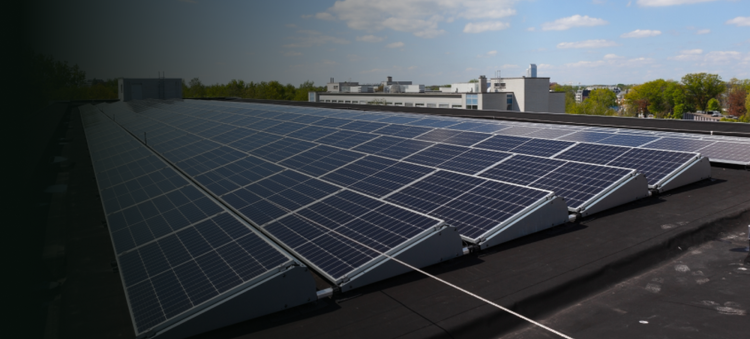
<p class="image-caption">Solar panels are a source of clean energy</p>
Why is the govt offering a solar rooftop subsidy?
The Indian government’s solar rooftop subsidies are designed to make clean energy accessible and accelerate the adoption of rooftop systems across urban and rural households. The core goals include -
1. To accelerate rooftop solar adoption and reach national targets such as the 40,000 MW target for grid-connected rooftop solar under the Grid Connected Rooftop Solar Programme.
2. To lower the upfront cost for households, making solar system installations financially accessible.
3. To reduce dependence on fossil fuels and enhance energy security by promoting clean power generation at the user end.
4. To encourage the use of unused rooftop space and optimize distributed energy resources, reducing transmission and distribution losses.
5. To stimulate domestic manufacturing and technology development in solar modules and related equipment, thereby reducing import dependency.
6. To support employment generation and local economic development in the renewable energy sector.
7. To ensure equitable access to clean energy for citizens, especially households, by making subsidy support available to eligible residential consumers.
By encouraging more homeowners to install rooftop systems, the government subsidies for home solar panels are helping India move closer to its net-zero targets.
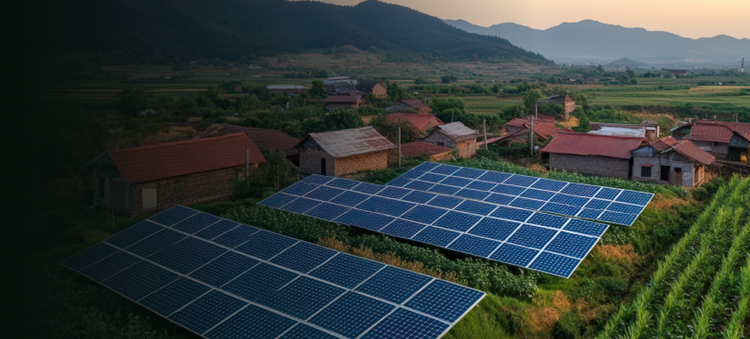
<p class="image-caption">A limitless source of green energy</p>
How are government subsidies for solar panels promoting renewable energy?
The solar panel government subsidy has been a game-changer in making clean energy mainstream. By reducing the financial burden, it allows households to shift from grid dependence to self-generation. Here’s how -
The subsidies offered by the Ministry of New & Renewable Energy (MNRE) are actively shifting India’s energy landscape toward clean and renewable sources. By lowering the cost barrier for rooftop and grid-connected solar systems, subsidies help more households and commercial units adopt solar power. This broadens adoption beyond large utility projects and brings power generation closer to users, reducing transmission losses and reliance on fossil fuel plants.
For instance, as of May 2025, solar power capacity in India had reached 116.25 GW, and renewables (excluding large hydro) accounted for about 34.4% of all installed capacity. At the same time, the national rooftop solar target under MNRE’s “Grid Connected Rooftop Solar Programme” aims for 40 GW of rooftop systems.
The accelerating installation of solar capacity under these subsidy-driven schemes means cleaner, more distributed energy generation, fewer greenhouse-gas emissions, and stronger progress toward India’s climate and energy-security goals. By June 2025, non-fossil fuel installations in India totaled 235.7 GW - about 49 % of the nation’s total installed capacity of 476 GW.
Top solar rooftop subsidies in India to maximize your energy savings
PM Surya Ghar Muft Bijli Yojana
The PM Surya Ghar Muft Bijli Yojana enables Indian households to generate their own clean electricity and significantly cut monthly power bills through central government support. Under the solar panel govt subsidy, residential consumers receive ₹30,000 per kW up to 2 kW and ₹18,000 per kW for additional capacity up to 3 kW, with the total subsidy capped at ₹78,000 for rooftop systems of 3 kW or more. Households consuming up to 300 units per month can save substantially on electricity costs and may earn credit by supplying surplus power to the grid. The scheme operates through the National Portal for Rooftop Solar and authorized local DISCOMs to ensure smooth installation and direct subsidy transfer. For special states, an additional 10% Subsidy will be applicable per kW
Group Housing Societies and Resident Welfare Associations qualify for a subsidy of ₹18,000 per kW for common-area solar installations, including EV charging, up to 500 kW capacity (calculated at 3 kW per house). The 500 kW upper limit includes any individual rooftop systems installed by residents within the GHS or RWA.
For more information, visit the official PM Surya Ghar Yojana portal
Grid Connected Rooftop Solar Programme
The Grid Connected Rooftop Solar Programme administered by the Ministry of New & Renewable Energy (MNRE) aims for a cumulative rooftop solar capacity of 40,000 MW (40 GW) by 31 March 2026.
For residential solar installations approved under Phase II, the support (Central Financial Assistance or CFA) is set at ₹14,588 per kW for the first 3 kW in general-category states, and ₹7,294 per kW for capacity beyond 3 kW up to 10 kW. In special-category states/UTs, the rates are ₹17,662 per kW for the first 3 kW and ₹8,831 per kW thereafter. This solar panel government subsidy is transferred directly to the consumer's account after successful commissioning and verification. This subsidy advances India’s sustainability agenda by cutting carbon emissions and strengthening energy security through a greater integration of renewable energy.
For more information on eligibility and application, visit the official MNRE website
PM – KUSUM
The Pradhan Mantri Kisan Urja Suraksha evam Utthaan Mahabhiyan (PM-KUSUM) supports farmers through three components: installation of decentralized solar plants on agricultural land, deployment of stand-alone solar pumps in off-grid areas, and solarisation of grid-connected agricultural pumps. It provides central financial assistance for up to 30% of the installation cost (and up to 50% in special/remote regions) alongside incentives for DISCOMs to purchase solar power generated under the scheme. This reduces farmers’ electricity costs, increases renewable generation in agriculture, enhances energy and water security, and promotes distributed solar power in rural areas.
Three key components
1. Component A – Installation of 10,000 MW of decentralized ground- or stilt-mounted grid-connected solar (or other renewable) power plants.
2. Component B – Deployment of 14 lakh stand-alone solar agriculture pumps in off-grid areas.
3. Component C – Solarisation of 35 lakh grid-connected agriculture pumps, including feeder-level solarisation
For more details on how to apply, visit the official PM-KUSUM portal
Production Linked Incentive (PLI) Scheme
The Production Linked Incentive (PLI) Scheme: National Programme on High Efficiency Solar PV Modules, administered by the Ministry of New & Renewable Energy, sets aside an outlay of ₹24,000 crore to build gigawatt-scale domestic manufacturing of high-efficiency solar PV modules. This solar rooftop subsidy is structured in two tranches, with the first tranche focused on 4,500 crores and 8,737 MW of manufacturing capacity, and the second tranche aimed at 19,500 crores in additional capacity.
This initiative reduces reliance on imported solar components by incentivizing domestic production of high-efficiency modules using locally sourced materials. Through competitive bidding, it aims to attract major investments, create jobs, and accelerate technological growth, strengthening India’s energy security and advancing the Atmanirbhar Bharat vision.
For more information and to be updated with the latest developments, visit the official MNRE website.
Delhi Solar Energy Policy 2023
The Delhi Solar Energy Policy 2023, initiated by the Government of the National Capital Territory of Delhi, targets a total solar capacity of 4,500 MW by 2026-27, combining 750 MW of rooftop solar within Delhi and approximately 3,750 MW of utility-scale solar sourced externally. According to the first amendment dated 16 July 2025, the state now offers a capital subsidy for residential rooftop systems of ₹10,000 per consumer. For Group Housing Societies/Resident Welfare Associations, the subsidy has been set at ₹2,000 per kW for common-area installations up to 500 kW. The policy also continues to support models like RESCO and net-metering alongside central support under the PM Surya Ghar Muft Bijli Yojana.
For more detailed insights and guidelines, please explore the official Delhi government energy portal
Comparing govt solar panel subsidies across states in India
These combined government subsidies for solar panels in domestic homes make rooftop solar one of the most cost-effective energy upgrades in India.
How solar rooftop subsidies in India impact citizens and energy costs
1. Reduced upfront costs
Subsidies significantly lower the initial investment required for rooftop solar systems. For example, under national schemes, homeowners receive fixed support per kW of capacity. This makes solar adoption financially accessible for middle-income households rather than being a luxury.
2. Lower monthly electricity bills
Once a rooftop system is installed and connected, households can generate their own electricity and reduce or eliminate their monthly power costs. For grid-connected systems with net-metering, any excess power fed back to the grid translates into credits. Over time, this yields meaningful savings.
3. Income generation potential
Beyond savings, surplus solar generation can be exported to local DISCOMs under net-metering or other incentive arrangements. This adds a small but steady stream of income or bill offsets, improving return-on-investment for households.
4. Enhanced energy security & reliability
By generating power locally on their rooftop, consumers reduce dependence on grid supply, avoid some tariff fluctuations, and improve resilience against outages. Especially in areas with unstable electricity, this can translate into a better quality of living.
5. Environmental & social benefits
Subsidized solar installations contribute to national renewable targets, cut carbon emissions, and reduce reliance on fossil fuels. For citizens, this means cleaner air, cleaner energy sources, and improved public health outcomes.
6. Broader access across economic groups
Schemes target not just affluent homeowners but aim to support lower-income, rural, or underserved populations too. This expands clean energy access across society and helps bridge energy inequality.
7. Increased adoption & cost decline
With subsidies driving higher demand, manufacturing scale improves, and system costs fall. This translates to more affordable solar over time for all citizens. As installation costs drop, the value of subsidies becomes even more amplified.
The Tata Power advantage
1. With over 30 years of expertise, Tata Power has consistently led India’s rooftop solar sector, earning the title of the nation’s No. 1 rooftop solar company for 10+ years.
2. Built using state-of-the-art materials, backed by 25-year performance warranties, and equipped with all-weather protection, Tata Power solar systems are designed to deliver complete peace of mind and long-term reliability.
3. Tata Power Solar offers customized rooftop solutions for homes, integrating advanced inverter technology, battery backup, and real-time performance monitoring to ensure maximum efficiency and energy savings.
4. With over 150,000 rooftop installations across 700+ cities, Tata Power stands as India’s largest and most trusted rooftop solar provider, offering sustainable energy solutions along with assured quality and service.
5. Tata Power’s solar systems are engineered to perform in India’s toughest climates, from scorching summers to heavy monsoon rains. Every installation uses high-quality Staad-GI (Galvanized Iron) mounting structures, providing superior stability, durability, and safety to keep panels secure and efficient year-round.
6. By offering lifetime service support and end-to-end annual maintenance contracts (AMCs), Tata Power ensures long-term system reliability and efficiency, enabling customers to gain the full value of solar panel government subsidies and other state-level incentives.
Schedule a Site Visit Today!
Bottom line
India’s solar journey is a reminder that progress can be both powerful and peaceful. Every rooftop that welcomes the sun adds to a collective momentum - one that lights homes, empowers families, and strengthens the nation’s path toward self-reliance. With supportive solar panel government subsidies and trusted partners like Tata Power making solar simpler and more accessible, clean energy is no longer a distant dream but a daily reality. The future isn’t waiting somewhere ahead; it’s unfolding quietly on rooftops across the country - one panel, one sunrise, one household at a time.
<p class="tp-font-p-small tp-font-regular tp-caption-text">*The information in this blog is based on details retrieved from reliable public sources as of Novemeber 2025. Government schemes, subsidies, and related provisions are subject to periodic revisions. Readers are advised to verify the latest information from the original official sources. The content is intended solely for general informational purposes and should not be considered as financial, legal, or professional advice</p>
<h2 id="accordion-heading">Frequently asked <span class="dark-teal">questions</span></h2>
<p>The frequently asked questions section is a reliable source for unlocking answers to some of the most crucial inquiries. Please refer to this section for any queries you may have.</p>
Sources
A number of incentives are being provided for growth of the renewable energy sector in the country: Union Power & NRE Minister Shri R. K. Singh
FAQ: Grid Connected Solar Rooftop System
ELECTRICITY FROM SOLAR ENERGY
Subsidy scheme of MNRE for Operational guidelines for Grid-Connected Rooftop and Small Solar Power Plants Programme
Central Financial Assistance (CFA)/ Central Government Subsidy for rooftop solar plant installed by a residential consumer under simplified procedure
Delhi Solar Portal
PM Surya Ghar: India’s Solar Revolution Muft Bijli Yojana Crosses Milestone of 10 Lakh Installations
Grid Connected Rooftop Solar Programme
MNRE issues advisory for the general public on rooftop solar scheme
Production Linked Incentive (PLI) Scheme: National Programme on High Efficiency Solar PV Modules