


 Contact us

From rooftop solar and EV charging expansion to grid and renewable infrastructure, Tata Power's integrated growth is built on execution excellence at every level


Sections
- Introduction
- FY26 At a glance
- Is India's energy transition a test of scale, or a test of intelligence?
- What does a year of profitable scaling look like in practice?
- What keeps rapid transformation grounded in responsibility?
- FY26 strategy performance
- How does Tata Power’s sustainability strategy translate into real action?
- What happens when the grid becomes intelligent?
- From power utility to integrated energy platform
- What powers the people who power India?
- Bottomline
Introduction
India's energy story has a new chapter, and it reads less like a utility report, more like a strategic inflection. Tata Power sits at its centre: 16,716 MW of capacity, 13 million customers, a 46% clean portfolio, and ambitions stretching from rooftop solar to real-time energy intelligence. Tata Power's Integrated Annual Report 2025-26, the company's seventh, tells this story with the kind of specificity that separates credible transformation from corporate narrative.
That story begins with India. As Dr. Praveer Sinha, CEO and Managing Director, has observed: "Clean, cheap, and abundant power is one of the basic ingredients for the economic progress of a city, state or country." FY26 gave those words new weight.
FY26 At a glance

16,716 MW
Total installed/managed capacity

46%
Clean and green portfolio

7,856 MW
Cumulative clean capacity commissioned

13+ million
Distribution customers served

4.8+ GWp
Rooftop solar installed (cumulative)
7,900+ across 700+ cities
EV charging points

28+ lakh
Smart meters deployed

103%
Fly ash utilization

5.2 million
CSR beneficiaries reached
Is India's energy transition a test of scale, or a test of intelligence?
In FY26, India crossed a threshold it had been building toward for years. Installed power capacity surpassed 500 GW, with non-fossil sources accounting for more than 51% of that base, fulfilling the country's COP26 Panchamrit commitment five years ahead of schedule. Peak demand hit 245 GW. Renewable capacity grew 23% year on year, with over 8 GW of rooftop solar added nationally, a 70% jump.
The demand side of this shift is equally important. EV registrations reached approximately 24 lakh in FY26. AI data centres, advanced manufacturing, and industrial electrification are placing new categories of load on grids that did not exist five years ago. The International Energy Agency projects electricity consumption will outpace overall energy demand by more than 2.5 times in the years ahead.
Energy companies that can only generate power are no longer sufficient for what India needs. What the country requires are participants capable of integrating supply, demand, storage, and intelligence into something durable and adaptive. That capability is what separates a utility from an energy platform, and it is the distinction Tata Power has been deliberately building toward. That build is visible in the numbers.
What does a year of profitable scaling look like in practice?
The growth case in FY26 is specific and self-reinforcing.
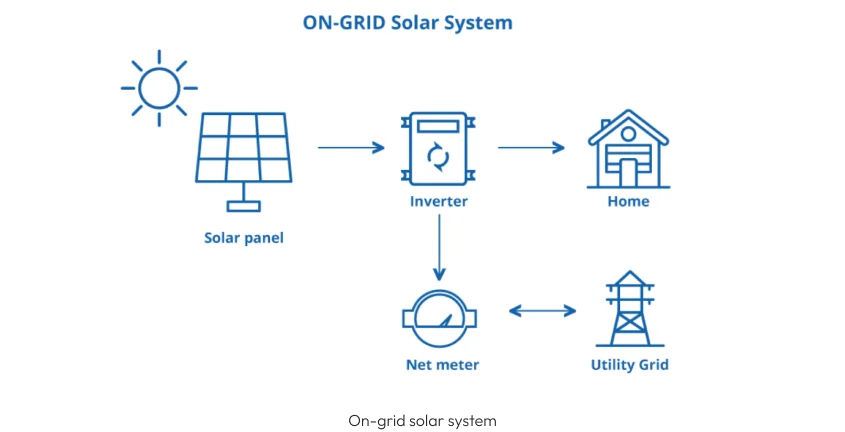
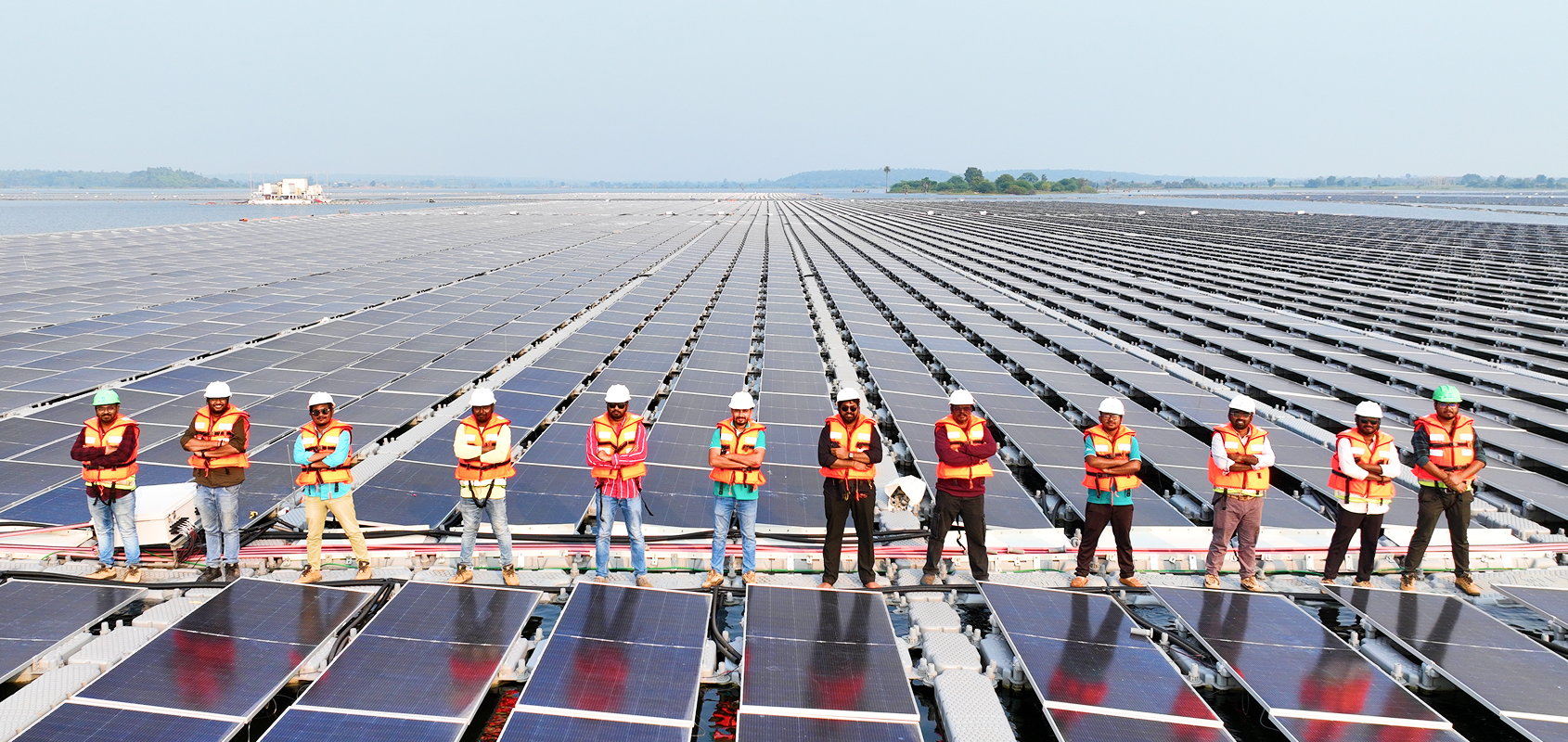
Cumulative clean and green capacity reached 7,856 MW, up 14% from the prior year, with 1 GW of renewable capacity commissioned during the year. Rooftop solar expanded at nearly two rooftops per minute across India, with a cumulative third-party installed base of 4.8+ GWp, ranking Tata Power first in this category nationally. The EV charging network reached 7,900+ points across 700+ cities, with over 2 lakh home chargers installed. What distinguishes these numbers is not just their scale but the logic connecting them: manufacturing depth at the 4.3 GW Tirunelveli facility reduces solar project costs; transmission wins create the grid capacity that renewable additions require; distribution growth creates the consumer base that rooftop solar and EV charging then serve.
Each business line, in other words, makes the others more viable. That is what integrated growth looks like. But growth at this pace demands an equally disciplined financial architecture to hold it together.
What keeps rapid transformation grounded in responsibility?
Discipline is where Tata Power's strategy earns its credibility. Thermal asset availability averaged 81.8% in FY26. Wind reached 97.9% and solar came in at 99.8%. The company earned Rs 106 crore in performance-linked incentives in regulated businesses, a direct measure of operational quality rather than just output. An AA domestic credit profile and S&P BBB/Stable rating reflect a balance sheet managed with the same rigor as the physical asset base. Asset-light models across EPC, rooftop solar, and EV charging keep leverage at targeted levels while funding continued expansion. The result is a company that has grown its clean capacity by 14% in a single year while maintaining the financial stability that makes the next round of investment possible.
FY26 strategy performance
| Strategic pillar | FY26 proof point |
|---|---|
| Profitable scaling of renewables, T&D, and energy solutions | 7,856 MW cumulative clean capacity; 1 GW commissioned; 833 ckm transmission installed; 226 ckm TBCB won |
| ESG and sustainability leadership | SBTi-validated targets; 103% fly ash utilization; Net Zero 2045 on verified trajectory |
| Financial leverage at targeted levels | AA domestic credit; S&P BBB/Stable; asset-light models across EPC, rooftop, and EV |
| Digital platforms driving customer value | 28+ lakh smart meters; CSAT 99.8% Delhi, 95% Mumbai; GenAI contract tools live |
| Future energy services and solutions | EnerUni and MySine launched; 18.9 MMT green MUs sold; 628 MW hybrid/FDRE PPAs signed |
| Future-ready workforce | 7.12+ lakh training hours; 93%+ retention; Digital and AI Academy expanded |
| Minimizing coal cost at Mundra | 43/57 HCV-MCV blend; heat rate within SPPA norms; DC at 88.48% |
| Operational excellence benchmarks | 81.8% thermal, 97.9% wind, 99.8% solar availability; Rs 106 crore incentives earned |
That discipline extends beyond the balance sheet. It runs through how Tata Power approaches its environmental obligations, and has for over a century.
How does Tata Power’s sustainability strategy translate into real action?
Tata Power's sustainability strategy reads like an operations section, not a compliance one.
In FY26, the company received SBTi validation for its near-term emission reduction targets, placing its Net Zero 2045 commitment on a verified trajectory. Fly ash utilization reached 103%, channelled into cement and construction sectors. Coal blending at Mundra was managed at a 43/57 HCV-MCV ratio, with heat rate maintained within SPPA norms. High-efficiency ALMM-II, BNEF Tier-1 solar modules were deployed to reduce supply chain emissions. Five thousand kilograms of plastic waste was converted into livelihood-linked products through community circularity programs.
That claim is backed by the way the company runs its plants, manages its fuel, and accounts for its environmental obligations across every business unit, growing more meaningful with every percentage point of AT&C loss reduced and every megaunit of green energy sold. That operational philosophy is most visible in what Tata Power has built at the consumer level.
What happens when the grid becomes intelligent?
The most telling indicator of where Tata Power is heading is not what it plans to build, but what is already running. Across geographies and customer segments, the company has quietly assembled an energy intelligence layer on top of its physical infrastructure.

Mumbai
Smart meters integrate with the My Tata Power app, giving customers real-time consumption data and enabling demand response programs that shift load dynamically, reducing pressure on the grid at peak hours

Delhi
TPDDL's behavioral demand response program covers approximately 1.54 lakh customers through an IoT-based virtual power plant model developed with Imperial College London, enabling voluntary large-scale peak load reduction at a scale previously only possible with physical infrastructure

Odisha
AI-based theft detection, OCR meter reading, and GIS-enabled field applications are simultaneously reducing AT&C losses and improving service reliability, turning distribution operations into a data-driven function

EnerUni
A new platform that integrates supply, demand, generation, trading, and analytics into a single customer-facing interface, making end-to-end energy management accessible for homes and businesses for the first time. Click here to explore more about EnerUni

MySine
Allows rooftop solar customers to store excess generation and draw from it during outages or peak demand, shifting the customer from passive consumer to active prosumer.

Energy-as-a-Service
Already being delivered to commercial and industrial clients through the ESCO model, bundling renewable energy, efficiency management, and optimization without the capital burden of direct ownership

Bhivpuri and Khorlochhu
A 1,000 MW pumped storage project in Maharashtra and a 600 MW hydropower project in Bhutan, both progressing as Tata Power's long-term commitment to dispatchable, round-the-clock clean power
In FY26, 18.9 MMT of green energy units were sold and 628 MW of hybrid and FDRE PPAs were signed. The company also launched the Energy Insights and Innovation Lab with the London School of Economics, and collaborated with Harvard Business School on a case study examining its role in India's energy transition.
From power utility to integrated energy platform
| Dimension | Traditional Utility Model | Tata Power Today |
|---|---|---|
| Core role | Generate and distribute electricity | Integrate generation, storage, trading, and intelligence |
| Customer relationship | Passive billing | Real-time demand response; 1.54 lakh enrolled in Delhi alone |
| Energy ownership | Grid-dependent supply | Rooftop solar and MySine storage for prosumers |
| Technology layer | Physical grid infrastructure | AI, IoT, GenAI, and digital analytics across operations |
| Product range | Electricity tariffs | EV charging, rooftop solar, EaaS, cooling-as-a-service, EnerUni |
| Tariff trend | Largely fixed post-installation; shields users from future tariff revisions | Variable; periodically revised by regulators based on the cost of supply and policy decisions |
| Sustainability posture | Regulatory compliance | SBTi-validated; Net Zero 2045; 103% fly ash utilization |
| Long-duration storage | Minimal | 2.8 GW pumped hydro storage under development |
| Geographic reach | Metro and urban focus | 700+ cities; 13 million distribution customers |
For homes and businesses already thinking about how to participate in this transition, the entry point is closer than it appears.

Thinking of starting your clean energy journey?
Explore Tata Power’s smart power solutions, designed around your needs
What powers the people who power India?
Infrastructure alone does not power a transition. People do.
In FY26, Tata Power employees logged 7.12+ lakh training hours. Retention held above 93%. The Digital and AI Academy was expanded, rooftop solar training was rolled out across Odisha DISCOMs, and Twin Green Skilling Centres were launched in Tamil Nadu. Customer satisfaction reached 99.8% in Delhi, 95% in Mumbai, and 94.04% in Ajmer. CSR programs reached 5.2 million beneficiaries, backed by Rs 100.54 crore in spending across education, employability, and community resilience.
Behind every metric here is a person. The 93% retention rate means engineers and operators who chose to stay. The Twin Green Skilling Centres mean young people being trained for an industry that is still being built. And the 5.2 million CSR beneficiaries represent communities adjacent to Tata Power's operations who are not simply affected by the energy transition, but are being prepared for it. The energy transition is ultimately a human transition too, and Tata Power's investment in capability and community reflects an understanding that the two cannot be separated.
Bottomline
When Tata Power's founders laid the first transmission lines across Mumbai in 1915, the business model was simple: generate electricity, deliver it, collect payment. A century later, the Integrated Annual Report 2025-26 documents how thoroughly that model has been reinvented. The groundwork being laid through Bhivpuri, Khorlochhu, EnerUni, and a network spanning 700+ cities reflects a company thinking in decades, not quarters. It is architectural. The next era of energy leadership will belong to those who build the most intelligent, resilient ecosystems around power, not just those who generate the most of it.
Keep reading...
View all