


 Contact us


Introduction
India’s EV story has moved past the question of whether adoption will rise. The sharper question now is whether charging can keep up. In FY26, EV registrations stood at 2.45 million, while public charging infrastructure continued to scale across the country. That makes charging no longer a support layer, but a core part of India’s mobility experience.
The Tata Power Integrated Report 2025-26 brings this shift into focus. Through EZ CHARGE, the company is expanding home, public, fleet, e-bus, highway and digital charging capabilities, while linking convenience with green energy and interoperability. The report’s real signal is clear: India’s EV transition will be shaped not only by vehicles on the road, but by the confidence, cleanliness and dependability of the charging network behind them.
7 takeaways from Tata Power’s EV charging growth story

EV charging is moving from city-led adoption to nationwide access

Fast charging is turning highways into EV-ready corridors

The TATA.ev MegaCharger Hub shows what charging at scale can look like

Green charging is becoming central to low-carbon mobility

EZ CHARGE is becoming the digital layer of EV ownership

Reliability can unlock the next phase of EV adoption

Home charging remains the quiet engine of EV adoption
As India’s EV charging ecosystem expands beyond metros, Tata Power’s Integrated Report 2025–26 shows how scale, green energy, digital access and smarter networks are turning charging into everyday confidence.
1. EV charging is moving from city-led adoption to nationwide access
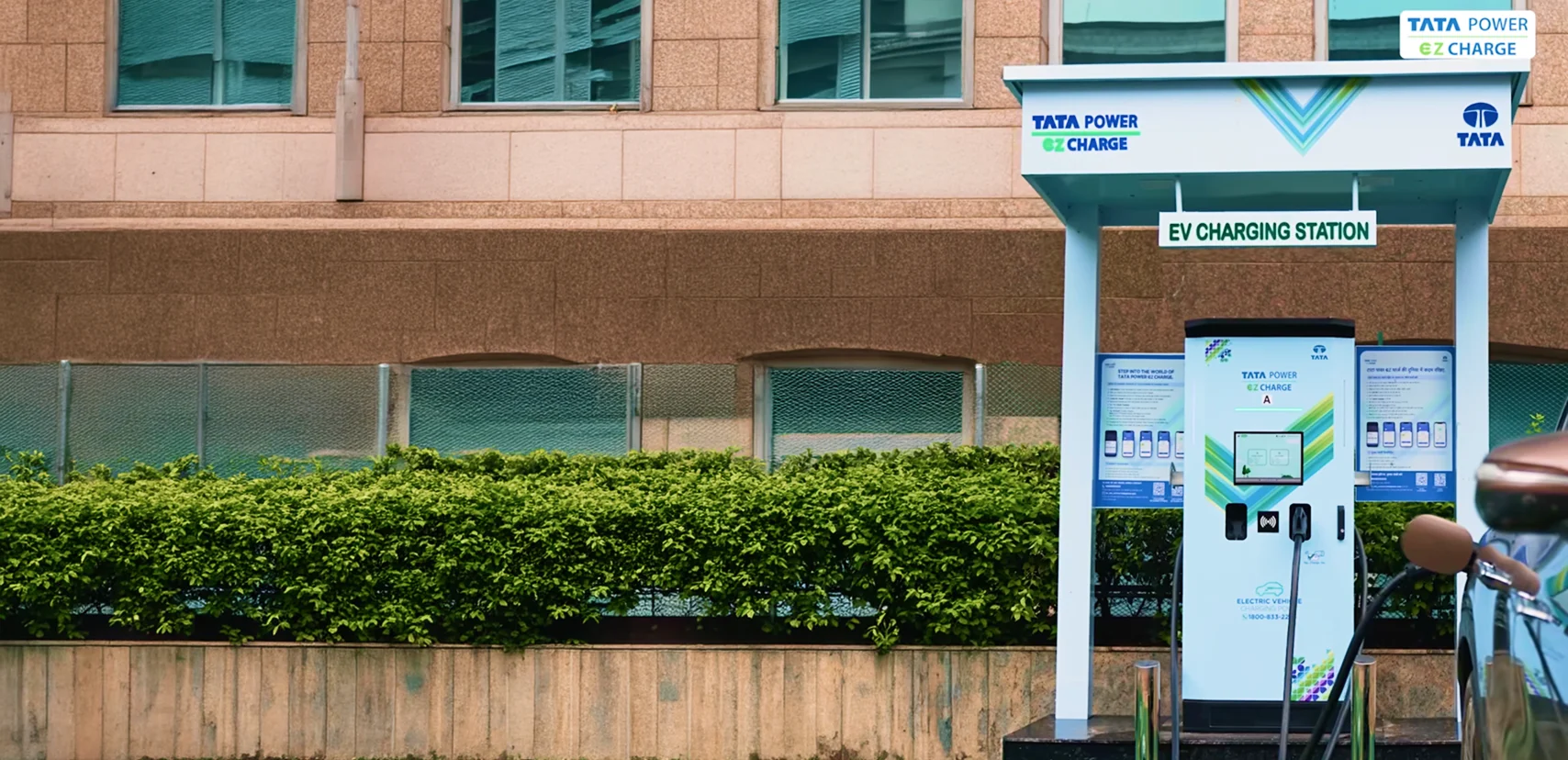
One of the biggest takeaways from the year is the continued expansion of EV charging infrastructure India needs for wider adoption. Tata Power’s network is helping move electric mobility beyond metro-led adoption by supporting public, semi-public, fleet and residential charging needs across cities and towns.
Key scale indicators include -
- 700+ EZ-ready cities and towns developed
- 5,800+ public, semi-public and fleet points, plus 1,200+ e-bus charging points
- Presence across public, fleet and residential charging segments
- Expansion across urban and rural India, including Tier II and Tier III cities
This scale matters because EV adoption cannot remain limited to large urban centers. Charging access needs to become more visible, reliable, and convenient across everyday mobility routes, workplaces, homes, and commercial hubs.
2. Fast charging is turning highways into EV-ready corridors
Range anxiety remains one of the biggest barriers for EV buyers, especially for long-distance travel. Tata Power’s focus on highway fast-charging corridors directly addresses this concern by making intercity EV journeys more practical and dependable.
Key developments include -
- 1,160+ fast-charging points across 254 highway corridors
- Strategic focus on long-distance EV travel
- Charging support for private users, commercial users and fleet operations
This is a critical development for India’s EV charging ecosystem because adoption depends on confidence. Users need to know that charging will be available not only near their homes or offices, but also on important travel corridors.
3. The TATA.ev MegaCharger Hub shows what charging at scale can look like
A major milestone in 2025–26 was the launch of India’s first co-branded TATA.ev MegaCharger Hub in partnership with Tata Passenger Electric Mobility Ltd. Located near Terminal 2 of Chhatrapati Shivaji Maharaj International Airport, Mumbai, the hub sits on a high-traffic corridor connecting business, travel, and logistics movement.
Key highlights of the hub include -
- Launch date: World EV Day, September 9, 2025
- Location: Near Terminal 2, Chhatrapati Shivaji Maharaj International Airport, Mumbai
- Primary users: Private vehicles, taxis, ride-hailing fleets and logistics operators
- Eight fast DC chargers delivering up to 120 kW
- 16 charging bays for simultaneous charging
- Powered entirely by 100% renewable energy
Its location makes it more than a symbolic launch. It places high-capacity charging where frequent, high-utility charging demand already exists. By combining speed, access and clean energy, the hub creates a replicable model for future large-scale Tata Power EV charging stations.
4. Green charging is becoming central to low-carbon mobility
EVs deliver their strongest climate benefit when the charging ecosystem becomes cleaner. Tata Power’s focus on renewable energy-powered charging stations reflects this shift from simply enabling electric mobility to enabling cleaner electric mobility.
Key sustainability indicators include -
- 41.39 crore green kilometers enabled through the EV charging network
- 15,47,088 tons of CO2 emissions reduced through EV charging initiatives
- 1,000+ charge points in Mumbai powered with green energy
- Deployment of renewable energy-powered charging stations to support a greener EV ecosystem
This is significant because the future of EV charging infrastructure in India cannot only be about charger count. It also needs to consider the source of energy powering mobility. By integrating renewable energy with EV charging, Tata Power is aligning electric mobility with broader Net Zero objectives.
5. EZ CHARGE is becoming the digital layer of EV ownership
Another key insight from the Integrated Report is the growing role of digital experience in EV charging. The Tata Power FY26 integrated report EZ CHARGE highlights show how the EZ CHARGE platform is moving beyond basic charger discovery and becoming a more integrated digital layer for EV users.
Key platform indicators include -
- 5.6+ lakh registered users
- 30.22 lakh charging sessions
- 259.64 million units of energy delivered
- In-car, app-less charging capabilities
- Ability to locate, book, pay and control charging through vehicle infotainment systems
The platform also brings in customer-focused features such as Trip Planner, advanced notifications, Time-of-Day-based charging, and improved booking management. These enhancements make the charging journey more personalized, predictable, and efficient.
Beyond customer convenience, the digital layer is also improving how the network performs. In FY26, Tata Power recorded 25% growth in charger utilization and a 65% increase in public charger revenue, showing how better visibility, smarter operations, and stronger usage insights can support both user experience and business performance.
For users, this means EV charging becomes less fragmented. For Tata Power, it strengthens the Tata Power EV Charging network as a digital-first ecosystem, not just a physical network of chargers.
6. Reliability can unlock the next phase of EV adoption
India’s EV charging ecosystem will become stronger when users can access multiple networks without fragmented apps, payment journeys or discovery limitations. Tata Power’s development of the Beckn-enabled Unified Bharat eCharge, or UBeC, points to this next phase.
Key interoperability initiatives include -
- Development of a Beckn-enabled Unified Bharat eCharge platform
- Creation of an open and interoperable digital charging ecosystem
- Seamless access across participating EV charging networks
- Integration with OEMs, fleet partners and digital platforms
- Improved charger discovery through platforms such as Google Maps
This can help users discover and access chargers more seamlessly while supporting better utilization for charging operators. Interoperability is therefore not only a technology upgrade. It is a practical enabler for mainstream EV adoption.
7. Home charging remains the quiet engine of EV adoption
While public charging is important for visibility and confidence, home charging remains a major part of EV ownership. Tata Power's integrated report on EV chargers also highlights the company’s strengthened home EV charging portfolio through new-generation AC chargers and OEM partnerships.
Key home charging developments include -
- 2.14+ lakh home chargers installed to date
- 7.4 kW AC charger introduced for diverse EV user needs
- OCPP-enabled and RFID-based charger variants
- OEM partnerships to strengthen home charging access
- Term of Reference with Montra Electric for monthly supply of 600 units of 3.3 kW AC charging boxes
This focus on home charging is important because many EV users prefer the convenience of overnight charging. A strong home charging portfolio can make EV ownership easier, especially when supported by safe installation, OEM partnerships, and digital service integration. Together, these priorities also reflect Tata Power EZ CHARGE business goals in 2026, where scale, user convenience, and network readiness work together.

Bottomline
The real test of India’s EV transition will not be how many people choose electric vehicles, but how easily they can live with that choice. Tata Power’s Integrated Report 2025–26 captures this shift with a focus on charging that is accessible, cleaner, smarter and more integrated into everyday movement. From Tata Power’s EV charging stations to digital-first platforms and green-powered hubs, the company is helping make electric mobility feel less like a future decision and more like a present-day convenience. That is when infrastructure stops being noticed and starts becoming part of how a country moves.
Keep reading...
View all