Step 1: Site assessment and planning
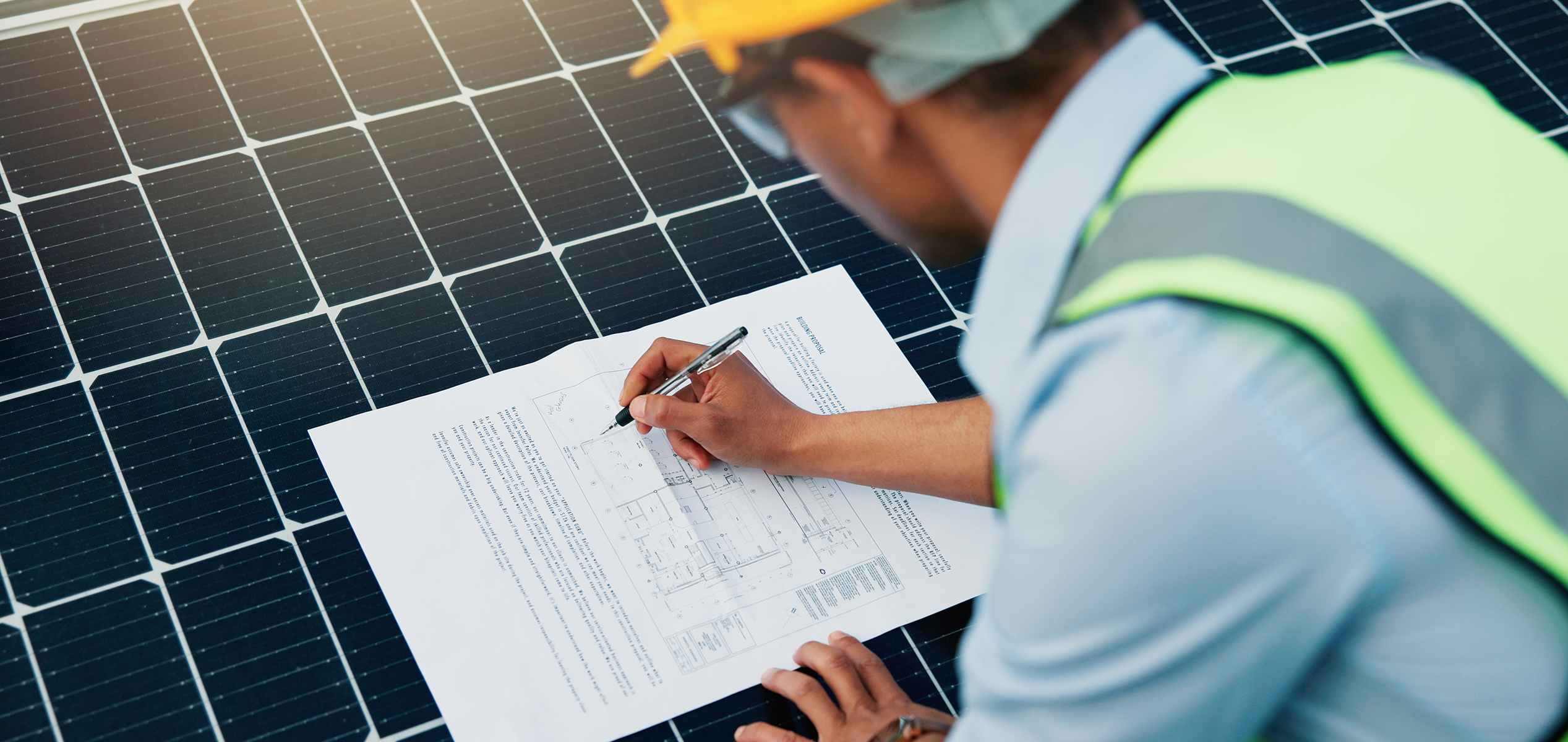
Every solar installation starts with an assessment of both your electrical usage needs as well as what your roof can provide. A house that uses approximately 300 units per month will likely need a 2–3 kW system or about 5–7 panels. A house using 600 units or more will typically need a 5-kW system or larger.
At the same time, the roof is evaluated for sunlight exposure, shading, direction, and available space. A bright, south-facing roof can generate more power with fewer panels, while shaded or smaller areas may require a different layout. Combining energy needs with roof conditions helps determine whether rooftop solar is feasible and the optimal system size for your home.
Step 2: Choose the right solar panel type
After determining the size of your solar panels for installation, figure out the panel that works best for you. Efficiency, durability, adequate amount of useable area, and long-term output potential are key factors in choosing the right panel. Selecting the right type of panel will ensure that your installed solar system produces a steady power output during its entire lifespan.
For instance, monocrystalline panels are commonly chosen for homes with limited roof space, as they produce more power per panel and work well even in low-light conditions while polycrystalline panels are a more economical option and suit homes with larger rooftops where space is not a constraint. In certain layouts, bifacial panels may be used to generate additional power from reflected sunlight, especially where panels are mounted higher or over light-colored surfaces.
It is also important to ensure that the panels meet recognized quality and safety certifications, such as BIS standards and MNRE guidelines, which indicate reliability, performance, and suitability for Indian conditions.
Step 3: Decide the solar system configuration
Once you’re set on what type of panels to use, go ahead and determine the system type from among on-grid, off-grid, and hybrid systems:
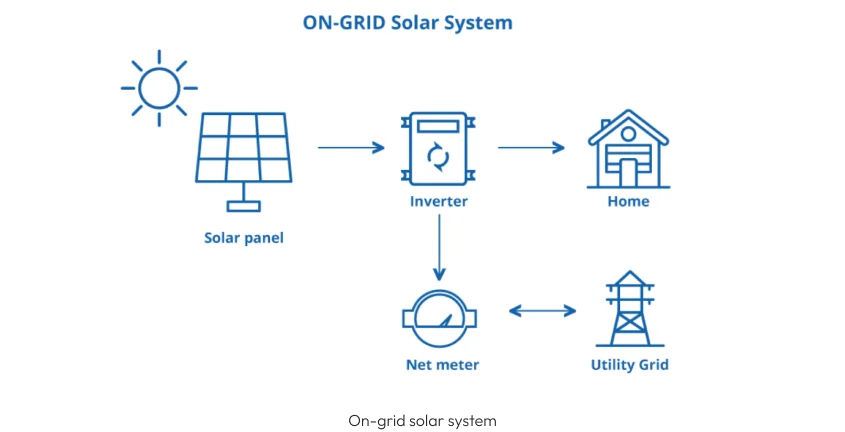
- On-grid systems connect to the utility and allow excess energy to be exported. Ideal where electricity supply is stable.
- Off-grid systems operate independently with battery storage, suited to areas with unreliable grid access.
- Hybrid systems combine both, using batteries for backup while remaining connected to the grid.
Your choice of the grid system defines how electricity flows between panels, home, batteries, and the grid, thereby impacting performance and savings.
Step 4: Complete approvals and documentation
Before installation is started, you require approvals from the local electricity distribution company and other relevant authorities. This includes sending in requests for grid connections, system designs, and component details. Government initiatives such as PM Surya Ghar support residential rooftop solar panel approvals and subsidies. If you do this step right, the installation will meet safety standards and be able to connect to the grid legally without any regulatory hiccups in the future.
Step 5: Install the mounting structure
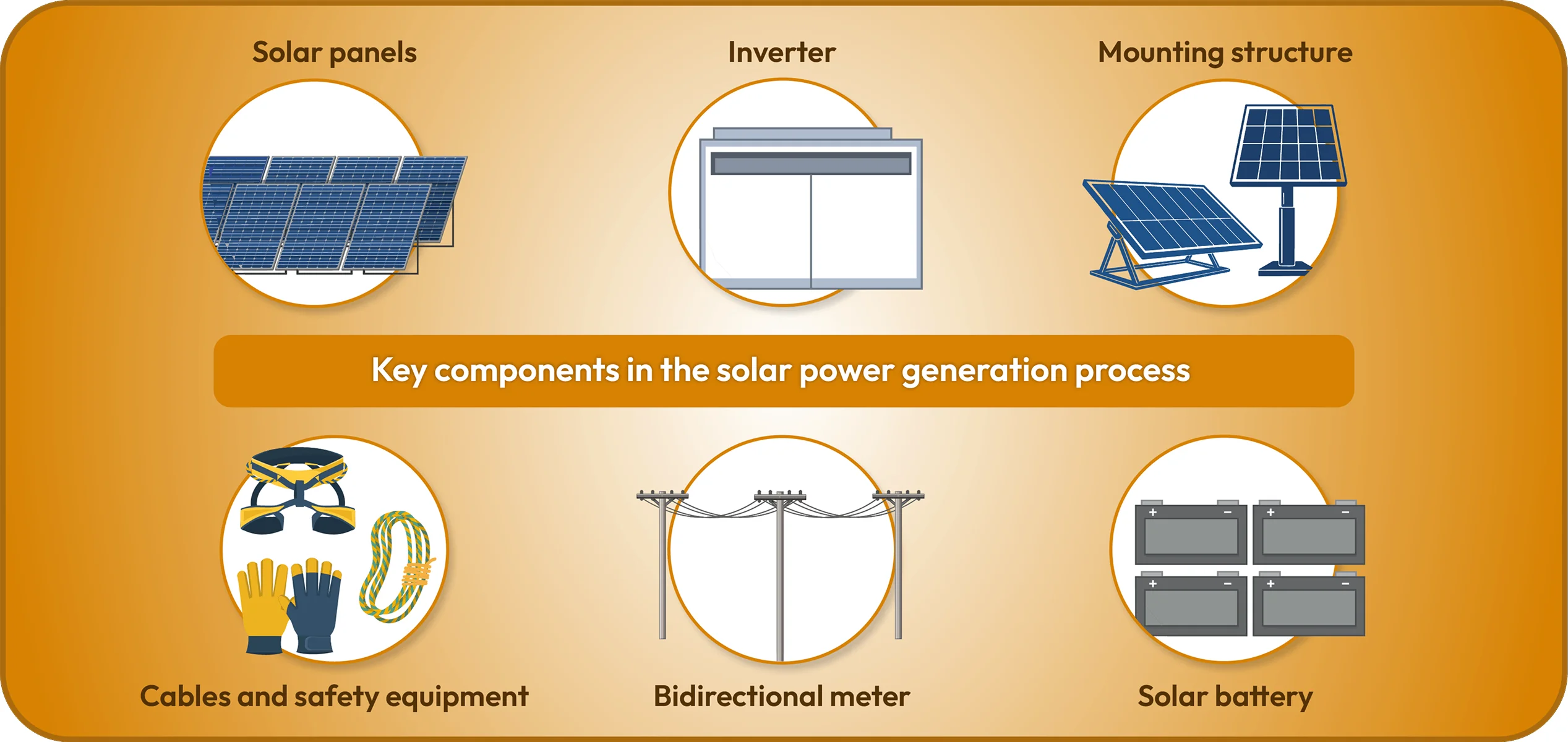
Once the approvals are in place, the mounting structure is installed on the roof or the ground. The mounting structure is secured to the surface it rests on and sealed to prevent damage from the elements. At this point, the tilt and alignment are set optimally so that the solar panels can get maximum sunlight all year long.
The mounting structure performs as the backbone of your solar panel system.
Step 6: Mount the solar panels
Solar panels are then placed onto the mounting structure and secured firmly. Proper spacing is integral to solar panel performance since it allows optimal airflow for temperature regulation. Careful alignment at this stage ensures minimal wastage, while keeping the installation stable for a long time.
Step 7: Connect the panels and complete wiring
Once mounted, the panels and electrically connected to form a solar array. Protective conduits are used to route the wires towards the inverter. This step sets up the power bridge by linking the energy generated on the roof to the rest of the system.
Step 8: Install the inverter and battery storage (if applicable)
An inverter is installed to convert the direct current generated by the photovoltaic cells to alternating current. It is in this form that the power can be supplied to your home.
In certain systems, where weather conditions are extreme or power cuts are frequent, batteries are also added to store surplus energy for later use.
Step 9: Connect the system to the grid
For grid-connected systems, the solar setup is linked to the local electricity network after approvals are in place. A solar net meter is installed to keep track of the bidirectional flow of electricity (to and from the grid).
Once connected, your home uses solar power first during the day, while any surplus energy is exported to the grid. At night or during low sunlight, electricity is drawn from the grid as usual. This step ensures the system works seamlessly with the utility supply and allows homeowners to maximize savings from their solar panel installation.
Step 10: Testing and commissioning
Post connecting to the grid, final testing and inspections are performed to ensure that the system works as intended. Once commissioned and approved, the system is switched on for use. If preferred, homeowners can maximize usage and save money by installing monitoring devices to track generation.




 Contact us