


 Contact us
Automated Guided Vehicles navigating a smart warehouse with precision


Sections
Introduction
We have all imagined a future where robots take care of our work and make our lives simpler. Today, that future is already here in many industries through automated guided vehicles, driverless machines that handle materials efficiently while reducing errors and improving safety.
From videos of smart warehouses to glimpses inside modern factories, AGVs are changing how goods are moved and managed. Their ability to operate around the clock and follow precise routes makes them an essential part of manufacturing, logistics, and healthcare operations.
To see why they are so important, it helps to understand exactly what an automated guided vehicle is and how it works.
What is an Automated Guided Vehicle (AGV)?
An automated guided vehicle (AGV) is a driverless, battery-powered mobile robot used to transport materials such as pallets, boxes, and containers within industrial and logistics environments by following programmed routes. Unlike manual forklifts or carts, AGVs navigate safely using magnetic tape, embedded wires, lasers, or vision-based systems, enabling efficient, repeatable material movement without human drivers and supporting consistent, automated workflows.
Modern AGVs possess built-in sensors and safety features to detect obstacles and avoid collisions, allowing them to operate alongside humans without causing disruptions. They are often integrated with a central control system that manages tasks, routes, and schedules, making them a crucial part of smooth and predictable workflows. In Indian manufacturing units, logistics hubs, hospitals, and emerging smart factories, AGVs are increasingly used to handle repetitive, time-consuming tasks, freeing human workers for higher-value roles and helping organizations maintain consistent productivity at scale.
Wondering how an automated guided vehicle system actually works? Here’s how.

How an Automated Guided Vehicle System works
An automated guided vehicle system is more than just a single robot moving items around. It is a combination of hardware, software, and control systems that allow AGVs to operate efficiently and safely without human intervention. These systems handle tasks such as transporting raw materials, moving finished products, or replenishing inventory while minimizing delays, errors, and labor costs.
In simple terms, an AGV system works in four steps: navigation, task assignment, movement, and load handling. Each of these steps is supported by dedicated technologies that keep operations smooth and predictable.
Navigation and guidance
AGVs use a variety of navigation methods:
- Fixed guidance: Magnetic tape, embedded wires, or painted lines guide the vehicle along pre-defined paths.
- Vision-based guidance: Cameras and computer vision help AGVs detect paths and navigate more flexibly.
- Laser-guided navigation: Rotating lasers scan the surroundings, enabling AGVs to follow complex routes.
- Free-range navigation: SLAM (Simultaneous Localization and Mapping) allows AGVs to map their environment in real time and adjust their routes dynamically.
Centralized control and fleet management
Most AGV systems are managed through a central control software that ensures smooth coordination of the fleet. This system:
- Assigns tasks to individual AGVs.
- Monitors vehicle locations in real time.
- Prevents collisions and avoids bottlenecks.
- Optimizes material flow across warehouses or production floors.
Load handling and customization
AGVs can be equipped with various attachments depending on the type of material they transport:
- Forks for pallets and crates.
- Lifting platforms for heavy or high-stack loads.
- Clamps for precise handling of delicate items.
- Conveyor systems for automated loading and unloading.
By integrating navigation, control, and load-handling capabilities, an automated guided vehicle system transforms traditional material handling into a smooth, automated process.
Automated guided vehicles rely on a combination of advanced technologies and components to move materials safely and efficiently. Understanding these building blocks helps explain how AGVs operate autonomously and why they are transforming modern industries. Unlike Autonomous Mobile Robots (AMRs), AGVs typically follow predefined paths, making them better suited for structured, repeatable workflows rather than highly dynamic environments.
1. Navigation systems
The heart of every AGV is its navigation system, which determines how it moves and follows routes:
- Magnetic or wire guidance: Embedded wires or magnetic strips in the floor guide the AGV along a fixed path.
- Laser guidance: Rotating lasers scan reflectors placed around the facility to help AGVs navigate precisely.
- Vision-based systems: Cameras and computer vision detect floor markings, objects, and obstacles, enabling more flexible movement.
- SLAM (Simultaneous Localization and Mapping): Advanced systems create real-time maps of the environment, allowing AGVs to adapt to changing layouts without needing physical guides.
2. Sensors and safety devices
AGVs are equipped with multiple sensors to ensure safe operation around humans and other machines:
- Proximity sensors detect obstacles and prevent collisions.
- Ultrasonic or infrared sensors help with navigation in tight spaces.
- Emergency stop mechanisms allow immediate shutdown in case of hazards.
- Load sensors monitor weight distribution to prevent tipping or damage.
3. Power and drive systems
Reliable mobility is critical for AGVs to operate continuously:
- Battery systems provide hours of autonomous operation, often with automatic charging stations.
- Electric motors and drive units ensure smooth movement, accurate stopping, and the ability to handle different load weights.
- Energy management systems optimize battery usage and schedule recharging to avoid downtime.
4. Control systems and software
Centralized and onboard computing systems coordinate AGV operations:
- Fleet Management Software assigns tasks, plans routes, and monitors all vehicles in real time.
- Onboard computers process sensor input, control speed, steering, and load handling.
- Integration with Warehouse Management Systems (WMS) ensures seamless operation within larger logistics or production workflows.
5. Load handling devices
AGVs can carry different types of loads depending on the application:
- Forks, clamps, and conveyors for pallets, crates, or containers.
- Lifting decks and rollers for stacking or moving individual items.
- Specialized attachments for assembly line support or sensitive materials.
Together, these technologies make AGVs reliable, safe, and adaptable tools for modern industry. By understanding these components, it becomes easier to see how AGVs are applied across manufacturing, logistics, healthcare, and other sectors.

Automated Guided Vehicles making industrial operations smoother and greener
Automated guided vehicles come in different types, each designed for specific tasks and environments. Understanding these variations helps businesses match the right AGV to their material handling needs. Forklift AGVs are best suited for pallet handling and high-rack storage, while unit load AGVs work well in conveyor-based workflows that require smooth, automated load transfer. Other AGV types support towing, assembly operations, or compact movement in tight spaces.
AGV types by function and navigation
| AGV type | Navigation method | Typical use / Application |
|---|---|---|
| Forklift AGVs | Magnetic tape, laser, or wire guidance | Lifting and moving pallets, stacking in high racks, transporting goods across warehouse floors |
| Towing (Tugger) AGVs | Magnetic tape, laser | Pulling multiple carts or trailers, ideal for heavy loads over long distances |
| Unit Load AGVs | Laser, vision, or QR code | Transporting single pallets or containers, often with rollers, belts, or lifting decks |
| Automated Guided Carts (AGCs) | Magnetic tape, laser, vision | Moving smaller loads in tight spaces, common in e-commerce and assembly lines |
| Assembly Line AGVs | Magnetic tape, laser, or vision | Carrying parts along assembly lines in sequential production processes |
| Pallet Trucks | Magnetic tape, laser | Moving palletized loads from floor level to storage or dispatch stations |
| Hybrid Vehicles | Multiple (manual + autonomous) | Flexible operation that can switch between driverless and manual control depending on workflow needs |
Navigation-focused AGVs
Some AGVs are categorized primarily by their navigation method:
- Laser-guided AGVs: Rotating lasers scan reflectors to navigate accurately.
- Magnetic-guided AGVs: Follow magnetic tape or embedded wires.
- Vision-guided AGVs: Use cameras and computer vision to navigate dynamic environments.
- QR code-guided AGVs: Read floor-placed QR codes to follow paths and receive instructions.
Each type has unique advantages depending on the workflow, environment, and material handling needs. Forklift and unit load AGVs are excellent for structured, predictable workflows, while vision-guided or hybrid AGVs handle more dynamic, changing environments effectively.
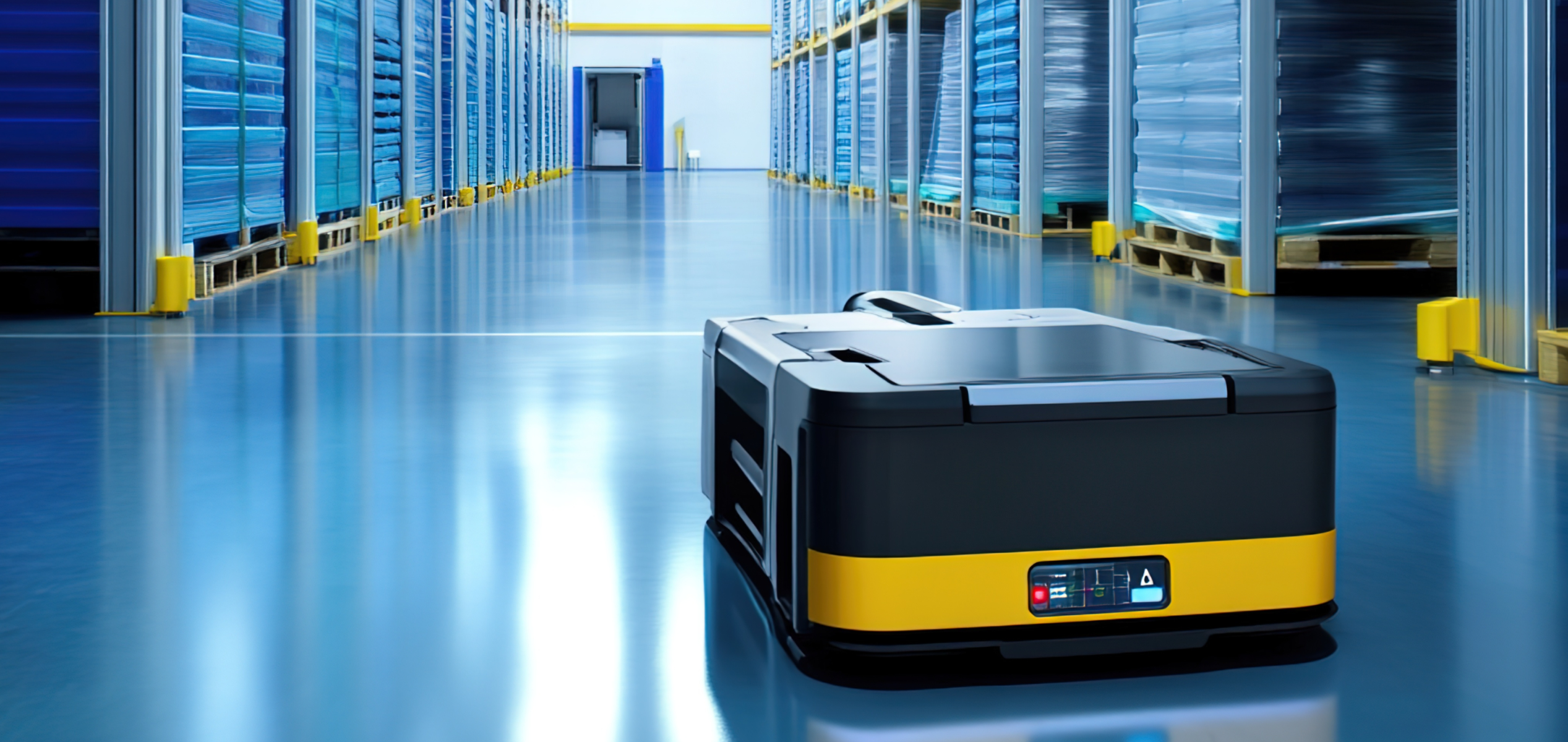
AGVs powered by electric mobility solutions for efficient operations
Automated guided vehicles are no longer futuristic concepts; they are actively shaping operations across industries by improving efficiency, safety, and reliability. In Indian manufacturing plants, large logistics parks, hospitals, and fast-growing e-commerce warehouses, AGVs are increasingly used to automate repetitive material handling tasks while reducing errors and operational costs. As smart factories and digitally connected supply chains expand, AGVs are expected to play a central role in India’s shift toward automated, data-driven industrial operations.
1. Manufacturing
- Transporting raw materials to production lines.
- Moving semi-finished products between assembly stages.
- Supporting assembly lines with mobile platforms.
AGVs help factories maintain consistent workflows, reduce human fatigue, and keep production moving 24/7.
2. Warehousing and logistics
- Storing and retrieving pallets in warehouses.
- Feeding items to order-picking stations.
- Moving goods in distribution centers efficiently.
- AGVs optimize warehouse space, reduce manual labor, and speed up order fulfillment, making them ideal for e-commerce, retail, and third-party logistics.
3. Healthcare
- Delivering meals, linens, and medicines in hospitals.
- Transporting medical supplies to different departments.
- Handling sensitive materials while adhering to hygiene standards.
- AGVs reduce human contact in critical environments, improving safety and allowing staff to focus on patient care.
4. Automotive and aerospace
- Moving parts along assembly lines.
- Delivering heavy components to workstations.
- Transporting completed assemblies to storage or shipping areas.
- AGVs maintain precise schedules and reduce delays in complex production processes.
5. Food and beverage industry
- Transporting raw ingredients or finished products.
- Supporting packaging and bottling lines.
- Moving items in temperature-controlled environments.
- AGVs ensure consistent, hygienic handling of food products while maintaining workflow efficiency.
6. Future potential
As AGV technologies advance, their applications are expanding beyond traditional material handling. Flexible, vision-guided, and SLAM-enabled AGVs are being used in dynamic environments such as airports, large-scale retail stores, and smart factories, showing that automated material transport is becoming a standard part of modern industry.
Automated guided vehicles offer numerous advantages for industries looking to boost efficiency, safety, and productivity. However, like any technology, they also come with certain limitations that businesses should consider before implementation.
| Category | Benefits | Limitations |
|---|---|---|
| Productivity and efficiency | Operates 24/7, handles repetitive tasks, improves throughput, and frees staff for complex jobs. | Best for fixed routes; struggles with non-repetitive or dynamic tasks. |
| Safety | Reduces workplace accidents by automating heavy or hazardous tasks; built-in sensors prevent collisions. | Requires proper setup and monitoring to ensure safety; unexpected malfunctions can pose risks. |
| Cost | Lowers long-term labor costs, reduces product damage, and minimizes indirect expenses like repetitive task training. | High initial investment for vehicles, guidance systems, and software integration. |
| Accuracy and traceability | Follows precise programmed paths, improving inventory tracking and reducing human error. | Limited flexibility for route changes; reprogramming or infrastructure modifications may be needed. |
| Scalability and flexibility | Can be integrated into larger fleets; advanced systems allow rerouting and dynamic task allocation. | Workforce impact: may require retraining or redeployment of staff; maintenance needs can cause downtime. |
Automated guided vehicles deliver the greatest value in environments with high-volume, repetitive workflows where consistency, safety, and long operating hours matter most. While the initial investment and limited flexibility can be challenges, businesses with stable layouts and predictable material flows often see strong long-term returns from AGV automation. Automated Guided Vehicles are part of the broader shift toward electric mobility, supported by robust EV charging infrastructure.

Automated guided vehicles are playing a key role in transforming industries by improving efficiency, safety, and accuracy in material handling. They allow businesses to automate repetitive tasks, maintain consistent workflows, and reduce errors caused by human fatigue. While the upfront investment and limitations in route flexibility can be challenges, the long-term advantages such as lower labor costs, improved throughput, and better inventory tracking make AGVs a worthwhile investment. With advances in navigation technology and fleet management systems, AGVs are becoming increasingly adaptable, allowing organizations to scale operations and prepare for the demands of modern industrial environments.
Frequently asked questions
The frequently asked questions section is a reliable source for unlocking answers to some of the most crucial inquiries. Please refer to this section for any queries you may have.
- FAQ
An AGV follows predefined routes, while an AMR navigates dynamically using real-time mapping and AI. Automated guided vehicles rely on fixed paths such as magnetic tape, wires, or programmed laser routes, making them ideal for structured environments. Autonomous Mobile Robots are more flexible and can reroute themselves, but AGVs remain more predictable and reliable for repetitive, high-volume material movement.
An automated guided vehicle system works by guiding driverless vehicles along programmed routes to transport materials without human intervention. AGVs receive tasks from central software, navigate using guidance technologies like lasers or magnetic tape, avoid obstacles using sensors, and handle loads through forks, conveyors, or lifting platforms, ensuring consistent and automated material flow.
In hospitals, an AGV is used to autonomously transport supplies such as medicines, linens, meals, and waste. These automated guided vehicles reduce manual handling, limit human contact in sensitive areas, improve hygiene standards, and allow healthcare staff to focus more on patient care rather than logistics.
The cost of an automated guided vehicle typically ranges from ₹15 lakh to over ₹1 crore per unit, depending on type and system complexity. Pricing varies based on navigation technology, load capacity, software integration, and whether the deployment involves a full automated guided vehicle system with fleet management and charging infrastructure.
Neither is universally better; AGVs are better for predictable workflows, while AMRs suit dynamic environments. AGV automation works best where routes and tasks are stable, offering reliability and lower operational variability. AMRs are preferred when layouts change frequently, though they often come at a higher cost and complexity.
Manufacturing, warehousing, logistics, healthcare, automotive, and food processing use automated guided vehicles the most. These industries benefit from AGVs handling repetitive material transport, improving safety, reducing errors, and maintaining consistent operations across large facilities.
Yes, automated guided vehicles are well suited for Indian warehouses with stable layouts and high-volume operations. As India’s e-commerce, manufacturing, and logistics sectors expand, AGVs help address labor shortages, improve safety, and support scalable automation in large distribution centers and industrial parks.
An automated guided vehicle typically has a lifespan of 8 to 15 years with proper maintenance. Battery replacements, software updates, and routine servicing play a key role in extending AGV life, especially in high-usage environments operating multiple shifts.
Yes, modern automated guided vehicle systems can integrate with existing warehouse management systems and ERP platforms. Through software interfaces, AGVs can receive tasks, update inventory movement, and operate alongside conveyors, storage systems, and manual workflows without requiring a complete infrastructure overhaul.
The first automated guided vehicle was introduced in the early 1950s by Barrett Electronics in the United States. Originally designed to tow trailers using wires embedded in factory floors, early AGVs laid the foundation for today’s advanced systems that use sensors, software, and intelligent navigation technologies.

Keep reading...
View all