


 Contact us
Solar operation and maintenance at work


Introduction
As the morning light shines, solar fields convert ordinary landscapes into engines of clean energy. Did you know India has surpassed 100 GW of installed solar power capacity as of early 2025? To keep operations running smoothly and ensure uninterrupted production, solar operation and maintenance (O&M) of these power plants is essential. Behind every megawatt produced, steady upkeep and precise monitoring ensures that systems are healthy for years after installation day.
Since solar capacity in the country expands across deserts, rooftops, highways, and industrial parks, the role of solar plant operations and maintenance has also expanded. Dust, heat, humidity, grid fluctuations, and seasonal extremes all influence how efficiently a plant performs. Strong solar O&M practices help projects stay reliable, cost-effective, and ready to meet the country’s rising energy needs.
What is solar operation and maintenance (O&M)?
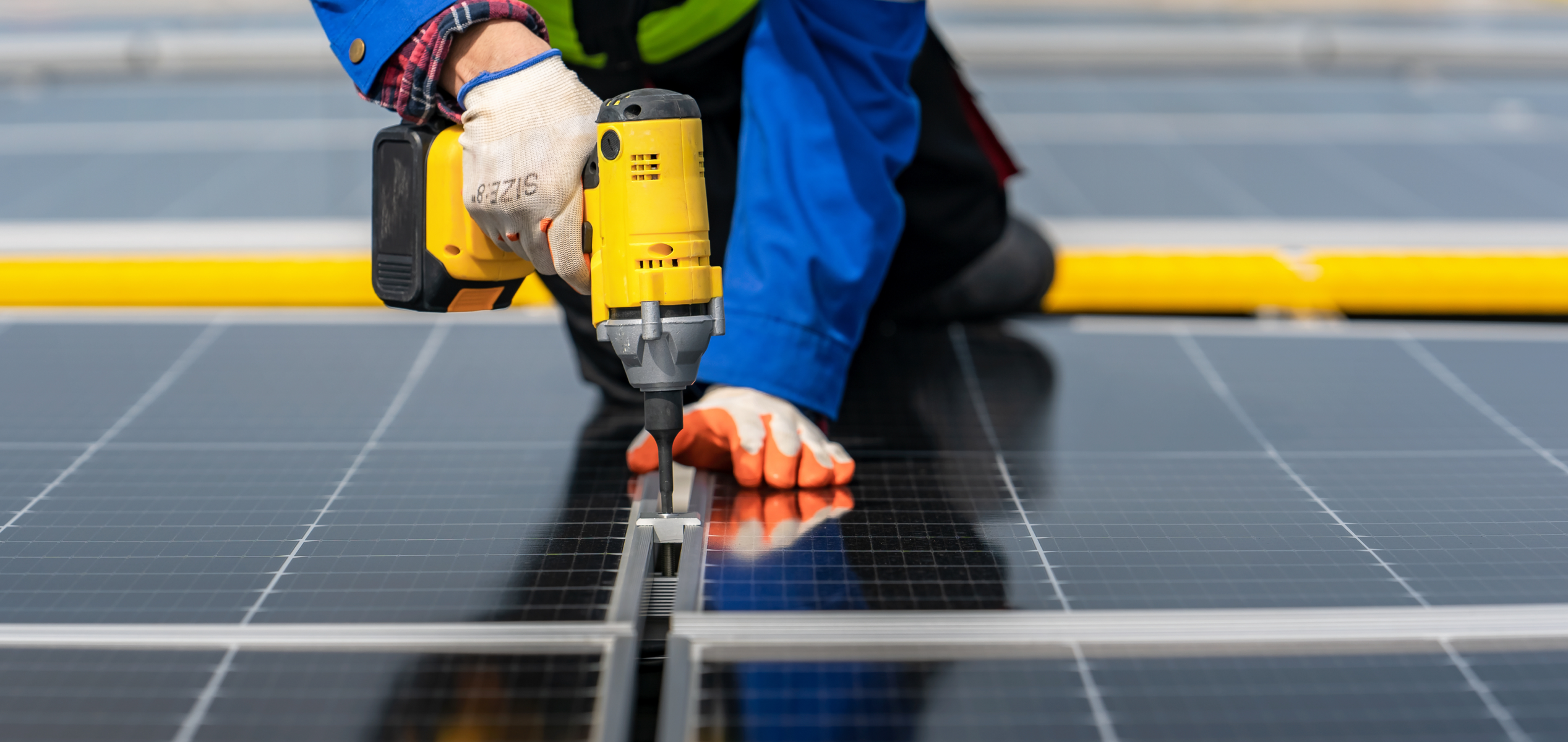
Solar operation and maintenance refers to the ongoing activities required to keep a solar power plant running safely, efficiently, and reliably throughout its lifecycle. It includes daily monitoring, performance analysis, cleaning, repairs, inspections, and component replacements. The goal is to maximize energy output while reducing downtime and long-term costs.
A well-planned O&M strategy also includes:
- Safety
- Documentation
- Regulatory compliance
- Warranty management, and
- Timely reporting
What are the key considerations in India?
India’s solar growth story is impressive and still being written but operating and maintaining these assets comes with its own realities. The country’s geography, climate patterns, grid structure, and regulatory environment shape how solar operations and maintenance must be planned and executed for long-term efficiency.
The following considerations should be kept in mind in India:
1. Dust and soiling
This is especially true for regions like Rajasthan, Gujarat, and parts of Karnataka. High particulate levels can reduce generation of power, if not managed with systematic cleaning schedules.
2. Water scarcity
These same regions also undergo water scarcity, introducing a second challenge. This pushes O&M teams toward dry cleaning systems, robotic cleaners, and optimized wash cycles.
3. Climatic diversity
Different regions of India have varying climatic conditions, which introduces more complexity. Monsoon-heavy regions face waterlogging and accelerated corrosion. On the other hand, central and northern states experience wide temperature swings that affect module performance and inverter lifespan. Strong winds, hail events, and thunderstorms also demand durable mounting structures and frequent inspection routines.
Do solar panels function in winter? The reality is that solar panels rely on sunlight and not heat for panels. Here's why. sometimes cooler temperatures can even aid in the performance of solar panels.
4. India’s solar grid ecosystem
Factors like grid intermittency, voltage fluctuations, and curtailment can affect plant availability and financial performance. O&M teams must monitor grid conditions closely, coordinate with distribution companies, and maintain stabilization equipment such as SCADA-driven controls, capacitors, and protection systems.
Recent research indicates that advanced predictive maintenance methods can reduce O&M costs by around 25-30% and enhance energy yield or system availability by approximately 15-20% in grid-connected solar photovoltaic systems
5. Compliance
India’s regulatory environment requires timely reporting, safety adherence, and performance documentation, whether for large solar parks or rooftop systems. Adhering to SLAs, meeting state nodal agency requirements, and ensuring warranty alignment with OEM guidelines help protect plant owners from avoidable claims or losses.
6. Scale
The sheer scale of India’s deployment calls for skilled manpower and advanced digital oversight. Real-time monitoring, predictive maintenance, and strong field execution can dramatically improve plant uptime.
In short, operating solar assets in India demands a practical, climate-aware, and data-driven approach. This aims to respect both the diversity of the landscape and the expectations of long-term energy generation.
Key components and risk areas in solar systems
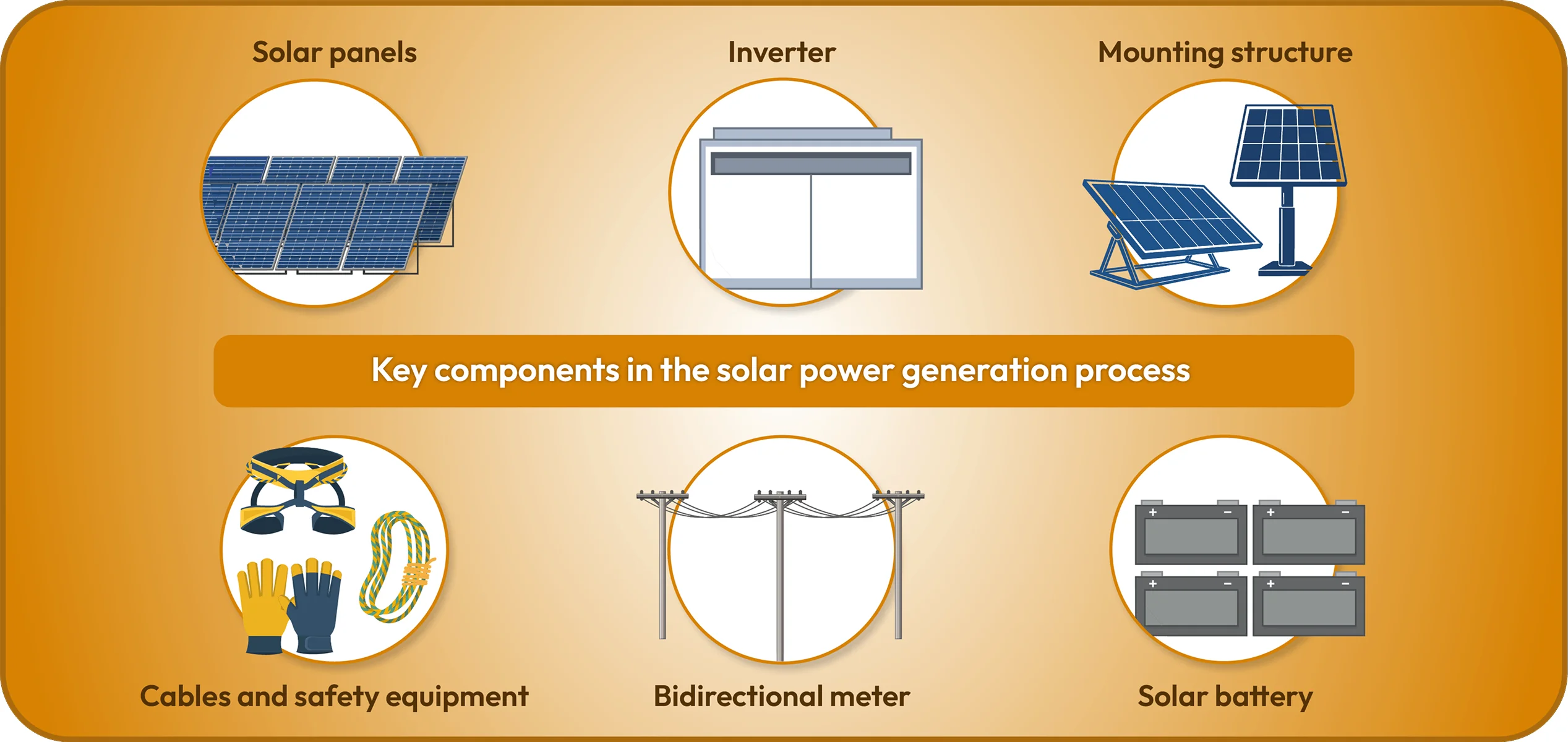
A solar plant may appear simple on the surface, but its performance depends on multiple interconnected components working in sync. Each part has its own set of risks. This is why structured solar operations and maintenance is essential.
1. Solar modules
Modules convert sunlight to electricity and face the highest environmental exposure. Key risks include hotspot formation, PID (Potential Induced Degradation), micro-cracks, delamination, and heavy soiling. Thermal cycling, hail, strong winds, and UV degradation can reduce long-term output if not monitored.
2. Inverters
Inverters are often called the “heart” of a solar plant. Inverters handle maximum electrical stress and are prone to overheating, component wear-out, firmware errors, fan failures. Even minor inverter downtime can significantly cut annual generation.
3. Mounting structures and trackers
Corrosion, misalignment, foundation settlement, and mechanical wear pose risks. In high-wind zones and cyclone-prone states, structural integrity becomes critical for system safety.
4. Cables, junction boxes & connectors
Loose connections, rodent damage, insulation failures, and moisture ingress affect plant reliability and can create fire hazards. Periodic thermography helps detect hidden thermal stress.
5. Transformers & switchgear
Oil quality degradation, overheating, protection relay malfunctions, and earthing issues require regular inspection. These components directly impact grid compliance and safety.
6. Monitoring & SCADA systems
Data gaps, sensor drift, communication failures, and inaccurate irradiation measurements distort performance analysis. A reliable SCADA setup is central to timely decision-making.
Each of these components has its own ageing curve and failure mode. Identifying risks early reduces downtime, protects warranties, and secures long-term energy yield.
Best practices and operational framework for efficient solar O&M
Efficient solar plant operation and maintenance relies on a structured framework that balances preventive care, corrective response, and predictive insights. The following practices help maximise output while extending asset lifespan:
1. Preventive maintenance
This includes routine cleaning, electrical inspections, torque checks, and vegetation control. Scheduled inspections reduce unexpected failures. Plants in dusty regions benefit from optimised cleaning cycles, robotic systems, or water-efficient methods.
Curious to learn more about how to maintain a solar panel? Dive into the full-length blog on maintenance of solar panels.
2. Predictive maintenance
Using advanced analytics, thermal imaging, IV curve tracing, and remote monitoring, teams can detect underlying degradation before it impacts performance. Machine-learning-driven anomaly detection is becoming standard in modern utility and industrial plants.
3. Real-time monitoring & SCADA analytics
Continuous tracking of generation, performance ratio (PR), inverter status, and weather conditions helps operators react quickly. A strong SCADA system also supports regulatory reporting, grid compliance, and SLA adherence.
4. Corrective maintenance
Swift response to inverter faults, wiring issues, communication errors, or structural damage reduces downtime. Spare parts planning and OEM coordination further shorten repair cycles.
5. Documentation and compliance
A well-maintained solar power plant operation and maintenance manual guides teams on safety, reporting procedures, warranty-friendly practices, and emergency protocols.
6. Workforce competency
Skilled technicians trained in electrical safety, high-voltage equipment handling, and data interpretation form the backbone of reliable O&M execution.
7. Performance benchmarking and continuous improvement
Comparing site performance across seasons and geographic zones helps refine operating strategies and optimise plant yield.
Together, these practices create a robust O&M framework and improves reliability, lowers LCOE, and strengthens long-term project viability.
The Tata Power Advantage
High-performing solar assets need maintenance powered by intelligence and experience. Tata Power Solar combines both to deliver reliable generation and long-term asset value.
Why Tata Power Solar:
- Proven Scale & Expertise: Decades of experience across utility, rooftop, and distributed solar assets
- Real-Time Monitoring: Central command centers for early fault detection and performance optimization
- Predictive Maintenance: Drones, thermography, and analytics to prevent downtime
- Strong Field Execution: Trained teams, strict safety standards, structured PM schedules
- Efficiency-Focused Care: Water-efficient cleaning and rapid corrective response
- India-Ready Operations: Deep understanding of local climate and grid conditions
Bottomline
Solar plants can deliver strong, predictable performance only when operation and maintenance receive consistent attention. A structured O&M approach protects system health, improves annual generation, and secures returns across the plant’s entire lifespan, which helps India’s clean energy ambitions stay firmly on track.
Frequently asked questions
The frequently asked questions section is a reliable source for unlocking answers to some of the most crucial inquiries. Please refer to this section for any queries you may have.
- FAQ
Daily O&M activities typically involve monitoring plant generation, checking inverter logs, inspecting module conditions and tracking grid voltage. Additionally, it also involves verifying SCADA data and identifying early signs of faults. Teams may also perform light cleaning, site housekeeping, and safety assessments.
Cleaning frequency depends on location. High-dust zones like Rajasthan may require weekly cleaning, while other areas may need cleaning every 15-30 days. Plants near industrial zones, farmland, or coastal regions may have more frequent soiling and require customised cleaning cycles.
Here’s a full guide on how to clean a solar panel
A well-maintained plant typically achieves a PR of 75-85%, depending on technology, climate, and system design. Declining PR over time signals potential issues such as degradation, inverter faults, heavy soiling, or shading
Traditional preventive care detects issues only during inspection cycles. Predictive maintenance uses data analytics, thermal imaging, and real-time AI-based alerts to identify anomalies early reducing downtime and preserving energy yield
Solar O&M requirements are different for rooftop systems vs. utility-scale plants. Rooftop systems face unique risks such as shading from nearby structures, roof load constraints, water drainage issues, and localised dust accumulation. Utility-scale sites deal with land preparation, vegetation, large inverter stations, and grid coordination challenges
Most equipment warranties cover manufacturing defects, not operational issues. O&M teams ensure that all upkeep follows OEM guidelines, protecting warranty claims while preventing avoidable failures
SCADA provides live visibility into generation trends, component behaviour, and environmental conditions. It helps teams react quickly, maintain grid compliance, identify performance loss, and streamline reporting.
Sources
1. India has surpassed 100 GW of installed solar power capacity as of early 2025: Enerdata
2. Recent research indicates that advanced predictive maintenance methods can reduce O&M costs by around 25-30%: MDPI research article
Keep reading...
View all