Introduction
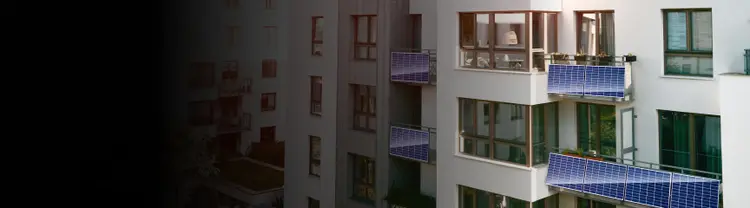
Did you know that residential rooftops have potential for over 637 GW of solar energy? With balcony solar panels included, that’s a significant amount of untapped potential. If you live in a smaller space like an apartment with a balcony, you can still be part of the solar energy movement. Solar panels are now lighter and more versatile for balconies, railings, ledges or even walls.
Households in urban cities across India, and the world are exploring balcony solar panels because in many cases, balconies are the only sunlit spaces available. This guide covers everything you need to know from types, sizes and uses of the energy output. It includes a checklist of considerations before you decide to install your own balcony solar panel
Make sustainability convenient with balcony solar panels
Why use solar panels in balconies?
Balconies offer a practical entry point for residents who want to generate some portion of their own electricity without making major infrastructure changes. In apartment settings where rooftops are shared, restricted, or inaccessible, a balcony is often the only private outdoor space with consistent sunlight. This makes balcony solar particularly appealing for renters and condo owners, who typically can’t drill into walls, alter wiring, or make permanent structural modifications.
Small balcony systems can support everyday needs like charging devices, powering lights, running low-watt appliances, or keeping essential backup options during outages. For renters, balcony solar is a portable solution and they can install it without violating lease agreements and simply take it along when they move. For condo owners, it’s a way to gain energy independence without waiting for society-level approvals or navigating shared-rooftop policies.
As of July 2025, India has installed roughly 11 GW of rooftop solar under various schemes, with a notable portion contributed by the residential segment. This reflects a broader trend, Indian households are steadily adopting solar energy.
Checklist to consider before installing a balcony solar panel
Before you invest in a balcony solar setup, here’s a simple checklist to help you evaluate if you meet most, if not all, of the criteria. For example, “does your balcony receive enough sunlight?” and “Is there enough space or mounting options for solar panels?”
1. How much sunlight does a balcony solar panel need?
Check daily sunlight exposure and shading. South- or west-facing balconies usually meet the sunlight requirement for solar panels.
2. Is there enough space for balcony solar installation?
Measure your railing, wall, or floor area and choose between rigid, flexible, or foldable options designed for small solar panel for home use.
3. Do you need permissions or approvals?
Confirm rules with your landlord, housing society, or condo association for any exterior balcony solar installation.
4. Is the balcony structurally safe for panels?
Ensure the space can support the weight of panels and withstand wind loads on higher floors.
5. How will the system connect electrically?
Decide between plug-and-play setups or connecting to an inverter or portable power station.
6. What energy output can you expect?
Assess whether a small solar panel for home use will meet needs like charging devices or powering lights.
7. Can you easily maintain the panels?
Check that you have access for cleaning since dust, pollution, and bird droppings can reduce efficiency.
8. Is your setup safe and secure?
Plan proper cable routing, waterproofing, and secure mounting to avoid hazards and improve system longevity.
Green hydrogen is cleaner and uses renewable energy, making it better for India’s long-term plans. Blue hydrogen is cheaper today and easier to start with because it uses existing natural gas systems.
Your balcony can be a solar energy generation hub
Is it feasible to install a solar panel on your balcony?
Now that you’ve met all the requirements on the checklist, the question remains whether a balcony-based solar system is the feasible option for you based on your space and environment. In dense cities, sunlight can be uneven because of tall buildings, narrow lanes, and frequent shading throughout the day. This makes the orientation and location of the balcony the most important factor.
South-facing and west-facing balconies generally offer the best potential, as they receive longer stretches of direct sunlight. East-facing balconies can still work, though their output may be limited to the morning hours. North-facing balconies tend to be the least viable unless the building is situated in an open area with minimal obstruction.
Higher floors usually have better exposure and fewer shade interruptions. Lower floors may still be workable, but the surrounding architecture often affects consistency. It’s also important to remember that balcony systems are meant for small-scale use. They can meaningfully reduce dependence on the grid for light loads, but they won’t replace a full rooftop setup.
Even small solar plants (e.g. up to 5 kW) have the potential to meet the electricity needs of over 99% of Indian households, according to a 2025 analysis. Even though balcony solar panels are more often a supplement for solar energy and not a replacement, it still has the potential to meet the needs in your home.
Simply put, a solar panel on the balcony is a great option for households that receive direct sunlight for at least three to four hours a day. Since it is a more pocket-friendly option than rooftop panels, more urban residents are leaning towards this option.
Types and sizing of solar systems suitable for balconies
So, you have dipped your toes into the topic and you’re curious to delve deeper into types and sizes of solar systems. This section highlights the categories of solar panels that you can consider for your balcony. Each of them is suited to different spaces usage needs.
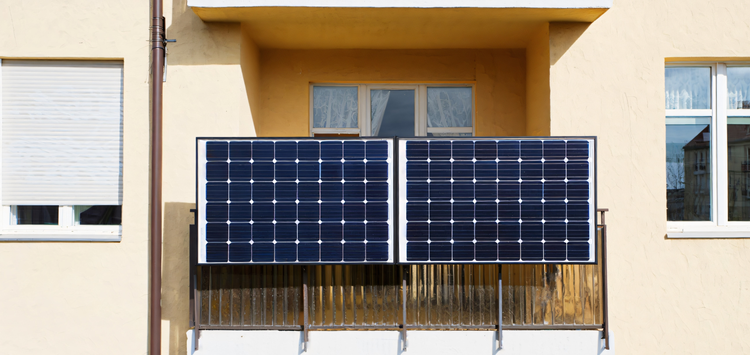
1. Rigid solar panelsStandard photovoltaic panels offer higher efficiency and durability. They work well on balconies with solid railings or walls and enough room for secure mounting.
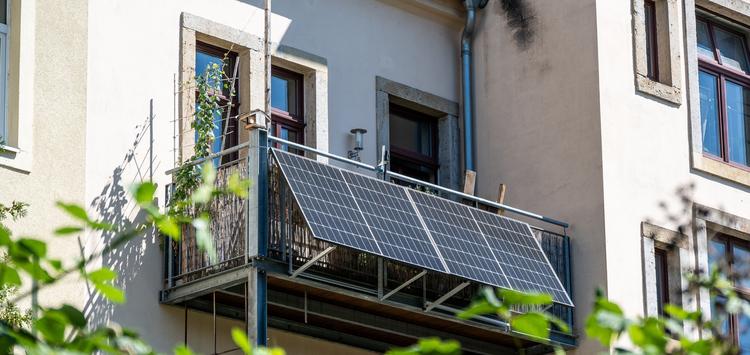
2. Flexible solar panels for balcony useThese lightweight, bendable, flexible panels for balcony use are ideal for curved surfaces, metal railings, or areas that cannot bear much weight. They’re visually less intrusive and easy to reposition.
3. Plug-and-play balcony solar kitsThese compact systems combine small panels with microinverters or portable power stations. They are simple to set up and suitable for renters who prefer non-permanent solutions.
4. Portable foldable solar panelsUseful for balconies with inconsistent sunlight or limited space. They can be moved to the sunniest spot and folded away when not needed.
Sizing Guidelines
- 50-150 W: Suitable for charging phones, small electronics, LED lights, and basic low-watt devices.
- 150-300 W: Can support slightly larger loads such as fans, laptops, routers, and small appliances when paired with a power station.
- 300-500 W: Works for households that want more consistent utility, though this typically requires larger balcony space and stable mounting.
Sizing should match realistic energy needs rather than household-level consumption. As emphasized above, balconies are best for supplementary power, not full substitution.
How to install solar panels on a balcony
Installing balcony solar panels is relatively straightforward, but the process must prioritize safety, stability, and correct electrical routing. The exact steps depend on the type of panel and the space available, but the general installation flow looks like this:
1. Assess the sunniest spotIdentify the part of your balcony that receives the most direct sunlight across the day. Avoid areas with frequent shading from nearby buildings, trees, or overhangs.
2. Choose the right mounting methodBalconies typically allow for three kinds of mounting setups:
- Railing-mounted brackets
- Wall-mounted frames
- Floor-mounted stands angled toward the sun For higher floors or windy regions, secure mounting and anti-tilt support become more important.
3. Position the panels at an optimal tiltAngling the panels improves generation, especially if your balcony doesn’t face the perfect direction. A tilt of 20-30 degrees works well in many locations, though vertical mounting is also common when space is tight.
4. Connect the panels to an inverter or power stationBalcony systems usually fall into two categories:
Plug-and-play setups connected to a microinverter or portable power station.
- Grid-tied systems, which require approval from the building association and your electricity provider.
- Most apartment residents opt for the first category because it avoids structural and regulatory complexity.
5. Manage wiring safelyRoute cables along the edges of the balcony and use waterproof coverings where needed. Keep wires away from pathways or areas exposed to pets, children, or rainfall.
6. Perform a basic output testOnce connected, check voltage or system output using the display on your inverter or power station. This confirms that the panels are receiving adequate sunlight and are functioning as expected.
7. Secure all components for long-term stabilityTighten mounts, check weight distribution, and confirm that the setup stays stable during windy conditions. This is especially important for upper floors common in urban apartments.
The approach detailed above keeps installation simple while maintaining safety and performance standards.
Maintenance of Solar Panels on a Balcony
Balcony solar panels don’t demand much upkeep, but a bit of regular care goes a long way in keeping them efficient. Urban balconies collect dust, pollution, bird droppings, and other debris much faster than open rooftops, so panels can lose output without periodic cleaning. A good practice is to clean them two to four times a year or more often (like every 2–3 months) if your area is dusty, polluted, or prone to bird activity.
Along with cleaning, check the wiring and mounting occasionally, and notice any changes in sunlight or shade. For full maintenance guidance and long-term care tips, see our complete solar panel maintenance guide.

Get in touch for reliable solar expertise
Bottom line
If you’ve been considering and looking for ways to generate clean energy but have faced obstacles like space and cost, this blog offered a practical way you can do so. Balcony solar panels offer a viable alternative. Apartment residents can now generate small amounts of clean energy without needing rooftop access. While their output is not as high when compared to full-scale systems, they can support everyday low-power needs and help reduce reliance on the grid. The key is understanding your balcony’s sunlight exposure, choosing the right system size, and installing the setup safely. For many urban homes, especially where sunlight is consistent for a few hours a day, consider balcony your accessible starting point for adopting renewable energy
<h2 id="accordion-heading">Frequently asked <span class="dark-teal">questions</span></h2>
<p>The frequently asked questions section is a reliable source for unlocking answers to some of the most crucial inquiries. Please refer to this section for any queries you may have.</p>
Sources
1. Solar Panel Maintenance Guide: Efficiency, tips and lifespan benefits
2. Balcony Solar Panels in India: Can You Really Install Solar in a Flat?
3. Overview of residential rooftop solar installations in India 2025
4. The Ultimate Guide to Installing a Balcony Solar System
5. Best Guide for Solar Panel for Flats- Cost,Options & Installation