

 Contact us
The potential benefits of parallel licensing go beyond simply adding another distributor. If implemented effectively, competition can influence how utilities serve consumers and operate their networks.


Sections
- Introduction
- What is parallel licensing in India?
- How does parallel licensing work in India?
- Who can apply for a parallel distribution license?
- How does the parallel licensing application process work?
- What documents are required for a parallel distribution license?
- What are the benefits of parallel licensing?
- How does Tata Power fit into Mumbai’s parallel licensing model?
- Bottomline
- FAQs
- Sources
Introduction
India’s per-capita electricity consumption reached 1,460 kWh in 2024–25, as cited by the Ministry of Power, reflecting a power sector that is expanding alongside the country’s economy. As electricity demand grows, the conversation is also shifting towards how power reaches consumers and how distribution can become more responsive, efficient, and competitive.
That is where parallel licensing in India enters the picture. It challenges a long-familiar way of thinking about electricity distribution and opens up a different conversation around competition and consumer choice. So, what is parallel licensing, and why is it becoming increasingly relevant to India’s power sector? Let’s find out.
What is parallel licensing in India?
Parallel licensing allows two or more electricity distribution companies to operate within the same geographical area. Also known as parallel distribution licensing, it enables multiple distribution licensees to serve an area instead of relying on a single electricity distributor. This means a new distributor can enter the market while the existing one continues operating.
Under Section 14 of the Electricity Act, 2003, an eligible applicant cannot be denied a distribution license solely because another licensee already operates in that area, provided all licensing requirements are met. Under current law, each parallel licensee must distribute electricity through its own distribution system.
How does parallel licensing work in India?
Under parallel licensing in India, another eligible distribution licensee can receive approval to operate within an area already served by an existing distributor. Both remain regulated, but each is responsible for meeting the obligations attached to its license.
Here is what the model means in practice -
More than one distributor can serve the same area
Section 14 of the Electricity Act, 2003, allows licenses to be granted to two or more persons for electricity distribution within the same area. An eligible applicant cannot be refused only because another distribution licensee is already operating there.
Each licensee currently requires its own distribution system
Under the law currently in force, parallel licensees distribute electricity through their own distribution systems. A new entrant may therefore need to invest in lines, substations and other network infrastructure instead of simply using the incumbent distributor’s network.
The license covers a defined geographical area
The Central Government’s 2022 rules provide that the minimum area for a parallel distribution license is generally an entire Municipal Corporation or three adjoining revenue districts, unless the appropriate government notifies a smaller area.
Regulation continues even when competition increases
Parallel licensing does not create an unregulated electricity market. The relevant State Electricity Regulatory Commission, or SERC, continues to oversee the license, tariffs, service requirements, and other regulatory obligations.
So, the model introduces competition between distributors while keeping electricity distribution within a regulated framework.
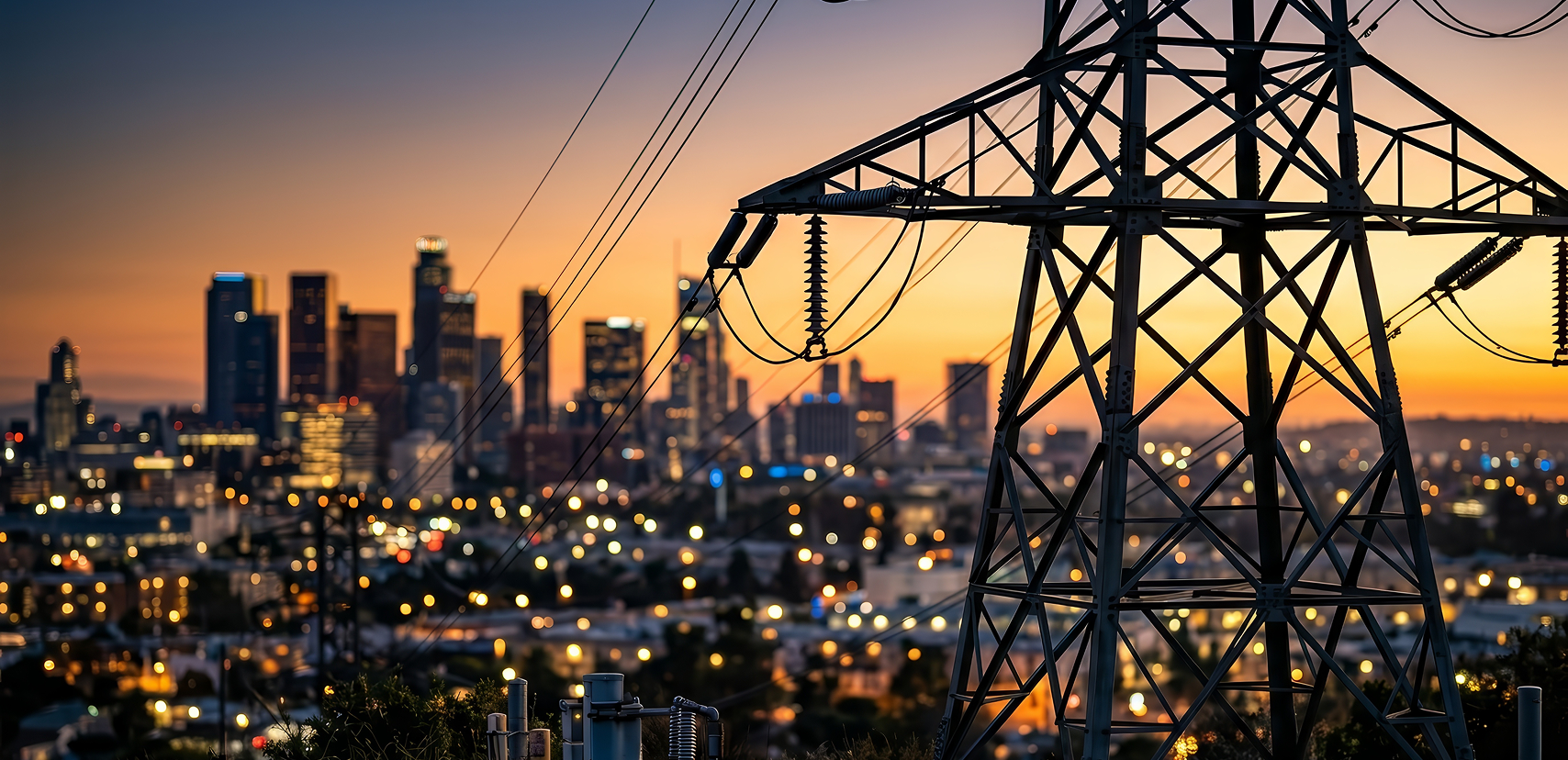
Parallel licensing brings multiple electricity distributors to one area
Who can apply for a parallel distribution license?
Section 14 of the Electricity Act, 2003, allows the Appropriate Commission to grant a distribution license to any “person”. Under the Act, that can include a company, body corporate, association, or body of individuals, whether incorporated or not, as well as an artificial juridical person. State regulations and application formats may further specify the organizational forms that can apply.
Approval, however, depends on much more than the applicant’s legal form.
Financial capacity
The parallel licensing guidelines require applicants to demonstrate adequate financial strength. The regulator assesses the required distribution network investment based on factors such as the area of supply and service obligations.
The applicant, along with its promoters where applicable, must then show resources for equity equal to 30% of the assessed investment, based on net worth and internally generated resources over the preceding three years, after excluding other committed investments.
Operational readiness
Distribution involves far more than obtaining permission to sell electricity. The applicant must be capable of establishing and operating the proposed distribution business and meeting the obligations associated with the license.
State application formats can seek detailed information on the proposed supply area, distribution network, power sourcing, investment requirements, and rollout plans. Maharashtra’s format, for example, requires technical and financial details along with an indicative five-year investment and network rollout plan.
Compliance and conduct
Financial strength alone is not enough. The 2005 rules also require the applicant to satisfy the Commission regarding prescribed code-of-conduct conditions. These include checks relating to specified findings of guilt or disqualification under certain corporate, tax, securities, excise, and customs provisions, as well as whether a license has been suspended or revoked within the preceding three years. Additional conditions apply when the applicant is a company.
How does the parallel licensing application process work?
The parallel licensing process is regulator-led, and the exact filing requirements differ between states. The Electricity Act, however, lays down the basic route that an application must follow.
1. File the application - Apply to the relevant State Electricity Regulatory Commission in its prescribed form and pay the applicable fee.
2. Submit the supporting plans - Depending on the Commission’s regulations, this can include the proposed supply area, technical details, financial capability, investment plan, and network rollout plan.
3. Publish the application notice - Section 15 of the Electricity Act requires the applicant to publish notice of its application within seven days in the prescribed manner.
4. Invite objections - Interested parties can raise objections. Under section 15, objections must be received within 30 days from publication of the notice.
5. Undergo regulatory scrutiny - The Commission may seek additional information and consider the application, stakeholder objections, and other relevant material before taking a decision.
6. Receive the license decision - The Electricity Act states that the commission should, as far as practicable, issue or reject the license within 90 days of receiving the application. A license ordinarily remains in force for 25 years, unless revoked earlier.
What documents are required for a parallel distribution license?
There is no single nationwide checklist of parallel licensing documents required. Section 15 allows the relevant Commission to determine the application form and manner, so requirements can vary across states.
Depending on the SERC (State Electricity Regulatory Commission), supporting information may include -
1. Business identity - Incorporation or registration details, constitutional documents, ownership information, and management profiles.
2. Financial evidence - Audited annual reports, bank references, funding arrangements, and evidence supporting financial capacity.
3. Technical credentials - Relevant experience, staffing details, and proposed technical or operating arrangements.
4. Area and network plans - Maps showing the proposed supply area, existing infrastructure, and facilities to be developed.
5. Business projections - Demand, sales, costs, revenues, investment, and network rollout forecasts. For example, Maharashtra’s form seeks five-year projections.
6. Regulatory compliance: Proof of the application fee and supporting information demonstrating compliance with the central government’s additional requirements.
What are the benefits of parallel licensing?
Where regulatory and network arrangements allow it, having more than one licensee can give consumers greater choice instead of leaving an area dependent on only one distribution provider.
Consumer choice
Competition can encourage attention to billing accuracy, complaint handling, and customer support. These are practical ways distributors can earn and retain consumer confidence.
A stronger focus on service

New entrants can bring fresh operating approaches and additional investment in substations, distribution lines, smart meters, automation, and digital services, subject to regulatory scrutiny and approval.
Technology and investment

Competition can encourage utilities to improve efficiency and service standards, but the results depend on tariff regulation, network planning, consumer mix, safeguards, and how effectively multiple licensees operate together. The Ministry of Power has similarly linked the proposed framework with better consumer service, reliability, innovation, and operational efficiency.
Greater efficiency
How does Tata Power fit into Mumbai’s parallel licensing model?
Mumbai brings the concept out of the rulebook. Tata Power operates in areas that overlap with other distribution licensees, under the Maharashtra Electricity Regulatory Commission’s framework.
Tata Power’s current distribution license, Distribution License No. 1 of 2014, was granted by the Maharashtra Electricity Regulatory Commission (MERC) for 25 years, from August 16, 2014, to August 15, 2039. It authorizes Tata Power to distribute electricity across the entire Mumbai District, part of the Mumbai Suburban District, and the Mira-Bhayandar Municipal Corporation.
Today, Tata Power reports 8 lakh+ Mumbai distribution consumers, a 485 sq. km licensed area, and over 5,656 circuit km of distribution lines. Tata Power’s wider distribution overview itself describes its Mumbai presence as a “Multiple Licensee Model.”
Mumbai’s framework distinguishes between changeover, where consumers switch suppliers while using the existing distributor’s network, and switchover, which involves moving to the other distributor’s network, subject to applicable regulatory and network conditions. This makes Mumbai a relevant example for parallel licensing in power sector reform, showing how multiple licensed utilities can operate within a regulated framework while managing network, supply, and consumer-service responsibilities.
Scratch. Reveal. Learn
A small swipe. A big reveal.
Bottomline
Parallel licensing is not really about putting another distributor on the map. It is about changing the idea that electricity distribution in an area must always belong to just one player. Parallel licensing in India creates room for regulated competition. While keeping entry, investment, tariffs, and service obligations under regulatory oversight. The real benefits of parallel licensing, therefore, will depend on what that competition delivers on the ground. As parallel licensing in electricity evolves, the question worth watching is not simply who enters the market, but whether consumers ultimately get more choice, better service, and stronger networks.

Frequently asked questions
The frequently asked questions section is a reliable source for unlocking answers to some of the most crucial inquiries. Please refer to this section for any queries you may have.
- Solaroof
No. Parallel licensing allows more than one distribution licensee to operate in the same geographical area.
Open access works differently: under Section 42 of the Electricity Act, eligible consumers may obtain electricity from another generator or supplier while using an existing network, subject to State Commission regulations and applicable charges.
So, parallel licensing changes the set of local distributors, while open access changes where an eligible consumer can procure electricity.
No. Parallel licensing and privatization are not the same thing. Section 14 allows more than one distribution licensee to operate in the same area; it does not require an existing public-sector distributor to exit or automatically transfer its assets to a new entrant. Any takeover, merger or transfer of a licensee’s utility is separately regulated under Section 17 and requires prior approval of the appropriate Commission.
The appropriate electricity regulatory commission oversees retail tariffs. Section 62 of the Electricity Act says that where two or more distribution licensees operate in the same area, the Commission may, to promote competition, fix only a maximum ceiling for retail tariffs. This means parallel licensing does not give a distributor unrestricted freedom to charge consumers at any price; tariff treatment continues to sit within the statutory regulatory framework.
For electricity distribution within a state, the relevant State Electricity Regulatory Commission is responsible for granting the license. Applications are considered under the Electricity Act, 2003, and applicable regulations. The process includes evaluating whether the applicant meets prescribed requirements and considering objections received after public notice. Regulatory approval is therefore essential before an additional distribution licensee can operate in the same area as an existing distributor.
Section 15 of the Electricity Act provides a 25-year license period unless the license is revoked. The Electricity (First Amendment) Rules, 2023 further provide for deemed renewal of licenses unless revoked, generally for 25 years at a time or a shorter period if requested by the licensee. License conditions and continuing regulatory requirements still apply throughout the operating period.
Not necessarily. Meter arrangements depend on the approved switching process, the existing meter, and the requirements of the incoming supplier. Tata Power’s Mumbai changeover application includes options for a Tata Power meter, a consumer-purchased meter, or the existing utility’s meter. Before applying, ask which option is available for your connection and whether meter testing, replacement, rental, or other approved charges will apply.
They can. Section 65 of the Electricity Act allows State Governments to provide subsidies to specified categories of electricity consumers. The Ministry of Power has clarified that, under a multiple-licensee framework, states can continue to support categories such as domestic and agricultural consumers through such subsidies. The availability and amount of a subsidy, however, depend on the relevant State Government’s policy and should not be assumed to be identical across states or consumer categories.
A distribution licensee holds a license under the Electricity Act to operate and maintain a distribution system and supply electricity within its authorized area. A distribution franchisee, by contrast, is appointed by a distribution licensee to distribute electricity on the licensee’s behalf in a specified part of that area. The franchisee does not replace the licensee, which continues to hold the license and remains responsible for its distribution obligations.
Sources
1. The Electricity Act, 2003
2. Distribution of Electricity Licence (Additional Requirements of Capital Adequacy, Creditworthiness and Code of Conduct) Rules, 2005
3. Distribution of Electricity Licence (Additional Requirements...) (Second Amendment) Rules, 2022
4. MERC – Distribution Licences
5. DRAFT NATIONAL ELECTRICITY POLICY (NEP), 2026 RELEASED FOR PUBLIC CONSULTATION WITH STAKEHOLDERS
6. Parallel licensing can help build energy backbone for India’s next growth phase
7. Parallel licencing in electricity distribution in Mumbai: Muddle or model?
8. Parallel Distribution Licensing India: What It Means
Keep reading...
View all