


 Contact us


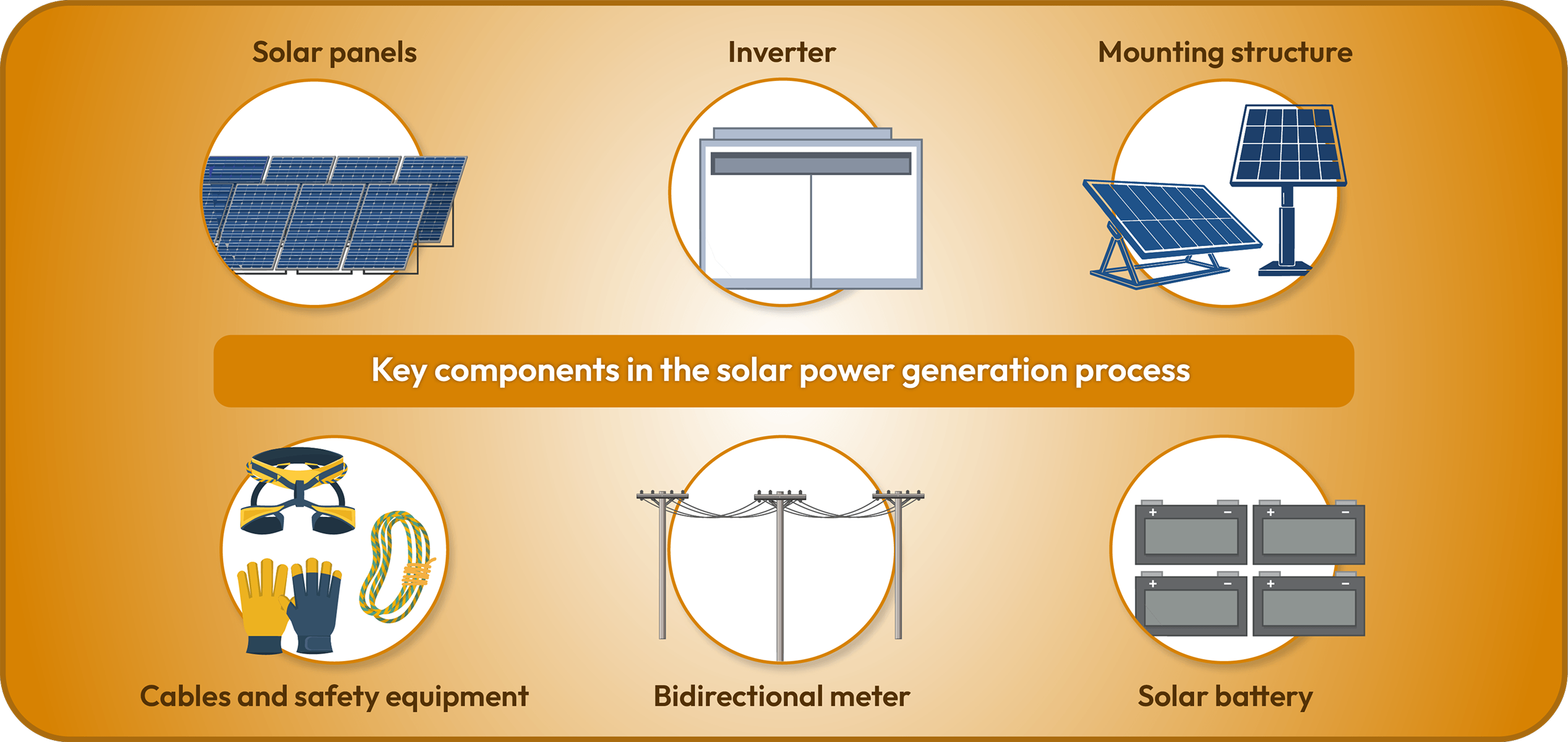
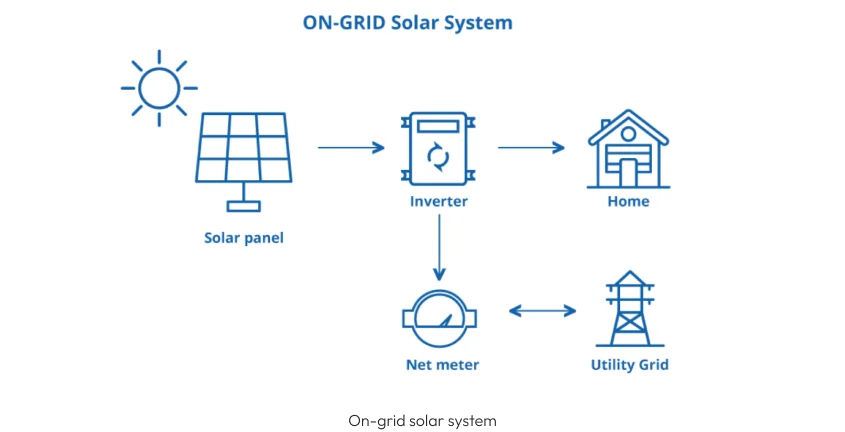
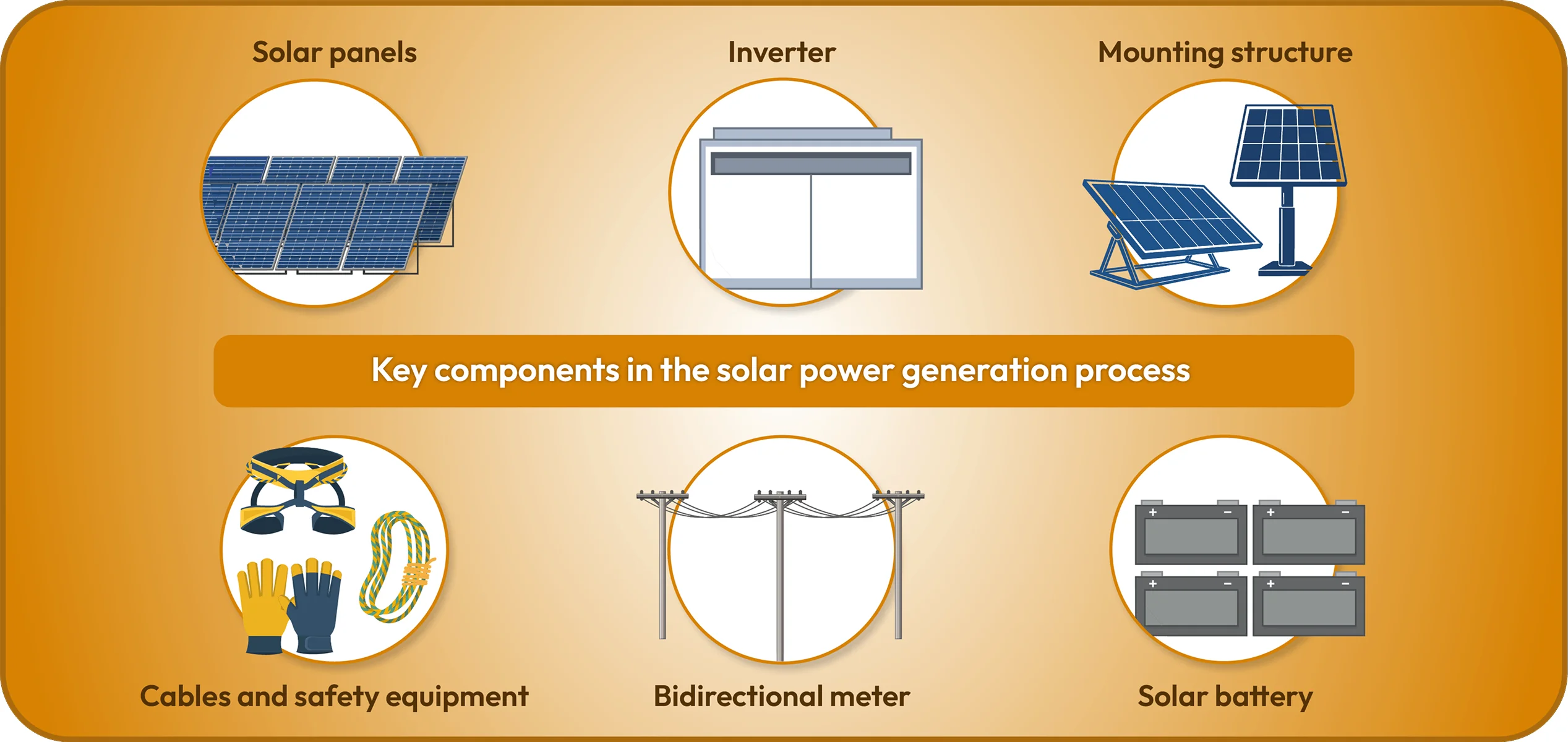
The basic working principle of solar energy is the conversion of sunlight into usable electricity. This happens through a series of interconnected components that capture sunlight, convert it into electricity, and transmit it to your home for use. Here is how this process works:
Step 1: Sunlight hits the solar panels
The first step involves the excitation of electrons. Solar panels constitute photovoltaic cells that are designed to capture sunlight. When sunlight touches the panel surface, it triggers a chemical reaction in the photovoltaic cells that excites electrons in motion.
Step 2: Direct Current (DC) is generated
Once the excited electrons start flowing, Direct Current is generated in the opposite direction. But it cannot be supplied directly for use since appliances run on Alternating Current (AC).
Step 3: DC power is converted to AC
The inverter in the solar setup converts DC into AC, making it suitable for use.
Step 4: Electricity powers your home
The AC power is then supplied to your home for use. Any excess power generated is either sent to the local grid for use, or captured in a battery storage system for later use.
This complete process from sunlight to electricity is known as the photovoltaic effect.