


 Contact us
An on-grid solar system, also called a grid-connected or grid-tied system, generates electricity through solar PV panels while remaining connected to the local utility grid. Solar power meets on-site demand first; the grid supplies any shortfall. Surplus electricity may be exported through net metering, net billing, or other mechanisms permitted by the State Electricity Regulatory Commission and DISCOM. Standard on-grid systems do not normally provide backup power during grid outages.


Sections
- Introduction
- What is an on grid solar system?
- How does an on-grid solar system work?
- What are the advantages of on-grid solar systems?
- What is an off grid solar system?
- How does an off-grid solar system work?
- What are the advantages of off-grid solar systems?
- What is the difference between off-grid and on-grid solar systems?
- What factors should you consider before choosing an on-grid or off-grid solar system?
- How much does an on-grid vs off-grid solar system cost?
- The Tata Power advantage
- Bottomline
- FAQs
- Sources
Introduction
Rooftop solar is scaling fast in India, but choosing solar is only half the decision. As of 12th August 2026, 51.58 lakh households were benefiting from rooftop solar under PM Surya Ghar: Muft Bijli Yojana, according to the Press Information Bureau of India. The next question is more practical: when your panels cannot meet demand, where should the power come from?
That is where on-grid and off-grid solar systems take different paths. So, what are on-grid and off-grid solar systems, and what really separates them? One stays connected to the electricity grid; the other works independently, typically with battery storage. That difference can shape your costs, backup, and everyday power use.
What is an on-grid solar system?
How does an on-grid solar system work?
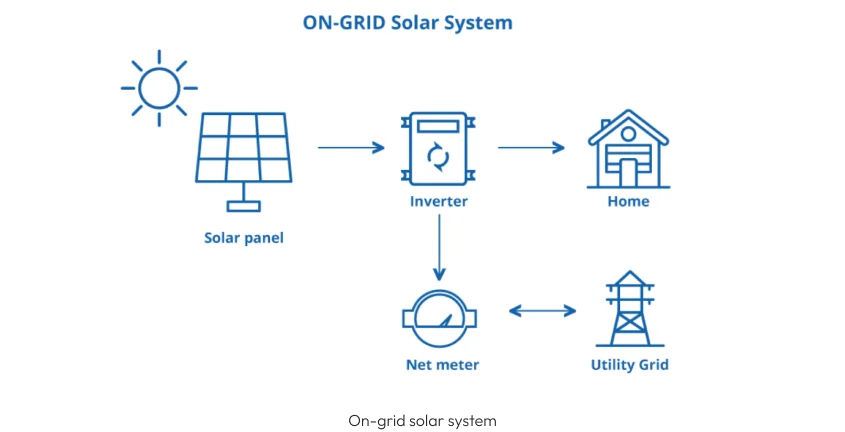
An on-grid solar power plant balances solar generation, on-site consumption, and grid exchange through a connected electrical system.
1. Solar panels generate power - Photovoltaic modules convert sunlight into direct current (DC) electricity.
2. The inverter converts electricity - A grid-tied inverter changes DC into alternating current (AC) and synchronizes its output with the grid.
3. Your building uses solar energy - Appliances consume the available solar electricity, reducing how much power you need to draw from the grid.
4. Surplus is exported - A bi-directional meter records electricity imported from, and surplus power exported to the grid under the applicable DISCOM-approved metering arrangement.
5. The grid fills gaps - The grid supplies power when solar generation falls below demand. During an outage, the system automatically shuts down for safety unless paired with compatible backup storage.
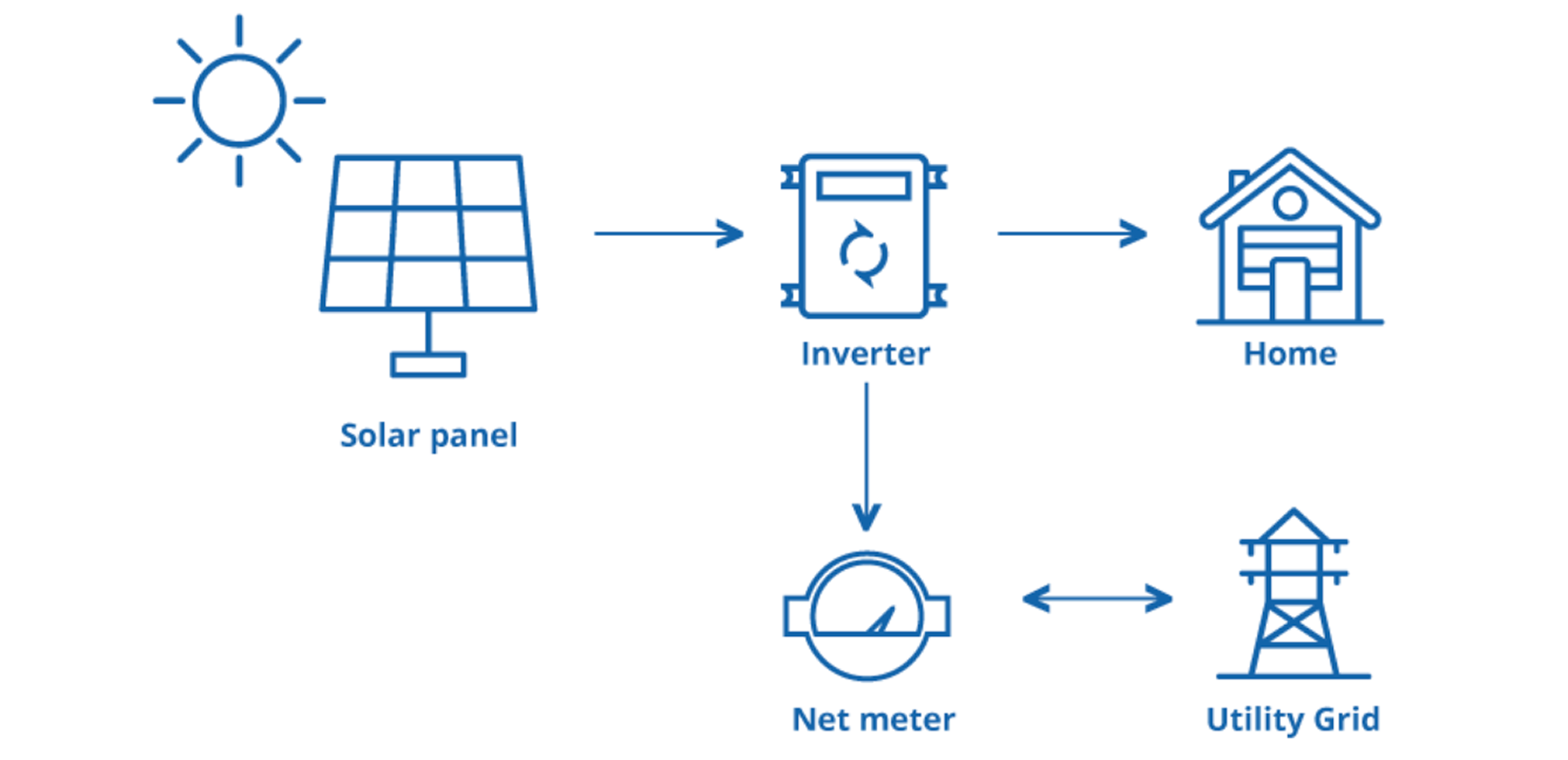 On-grid solar system
What are the advantages of on-grid solar systems?
For locations with dependable grid access, an on-grid solar system can combine lower system complexity with meaningful electricity-bill savings.
1. Lower upfront cost - Since batteries are not essential for a standard on-grid system, initial costs are generally lower than for an off-grid setup.
2. Better use of daytime solar - Electricity generated during the day can directly serve on-site loads, reducing grid consumption.
3. Value from surplus generation - Where permitted, excess solar electricity can be exported under net metering, net billing, or another approved mechanism.
4. Grid support when solar dips - The utility grid supplies electricity at night or whenever solar generation falls below demand.
5. Simpler maintenance - With no mandatory battery bank, there are fewer storage components to maintain or replace.
6. Subsidy access for eligible homes - Residential grid-connected rooftop systems can qualify for Central Financial Assistance under PM Surya Ghar, subject to scheme and DISCOM requirements.
What is an off-grid solar system?
An off-grid solar system operates independently of the utility grid. Solar panels generate electricity for immediate use while a battery bank stores surplus power for nights, cloudy periods, or other times when generation is insufficient. A charge controller and compatible inverter manage charging, conversion, and supply. Because the system cannot fall back on grid electricity, its solar capacity, battery storage, and backup strategy must be sized carefully around the user's actual load and required autonomy.
How does an off-grid solar system work?
An off-grid solar system must generate, store, and manage enough electricity to serve connected loads without utility-grid support.
1. Solar panels generate electricity - Photovoltaic cells convert sunlight into DC power for immediate use and battery charging.
2. Charging is regulated - A charge controller regulates battery-charging voltage and current; some inverters incorporate this function.
3. Batteries store surplus - Excess generation is stored within the battery’s permitted charging limits for later use, or when demand exceeds current generation.
4. The inverter supplies AC current - The inverter converts DC from solar or batteries into AC for connected appliances.
5. Stored energy covers shortfalls - Batteries support loads after sunset or during cloudy periods, within their usable capacity.
6. Additional backup supports demand - A compatible generator may cover prolonged shortages where the system is designed for it.
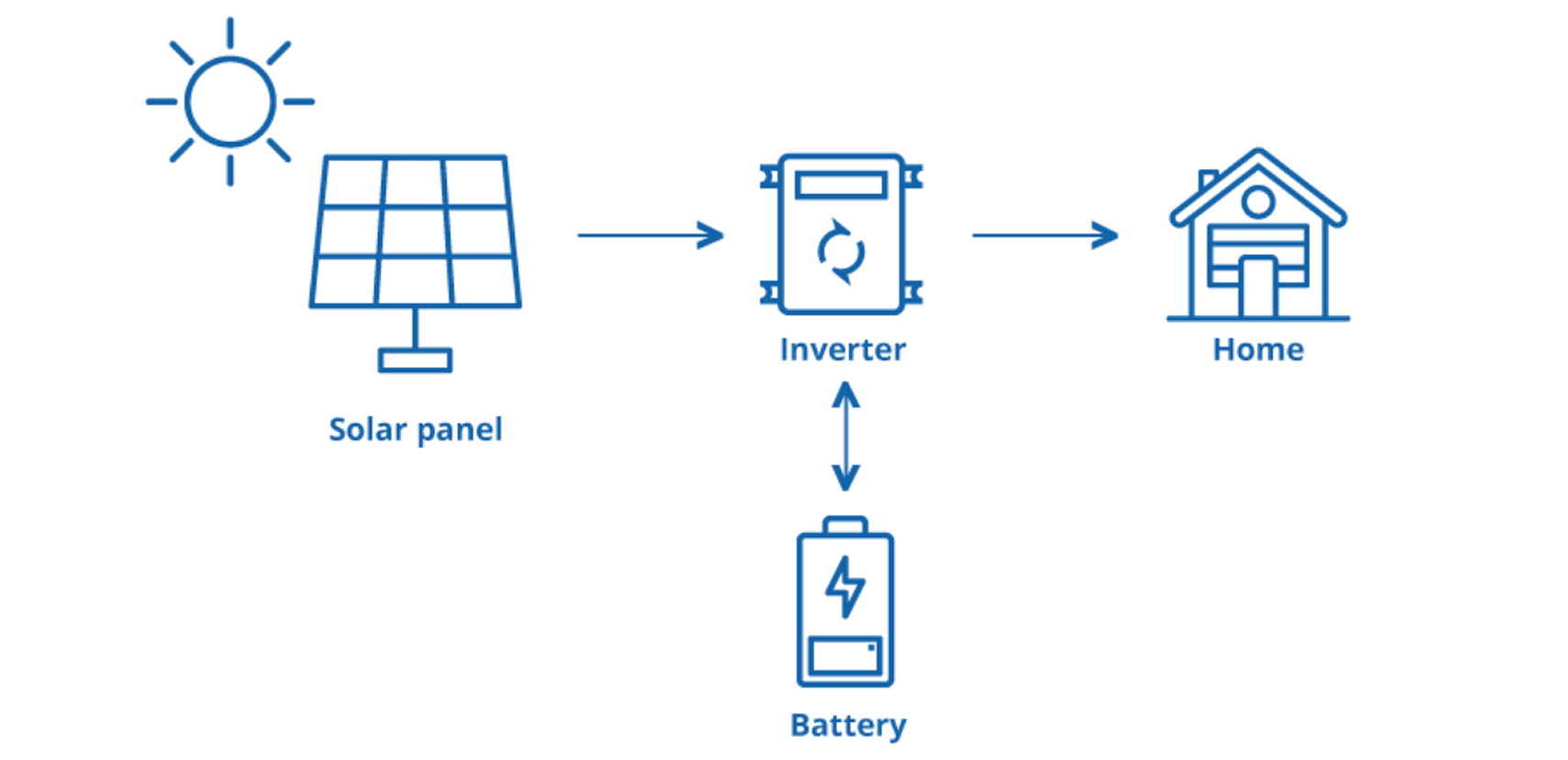 Off-grid solar system
What are the advantages of off-grid solar systems?
Off-grid solar can make electricity available in places where grid connections are unavailable, unreliable, or expensive to extend.
1. Independent operation - The system does not depend on a utility connection, making it suitable for locations beyond reliable grid reach.
2. Power during grid failures - Stored energy can continue supplying selected loads when the wider grid is unavailable.
3. Useful for remote sites - It can avoid the difficulty or cost of extending grid infrastructure to isolated homes, farms, or facilities.
4. Greater energy control - Generation and storage can be sized around essential loads and backup needs, although larger batteries raise upfront costs and require lifecycle planning.
What is the difference between on-grid and off-grid solar systems?
The difference becomes clear when your panels produce more or less electricity than you need. An on-grid solar system can draw from the grid or export surplus power where permitted. An off-grid system operates independently, typically relying on batteries when solar generation falls short or is unavailable.
On-grid solar system
An on-grid solar system remains connected to the utility network, draws electricity when solar output falls short, and can export surplus under approved metering rules. Usually installed without batteries, it generally costs less upfront and involves less storage-related maintenance. It suits users prioritizing bill savings where grid supply is reliable, but a conventional setup stops supplying power during outages for safety reasons.
Off-grid solar system
An off-grid solar system supplies electricity independently, using solar generation and, typically, batteries. Storage increases the initial investment and brings battery maintenance or replacement costs, but the system can serve remote locations without grid access. There are no utility electricity bills or net-metering credits. Continued supply depends on available sunlight, stored energy, and connected demand, making careful sizing and a plan for prolonged shortages essential.
What factors should you consider before choosing an on-grid or off-grid solar system?
Choosing between on-grid and off-grid solar starts with how and where you use electricity -
1. Grid reliability - Choose an on-grid system where utility power is stable; consider an off-grid system where outages are frequent or prolonged.
2. Budget - On-grid systems generally cost less initially because they do not require battery storage; off-grid systems require a higher upfront investment.
3. Energy requirement - Size the system according to daily consumption, peak demand, and the appliances that must remain operational.
4. Location - On-grid systems suit properties with a dependable grid connection, while off-grid systems are better for remote locations without reliable grid access.
5. Backup needs - Choose an off-grid or battery-backed system if you need essential appliances to operate during grid failures.
The right choice should follow your load profile and site conditions, rather than simply choosing the system with more components.
How much does an on-grid vs off-grid solar system cost?
Solar pricing is not a single ₹/kW number. The final outlay changes with system size, equipment specifications, site conditions, metering needs, and, for off-grid setups, the storage capacity you need.
What sets the cost of an on-grid solar system?
For residential grid-connected rooftop solar, PM Surya Ghar currently uses a benchmark cost of ₹50,000/kW for the first 2 kW and ₹45,000 for the additional kW. This is a government benchmark used for calculating scheme support, not a fixed market price or vendor quotation.
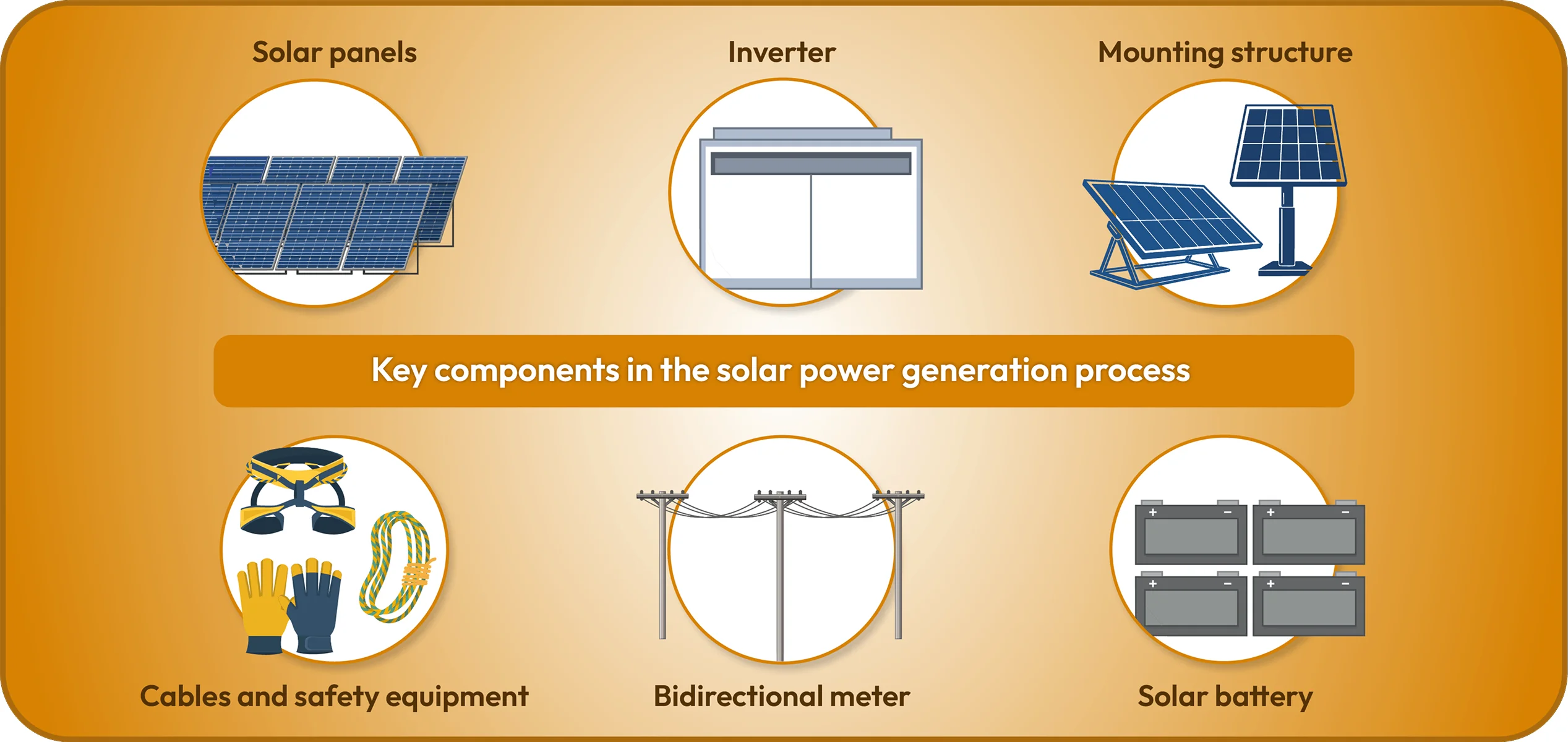
An on-grid solar quote typically brings together -
- Solar panels: The modules that generate electricity from sunlight.
- Grid-tied inverter: Converts solar DC electricity into grid-compatible AC power.
- Mounting structure: Secures the panels to the rooftop and is designed around site conditions.
- Electrical and safety components: Cables, junction and distribution boxes, earthing, surge and lightning protection, and other balance-of-system equipment.
- Installation and commissioning: Covers system assembly, electrical integration, testing, and commissioning.
- Metering and interconnection: A bi-directional energy meter and related grid-connectivity requirements may be needed, with applicable charges determined by the respective DISCOM.
MNRE's technical specifications identify these as core components of a grid-connected rooftop solar installation.
Why is off-grid solar pricing harder to quote per kW?
For an off-grid system, panel capacity tells only part of the cost story. The quotation must also account for battery capacity, battery chemistry, usable storage, inverter configuration, and the number of backup hours required. A home designed to run only essential appliances after sunset will therefore have a very different cost from one designed for longer or heavier backup.
That is why an off-grid system is better priced around the load it must support and the storage it needs, rather than using one generic nationwide ₹/kW figure.
The Tata Power advantage
Choosing the right solar configuration is only one part of the decision. Execution, system design, financing, and long-term support can determine how well that system performs over its life.

4.8+ GWp of rooftop solar installed capacity, with more than 3.7 lakh rooftop installations across residential, commercial, and industrial segments.

Ranked the #1 solar rooftop company for eleven consecutive years.

A wide on-ground ecosystem comprising 650+ channel partners, 3,000+ retailers and 265+ authorized service centres, improving access across Tier-2 and Tier-3 markets.

Financing access through partnerships with 16 institutions, including PSUs, regional rural banks, private banks, and NBFCs under PM Surya Ghar.

Tata Power installed 1.7 GWp of rooftop solar during FY2025-26, reflecting the growing scale of its rooftop business.

Rooftop solutions are supported by 25-year module warranties and a nationwide service network, alongside storage-led offerings such as MySine for customers seeking solar with dependable backup.
Scratch. Reveal. Learn
Curiosity has its rewards
Bottomline
Your solar decision should end with one clear question: what happens when the sun goes down, or the grid goes out?
If your priority is lowering electricity bills and making the most of a reliable grid connection, an on-grid system can deliver strong value without the added cost of batteries. But if power cuts disrupt work, safety, or essential appliances, or if the grid does not reach you at all, an off-grid system can turn stored sunlight into dependable backup.
There is no universal winner in the on-grid versus off-grid debate. The wrong system can leave you paying for capacity you rarely use or facing outages when you need power most. The right one does more than generate electricity; it controls your energy costs and gives you confidence long after installation day.

Frequently asked questions
- FAQs
For most homes with a reliable electricity connection, an on-grid solar system is typically the more practical option because it avoids the cost of mandatory battery storage and can reduce grid consumption. Eligible residential grid-connected systems may also receive the PM Surya Ghar subsidy. Homes requiring backup during frequent outages should consider adding a compatible battery storage solution based on their essential loads.
1. On-grid systems stay connected to the utility grid, using solar power first and drawing from the grid when needed.
2. Off-grid systems operate independently and rely on batteries to store power for nights or outages.
3. Hybrid systems combine both approaches, remaining grid-connected while incorporating battery storage for backup. The right choice depends on grid reliability, budget, backup needs, and how much energy independence you want.
Battery backup is estimated by dividing the energy available from the battery by the power used by connected appliances. A practical formula is: battery capacity (kWh) × usable depth of discharge × inverter efficiency ÷ total load (kW). For example, a 5 kWh battery with 90% usable capacity and 90% inverter efficiency powering a 1 kW load may provide about four hours of backup. Actual duration varies with changing loads.
Apartment residents generally have less control over individual rooftop space, so the right approach depends on roof ownership and housing-society rules. A Group Housing Society or RWA can install rooftop solar for common facilities, while Virtual Net Metering may allow generation benefits to be allocated among participating consumers in states where the mechanism is permitted. PM Surya Ghar also provides CFA for eligible GHS/RWA common facilities, including EV charging.
Businesses with dependable grid connections and significant daytime electricity use generally benefit more from on-grid solar because solar generation can directly offset daytime consumption without requiring a large battery bank. The final economics depend on the site's tariff, demand profile, and state metering regulations. Commercial consumers are not eligible for the residential CFA provided under PM Surya Ghar.
For a home, the main difference is where electricity comes from when solar generation is low. An on-grid system can draw power from the utility grid and usually does not require batteries. An off-grid system has no grid connection, so it relies on stored battery power after sunset or during low-solar periods. The right choice, therefore, depends largely on grid reliability, backup requirements, and your available budget.
Battery backup duration depends on usable battery capacity and the amount of electricity being consumed. As a simple estimate, dividing usable battery energy in kWh by the average connected load in kW gives the approximate theoretical backup time, before accounting for conversion losses and operating limits. Running only essential loads such as lights, fans, and refrigerators can considerably extend available backup.
Lithium-based batteries, particularly LFP batteries, generally provide greater usable energy, longer cycle life, faster charging, and lower maintenance than conventional lead-acid batteries. Lead-acid systems can have a lower initial purchase price but are typically heavier and require more maintenance and more conservative discharge limits. The right choice should consider lifecycle cost, required backup duration, warranty, safety, and inverter compatibility.
Both systems need periodic panel cleaning, inspection of wiring and mounting structures, and checks of inverter performance and system generation. An off-grid system also requires attention to battery health and storage components. Maintenance requirements vary by battery chemistry. Modern LFP storage systems can require significantly less routine maintenance than traditional lead-acid batteries.
In an off-grid solar system, solar panels convert sunlight into DC electricity. A charge controller regulates this power and directs excess energy into batteries for storage. When appliances need electricity, the inverter converts DC power from the panels or batteries into usable AC power. Stored energy can then supply electricity at night, during cloudy weather, or when solar generation is low. Because there is no grid backup, battery capacity and system sizing are especially important.
PM Surya Ghar is designed around grid-connected residential rooftop solar, and consumers linked to a local DISCOM electricity connection. An independent off-grid solar system, therefore, does not ordinarily qualify for the residential Central Financial Assistance under this scheme. Consumers should verify current eligibility and technical requirements on the National Portal and with their respective DISCOM before installation.
No. State Electricity Regulatory Commissions determine the applicable net-metering, net-billing, net feed-in, and gross-metering regulations, so capacity limits, energy settlement, and application procedures can differ between states and DISCOMs. The Central Electricity (Rights of Consumers) Rules provide the broader framework, but consumers should check out the latest regulations applicable to their location before installing an on-grid solar system.
Sources
1. Grid Connected Rooftop Solar Programme
2. India’s Energy Journey: Expanding Capacity, Strengthening Security
3. Guiding/Helping SOP for implementation of Virtual Net Metering and Group Net Metering
4. Tata Power Integrated Annual Report 2025-26
5. Solar systems explained - On-grid, Off-grid & Hybrid
6. On-Grid Solar Power Systems vs Off-Grid Solar Power Systems: Their applications & advantages
7. On-Grid & Off-Grid Solar System: Which One To Choose?
Keep reading...
View all