


 Contact us
Group captive solar is a renewable energy procurement model where multiple consumers jointly invest in a solar power plant and consume the electricity generated.


Sections
- Introduction
- What is the group captive solar power model?
- How does group captive solar work in India?
- Why are businesses moving towards group captive solar?
- How does group captive solar compare to other models?
- Is group captive solar expanding beyond industrial use?
- What are the key considerations before adopting group captive solar?
- Bottomline
- FAQs
- Sources
Introduction
Group captive solar is becoming a strategic lever for businesses managing rising power costs and sustainability mandates. Under India’s open access framework, it allows multiple companies to jointly invest in and consume clean energy, often delivering 20–40% savings compared to grid tariffs for commercial and industrial users.
Beyond cost efficiency, the model offers long-term energy security, greater control over power expenses, and a scalable route to renewable adoption. This blog explores how group captive solar works in India, its regulatory framework, key advantages, and how players like Tata Power are helping accelerate its adoption.
How does group captive solar work in India?
The group captive solar model operates at the intersection of ownership, regulation, and grid infrastructure, making it structurally different from traditional power procurement. While it appears straightforward on the surface, its effectiveness depends on how well each layer is designed and executed.
Project development and site selection
The process begins with selecting a site that balances solar irradiation, grid access, and policy stability. Land may be acquired or leased based on project tenure, influencing capital exposure and returns.
Environmental approvals, regulatory permissions, and grid connectivity are critical. Delays here can affect execution, power evacuation, revenue realization, and bankability.
Creation of a special purpose vehicle (SPV)
A dedicated SPV is created to own and operate the asset within the group captive solar power model.
It allows multiple companies to participate in one project without operational overlap, while separating project-level risk from each participant’s core business. The SPV anchors governance, contracting, and compliance.
Equity structuring and ownership compliance
To qualify under group captive solar in India, two conditions must be met -
- Consumers must collectively hold at least 26 percent equity
- They must consume at least 51 percent of the generated power annually
These thresholds determine captive status. If not met during a financial year, the project can lose key benefits, making compliance an ongoing responsibility.
Power allocation and consumption planning
Electricity is allocated in proportion to each participant’s equity stake, making demand planning critical. Businesses must ensure collective consumption meets the 51% threshold and individual offtake aligns with ownership to avoid underutilization, inefficiency, or non-compliance.
Open access transmission mechanism
Power is supplied through open access, which allows consumers to procure electricity from chosen sources using existing transmission networks. With India’s solar open access capacity crossing 30 GW, this model enables access to competitively priced renewable power through state transmission, banking where applicable, and wheeling charges, reducing dependence on DISCOM tariffs.
Long-term power purchase agreements (PPAs)
Participants enter into long-term PPAs with the SPV, usually for 15 to 25 years.
These agreements define tariffs, scheduling, performance guarantees, and risk allocation. For consumers, they convert volatile energy expenses into predictable costs, one of the key benefits of group captive solar.
Regulatory compliance and annual verification
Compliance is central to the group captive solar model.
Authorities periodically verify ownership and consumption criteria. Clearer ownership definitions and stricter monitoring have made compliance a continuous operational requirement.
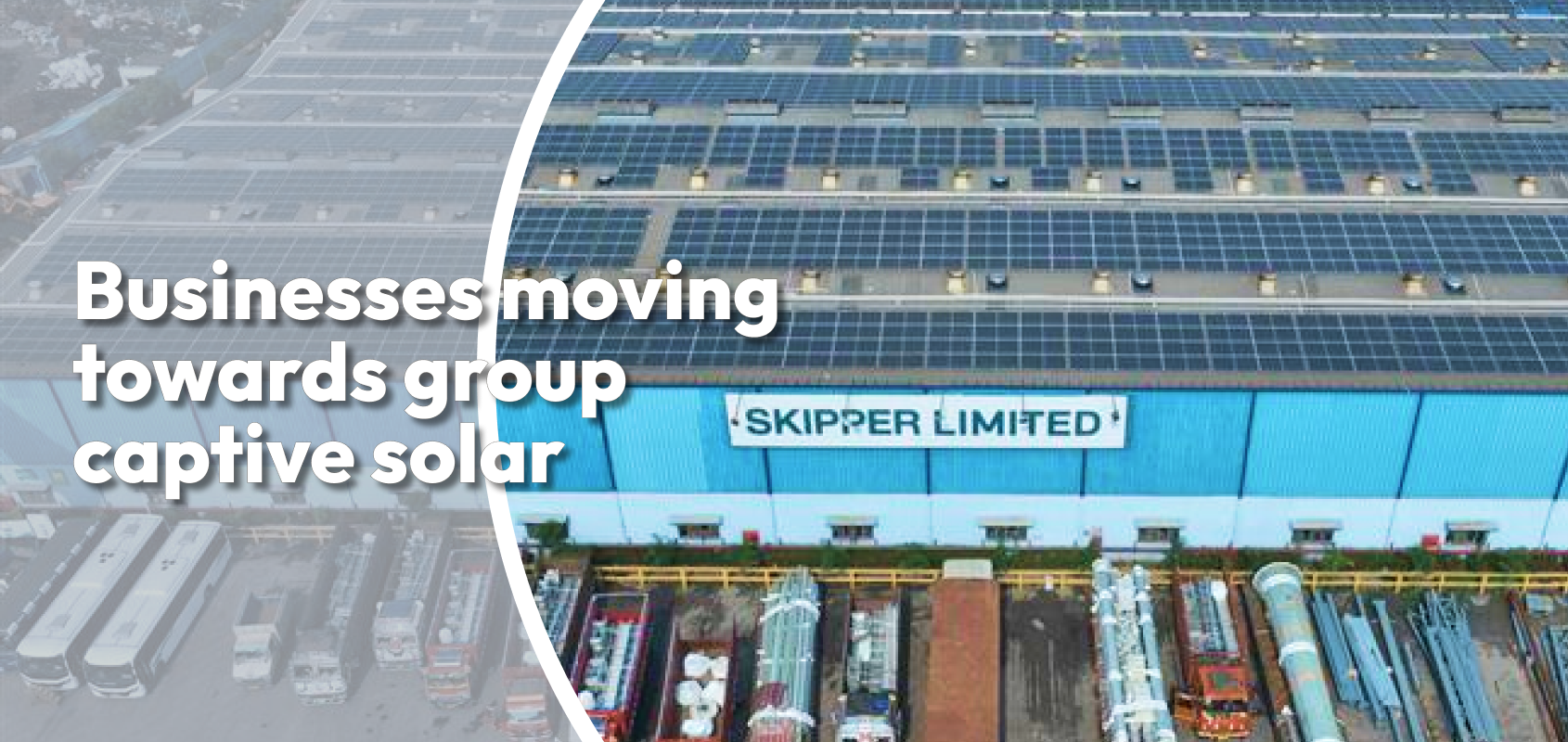
The group captive solar model provides strategic advantages
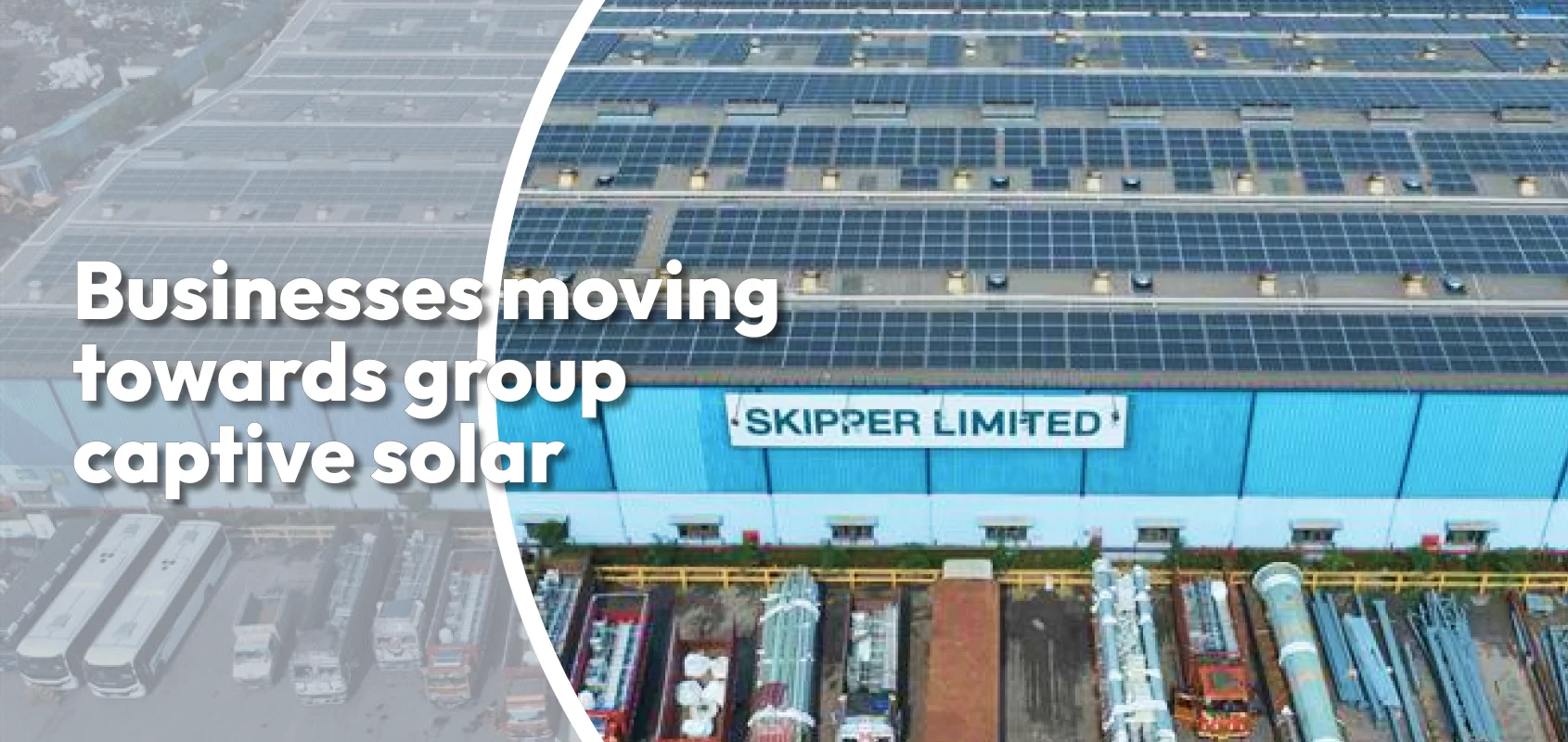
Why are businesses moving towards group captive solar?
The adoption of group captive solar is not incidental. It is driven by a combination of financial, operational, and strategic benefits.
Significant cost savings
Electricity through group captive solar is often cheaper than grid power. Exemptions from cross-subsidy surcharge and additional surcharge reduce landed power cost, especially for energy-intensive businesses.
Long-term price certainty
Group captive solar offers fixed or pre-defined tariffs over 15 to 25 years, helping businesses manage electricity costs despite inflation and regulatory tariff changes.
Decarbonization and ESG alignment
With India targeting 500 GW of non-fossil capacity by 2030, businesses face pressure from investors, supply chains, and regulators to decarbonize.
The benefits of group captive solar help reduce carbon footprint, meet Renewable Purchase Obligations, and support net-zero goals.
Energy security and reliability
DISCOM dependence can expose businesses to outages, voltage fluctuations, and peak-demand constraints.
With group captive solar benefits, companies gain partial control over energy sourcing through dedicated capacity, structured O&M, and defined service-level agreements.
No space constraints
Unlike on-site solar, group captive projects do not require roof or land space at the consumption site. They can be developed in high-irradiation regions, making them suitable for urban or land-constrained facilities.
Scalability across multiple locations
A single group captive solar plant can supply multiple factories, offices, or distributed operations within a state through open access, allowing centralized renewable power procurement.
See why group captive solar is reshaping business energy decisions
How does group captive solar compare to other models?
Most solar decisions are framed around cost or ownership. The real difference lies in how each model allocates risk, control, and long-term savings, especially in group captive solar. Here’s how it compares with CAPEX and OPEX solar models.
| Parameters | CAPEX | OPEX | Group captive solar |
|---|---|---|---|
| Ownership | Full ownership by the consumer | Owned by a third-party developer | Shared ownership (minimum 26% equity by consumers) |
| Upfront investment | High upfront capital investment | No or minimal upfront investment | Medium investment through equity participation |
| Tariff benefit | Highest long-term savings due to near-zero marginal cost | Moderate savings through PPA (Power purchase agreement)-based tariffs | High savings due to open access + surcharge exemptions |
| Control | Full control over assets and operations | Limited control, governed by contract terms | High control through ownership and PPA structure |
| O&M responsibility | Consumer is responsible for maintenance and performance | The developer handles full O&M and performance | Typically managed by a developer/SPV (Special purpose vehicle) with defined SLAs (Service level agreements) |
| Risk allocation | Performance and operational risk borne by the consumer | The majority of the risk is transferred to the developer | Shared risk across participants and the developer |
| Scalability | Limited by capital availability and site constraints | Easier to scale across sites with minimal capital | Highly scalable across multiple locations via open access |
| Typical use case | Large businesses with strong balance sheets and long-term ownership intent | Businesses seeking low investment and quick adoption | C&I consumers seeking low-cost power at scale without full ownership |
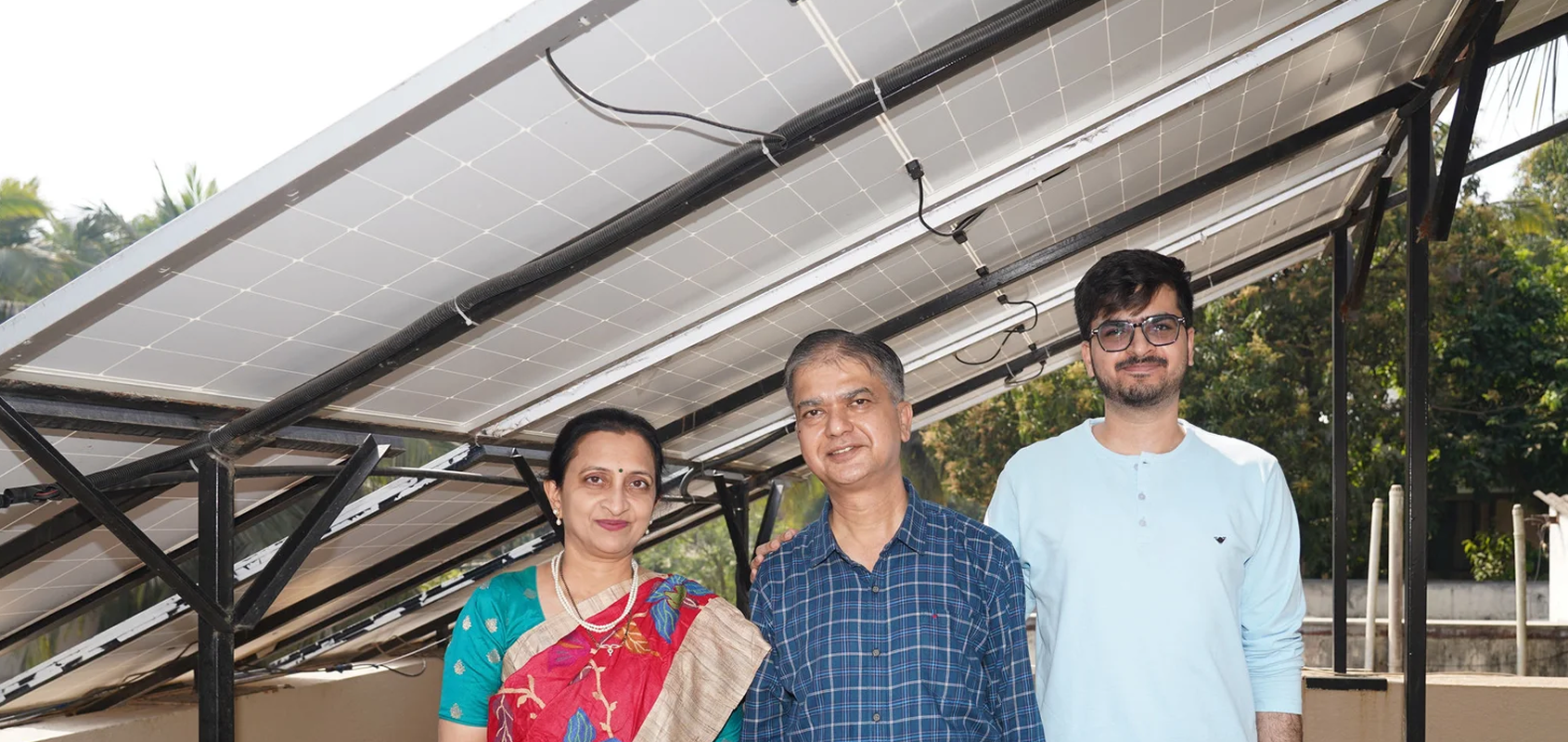
Group captive solar caters to community-first adoption of renewable energy
Is group captive solar expanding beyond industrial use?
A project by Tata Power highlights how group captive solar is moving beyond traditional industrial applications into new segments.
Tata Power Renewable Energy partnered with a Mumbai residential society to set up a 3.125 MW group captive solar plant, marking a shift toward community-level adoption.
Key highlights -
- Expected generation of 7.5 million units annually
- Tariff savings of ~40 percent lower than existing grid tariffs
- Significant carbon emission reduction
This demonstrates the model’s ability to deliver both cost efficiency and sustainability benefits beyond commercial and industrial use cases.
As highlighted by Shivram Bikkina, Chief Solar Rooftop & EV Charging Business - “This association is a testament to our continued efforts to mainstream renewable energy.”
Beyond this project, the shift toward wider adoption is being enabled by players like Tata Power Solar, who are simplifying the execution of group captive solar through -
- End-to-end project development, including land, approvals, and execution
- Structuring of SPVs to ensure regulatory compliance
- Long-term PPAs with transparent pricing
- Strong operational track record in renewable energy
Understanding the solar fundamentals that underpin such models can offer useful context - explore everything you need to know about solar panels
What are the key considerations before adopting group captive solar?
Adopting group captive solar requires careful evaluation of regulatory, financial, and operational factors, as each can significantly influence project viability, compliance, and long-term returns.

State-level regulations

Compliance requirements

Capital commitment

Long-term contracts

Developer risk

Demand alignment

Open access availability risk

Counterparty risk

Regulatory change risk
1. State-level regulations
Open access charges, banking rules, and approvals differ across states, directly affecting savings under the group captive solar power model.
2. Compliance requirements
The 26 percent ownership and 51 percent consumption thresholds must be maintained throughout the year. Failure can lead to loss of captive status and additional charges.
3. Capital commitment
Businesses must invest in equity through the SPV. While lower than CAPEX, it is still a long-term commitment requiring return and payback evaluation.
4. Long-term contracts
PPAs usually run for 15 to 25 years, so businesses must assess future demand, scale, and financial stability.
5. Developer risk
Project performance depends on the developer’s execution and O&M capability. Delays or weak maintenance can affect generation, reliability, and savings.
6. Demand alignment
Power consumption must align with generation. Lower demand can cause underutilization, while higher demand m
7. Open access availability risk
Even where policies permit open access, approvals are not always guaranteed due to grid constraints or DISCOM-level restrictions. Delays or denial of open access can impact project timelines and disrupt expected power supply.
8. Counterparty risk
Since multiple participants are involved, one participant’s failure to meet ownership or consumption requirements can affect overall compliance.
9. Regulatory change risk
Changes in open access charges, banking provisions, or policy interpretation can affect project economics over time.
To understand the checks behind a smarter group captive solar decision, explore the key considerations before adopting group captive solar.
One sun. Four solar secrets. Ready to play?
Take a spin, stay curious. Solar just got way more interesting
Bottomline
Energy is no longer just a utility cost. It is a business variable that directly impacts margins, planning, and growth. Group captive solar offers a way to bring that variable under control by combining cost efficiency with long-term visibility. But the real impact lies in how thoughtfully it is adopted. Businesses that align demand, structure contracts well, and choose the right partners can unlock consistent value over time. As power markets evolve, the shift is becoming less about adopting solar and more about choosing the right model. In that shift, group captive solar stands out as a practical, scalable path forward.

Frequently asked questions
The frequently asked questions section is a reliable source for unlocking answers to some of the most crucial inquiries. Please refer to this section for any queries you may have.
- FAQ
Group captive solar in India refers to a model where multiple businesses jointly own a solar power plant and use the electricity it generates for their own consumption. Under the Electricity Rules, 2005, users must collectively hold at least 26% ownership and consume at least 51% of the power annually to qualify as captive. This structure allows companies to access clean energy through open access while reducing dependence on distribution utilities and avoiding certain grid charges.
The 26% ownership and 51% consumption criteria are not arbitrary. They legally define whether a project qualifies as captive under India’s electricity rules. These thresholds ensure that the primary intent is self-consumption and not power trading. Regulators use this framework to prevent misuse of open access benefits such as surcharge exemptions. If these conditions are not met continuously, the project loses captive status and is treated like third-party power procurement.
The group captive solar power model operates through a Special Purpose Vehicle (SPV), where each participant’s ownership is linked to their power consumption. Recent regulatory clarifications require consumption to broadly align with shareholding, preventing scenarios where one participant consumes disproportionately more power. This proportionality ensures fairness and avoids misuse. It also means participants must carefully plan both equity and demand, making the structure commercially balanced but operationally disciplined.
In a group captive setup, businesses invest in an off-site solar project and sign agreements to consume its power. The electricity is transmitted through open access from the plant to their facilities. By meeting ownership and consumption criteria under the Electricity Rules, 2005, they avoid certain cross-subsidy charges and secure long-term clean energy, reducing reliance on traditional power distribution companies.
In India, group captive solar operates through the open access framework, which allows electricity generated at one location to be transmitted to users via the grid. The solar plant injects power into the grid, and it is scheduled and delivered to participating consumers at their respective locations. Charges such as wheeling and transmission apply, but key surcharges are often waived, which drives cost savings. This system enables off-site solar without requiring physical proximity.
No, the benefits are not uniform across India. While the core structure is defined centrally, open access charges, banking rules, and approvals are governed by state regulators. This means the same project can have very different economics depending on the state. Some states offer stronger incentives and smoother approvals, while others may impose higher charges or restrictions, directly impacting savings and project viability.
If a participant fails to consume power in proportion to its ownership, it risks losing captive benefits for that portion of electricity. In such cases, excess power may be treated as a third-party supply and attract additional charges like a cross-subsidy surcharge. In extreme cases, non-compliance at the group level can impact the entire project’s captive status, making demand planning a critical operational requirement.
Yes, group captive solar India directly helps businesses address Renewable Purchase Obligations (RPOs) while advancing ESG goals. RPO mandates require captive and open access consumers to source a portion of electricity from renewables. By procuring solar energy, companies reduce carbon emissions and align with sustainability expectations from investors and regulators, while ensuring compliance without increasing energy costs.
On average, solar carports in India achieve payback in 4-6 years, after which the installation delivers free electricity for decades.
In a group captive solar power model, the primary purpose must remain in self-consumption. Excess power is typically injected into the grid and may be banked depending on state policies. However, selling power commercially is restricted, as it can violate captive conditions. The treatment of surplus energy varies by state, making it important to understand local banking rules and compensation mechanisms before structuring the project.
Sources
1. MoP issues Electricity (Second Amendment) Rules, 2025 on captive generating plants
2. GREEN OPEN ACCESS RULES 2022 – AN EXPLAINER
3. Captive Plants: Much Needed Clarifications Provided by Supreme Court
4. Green Energy in India – the Green Open Access Regime and Group Captive Structures
5. Understanding Captive And Group Captive Solar Projects In India’s Open Access Market
6. FAQs on Open Access (OA)
7. Captive Power Plant vs Group Captive Power in Open Access Green Energy: A Strategic Guide for Procurement and Operations Leaders
8. What is Group Captive Open Access? Why should businesses opt for Renewable Energy transition through this route?
9. What Are Captive Solar Projects?
10. Regulatory Landscape - Captive Consumption in India
11. Government issues draft revisions to captive power project rules
12. 500GW Nonfossil Fuel Target
13. India adds record 7.8 GW of solar open access capacity in 2025: Report
Keep reading...
View all