


 Contact us
| Year | Opening WDV | Depreciation @40% | Closing WDV | Tax saved (25%) |
|---|---|---|---|---|
| 1 | ₹20,00,000 | ₹8,00,000 | ₹12,00,000 | ₹2,00,000 |
| 2 | ₹12,00,000 | ₹4,80,000 | ₹7,20,000 | ₹1,20,000 |
| 3 | ₹7,20,000 | ₹2,88,000 | ₹4,32,000 | ₹72,000 |


Sections
- Introduction
- What going solar really means for Indian industries?
- When do the power bills start to change?
- How solar quietly reshapes tax outcomes
- GST and input tax credit: improving working capital efficiency
- Why December and January make financial sense for solar adoption
- Why industries work with Tata Power Solaroof
- Bottomline
- FAQs
- Sources
Introduction
Solar energy adoption provides electricity cost reduction and tax benefits for industries.
If you think about electricity in financial terms, we have always thought of it as a fixed cost, because it is necessary, unavoidable, and largely outside strategic control. Industries focused primarily on optimizing labour, raw materials, and logistics, while energy bills were accepted as a given. That mindset is changing.
As India’s solar capacity has grown from just 3 GW in 2014 to over 129 GW in 2025, industries have begun to look at energy differently. What started as a sustainability-driven conversation has matured into a financial one. Solar is no longer discussed only in ESG reviews or corporate responsibility reports. It is now part of budget planning, tax optimization discussions, and long-term cost management strategies.
At a practical level, going solar enables industries to generate a portion of their own power, reduce dependence on the grid, and convert a volatile expense into a more predictable financial variable.
What going solar really means for Indian industries?
Rooftop solar lowers recurring electricity expenses, provides tax advantages through accelerated depreciation, improves cash flow through GST credits, and stabilizes energy costs over the long term.
For factories, warehouses, cold storage facilities, and processing units, energy costs directly influence competitiveness. Rising tariffs, peak demand charges, and fluctuations in grid supply have made power one of the most difficult costs to forecast with confidence.
Learn more about accelerated depreciation and the reasons why adopting solar is a financially smart decision for businesses.
This combination explains why solar has steadily moved from a “future consideration” to a decision that directly impacts the balance sheet. For many industries, the question is no longer whether solar makes sense, but how soon it can start contributing financially. This question is explored further in the next section.
When do the power bills start to change?
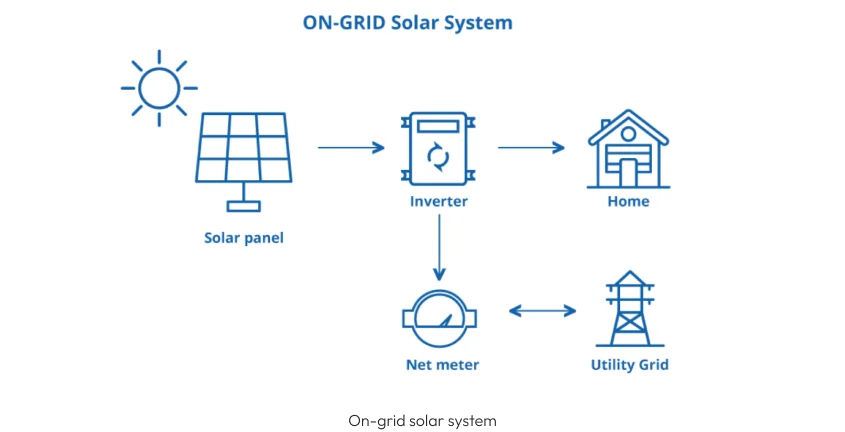
The first impact of solar is usually felt not in financial statements, but in monthly electricity bills. Net metering allows industries to consume the power generated on their rooftops directly, reducing reliance on grid electricity. Any excess power exported to the grid is adjusted against consumption, lowering payable units.
For energy-intensive industries such as manufacturing plants, logistics hubs, cold storage facilities, and continuous-process units, this delivers a clear outcome: lower power costs and greater control over monthly energy expenditure.
Depending on operating hours, sanctioned load, rooftop capacity, and state policies, industries typically experience 15% to 40% savings on electricity bills. Over time, these savings compound, easing pressure on operating cash flows and improving cost predictability.
While net metering delivers visible operational savings, the tax benefits of solar often reveal themselves closer to year's end.
Under Section 32 of the Income Tax Act, solar assets qualify for 40% accelerated depreciation on a Written Down Value basis. This allows businesses to depreciate a significant portion of the asset early, reducing taxable income during years when capital expenditure is highest.
Accelerated depreciation illustration
Accelerated depreciation on solar assets front-loads tax savings, delivering ₹3.92 lakh in tax benefits over three years on a ₹20 lakh investment.
Over three years, the cumulative tax saving amounts to ₹3,92,000, reducing the effective project cost to ₹16,08,000. For finance teams, this often reframes solar as a tool that not only lowers expenses but also actively supports tax planning during high-pressure reporting periods.

Solar tax benefits make clean energy more affordable
Beyond depreciation, GST and Input Tax Credit influence how capital flows through the business.
Eligible industrial solar projects allow businesses to claim Input Tax Credit on applicable components, reducing the net cash outflow tied up in the installation. This directly lowers the effective project cost and prevents excess capital from remaining locked into infrastructure.
From a working capital perspective, this matters. Funds that would otherwise remain blocked can be redeployed toward inventory, automation, or expansion. For organisations operating multiple facilities, ITC also brings greater structure and predictability to cash flow planning across the financial year.
Across industrial clusters, a noticeable number of solar installations are commissioned between December and January.
The reason lies in timing. Systems commissioned before March 31 qualify for full depreciation within the same financial year. GST credits can be claimed earlier. Power savings begin reflecting on electricity bills immediately.
From a financial standpoint, this timing improves EBITDA visibility, strengthens year-end cash flows, and creates additional headroom on the balance sheet before books are closed. For businesses planning capital expenditure in the following year, this window helps offset upcoming financial commitments.
Commissioning solar before March 31 maximizes depreciation benefits, accelerates GST credit claims, and improves year-end EBITDA visibility
For industrial solar, incentives alone are not enough. Execution quality, regulatory clarity, and long-term service support are equally important.
Industries choose Tata Power Solaroof for its depth of engineering expertise, nationwide presence, and long-standing understanding of utility processes. With decades of experience in power infrastructure, manufacturing capability at scale, and strong financing partnerships, Tata Power Solaroof supports industries through design, approvals, installation, and long-term operations.
For businesses making a 20-plus-year energy decision, predictability matters. Harness the power of the sun with advanced solar rooftop systems built for long-term reliability.
Step into a cleaner, brighter future. Explore now.
For Indian industries, solar has moved beyond intention and into execution. It affects how power costs are managed, how taxes are planned, and how cash flows are structured.
Each year an installation is delayed is a year of missed savings and foregone financial flexibility. In an environment where margins are constantly under scrutiny, those missed opportunities tend to surface eventually. The sun is already doing the work. The decision now lies in how soon businesses choose to let it support their balance sheets.
Frequently asked questions
The frequently asked questions section is a reliable source for unlocking answers to some of the most crucial inquiries. Please refer to this section for any queries you may have.
- FAQ
It’s favourable for industries to go solar as soon as possible. Delaying solar adoption means postponing power savings, tax benefits, and cash flow improvements that compound year after year.
Lower electricity costs and depreciation-led tax savings directly improve operating margins and EBITDA.
Yes, rooftop solar is suitable for energy-intensive operations. Industries with high daytime consumption typically see faster payback and higher financial returns.
Adopting solar can greatly help with tax planning and tax savings. Accelerated depreciation and GST credits reduce taxable income and effective project cost within the same financial year.
Energy savings appear from the first billing cycle, while tax and GST benefits materialise during year-end filings.
Sources
1. As India’s solar capacity has grown from just 3 GW in 2014 to over 129 GW in 2025


Keep reading...
View all