

 Contact us
On-grid solar draws from the grid; off-grid solar uses batteries


Introduction
Going solar is one decision. Deciding how your solar system should work is another. That is where off-grid vs on-grid solar becomes important. As of 31st August 2026, India had 32.59 GW of grid-connected rooftop solar capacity and 6.63 GW of off-grid solar capacity, according to MNRE, showing that both systems already have a distinct place in India’s solar landscape.
The difference between on-grid and off-grid solar systems lies in much more than their connection to the grid. From backup and battery storage to costs and everyday power use, this blog compares the key parameters to help you understand which system fits your needs better.
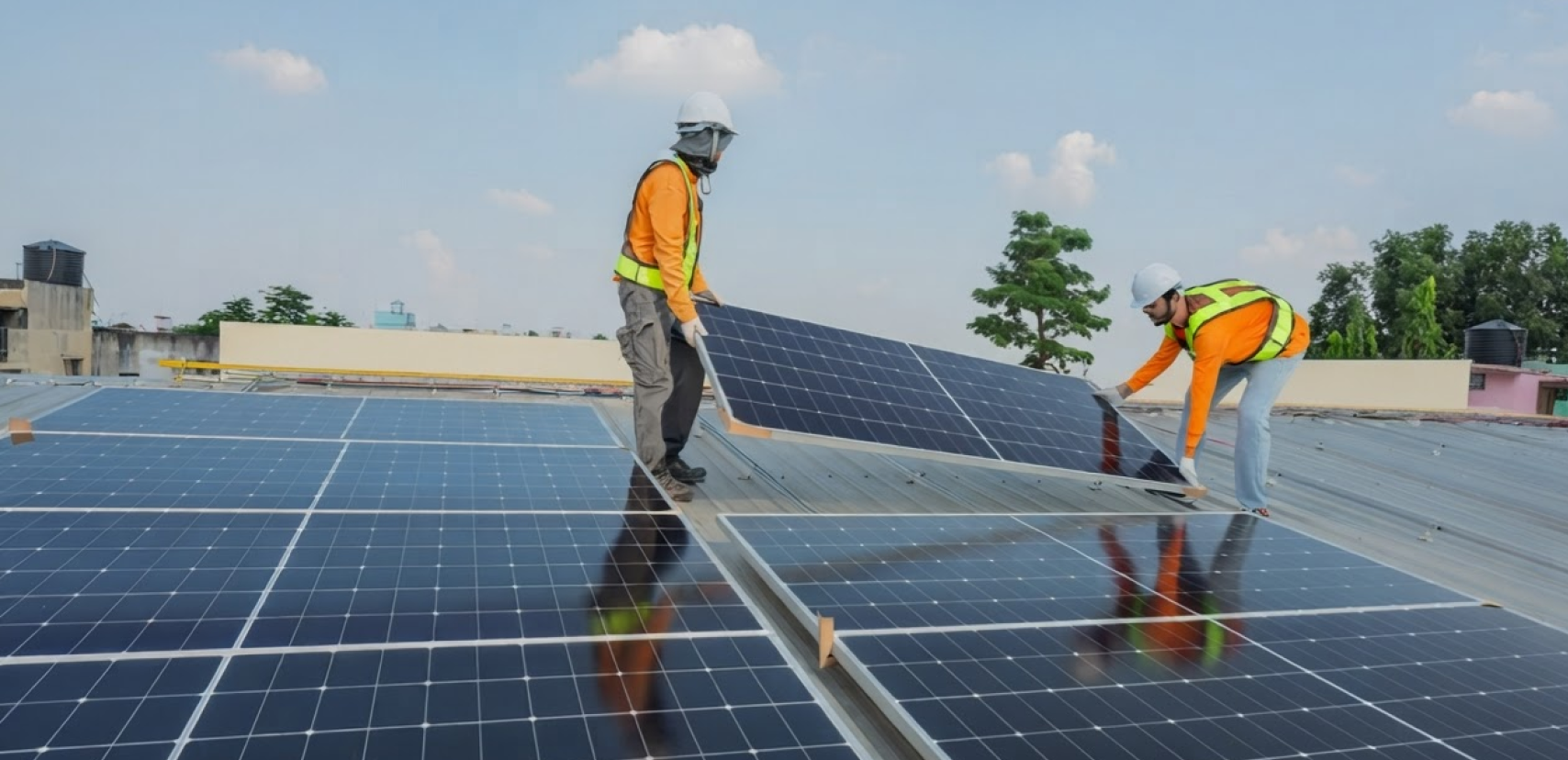
What is the difference between on-grid and off-grid solar?
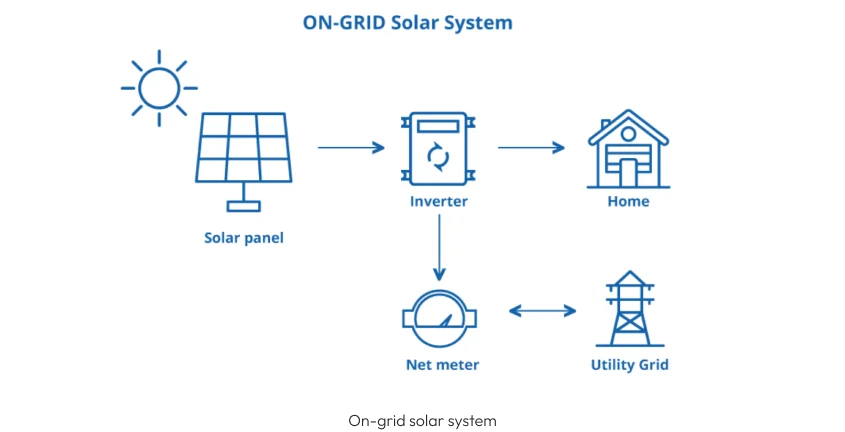
The difference between on-grid and off-grid solar goes beyond grid connection. It also affects how electricity is used, stored, backed up, and managed when solar generation is low.
| Parameter | On-grid solar system | Off-grid solar system |
|---|---|---|
| Connection to the grid | It is connected to the electricity grid. Your property can use solar power and draw electricity from the grid when required. | It works independently of the electricity grid, making it useful where grid supply is unavailable or unreliable. |
| How the system works | Solar electricity is used to power your home or business. If your system generates less than you need, the remaining electricity can come from the grid. | Solar power is used directly and can also charge a battery bank. Stored power can then be used when solar generation is unavailable. |
| Battery requirement | A standard grid-tied system does not require a battery because the grid can supply electricity when solar generation is insufficient. | Battery storage is generally an important part of the system because stored solar energy is needed when sunlight is unavailable. |
| Power during a grid outage | A conventional grid-tied system disconnects when the grid goes down, so solar panels alone do not normally provide backup during a power cut. | It can continue supplying electricity without the grid, as long as sufficient solar generation or stored battery power is available. |
| Net metering | Grid-connected rooftop systems can use net metering within prescribed limits, subject to applicable State Commission/DISCOM rules and charges. | Net metering does not apply in a fully off-grid setup because the solar system is not connected to the electricity grid. |
| Dependence on the electricity grid | The grid remains part of the electricity supply, especially when solar generation does not meet demand. | The system is designed to operate independently of the electricity grid. |
| Upfront system cost | Usually lower than a comparable battery-based off-grid setup because a standard grid-tied system does not require battery storage. | Usually higher because battery storage and associated equipment form part of the setup. The final cost depends on system size and storage requirements. |
| Maintenance | Generally easier to maintain, as standard grid-tied systems do not use batteries. Solar panels, inverters, and electrical components still require regular checks. | In addition to the solar equipment, the battery and storage-related components also need to be considered when maintaining the system. |
| Government rooftop solar support | Residential consumers with a grid-connected electricity connection can access benefits under PM Surya Ghar Muft Bijli Yojana, subject to the scheme's applicable conditions. | A standalone off-grid system does not fall under the grid-connected residential eligibility described for PM Surya Ghar. Other off-grid programmes may apply to specific applications or locations. |
| Best suited for | Properties with reliable grid access that want to use solar power while continuing to draw electricity from the grid when needed. | Locations where grid power is unavailable or unreliable, and an independent solar power supply with battery storage is required. |
Spin it. Solar gets simpler.
One spin, four quick takes on on-grid and off-grid solar. See where the wheel lands.
Bottomline
The right solar decision is not made when the panels go up. It is made by thinking about what happens when the sun goes down, demand rises, or the grid fails. That is where on-grid and off-grid systems take different paths. One keeps the grid as part of the equation; the other is designed to keep going without it. So, instead of asking which system is “better”, ask which one matches the way your property actually consumes and depends on power. Get that equation right, and solar stops being just an installation. It becomes an energy setup built around you.

Frequently asked questions
The frequently asked questions section is a reliable source for unlocking answers to some of the most crucial inquiries. Please refer to this section for any queries you may have.
- Solaroof
No. Their inverters perform different functions. An on-grid inverter converts solar DC power to AC and synchronizes it with the electricity grid. An off-grid system must also manage standalone electricity supply and typically work with battery storage. Because their operating requirements and system architecture differ, the inverter needs to match the solar setup. A standard grid-tied inverter should not automatically be considered suitable for an off-grid system.
Yes. Under PM Surya Ghar, Group Housing Societies and Resident Welfare Associations can install rooftop solar for common facilities, including EV charging, subject to applicable scheme conditions. The scheme provides for eligible capacity up to 500 kWp, calculated at up to 3 kWp per house. Individual apartment installations, however, also depend on available roof rights, common-area arrangements and the applicable DISCOM or regulatory requirements.
It is possible, but it is not simply a matter of adding batteries. On-grid and off-grid solar systems use different inverter configurations and electrical architecture. Converting to an existing setup may require a compatible inverter, battery storage, charge-control equipment, and changes to the electrical system. The Directorate General of Training distinguishes grid-tied and standalone systems based on these different components and operating requirements.
Both systems can generate less electricity when available sunlight falls during cloudy or rainy conditions. The practical impact, however, differs. An on-grid system can draw additional electricity from the grid when solar generation is insufficient. An off-grid system depends on its available solar generation and stored battery energy, making proper load and storage sizing especially important when planning for periods of lower solar availability.
An existing home inverter or UPS does not automatically make a standard on-grid solar system to provide solar power during an outage. Grid-connected solar inverters include anti-islanding protection and must stop supplying power when the grid fails for safety. A home UPS may continue supporting connected loads from its own battery, but integrating solar generation with backup requires a system specifically designed and wired for that purpose.
Once the batteries reach their required charge level, the charge controller regulates or stops further charging to protect them from overcharging. Solar power can still be used by connected loads when required, depending on the system design. If the available solar energy cannot be consumed or stored, the controller limits how much power is sent to the battery. This protection also helps support battery life and system performance.
Not directly. Whether you choose on-grid or off-grid solar depends mainly on grid availability, power requirements, and the way the system needs to operate. Roof conditions instead determine whether solar panels can be installed safely and effectively. Government rooftop solar guidance states that solar PV systems can be installed on different roof types as long as there is sufficient load-bearing capacity and suitable shadow-free space.
Sources
1. Solar off grid - MNRE
2. Solar Grid Connected - MNRE
3. PM - SURYA GHAR : MUFT BIJLI YOJANA
4. Over 48 Lakh Households Benefit Under PM Surya Ghar: Muft Bijli Yojana Since February 2024
5. What is the difference between On-grid and off-grid solar power?
6. On-Grid vs Off-Grid Solar: Where does the difference begin?
Keep reading...
View all