

 Contact us
EV charging franchises in India bridge infrastructure and opportunity


Sections
- Introduction
- Why start an EV charging station franchise in India?
- Who Can Start an EV Charging Station Franchise?
- How does an EV charging station franchise work?
- How do you open an electric car charging station in India?
- What do you need to start an EV charging station?
- How much does and EV charging station franchise cost in India?
- What type of EV charger do you need for a charging station?
- What licenses and permissions are required for EV charging station?
- What affects the revenue and profitability of an EV charging station?
- Bottomline
- FAQs
- Sources
Introduction
An EV charging station franchise lets individuals and businesses run a public charging station under an established EV charging brand. Anyone with a suitable site and the capital to invest can start one. The essentials are a good location, adequate power, the right chargers, the required approvals and funds for setup and operations. Thinking of starting one of your own?
Your timing couldn’t be better. India has 52,718 public EV charging stations, the Ministry of Heavy Industries told the Lok Sabha in July 2026, and setting one up needs no separate license under the Ministry of Power's 2024 guidelines. Here is how to take the first step.
Why start an EV charging station franchise in India?
Electric vehicles are no longer a rare sight on Indian roads, and the government is backing them with real support. PM E-DRIVE, which now runs until March 2028 with an outlay of ₹11,900 crore, has enabled 26.59 lakh EV sales as of June 2026. The Ministry of Power’s guidelines also aim for a public charging station in every 1 km by 1 km urban grid and one every 20 km on both sides of highways by FY 2030.
Getting there will take far more than the 52,718 stations India had in July 2026. If you own land, run a mall or a hotel, manage a fuel station or simply have a good plot in the right spot, that gap is your opening. A franchise makes it easier to step in, because you work with an operator that already has the technology, the network and the experience.
Of course, no business comes with a guaranteed return. How well a station does depends on its location, its chargers and how often drivers use it, and we cover all of that below. If you would are still wondering why this is the year for EV charging franchises in India, read more here.
Who can start an EV charging station franchise?
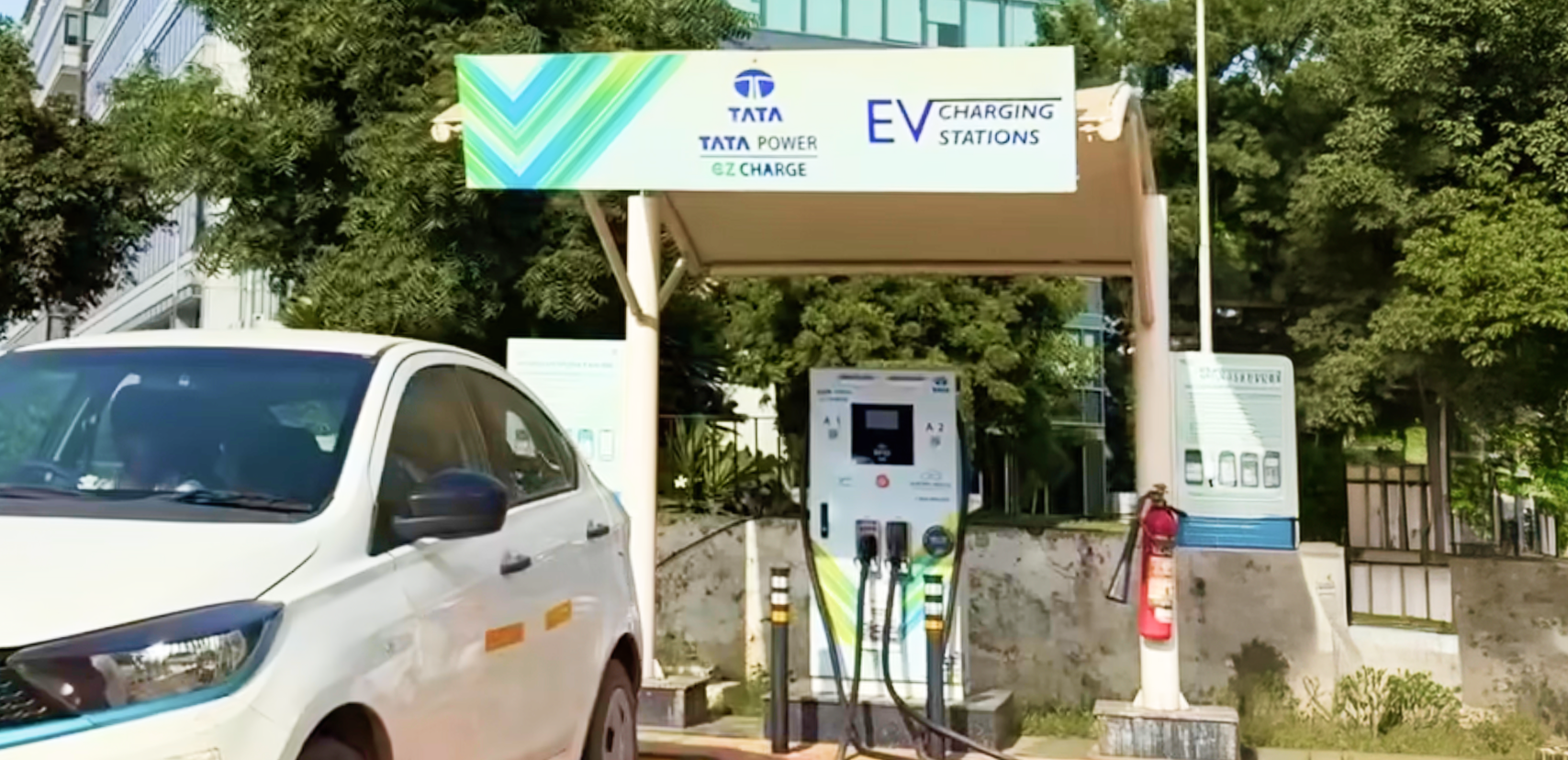
Individuals and businesses can both start one, as long as they have a suitable site and the capital to invest. The Ministry of Power's guidelines allow any individual or entity to set up a public charging station, and Tata Power's EV Mitra page lists these as the main groups who apply:
- Business owners and entrepreneurs
- Property owners
- Fleet operators
- Fuel station owners
What they share is access to a suitable site and the capital to invest in it. You will still need to complete a set of approvals, which are covered below, and Tata Power evaluates your site as part of the franchise process. You can see the full list on the EV Mitra page.
How does an EV charging station franchise work?
An electric vehicle charging station franchise in India is an arrangement where you set up and run a charging station under an established operator’s brand. The operator brings the technology, the app, the standards and the technical support, and you bring the site and the investment. The Ministry of Power’s guidelines call the operator a charge point operator, or CPO, which simply means any individual or entity that operates an EV charging station. In Tata Power’s franchise, that is Tata Power EV Charging Solutions Limited.
What support does Tata Power provide to EV charging franchise partners?
Here is how the responsibilities are divided between Tata Power and you as a franchise partner.
| Area | Tata Power (Charge Point Operator) | Franchise partner |
|---|---|---|
| Site | Screens and evaluates the site, with a focus on high-traffic locations | Finds and secures the site |
| Installation | Installs the charging equipment and makes sure the station meets industry safety standards | Coordinates site access and works for equipment purchase and installation, with Tata Power’s assistance |
| Technology | Supplies the hardware, the software and the charging app | Operates the station on Tata Power’s platform |
| Uptime and maintenance | Provides continuous maintenance and technical support, including 24/7 monitoring from its Network Operations Centre | Keeps equipment in good day-to-day condition |
| Daily operations | Provides the systems and support behind the station | Manages daily operations, oversees transactions and serves customers on site |
| Marketing | Runs franchisor-led marketing campaigns | Promotes the station locally |
| Brand and standards | Owns and upholds the brand and sets the guidelines | Follows the guidelines on branding, pricing and service standards |
The franchise agreement spells out exact responsibilities, commercial terms and revenue arrangements, so be sure to confirm them with the Tata Power team before you commit.
Why choose a franchise instead of building a station on your own?
A franchise gives you an operator’s technology, network and 24/7 monitoring from day one, so you do not have to build and run all of that yourself. The trade-off is that you follow the operator’s pricing, branding and service standards.
How do you open an electric car charging station in India?
The path is much the same whether you join a franchise or build on your own. In short, you move from site to power, approvals, equipment, installation, testing and go-live. Here are the seven stages:
1. Line up a site
Pick a location you own or can lease for charging use, with easy entry and exit, good visibility and enough room for the parking bays. Highways, malls, offices, hotels, housing societies and fuel stations can all work, each with a different charger mix.
2. Check power availability
Find out your sanctioned load and whether the site needs a higher load or a separate EV connection. Under the Ministry of Power's guidelines, your distribution company must provide a new connection within a set time, from 3 days in metro areas to 90 days when it has to extend its network.
3. Sort out documents and approvals
Gather your site papers and complete the electricity, safety and local approvals covered in the permissions section below.
4. Choose the equipment
Pick chargers based on the vehicles you expect and how long they will stay, then finalize the layout, cabling, lighting and signage.
5. Install the chargers
Put in the chargers, cabling, meter and signage according to the approved layout and safety standards.
6. Test and commission
Test the chargers and complete the electrical safety clearance before the connection is energized, then commission the station.
7. Go live
List the station on the charging network so drivers can find it, start a session and pay. With Tata Power, the stages from installation to go-live follow the four-step franchise process described later in this blog.
Once the station is live, the work shifts to keeping the charging experience reliable for drivers. That means getting the charger mix, power setup, safety measures and ongoing operations right from the start. And if you’re new to EV charging, understanding these basics before you begin can make the entire setup process easier to navigate.

What do you need to start an EV charging station?
Before a station can open, you need these six things in place.
| Requirement | What to check |
|---|---|
| A usable site | Ownership or a lease that allows public charging, easy entry and exit, and room for parking bays of about 3 m by 5 m each |
| Power | Enough sanctioned load for the chargers you plan, a separate meter for the charging connection and your distribution company’s approval for any load increase |
| Capital | Funds for chargers, power infrastructure, civil work, branding and software, plus working capital for electricity and upkeep |
| Equipment and software | BIS-compliant, type-tested chargers, a charger management system, and payment and billing through an app |
| Documents and approvals | Land or lease papers, company or ID proof, PAN, GST registration and the safety clearances covered below |
| People and processes | Someone to run daily operations and customer service, and a clear route for escalating technical faults |
What infrastructure does an EV charging station need?
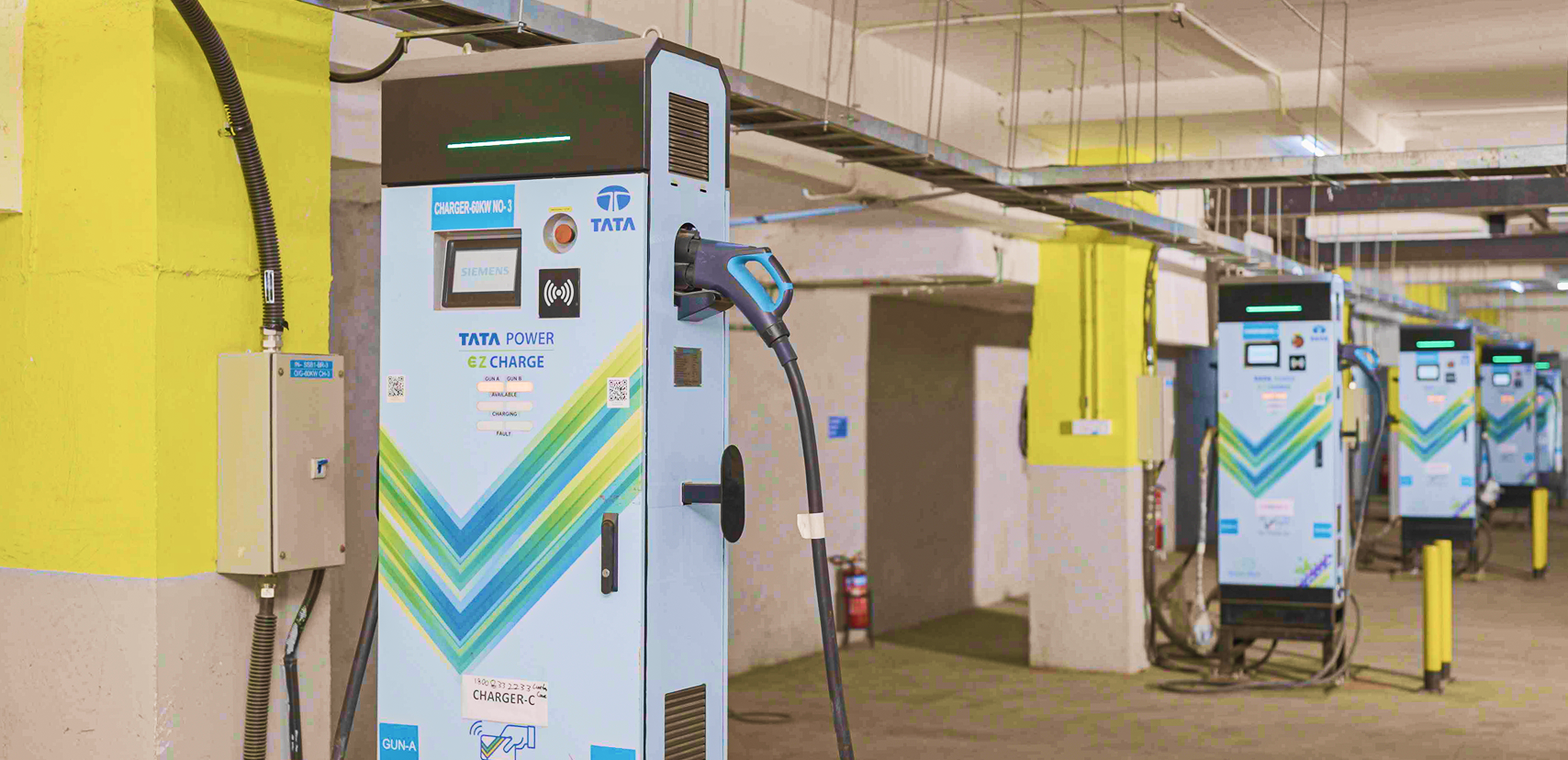
On site, a station comes down to four things: a good location, enough power (including cabling, any transformer and a separate meter), the chargers themselves, and basic safety and signage. Location matters most, so look for places where EV drivers already stop for 30 minutes or more, such as highways, malls, hotels and fuel stations. Tata Power evaluates your site as part of the franchise process. For the full picture, including layout, safety and maintenance, read what you need to set up EV charging infrastructure in India.
Turn your space into an EV charging station franchise
How much does an EV charging station franchise cost in India?
The cost depends mainly on how many chargers you install, how powerful they are and how much work your site needs. A small AC-only setup costs a fraction of the cost of a multi-charger DC fast station, which also requires a stronger power connection and often a dedicated transformer. The main cost components are:
- Chargers and their installation
- Power infrastructure, including cabling, any transformer, connection charges and a separate meter
- Civil work, canopy, lighting, signage and safety equipment
- Branding, software and connectivity setup
- Working capital for electricity bills and upkeep in the early months
Land is a separate cost if you do not already own or lease a suitable site.
Is there financing or government support for an EV charging franchise?
Financing is the clearer route. EV Mitra is a State Bank of India initiative to finance charging stations in public or private spaces, and Tata Power works with SBI to facilitate preferential interest rates for its customers. You can read more on the EV Mitra page.
Government capital support is narrower. Under PM E-DRIVE, ₹2,000 crore is earmarked for public charging infrastructure, but the entities eligible to apply are government bodies, public sector enterprises and states, who can work through charge point operators. As a private site owner, confirm your eligibility before counting on a subsidy, and check your state’s EV policy for separate incentives.
What type of EV charger do you need for a charging station?
The right charger depends on who will use your station and how long they will stay. AC chargers are slower and cost less, so they suit places where vehicles stay parked for hours. DC fast chargers recharge much faster and suit stops where drivers want a quick top-up.
| Charger type | Tata Power range | Where it fits |
|---|---|---|
| AC Type 2 | 7.4 kW | Housing societies, offices, hotels and other places where vehicles park for hours |
| Compact DC fast | 25 kW and 30 kW | Urban sites with limited space and shorter stops |
| DC fast | 50 kW and 60 kW | Highway stops and busy locations where quick turnaround matters |
For an electric car charging station franchise, DC fast chargers usually carry the load at highway and busy urban sites, while AC chargers fit long-stay locations. Many stations install both. Charging time depends on the charger and the vehicle’s battery, from about 30 minutes on DC fast chargers to several hours on AC. The Ministry of Power’s guidelines specify higher-power chargers of 240 kW and above for bus depots and heavy-duty highway charging. Match the first phase of your station to the vehicles you expect, and keep space and power capacity for expansion. For a deeper comparison, read AC vs DC chargers and public EV charging in India: types, levels and locations.
What licenses and permissions are required for an EV charging station?
The good news is that you do not need a separate license to set up or operate an EV charging station. The Ministry of Power’s 2024 guidelines classify it as a de-licensed activity, which means any entity can establish one if it follows the guidelines. You will still need approvals and documents, and the exact list varies by state, city and site type. The common requirements are:
Apply to your distribution company, which must provide a new connection within 3 days in metro areas, 7 days in other municipal areas, 15 days in rural areas and 30 days in hilly rural terrain. The limit rises to 90 days if it has to extend its network or commission a new substation. The charging station needs its own meter
An electricity connection
A registered land deed or lease, company registration, PAN, GST registration and a government ID for the authorized person, as listed in the guidelines’ tentative document list
Site and ownership documents

Chargers must follow BIS standards and carry a type test certificate from an NABL-accredited lab. Installations follow Central Electricity Authority safety regulations, and the electrical inspectorate’s safety clearance is shared before the connection is energized
Safety clearances
A fire department NOC if chargers go in a building basement, and PESO approval for fuel station sites. Local building and zoning rules apply too
Location-specific approval

Tata Power’s team helps franchise partners work through these steps during site evaluation and setup. State EV policies can add incentives or conditions, so check yours.
What affects the revenue and profitability of an EV charging station?
A station earns from charging sessions, and what it keeps depends on how often the chargers are used compared with what they cost to run. No single figure fits every site, so be careful with any promise of fixed monthly earnings. Five factors matter most.
- Utilization: This is the share of time your chargers are in use. Recent industry reports put sector-wide utilization at roughly 1% to 5%, so location and demand largely decide how a station performs.
- Location and vehicle mix: Nearby EV density, traffic, how long vehicles stay and whether fleets or ride-hailing vehicles use the site.
- Electricity cost and pricing rules: The Ministry of Power’s guidelines cap the supply tariff for charging stations at the average cost of supply until March 31, 2028, at 0.7 times that level during solar hours and 1.3 times at other times. Service charges are capped too, at ₹3 to ₹4 per kWh for AC and ₹11 to ₹13 per kWh for DC, excluding GST and land cost. Your state’s tariff order sets what you actually pay.
- Uptime: A charger that is offline earns nothing and costs goodwill. Remote monitoring and quick maintenance protect your revenue.
- Other income: Fleet tie-ups, advertising and on-site retail or food can add to charging revenue.
A good plan starts with expected sessions per day, average energy per session and your actual electricity cost. Ask the Tata Power team what usage to expect at your shortlisted site.
How can you apply for a Tata Power EV charging station franchise?
Getting started is simple. The process has four stages.
1. Submit an enquiry: Fill the inquiry form on this page with your contact details, the site’s address, and the purpose of your enquiry. You can also reach out through Tata Power’s website or customer support.
2. Site evaluation: Tata Power’s team evaluates the site and helps you identify a high-traffic location if yours needs a rethink.
3. Setup and branding: Tata Power installs the charging equipment and sets up and brands the station.
4. Go live: Once the station is operating, you earn from charging sessions.
If you have a site in mind, the next step is a conversation.

Take the first step towards your own EV charging franchise
Bottomline
At its heart, an EV charging station franchise is a partnership. You bring a suitable site and the investment, and Tata Power brings the technology, the network, the round-the-clock monitoring and the technical support that keep a station running. Your returns will depend on the location, the charger mix, how reliably the station runs and how often drivers plug in, so it pays to get those basics right, ask for the commercial terms in writing and check which financing or incentives apply to you.
Frequently asked questions
The frequently asked questions section is a reliable source for unlocking answers to some of the most crucial inquiries. Please refer to this section for any queries you may have.
- Solaroof
The inquiry form asks for your contact details, the site’s address, pin code, state and city, and the purpose of your inquiry. Your first conversation will move faster if you also know:
- Whether you own or lease the site
- The existing electricity connection and load, if any
- The vehicles you expect to serve, such as cars, two-wheelers, autos or fleets
- Your investment range and whether you plan to use financing
Tata Power runs its charging station franchise in India through EZ CHARGE, its EV charging brand. EZ CHARGE operates a network of more than 5,500 public charging points across 620+ cities and towns, and Tata Power brings more than 100 years of experience in energy infrastructure.
With a Tata Power EV charging franchise, you get access to its charging network, technology and operational support, along with assistance through the setup process. This includes:
- Network visibility: Your station is listed on the EZ CHARGE app and network, where drivers can check availability, start a session and pay, including with the EZ CHARGE RFID card.
- Technology: Tata Power supplies the hardware, software and charging app, and monitors operations around the clock from its Network Operations Center.
- Setup support: The team evaluates your site, installs the equipment and brands the station.
- Ongoing support: Maintenance and technical support continue after launch.
- A financing route: You can look at EV Mitra, the SBI financing initiative that Tata Power supports.
Together, these benefits give you the technology, operational support and network access needed to run an EV charging station, while Tata Power supports you through the setup and beyond.
The investment depends on the charger mix, power requirements and site. Costs typically include chargers, installation, power infrastructure, civil work, branding and working capital. For an EV charging station franchise, the electric charging station franchise cost in India will vary based on the setup.
The required land depends on the number of chargers, parking bays, and site layout. As a starting point, each charging bay needs about 3 m × 5 m, with additional space for access, equipment and safety clearances.
An EV charging franchise can be a better option if you want established technology, network access and operational support. An independent station gives you greater control but means managing the technology, maintenance, customer experience and operations yourself
There is no fixed payback period for an EV charging station, as it depends on utilisation, location, electricity costs, charger mix and uptime. A well-located station with strong demand can recover its investment faster than a low-utilisation site.
Sources
1. PIB, Ministry of Heavy Industries: EV charging stations (February 2026)
2. PIB factsheet: PM E-DRIVE Scheme (October 2026)
3. PIB, Ministry of Heavy Industries: EV charging infrastructure under PM E-DRIVE (December 2025)
4. Ministry of Power: Guidelines for Installation and Operation of EV Charging Infrastructure 2024
5. Business Standard: India’s EV charging stations cross 29,000 (September 2026)
Keep reading...
View all