


 Contact us
A solar ecosystem in every region of India


Sections
- India’s turning point for solar energy
- The forces guiding India’s solar future
- The new challenges of a solar-led power system
- How storage and flexibility enable solar around the clock
- Distributed solar and the shift in rural India
- Policies and pricing that support a stable solar economy
- Digital tools and the next phase of the energy experience
- Tata Power’s path toward a solar-led future
- Sources
India’s turning point for solar energy
India’s solar journey is undergoing more than just a technical shift, but rather, a societal transformation. A decade ago, conversations around solar were framed around possibility like “Can India scale solar?” or “Will solar ever become cost-competitive?’ or “Will customers trust distributed energy?”
Today, those questions belong to history.
India has propelled into the global top tier: 3rd in solar capacity, 4th in overall renewables, and among the world’s fastest-growing clean-energy markets. In the first nine months of 2025 alone, India added 26.6 GW of new solar capacity, a 54% year-on-year rise.
This momentum is not accidental. It reflects years of policy clarity, falling technology costs, and an unmistakable shift in public sentiment. Solar is not classified as “alternative,” it is mainstream. However, the next decade will be different. More ambitious. More complex and far more consequential.
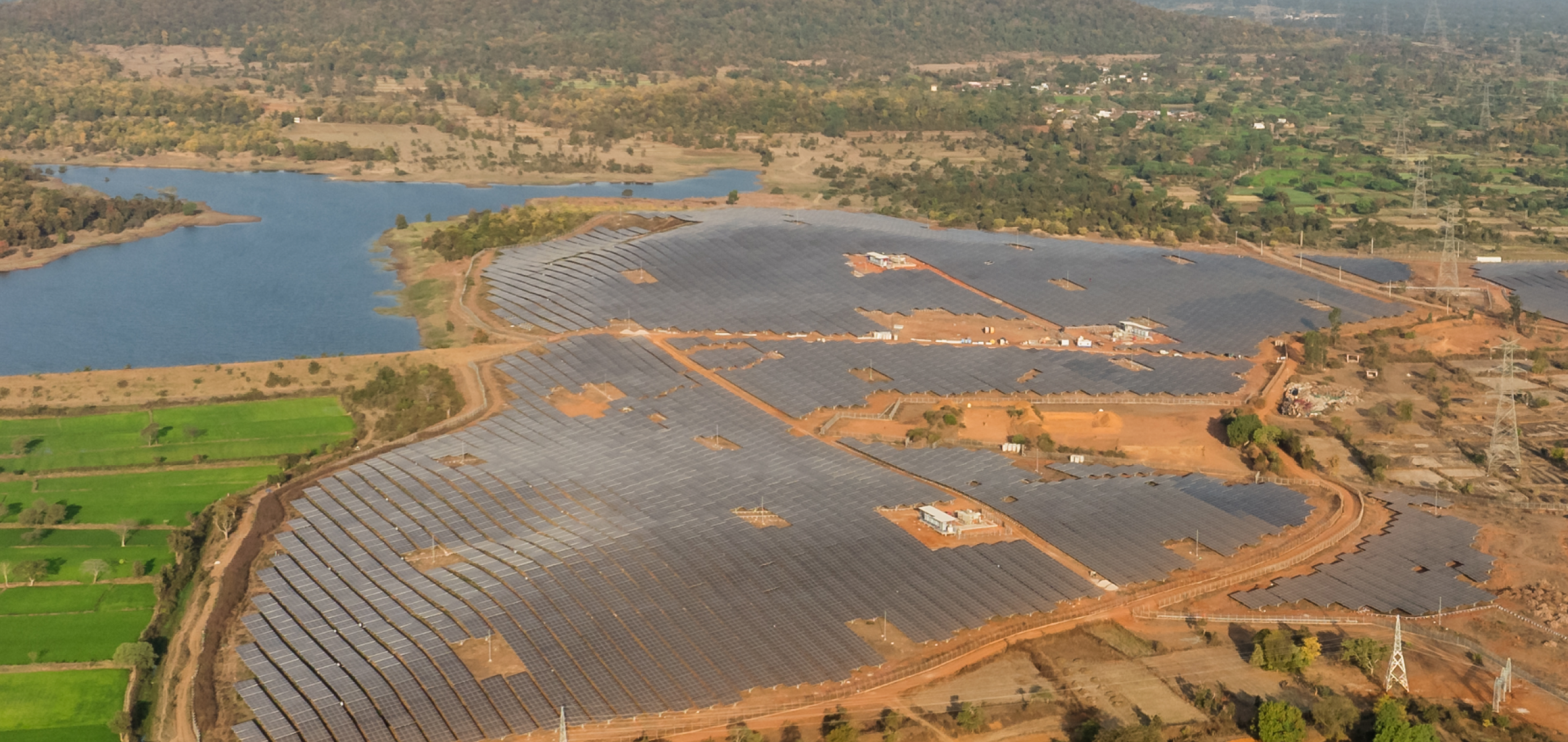
The Forces Shaping India’s Solar Future
India is now entering a period where solar must evolve from capacity addition to energy system transformation. Reliability, flexibility, manufacturing strength, and digital intelligence will matter just as much as megawatts installed. Dr. Praveer Sinha, CEO & Managing Director of The Tata Power Company Limited, often emphasizes:
“India will witness the largest increase in energy demand worldwide in the coming decades. Clean and green energy will play a major role in meeting this increased demand where what will matter the most is affordability and accessibility.”
The promise of 2035 is a resilient, digitally intelligent, inclusive solar ecosystem that touches every home, every business, and every region of India. With capital flowing and integration accelerating, India must now confront the complex challenges that emerge when solar becomes a dominant part of the energy mix.
As these opportunities and challenges converge, India will increasingly rely on energy players capable of integrating technology, infrastructure, and consumer needs at scale. It is within this evolving landscape that Tata Power’s role becomes most relevant.
The next decade will reward ecosystems. As India builds a cleaner and more complex energy system, progress will depend on how effectively government agencies, regulators, and industry leaders work together to align incentives, accelerate innovation, and scale solutions.
Collaboration will take place across several critical fronts, including:
- R&D for advanced modules and emerging technologies
- Workforce development for manufacturing and O&M
- Manufacturing innovation to strengthen domestic supply chains
- Grid modernization efforts with utilities and regulators
- ESG reporting frameworks that bring transparency and trust
- Early-stage pilots for hydrogen, recycling, and energy storage
When industry and government move in the same direction, bottlenecks reduce, timelines shorten, and the overall pace of India’s energy transition increases dramatically.
Rooftop solar remains one of India’s biggest levers for democratizing clean energy. While utility-scale projects have grown rapidly, the rooftops of homes, shops, MSMEs, and housing societies still hold enormous potential. Unlocking this opportunity depends on making the experience as simple and reassuring as any other modern household upgrade.
Rooftop adoption will accelerate when consumers receive:
- Intuitive apps that simplify discovery and support
- Transparent pricing and clear savings estimates
- Flexible financing options that reduce upfront cost
- Reliable installation and long-term service assurance
- Aesthetic product design that fits modern homes and lifestyles
From digital onboarding to post-installation care is an end-to-end journey. Adopting solar should feel less like a technical project and more like buying a trusted, everyday appliance. However, there are two sides to every coin and there are some complexities when it comes to a solar-heavy grid. India is on the path to surpassing these challenges and become a self-reliant user and producer of solar energy.
The new challenges of a solar-led power system
Energy transitions are never linear. As India accelerates toward a solar-heavy grid, the challenges are shifting from scaling capacity to managing complexity and each challenge brings an opportunity for innovation.
1. Grid variability & forecasting accuracy
Higher renewable penetration makes accurate forecasting essential for scheduling and grid stability. Advanced AI and real-time weather models will increasingly shape how utilities predict and manage solar output.
2. Transmission capacity constraints
Solar-rich states like Rajasthan, Gujarat, and Karnataka are growing faster than the national grid can keep up. New green corridors expanded inter-state lines, and flexible transmission planning will be critical to move clean energy to demand centers.
3. Distributed energy integration
With millions of rooftops, EV chargers, behind-the-meter systems, and microgrids coming online, distribution networks will need smarter controls, better visibility, and digital automation at the feeder and substation level.
Each hurdle also opens the door for progress, especially when combined with digital platforms, advanced analytics, and storage technologies that strengthen the entire system rather than just the generation side.
To turn these challenges into strengths, India will need a more flexible, responsive grid powered by storage
Solar’s next evolution is firm, dispatchable power, i.e. energy that can be delivered exactly when the grid or consumer needs it. As India’s solar capacity grows, flexibility becomes just as important as generation.
Battery storage, pumped hydro, advanced inverters, and real-time grid analytics will enable solar to provide:
- Evening peak support
- Frequency stability and grid balancing
- Ramp-rate control during sudden shifts in weather
- Black-start capabilities for grid recovery
- Consistent, round-the-clock clean energy when paired with wind and hydro
These solutions reduce restrictions, improve grid reliability, and help utilities depend on solar for critical operations. In the coming decade, storage will shift from a supporting technology to a core enabler, turning solar from an intermittent resource into a dependable backbone of India’s power system.
With flexibility coming to the grid, India is now positioned to expand the benefits of solar to regions that have long waited for reliable energy access.
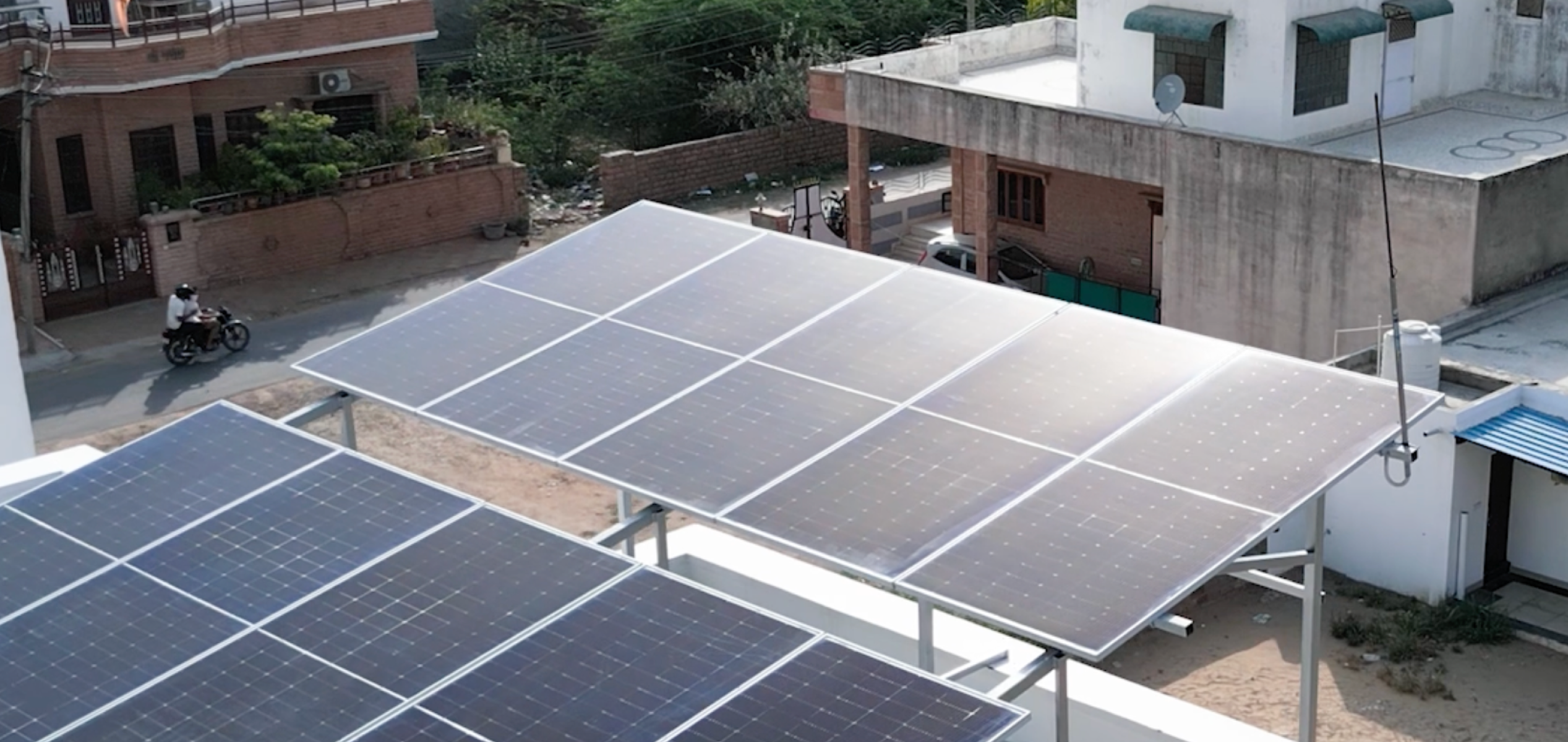
Solar panels provide reliable energy access
For rural India, solar is a pathway to inclusion, resilience, and local opportunity. Many villages that once relied on unreliable grids or costly diesel now experience steady power through distributed solar and microgrids, reshaping how rural economies function.
As of October 2025, India has achieved over 547,000 Decentralised Renewable Energy (DRE) installations nationwide, transforming rural economies by positively impacting nearly 37 million livelihoods across key sectors such as agriculture, textiles, and small-scale enterprises.
Energy players across the country are also now focusing on rural microgrid initiatives that enable small enterprises, cold-storage facilities, digital service centers, agricultural operations, and women-led businesses to operate with greater confidence and predictability. These early successes offer a glimpse of what is possible at scale.
By 2035, microgrids could become the backbone of:
- Rural manufacturing clusters
- Digital learning infrastructure
- Modern health centers
- Community-level e-mobility
Distributed solar ensures that clean-energy progress extends beyond major cities, allowing every district, regardless of geography, to participate in India’s renewable growth story.
To enable this kind of rural transformation at scale, India will need policy frameworks that support faster deployment, smarter grids, and long-term investment confidence.
India’s regulatory framework is evolving quickly, and the next wave of reforms will determine how smoothly the country moves into a solar-heavy grid. These policies are shifting from enabling capacity addition to building long-term system stability and domestic strength.
1. Resource adequacy frameworks
States will be required to plan for firm, dispatchable capacity alongside renewables. This ensures reliability as solar usage increases and creates a clear role for hybrids and storage-backed solutions.
2. Storage procurement mandates
Upcoming guidelines will encourage utilities and developers to add battery and pumped-hydro storage. This will help manage variability, reduce curtailment, and support round-the-clock renewable supply.
3. Domestic manufacturing incentives
Policies under Aatmanirbhar Bharat, including PLI schemes and duty protections, are strengthening India’s ability to build modules, cells, and upstream components locally, reducing long-term import dependence.
4. Green open access & digital permitting
Simplified open-access rules and upcoming digital approval systems will make it easier for industries and commercial consumers to source clean energy without lengthy administrative delays.
5. Advanced forecasting and scheduling standards
Improved guidelines from CEA and state regulators are pushing the sector toward more accurate, data-driven forecasting, a necessity as renewables becomes a larger share of the grid.
6. Circularity and panel-recycling frameworks
India is moving toward structured recycling norms for end-of-life modules, which will support responsible materials recovery and create a more sustainable solar lifecycle.
Predictable, forward-looking regulation will be one of the strongest enablers for innovation, investment, and India’s transition to a resilient solar economy.
Strong policy design is only one side of the equation, and the other is maintaining a pricing structure that keeps adoption high without compromising sector stability.
7. Balancing affordability and financial health
India’s solar journey has been shaped by some of the lowest tariffs in the world, which played a crucial role in driving mass adoption. However, as the sector matures, affordability must be balanced with the financial health of developers and manufacturers. A sustainable ecosystem depends on creating room for both cost efficiency and long-term viability.
Ensuring that balance will require:
- Strong payment security mechanisms that reduce delays and improve cash flow
- Fair risk allocation across contracts so developers can plan confidently
- Standardized bidding processes that prevent unhealthy undercutting
- Predictable, transparent regulatory decisions that support stable investment cycles
Affordable solar is essential, but sustainably priced solar is what will keep India’s clean energy transition resilient for decades to come. To maintain this equilibrium in the long term, government and industry must work together to address structural issues and accelerate innovation.
With government and industry moving in sync, attention turns to another essential ingredient for scaling the next phase of renewable infrastructure: smarter financing.
The next wave of clean-energy assets includes grid-scale storage, hybrid renewable systems, virtual power plants, and decentralized microgrids. These assets demand capital at a scale far beyond traditional project finance. This is where innovative financing becomes transformative.
Global investors are increasingly drawn to:
- Predictable regulatory environments
- High-quality, well-managed assets
- Strong corporate governance
- Transparent and credible ESG reporting
Access to green bonds, blended finance instruments, and long-horizon ESG capital reduces project costs and accelerates deployment of the technologies that will define the future grid.
As India builds a more distributed and digitally connected energy system, the consumer’s role is shifting from passive user to active participant. Apps, smart meters, and real-time dashboards are giving households and businesses much greater control over how they generate, use, and manage clean energy.
With these tools, consumers can:
- Track real-time solar generation and consumption
- Forecast monthly savings with greater confidence
- Optimize usage patterns based on time-of-day pricing
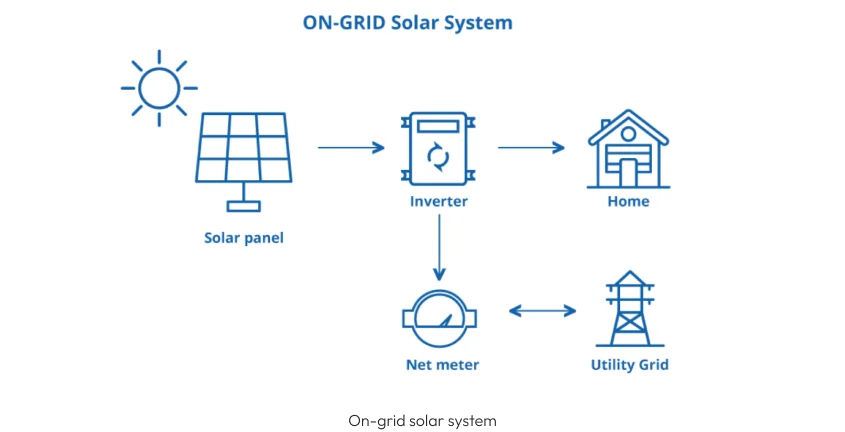
- Send surplus energy back to the grid through net metering
- Monitor system performance and detect issues early
This level of transparency builds trust, simplifies decision-making, and makes the solar experience far more interactive. Over time, these digital layers will be just as important as the hardware itself in driving adoption and long-term engagement.
Solar + EV + smart cities: Urban India is moving toward clean mobility. Solar-powered EV corridors, intelligent grid systems, and city-level energy management platforms will define the next wave of sustainable urban development.
The power of global partnerships: India’s solar ambitions aren’t unfolding in isolation. As technologies evolve and supply chains globalize, international collaborations will play a pivotal role in helping India leapfrog to the next generation of clean-energy solutions. Strategic partnerships give Indian companies access to deeper research pipelines, global best practices, and new models of financing that accelerate adoption.
Key areas where global collaboration will have outsized impact include:
- High-efficiency module and cell R&D
- Early-stage green hydrogen pilots and electrolysis innovation
- Advanced inverter and grid-stability technologies
- Circularity, recycling frameworks, and end-of-life material recovery
- Innovative financing models that lower the cost of capital
These partnerships bring not just technologies, but also speed, quality, and shared learning, helping India scale smarter and build a clean-energy ecosystem that is globally competitive.
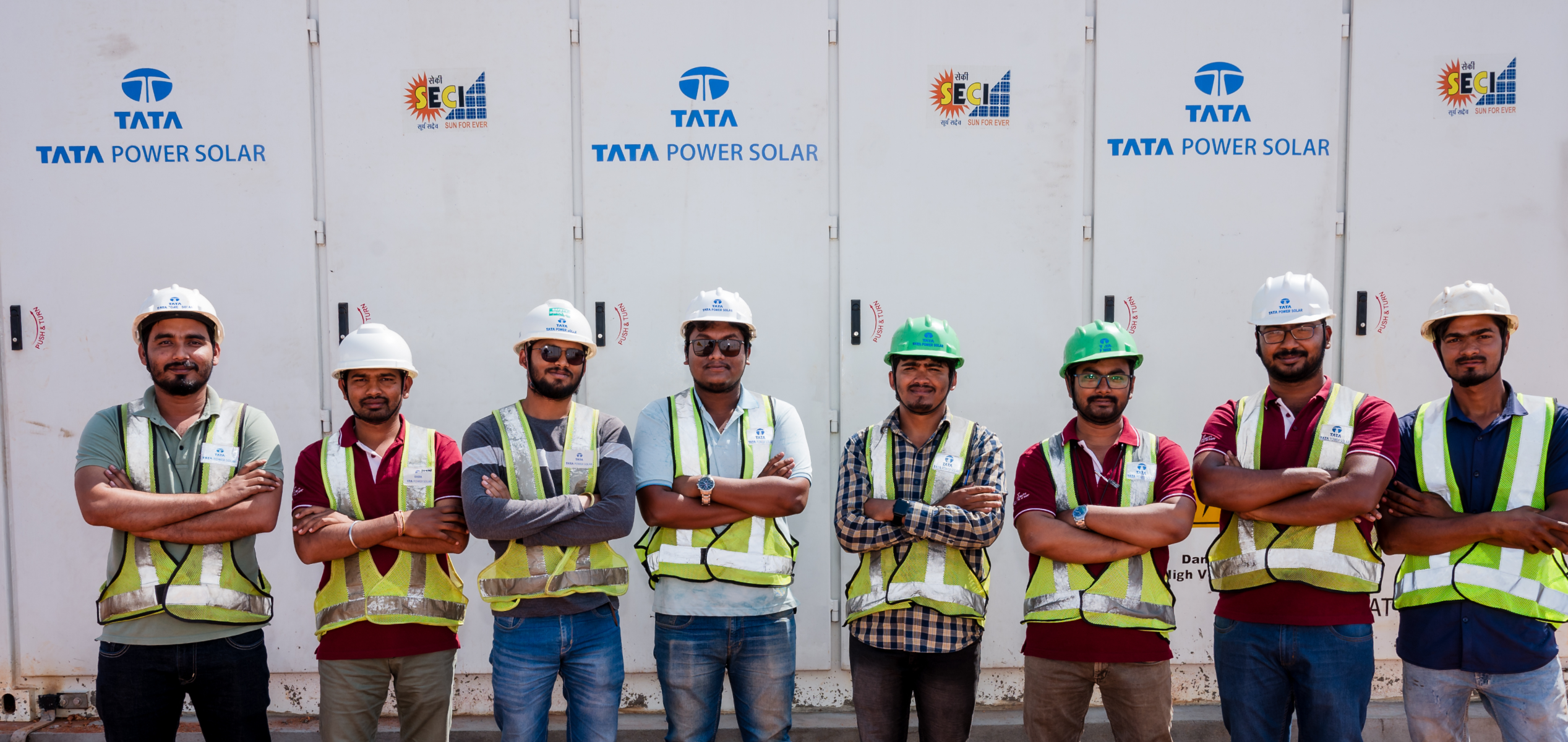
Tata Power is providing clean energy solutions across India
Tata Power’s evolution mirrors the arc of India’s energy transformation. What began as a journey to build renewable assets has now become a mission to reimagine the entire energy landscape. As India climbs toward a solar-heavy grid, Tata Power is transforming into a future-ready integrator and bringing together generation, storage, digital platforms, distribution intelligence, and customer experience.
Our leadership is anchored across five core pillars:
1. Integrated clean-energy ecosystems
India’s future energy system will be a multilayered, interconnected network.
Solar parks will work alongside rural microgrids, rooftop systems will communicate with grid-scale storage, EV chargers will draw from midday solar peaks and smart meters will adapt consumption patterns in real time.
Tata Power’s role is to weave these distributed elements into one intelligent clean-energy ecosystem, enabling: Grid-scale renewables, distributed solar, battery & pumped-hydro storage, smart distribution systems and consumer-facing digital platforms
Leadership will no longer be measured only in GW capacity, but in the ability to deliver 24/7 clean energy through intelligent integration.
2. Innovation at scale and how digital tools redefine solar
Solar is becoming a data-driven business.
Every module, inverter, and grid node generate valuable information. How companies process that data will determine who leads the next decade.
Tata Power is embedding intelligence across its operations:
- IoT sensors for real-time health monitoring
- SCADA automation for high-precision grid operations
- Drone-based inspections for faster and safer O&M
- Digital twins that simulate plant performance
- Machine-learning fault prediction to reduce downtime
- AI forecasting for more accurate scheduling
These tools convert solar from a reactive, weather-dependent asset into a predictable, optimized, data-rich energy engine.
3. Domestic manufacturing & supply-chain strength
India’s solar ambition requires manufacturing depth, not just at the modular level but across the entire value chain.
Tata Power is strengthening domestic capability by:
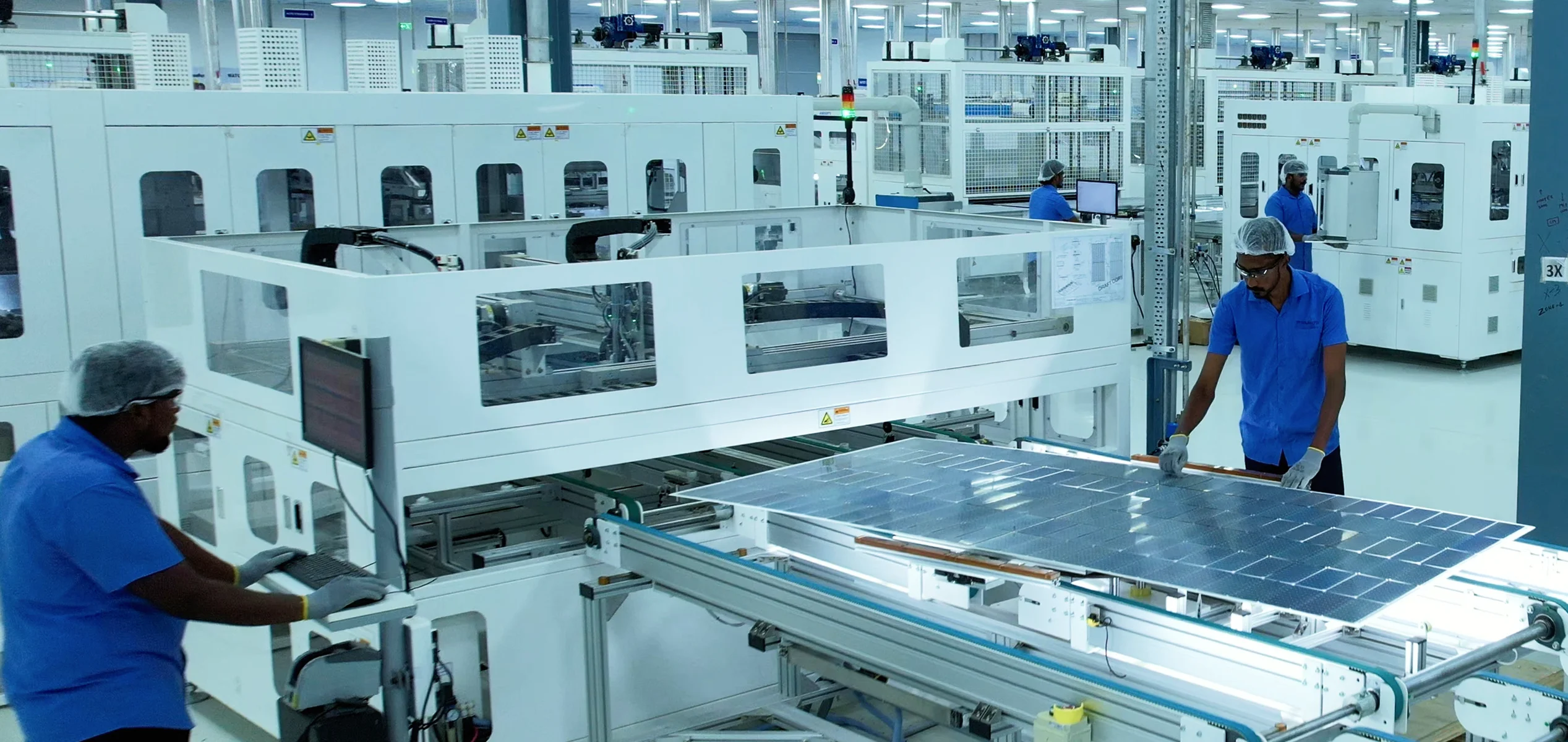
- Expanding module and cell manufacturing
- Increasing backward integration into wafers and components
- Partnering with BOS suppliers to indigenize critical technologies
- Building skilled workforce pipelines across states
- Working with MSMEs to localize balance-of-system components
As global supply chains face volatility, India’s resilience will come from local capacity, quality, and innovation.
4. Customer-first solar
India’s rooftop revolution will be powered by both price and experience.
As solar becomes a household product, expectations rise. Customers want fast installations, easy financing, smooth digital onboarding, and aesthetically integrated systems that complement modern homes.
Tata Power is creating a new standard for rooftop adoption by offering transparent digital journeys, end-to-end service workflows, trustworthy delivery timelines, visual design options for urban aesthetics and ongoing service assurance post commissioning.
5. Mobilizing global climate capital and financing the future
There is unprecedented global demand for Indian clean energy.
Green bonds, blended finance, and ESG-linked capital are flowing into markets that combine scale with credibility. Tata Power’s:
- Governance standards
- Legacy of operational excellence
- Diversified renewable portfolio
- Strong balance sheet
All these factors position it uniquely to attract long-term capital for emerging assets such as storage-backed solar, hybrids, and digital energy platforms.
Solar for industrial decarbonization
India’s industrial growth cannot come at the expense of climate commitments. Heavy sectors such as steel, cement, chemicals, logistics, and data centers are under pressure to decarbonize while staying competitive in global markets. Solar, paired with storage and emerging green hydrogen pathways, will become a cornerstone of this transformation.
Tata Power already supports industrial customers through:
- Open-access solar for large-scale procurement
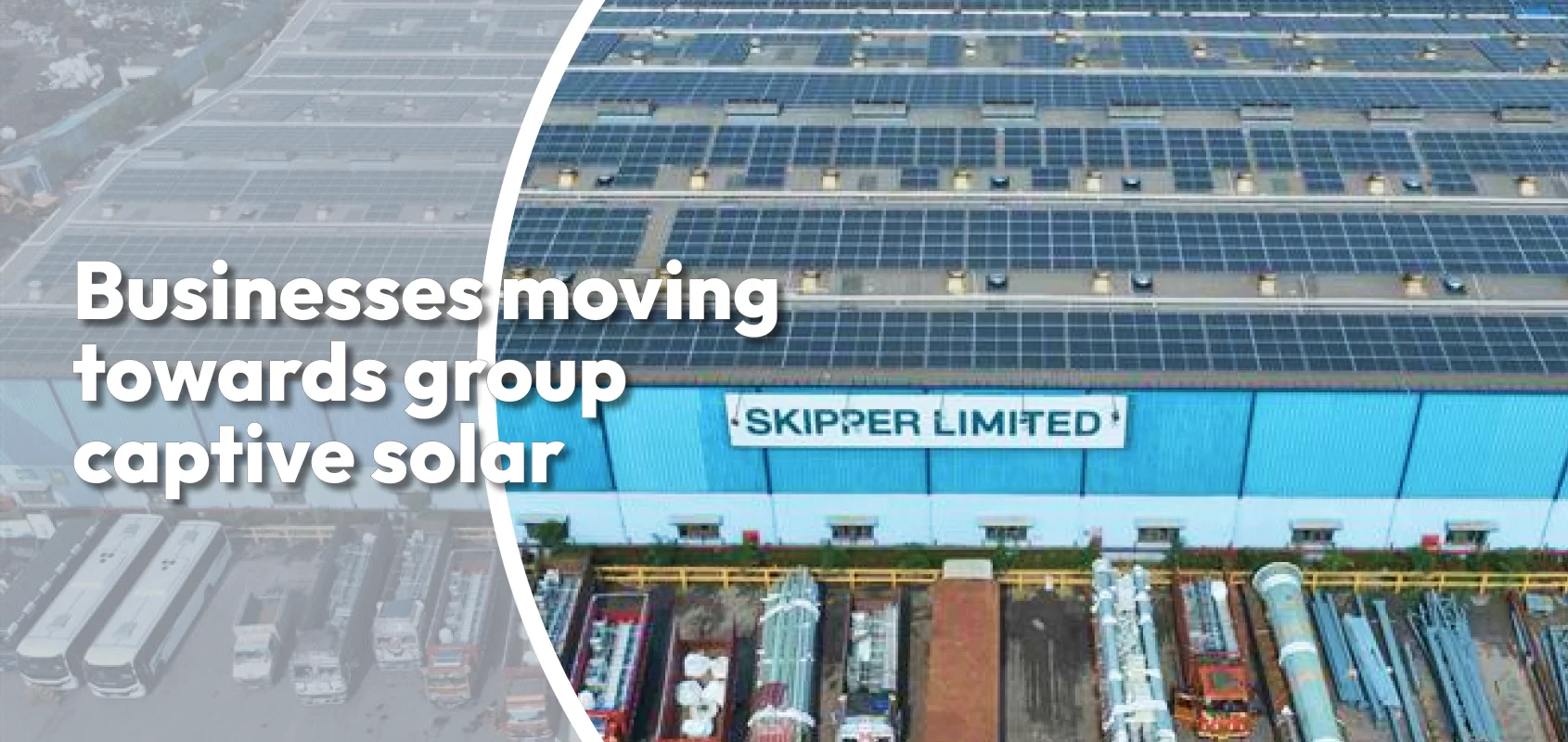
- Group captive models that offer cost stability
- Hybrid RE portfolios that improve supply reliability
- Behind-the-meter solar + storage for operational resilience
These solutions help industries cut emissions, lower energy costs, and future-proof their operations, ensuring India’s growth story stays aligned with its climate goals.
A new energy era begins
India is scaling solar, and a result, also building a solar-first economy.
By 2035, solar will be at the heart of India's competitiveness, powering industries, energizing communities, shaping smart cities, and creating millions of livelihoods. It will be embedded into supply chains, financial systems, and digital platforms.
Tata Power’s commitment is to lead this journey with vision, integrity, and innovation: as a systems integrator, a global collaborator, and an enabler for every Indian who aspires to be part of a cleaner, smarter tomorrow.
The next decade will go beyond energy transition and become a national transformation.
1. India adds 26.6 GW solar capacity in first nine months of 2025, up 54% YoY – Economic Times
2. India installed 26.6 GW solar power capacity in the first nine months of 2025 – PV Magazine India
3. “Tata Power Solar, Roofsol, Mahindra Solarize lead India’s rooftop solar market in 2024” - Mercom Clean Energy insights
4. Decentralised Renewable Energy: Electrifying Rural India – AQUARTIA
5. Overview of Tata Power’s Renewable Energy business and generation/transmission capacity
6. Recent results: rooftop installations, growth metrics for FY2024–25 and Q1 FY26 for rooftop solar near 220 MW in Q1 FY26 – Tata Power
7. Tata Power’s renewable-energy portfolio and project (solar + storage + renewables) – Tata Power Solar Energy/Renewables


Keep reading...
View all