


 Contact us
AC and DC chargers power every EV journey


Introduction
Electric vehicles (EVs) are no longer a rare sight on India’s roadways. A perk is that they offer a cleaner, greener alternative to traditional gasoline-powered cars. However, like with any innovation, there are some considerations that hold back prospective buyers. The most important question asked is, “how to charge an EV?”. There are two types of chargers: AC and DC chargers. AC chargers supply alternating current that the car converts internally, while DC chargers deliver direct current straight to the battery.
Did you know that around 35% of EV chargers are categorized as DC chargers (fast chargers) nationally. In this article, we’ll break down the key differences between the two and delve deeper into how they impact charging times. If you opt for residential garages or public charging stations, understanding AC vs DC charging can help you make the right choice for your vehicle, your needs, and your lifestyle.
AC vs DC charging time
The biggest distinction between AC and DC chargers is their charging speed. AC chargers can take between 4-12 hours and DC chargers, on the other hand, can charge an EV to 80% battery in just 20-40 minutes.
AC chargers: These chargers use alternating current to supply power to the EV. The vehicle's onboard charger then converts this AC power into DC power to charge the battery. Since this process is slower, it can take between 4-12 hours to fully charge an EV, depending on the battery size and charger capacity. AC chargers are typically found in residential garages and public parking areas, where slower charging is perfectly fine for overnight or daytime use.
DC chargers: These chargers, also known as fast chargers, convert AC power into DC power within the charging station itself. This means the power can go straight into the EV’s battery, significantly reducing charging time. DC fast chargers can charge an EV to 80% in just 20 to 40 minutes, depending on the charger’s power and the vehicle’s battery capacity. You'll mostly find DC chargers at highway rest stops, shopping centres, and commercial locations.\
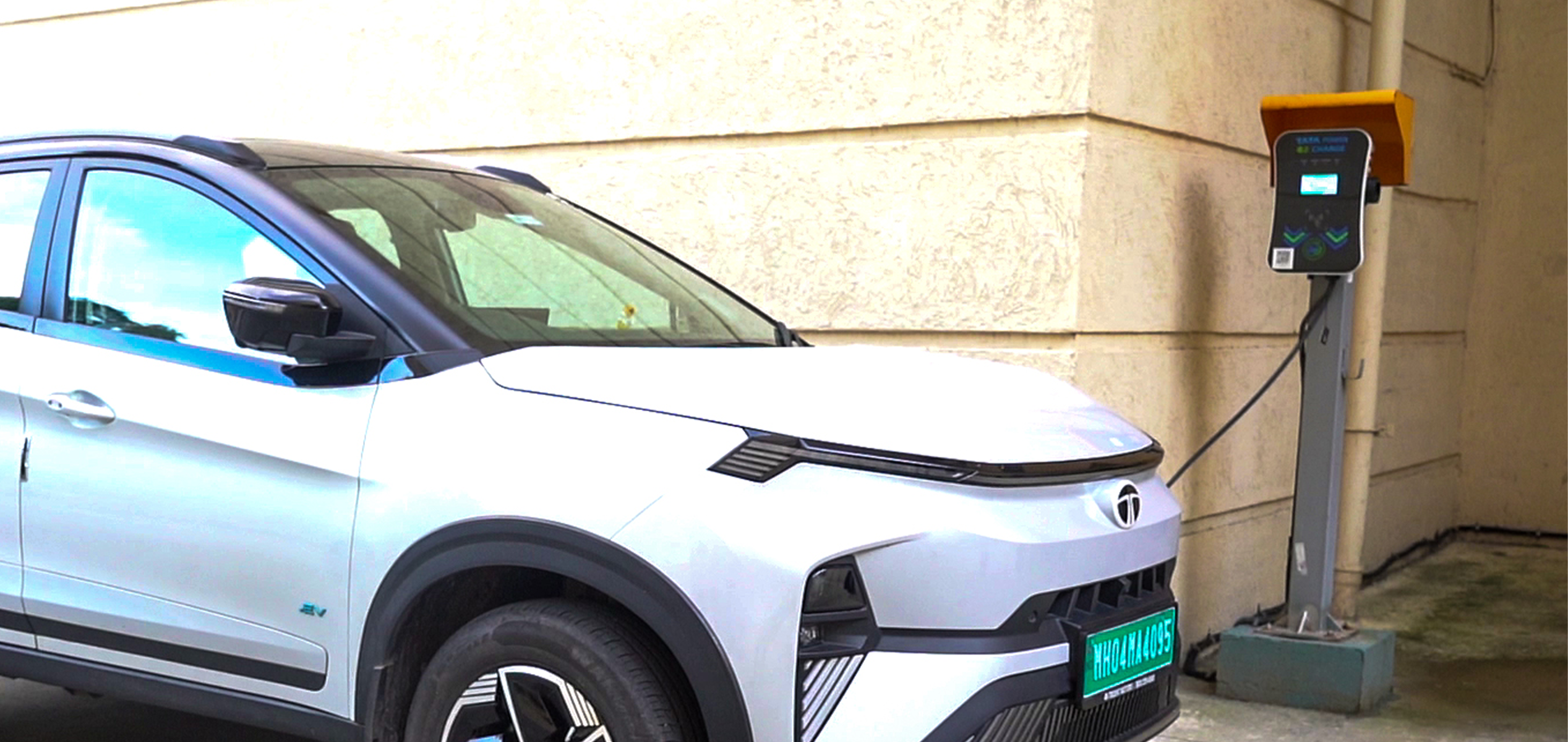
A clear breakdown of AC chargers vs DC chargers
| AC CHARGERS | DC CHARGERS |
|---|---|
| The electricity from the grid is supplied to your EV, where the vehicle's onboard charger converts the AC power into direct current (DC) to charge the battery | DC chargers convert AC power to DC within the charging station itself before delivering it to the vehicle |
AC chargers typically offer slower charging speeds, ranging from 3 kW (kilowatts) to 22 kW | They offer much higher power levels, typically ranging from 50 kW (kilowatts) up to 350 kW |
| They can fully charge a vehicle in 4 to 12 hours, depending on battery size and charger capacity | They can charge up to 80% in 20 to 40 minutes, depending on the charger's power and the vehicle's battery capacity |
| Installed in residential garages, apartment complexes, and public parking areas where vehicles stay longer | They are utilized at public charging stations, highway rest stops, and commercial sites where quick charging is essential |
| All electric vehicles with an onboard charger are compatible with AC chargers | Only vehicles that support DC fast charging can use DC chargers; compatibility varies by model and charging standard |
| The cost per session is typically lower, and sometimes charging is offered free at certain locations | Higher cost per session due to rapid energy delivery; pricing may be based on time or kilowatt-hours consumed |
| AC chargers need a standard electrical setup and are easier to install in residential and commercial areas | DC chargers require specialized equipment and substantial electrical infrastructure, making installation more complex |
| Generates less heat and usually relies on passive cooling methods like basic ventilation | Generates significant heat and requires advanced cooling systems, such as liquid cooling |
So, the above table concludes that both chargers can be viable options, depending on the EV owner’s usage and preferences.
How fast are EV chargers?
So, are you wondering what the types of chargers are and how fast they charge an EV? Here’s a breakdown of the 3 types of chargers, based on speed.
Level 1 charger: In Indian households, this type of charger typically uses a standard household power supply of 230V with a regular 15A socket. This type is categorized as the slowest charger. The general range falls between 8-15 kilometres/hour, depending on the vehicle. If you prefer to charge your EV overnight at home, Level 1 chargers are the ideal option.
Level 2 charger: These chargers are significantly faster and are preferred for daily use. They are installed in residential societies, offices, and public locations. They operate on 230V or higher capacity AV connections and provide a range of 15-100 km/hour, depending on the charger and EV. The typical time for a full charge is 4-8 hours.
Level 3 (DC fast chargers): The quickest option among the three is DC fast chargers. They are capable of charging most EVs to 80% in 20-40 minutes. Level 3 chargers are normally located along highways and major travel routes. If you are taking a road trip or any long-distance journey, they are ideal for a quick charging stop along the way.



Charging speed shapes your EV experience
Understanding EV charging levels helps you charge smarter, balancing home convenience with faster top-ups for mobility.
EV owners have different needs, and they vary day-to-day, based on the situation. So, choosing a charger for your EV can also vary. AC chargers are the best option for charging overnight at home, or at places with slower traffic. On the other hand, DC chargers are used for quick, on-the-go charging, especially for road trips and such.
Frequently asked questions
The frequently asked questions section is a reliable source for unlocking answers to some of the most crucial inquiries. Please refer to this section for any queries you may have.
- FAQ
It depends on your usage. AC chargers are great for home charging, while DC fast chargers are best for quick, long-distance travel.
Charging times will vary depending on what kind of charger you use and what kind of vehicle you have. Vehicles using AC chargers can take up to 12 hours to fully charge, while DC chargers can charge up to 80% in as little as 20-40 minutes.
DC chargers are more common in public areas like highway rest stops and commercial centres, whereas AC chargers are often found at residential locations.
DC Fast Chargers will typically cost you more than AC Chargers because the energy is transferred at a faster rate. Prices will vary from place to place but most of the time you will pay for how long you plug in for or how many kWh you use. Some charging stations are free while others may charge by the minute or flat fee. Be sure to look for the pricing before you plug in.


Keep reading...
View all