

 Contact us
Golden Triangle EV Record Drive redefines long-distance electric travel


Sections
- Introduction
- A great road trip starts long before you hit the highway
- Delhi to Agra: A strong start and a smart first charging stop
- Agra to Jaipur: Why a 30-kW charger was just as important
- Jaipur to Delhi: The final stretch brings the battery down to 5%
- Back in Delhi, 13 hours later: A new record takes its place
- Planning an EV road trip? Take these six lessons along
- Bottomline
- FAQs
Introduction
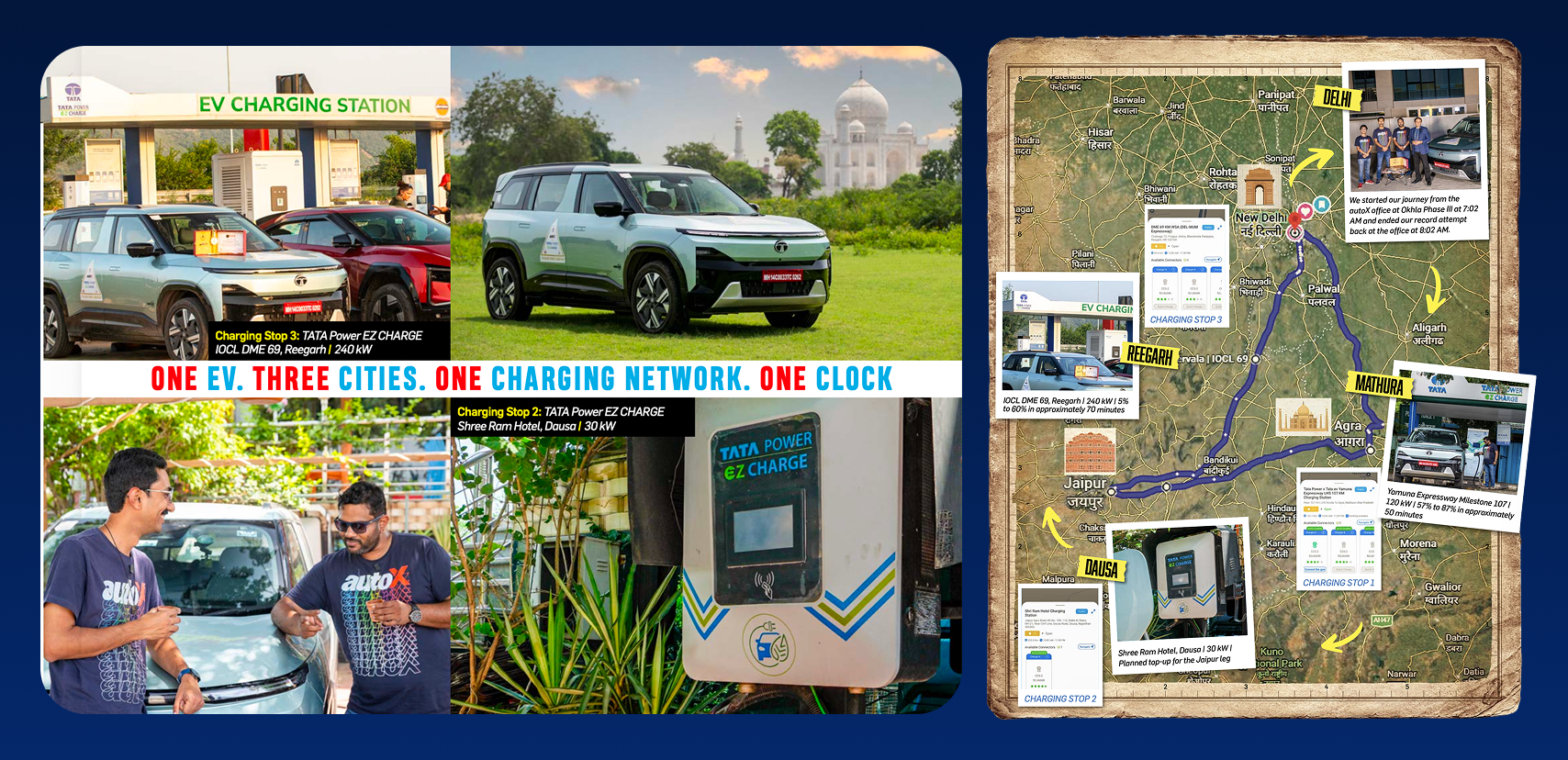
Imagine putting Delhi, Agra, and Jaipur on a road trip itinerary for the same day. Ambitious? Now add an electric car, three public charging stops, and a clock that keeps ticking even when the car is plugged in. That was the Golden Triangle EV road trip: a 732.5 km Delhi–Agra–Jaipur–Delhi circuit completed in just 13 hours. Suddenly, the question is not just Can the car make it? It is - Where do you stop, how much do you charge, and when do you get moving again?
On World EV Day, 9 September 2026, Tata Power EZ CHARGE and autoX turned those familiar EV road-trip questions into a real challenge: the Golden Triangle EV Record Drive. With autoX team members Kingshuk Dutta and Aakash Paul in a Tata Sierra EV, the plan was to travel from Delhi to Agra to Jaipur and back to Delhi, using public EZ CHARGE points along the way.
The result? An India Book of Records title. But the more interesting part is what happened between the start and the finish.
A great road trip starts long before you hit the highway
The route was straightforward on a map: Delhi to Agra, Agra to Jaipur, and Jaipur back to Delhi. But travelling that distance in an EV within a fixed time meant thinking a little differently about the journey.
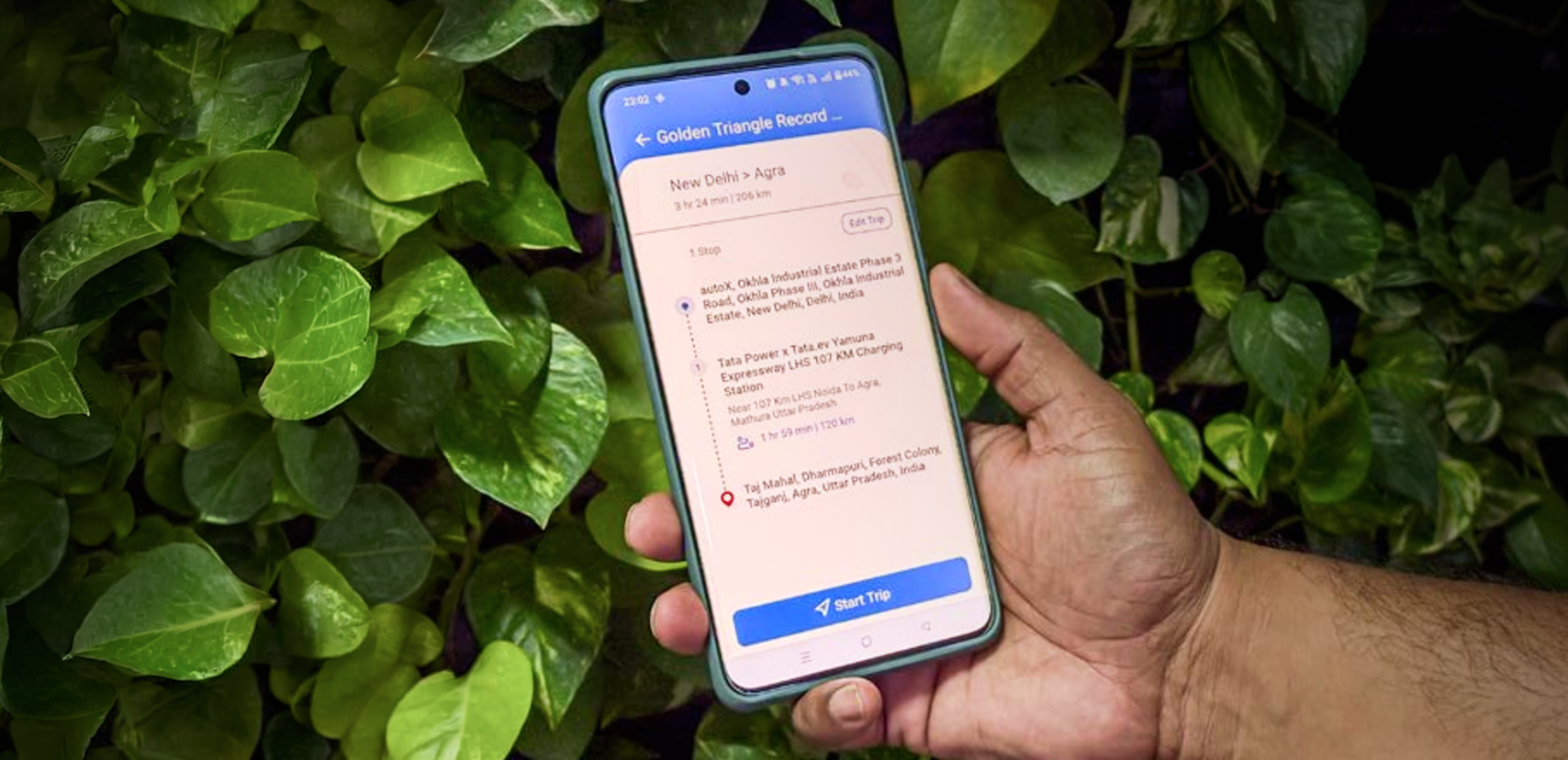
The team used the Tata Power EZ CHARGE app and Trip Planner to map charging options along the circuit. The idea was to identify stops that worked with the route, the battery levels, and the time available, rather than simply picking the most powerful charger.
The preparation involved three important considerations -
- Where to charge - Find stations along the planned highways without adding unnecessary detours.
- How much to charge - Carry enough energy for the next leg, allowing for the journey ahead.
- What if plans change - Identify alternative charging points before beginning the record attempt.
The final strategy was simple - fast charge, planned top-up, and fast charge.
| Journey leg | Planned Tata Power EZ CHARGE stops | Charger rating |
|---|---|---|
| Delhi → Agra | Yamuna Expressway, Milestone 107 | 120 kW |
| Agra → Jaipur | Shree Ram Hotel, Dausa | 30 kW |
| Jaipur → Delhi | IOCL DME 69, Reegarh | 240 kW |
Three charging stations with three different purposes. With the route sorted and the record clock ready, it was time to get moving.
Delhi to Agra: A strong start and a smart first charging stop
7:02 AM. Okhla Phase III, Delhi. The Tata Sierra EV began its journey with approximately 92% battery. Ahead lay the Yamuna Expressway and the first stop on a circuit that would eventually span more than 730 km.
By 8:45 AM, the team reached the Tata Power EZ CHARGE point at Yamuna Expressway Milestone 107, where a 120-kW charger was available. The battery stood at approximately 57%, leaving the team with an opportunity to recharge before continuing towards Agra.
Here is how the first stretch unfolded -
- 7:02 AM: Departure from C-103, Okhla, Delhi, with around 92% battery.
- 8:45 AM: Arrival at Yamuna Expressway Milestone 107 with 57% battery.
- 9:35 AM: Departure from the charging stop with approximately 87% battery.
- 10:19 AM: Arrival in Agra with around 72% battery remaining
An interesting detail? The team did not wait for the battery to reach 100%. In the 50-minute stop window, it gained 30 percentage points and continued the journey.
For anyone planning an EV road trip in India, this offers a useful perspective. Charging need not always mean filling the battery completely. The more practical question is how much charge you need for the next stretch, with an appropriate reserve and the vehicle manufacturer's guidance in mind.
And that approach had worked for the first leg. The Sierra EV reached Agra with plenty of charge remaining for the onward journey.
The road-trip takeaway - A charging stop is most useful when it fits your next destination, not simply when it fills the battery to its maximum.
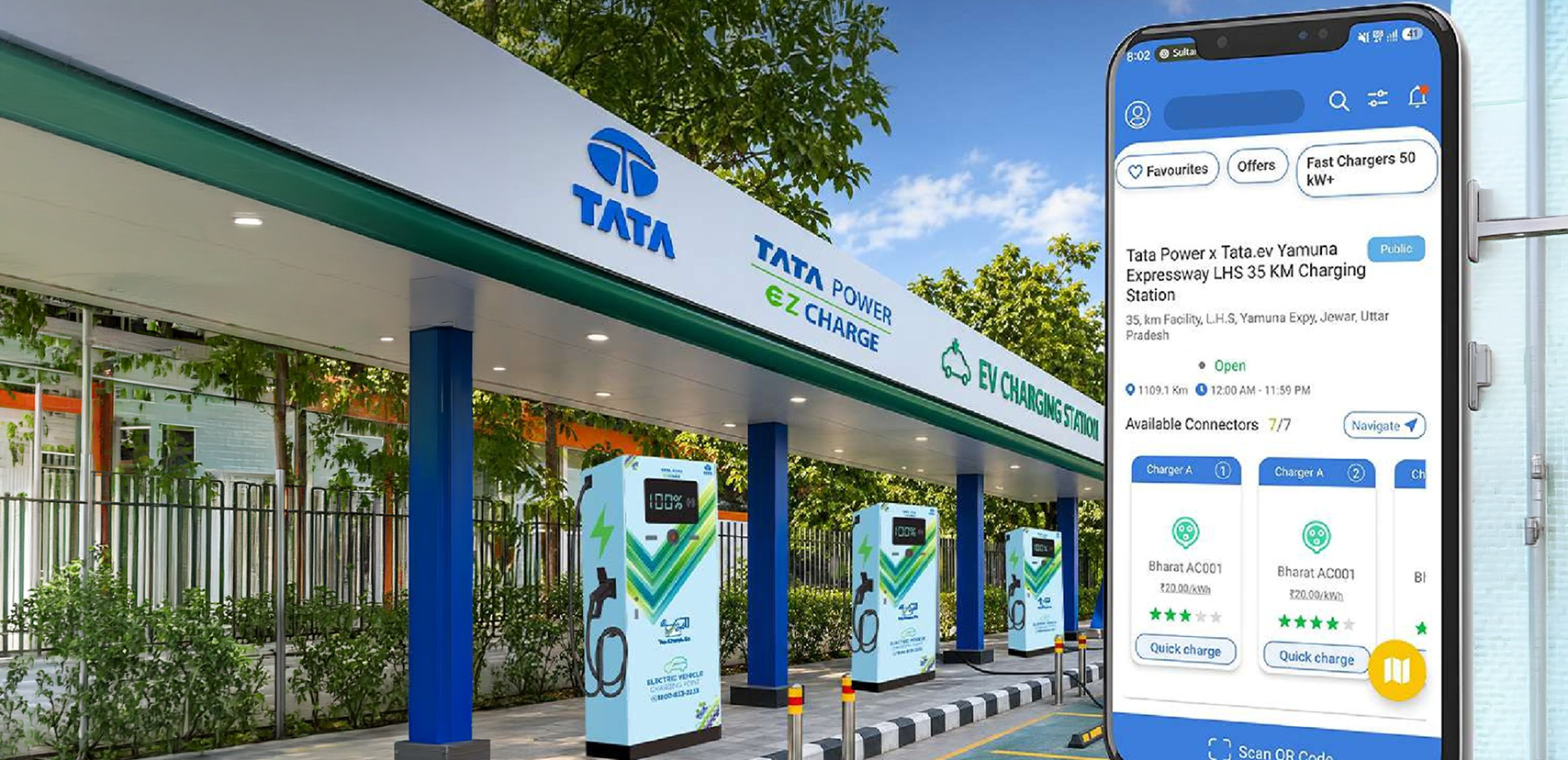
Strategic charging stops make longer electric journeys possible
Agra to Jaipur: Why a 30-kW charger was just as important
With Agra behind them, the team continued towards Jaipur. This section of the journey introduced a particularly interesting lesson about highway EV charging: sometimes, location matters just as much as charging speed.
At 1:10 PM, the Sierra EV arrived at Shree Ram Hotel in Dausa, with approximately 29% battery remaining. Unlike the 120-kW fast charger used earlier, this Tata Power EZ CHARGE station was rated at 30 kW.
On paper, it was a less powerful charger. On the road, it had an important role.
Located along the Agra–Jaipur section, the Dausa charging point offered a planned top-up without an unnecessary diversion from the route. It was not about chasing the highest charger rating. It was about choosing the right place to stop.
At 2:40 PM, the Sierra EV reached Jaipur with approximately 38% battery. All three cities on the Golden Triangle were now covered. The return leg to Delhi was next.
The Dausa stop also offers two useful insights for everyday EV travelers -
- The right location can be more valuable than a higher kW rating. A charger that fits naturally into your route can help avoid unnecessary driving.
- Different stops serve different needs. Some are suited to major fast-charging sessions, while others provide the top-up needed to reach the next destination.
That is what makes a charging network valuable for longer journeys. It is not only about having powerful chargers but also about having suitable charging options at useful points along the way.
The road-trip takeaway - Do not judge a charging station by its power rating alone. Sometimes, the best stop is simply the one in the right place.
Jaipur to Delhi: The final stretch brings the battery down to 5%
Three cities covered. One final journey back to Delhi. And the most striking battery reading of the day was still to come.
After reaching Jaipur, the team began the return leg towards Delhi, travelling via the Delhi–Mumbai Expressway. By 4:45 PM, the Sierra EV arrived at its third Tata Power EZ CHARGE stop, IOCL DME 69 in Reegarh, with approximately 5% battery remaining.
Fortunately, this was a planned charging location. The Reegarh station had a 240 kW-rated charger, making it the highest-rated charger used during the record attempt.
The final charging stop in numbers -
| Charging detail | At Reegarh |
|---|---|
| Arrival battery | 5% |
| Departure battery | 60% |
| Charge gained | 55 percentage points |
| Charger rating | 240 kW |
| Stop window | 4:45 PM to 5:55 PM |
The 70-minute stop at Reegarh saw the battery charge from approximately 5% to 60%, enabling the team to resume its final leg towards Delhi at 5:55 PM. The stop highlighted how advance route planning and well-identified charging points can support long-distance EV journeys, while reinforcing the value of maintaining a comfortable battery reserve for everyday travel.
The road-trip takeaway - The more you know about your next charging option, the more confidently you can plan the road ahead.
Back in Delhi, 13 hours later: A new record takes its place
At 8:02 PM, the Tata Sierra EV returned to Delhi, completing the Golden Triangle circuit in exactly 13 hours.
The journey earned Tata Power EZ CHARGE and autoX the India Book of Records title for the Fastest Completion of the Golden Triangle Circuit by an Electric Car.
The final numbers tell the story at a glance -
| The Golden Triangle EV Record Drive | Final result |
|---|---|
| Route | Delhi → Agra → Jaipur → Delhi |
| Total distance | 732.5 km |
| Total elapsed time | 13 hours |
| Public EZ CHARGE stops | 3 |
| Lowest recorded battery level | 5% |
| Record date | 9 September 2026 |
An important distinction in this achievement is between the Record Clock and the Charging Clock. The Record Clock captures the entire 13-hour journey, from 7:02 AM to 8:02 PM, including driving and three charging stops.
The Charging Clock measures only active charging time, which requires separate verification. For instance, the 50-minute Yamuna Expressway stop does not necessarily mean 50 minutes of charging. The achievement highlights how strategic charging locations and digital route planning can enable long-distance EV travel.
Driving into the record books with Tata Power EZ CHARGE
Planning an EV road trip? Take these six lessons along
The Golden Triangle drive offers useful lessons that can make everything from a weekend getaway to a longer highway holiday easier to plan, and for you to enjoy an electric road trip.
1. Make charging stops part of your itinerary
Just as you would plan your destinations and rest breaks, identify the important charging stations before leaving. A little preparation can save unnecessary decisions during the journey.
2. Choose the location, not just the charger rating
A 240-kW charger may sound more appealing than a 30-kW charger, but location, compatibility, and route deviation matter. The Dausa stop is a useful example of a lower-powered charger serving a specific travel need.
3. You do not always need a 100% battery
Think about how far you need to travel before your next stop. Charging to an appropriate level, while following manufacturer's guidance and retaining a sensible reserve, may be more practical than waiting for a full charge every time.
4. Always know where you can charge next
Before leaving one charging station, check out the options further along your route. This is particularly useful on longer highway stretches where charging locations may be more spread out.
5. Keep an alternative charging point in mind
Traffic, road conditions, or charger availability can change. Knowing another compatible charging location gives you greater flexibility if the original plan needs to be adjusted.
6. Use smart tools to take the guesswork out of the drive
The Tata Power EZ CHARGE app and Trip planner can help travelers -
1. Discover compatible Tata Power EZ CHARGE stations along a planned route
2. Compare route options and possible charging stops.
3. Check relevant charger information and availability.
4. Select stops and save a personalized journey plan.
The key is to make these decisions while planning your journey, then check out the latest charging information before setting off and as needed along the way.
Bottomline
The finish line was in Delhi, but the bigger story goes well beyond it. The Golden Triangle EV Record Drive showed how charging stops can become part of the adventure, opening up more possibilities for travelers who love the freedom of the open road.
For Tata Power EZ CHARGE and autoX, it was a record worth celebrating. For EV travelers, it is a reason to look at the highway with fresh excitement.
Because the most exciting thing about this record isn't the distance covered. It's the journey this event inspires next.

Frequently asked questions
The frequently asked questions section is a reliable source for unlocking answers to some of the most crucial inquiries. Please refer to this section for any queries you may have.
- Solaroof
Open the Tata Power EZ CHARGE app, enter your starting point and destination in Trip Planner, and explore the suggested routes. You can compare distances, estimated travel times, and charging stations, select suitable stops, and save your journey. This helps you prepare your charging plan before setting off.
Yes. Tata Power EZ CHARGE Trip Planner allows you to filter charging stations by connector type and availability. You can identify compatible chargers along your selected route and check which ones are currently available. This helps you make informed charging decisions before and during a long-distance EV journey.
Yes. Tata Power EZ CHARGE Trip Planner displays alternative routes, including options marked as the fastest route or the route with the highest number of charging stations. You can compare estimated travel time, distance, and charging options before selecting the route that best suits your journey.
Tata Power EZ CHARGE Trip Planner lets you set how far you are willing to deviate from your main route, with detour options ranging from 1 to 20 km. The app then displays compatible charging stations within your selected range, helping you choose convenient stops without adding unnecessary distance to your journey.
Yes. The Trip Planner's edit stops feature allows you to add or remove selected charging stations without creating a new journey. Your route plan updates to reflect the changes, giving you flexibility to adjust charging stops as your travel requirements evolve.
Yes. Once you have selected your preferred route and charging stations, Tata Power EZ CHARGE Trip Planner lets you save the journey for future reference. You can revisit your planned stops before or during your trip, making it easier to organize longer highway journeys.
Keep reading...
View all