


 Contact us
Residential rooftop and housing societies


Sections
- Introduction
- Different rooftop solar subsidies in Maharashtra
- What are the rates of solar panel subsidies in Maharashtra?
- Who can claim a solar subsidy in Maharashtra?
- Which systems qualify for a solar subsidy in Maharashtra?
- Residential rooftop subsidy explained
- How to apply for a solar subsidy in Maharashtra
- Other central govt. solar subsidies in Maharashtra
- Tata Power’s contribution to Maharashtra’s solar journey
- Bottomline
Introduction
Solar energy in Maharashtra is becoming more accessible and affordable thanks to the solar subsidy in Maharashtra and other government incentives. Installing a home solar system can reduce your upfront costs by as much as 40-50% in some cases through the solar panel subsidy 2025. As of 31 July 2025, Maharashtra has achieved an impressive 1,608.71 MW of grid-connected rooftop solar capacity, driven largely by residential adoption. This growth is fueled by both Central and State government efforts, including popular programs like the solar rooftop scheme Maharashtra and the PM Surya Ghar: Muft Bijli Yojana, which provide subsidized electricity through rooftop solar installations.
Wondering how this works and how you can benefit? In this blog, we break down all the details from rooftop solar subsidy in Maharashtra rates and eligibility criteria, to a step-by-step guide on how to apply for solar subsidy in Maharashtra. Read on to see how these incentives (plus contributions from industry leaders like Tata Power) are making green energy a smart choice for people to join the solar movement.
Different rooftop solar subsidies in Maharashtra
Maharashtra residents can tap into several government-backed solar subsidy schemes that make going solar much cheaper. The main categories include -
Residential Solar Subsidy Maharashtra (PM Surya Ghar Yojana)
Benefit: Significant upfront financial assistance reduces the cost of installing rooftop solar systems for homeowners and housing societies.
PM Surya Ghar Muft Bijli Yojana is a central government initiative providing financial assistance for home rooftop solar systems. This solar panel government subsidy in Maharashtra is implemented via the state DISCOM (MSEDCL) and offers hefty upfront discounts (more on the rates below). It’s aimed at homeowners and housing societies to lower their solar installation costs.
Agricultural Solar Pump Subsidy (PM-KUSUM / Saur Krushi Pump Yojana)
Benefit: Enables farmers to affordably switch to solar-powered irrigation pumps, drastically cutting electricity bills.
A scheme for farmers to solarize irrigation pumps. Under Maharashtra’s “Magel Tyala Saur Krushi Pump Yojana”, farmers pay only 10% (general category) or 5% (SC/ST) of a solar pump’s cost, and the rest ~90% is subsidized by the central + state governments. This enables affordable daytime power for agriculture with virtually no electricity bills.
Group housing society solar subsidy Maharashtra
Benefit: Helps group housing societies reduce common-area electricity expenses by subsidizing large-scale solar installations.
Housing societies in Maharashtra can claim subsidies for common-area solar installations. The central CFA (Central Financial Assistance) covers these at ₹78,000 per kW for communal systems up to a cap (max 500 kW per society). This helps apartments and resident associations reduce their shared power costs through solar.
What are the rates of solar panel subsidies in Maharashtra?
How much subsidy on solar panels in Maharashtra can you get? Here’s a quick look at the subsidy on solar panel in Maharashtra for rooftop systems, combining the central incentive and any state support -
Central Subsidy (All India)
₹30,000 per kW for the first 2 kW, and ₹18,000 per kW for the 3rd kW (up to 3 kW total). In practical terms, that’s ₹60,000 for a 2 kW system and ₹78,000 total for 3 kW or above. This central subsidy (40% of benchmark cost up to 3 kW, 20% beyond 2 kW) is the same across India and is capped at ₹78,000 per household.
Maharashtra state top-up
Maharashtra has provided an additional state subsidy on top of the central CFA to further reduce costs. According to recent reports, the state subsidy ranges from ₹25,000 up to ₹60,000 depending on system size. Smaller systems get a lower top-up, while a 3 kW system can get the max ₹60,000 from the state. Combined with the central share, this means a Maharashtra homeowner could receive over ₹1.3 lakh in total subsidies for a 3 kW setup. (This essentially covers roughly 60-70% of a typical 3 kW system cost.)
Subsidy caps
The subsidies above apply to system capacities up to 10 kW (for individual homes). There’s no extra subsidy beyond 3 kW in central funds (maximum ₹78,000), and Maharashtra’s top-up similarly maxes out at ₹60,000 by 3 kW. For larger residential systems (4 - 10 kW), you still get the same maximum ₹78,000 + ₹60,000 combined benefit, effectively a smaller percentage of the total cost as size increases. Housing societies (RWA/GHS) installing bigger shared systems get 20% CFA up to 500 kW (₹7,294 per kW as per central rates).
Agriculture and rural supply related schemes
Beneficiary | What you actually install | Capacity eligible for support | CFA you get |
Maximum cap
| Where to apply |
PM-KUSUM Component B (standalone solar pumps) | Off grid solar water pumping system for irrigation where grid is absent or unreliable | As per MNRE pump norms, typically up to 7.5 HP | 30% of eligible cost | As per benchmark or discovered cost |
|
PM-KUSUM Component C – Individual Pump Solarisation (IPS) | Solarise an existing grid connected agri pump. Surplus daytime energy can be exported to DISCOM | PV capacity up to 2 times the kW rating of the pump | 30% of eligible solar PV cost | Not a fixed rupee cap. Applies on eligible plant cost elements |
|
Feeder-level solarisation (MSKVY 2.0 under KUSUM) | Decentralized solar plants near agri feeders that supply daytime power to many farms | Typically, 0.5 to 25 MW per project near substations, sized for feeder load | 30 percent CFA on plant cost up to ₹1.05 crore per MW under PM KUSUM feeder solarisation | As above for plant level CFA. Tariff, grants and facilitation are defined in MSKVY 2.0 features |
|
What are the rates of solar panel subsidies in Maharashtra? (With comparison to other states)
Maharashtra offers attractive subsidies by combining central and state incentives to make rooftop solar affordable:
State | Central Govt Subsidy (CFA) | State Subsidy | Total Subsidy | Notes |
Maharashtra | ₹30,000/kW for first 2 kW, ₹18,000/kW for 3rd kW (up to 3 kW) | ₹25,000 to ₹60,000 top-up based on system size | Up to ₹1.3 lakh for 3 kW systems | State subsidy maxes at 3 kW; group housing societies get 20% CFA up to 500 kW |
Delhi | ₹30,000/kW for first 3 kW | No additional state subsidy | ₹90,000 for 3 kW systems | Subsidy capped at 3 kW |
Karnataka | ₹30,000/kW for first 3 kW | Additional ₹10,000 per kW (up to 3 kW) | Up to ₹1.2 lakh for 3 kW | State subsidy adds a significant boost |
Tamil Nadu | ₹30,000/kW for first 3 kW | No fixed state subsidy; varies regionally | ₹90,000 for 3 kW systems | Incentives through local DISCOMs |
Rajasthan | ₹30,000/kW for first 3 kW | Varies; some districts offer additional incentives | Around ₹90,000 or more | Strong state support in select areas |
Key Points:
- The central subsidy is uniform across India, generally ₹30,000 per kW for the first 2 or 3 kW, then ₹18,000 for the next kW.
- State subsidies vary widely, with Maharashtra offering one of the highest top-ups.
- Subsidies typically cap at 3 kW for individual residential systems; larger systems still benefit but with smaller subsidy percentages.
- Group housing and agricultural systems have different subsidy rules and higher capacity limits.
This comparison helps you see how Maharashtra’s solar subsidy stacks up against other states, making it one of the more generous schemes available.
Who can claim a solar subsidy in Maharashtra?
Residential rooftop
1. Must be a grid-connected rooftop system tagged to a residential consumer number in Maharashtra.
2. Use domestically manufactured modules and cells (DCR) to be eligible for CFA.
3. Apply only via the National Portal, choose a vendor registered with your DISCOM, and meet technical specs in the scheme.
4. A shadow-free rooftop or equivalent space is needed to set up the solar PV system.
5. You should own the property (or have legal rights) where the solar panels will be installed.
GHS/RWA
1. A separate common-area connection in society. Capacity up to 500 kW counted at 3 kW per house, with a subsidy of ₹18,000/kW.
Farmers (PM-KUSUM)
1. For standalone solar pumps and grid-connected pump solarisation, eligibility and quotas are managed on the MNRE/State portals. Maharashtra runs farmer-facing portals for applications and shortlisting.
Which systems qualify for a solar subsidy in Maharashtra?
System size limits
The solar subsidy in Maharashtra applies to systems ranging from 1 kW up to 10 kW capacity per individual house. While larger systems can be installed, the subsidy is capped at the first 10 kW. For group housing societies, systems up to 500 kW (calculated at 10 kW per flat) are eligible for the Central Financial Assistance (CFA) on common facilities. This outlines the systems eligible for solar subsidy in Maharashtra clearly for homeowners and societies alike.
Approved components and vendors
To qualify for the subsidy, solar equipment must meet prescribed standards, such as using ALMM-listed solar modules and BIS-certified inverters as per MNRE guidelines. Importantly, installations must be done by MNRE-approved or empaneled vendors; DIY or unregistered installers are not eligible. These vendors assist applicants in ensuring their system meets the necessary criteria.
Grid-tied systems only
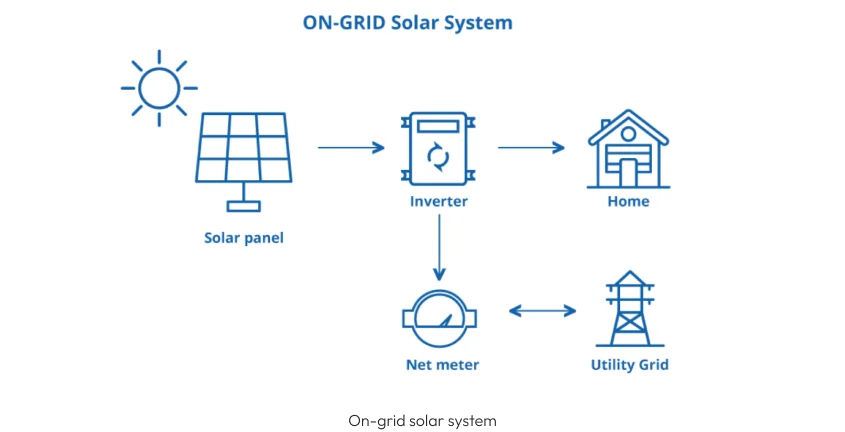
The subsidy program focuses exclusively on grid-connected solar systems in Maharashtra that are net metered. Off-grid systems with battery backup generally do not qualify, except for farmers under the KUSUM scheme, where standalone off-grid solar pumps are subsidized. For residential users, having a grid-tied solar setup with net metering is essential to qualify, allowing surplus energy to be exported back to the grid.
Residential solar subsidy in Maharashtra explained - Slabs and savings
Let’s break down how the home solar system subsidy in Maharashtra translates into savings for a typical homeowner. The subsidy works on a slab system based on your solar plant’s capacity -
Central government subsidy (CFA)
1. For systems up to 2 kW: ₹30,000 per kW.
2. For the next 1 kW (2–3 kW): ₹18,000 per kW.
3. Maximum subsidy: ₹78,000 for systems of 3 kW and above.
Central Government Subsidy (CFA) Slabs | Subsidy Amount (₹ per kW) |
Systems up to 2 kW | ₹30,000 per kW |
Next 1 kW (2 – 3 kW) | ₹18,000 per kW |
Maximum subsidy for systems ≥ 3 kW | ₹78,000 total |
Example costs after subsidy
1. 2 kW system (cost ~₹1.6 lakh): ₹60,000 subsidy reduces net cost to ~₹1 lakh.
2. 3 kW system (cost ~₹2.1–2.5 lakh): ₹78,000 subsidy brings cost down to ~₹1.3–1.7 lakh.
3. 5 kW system (cost ~₹3.3 lakh): ₹78,000 subsidy lowers cost to ~₹2.5 lakh.
System Size | Approximate Cost Before Subsidy (₹) | Subsidy Amount (₹) | Approximate Cost After Subsidy (₹) |
2 kW | 1,60,000 | 60,000 | 1,00,000 |
3 kW | 2,10,000 – 2,50,000 | 78,000 | 1,32,000 – 1,72,000 |
5 kW | 3,30,000 | 78,000 | 2,52,000 |
MNRE has also defined benchmark costs for reference: ₹50,000 per kW for the first 2 kW and ₹45,000 per additional kW (special-category states have slightly higher benchmarks). This is a reference to help you judge fair pricing on the portal.
Slashing electricity bills
With net metering, solar generation offsets your consumption, and exports earn credit. Many households cut their bills by 90% or more. A 3 kW plant produces 300+ units a month, often wiping out bills completely. Over its lifetime, the system can save lakhs in electricity costs while protecting against tariff hikes.
Disclaimer: All savings mentioned are based on central government rates.
How to apply for a solar subsidy in Maharashtra
Ready to go solar and wondering how to get a solar subsidy in Maharashtra for your rooftop system? The application process is now quite streamlined. Follow these steps to apply for solar subsidy in Maharashtra under the PM Surya Ghar Rooftop Solar Yojana.
Visit the National portal
1. Go to the National Portal for Rooftop Solar.
2. Click “Apply for Rooftop Solar” on the homepage.
Register your account
1. Sign up using your mobile number and email.
2. Select Maharashtra as your state and your local DISCOM (e.g., MSEDCL, Tata Power).
3. Receive OTP on the SANDES app, activate your account via email, and log in.
Enter consumer details
1. Log in and start a new application.
2. Enter your electricity consumer number (from your bill).
3. The portal will verify your residential connection and eligibility.
Fill out the application form
1. Provide your name, address, and proposed rooftop solar capacity (in kW).
2. Choose an MNRE-approved vendor from the portal’s list.
3. View vendor ratings and indicative prices before finalizing.
Upload the required documents
1. Latest electricity bill.
2. AADHAAR card (or valid ID) linked to the connection.
3. Proof of property ownership (property tax receipt/sale deed).
Application review & approval
1. DISCOM reviews feasibility (e.g., net metering readiness, transformer capacity).
2. They may request a site inspection.
3. Once approved, you’ll get the go-ahead for installation.
Install the solar system
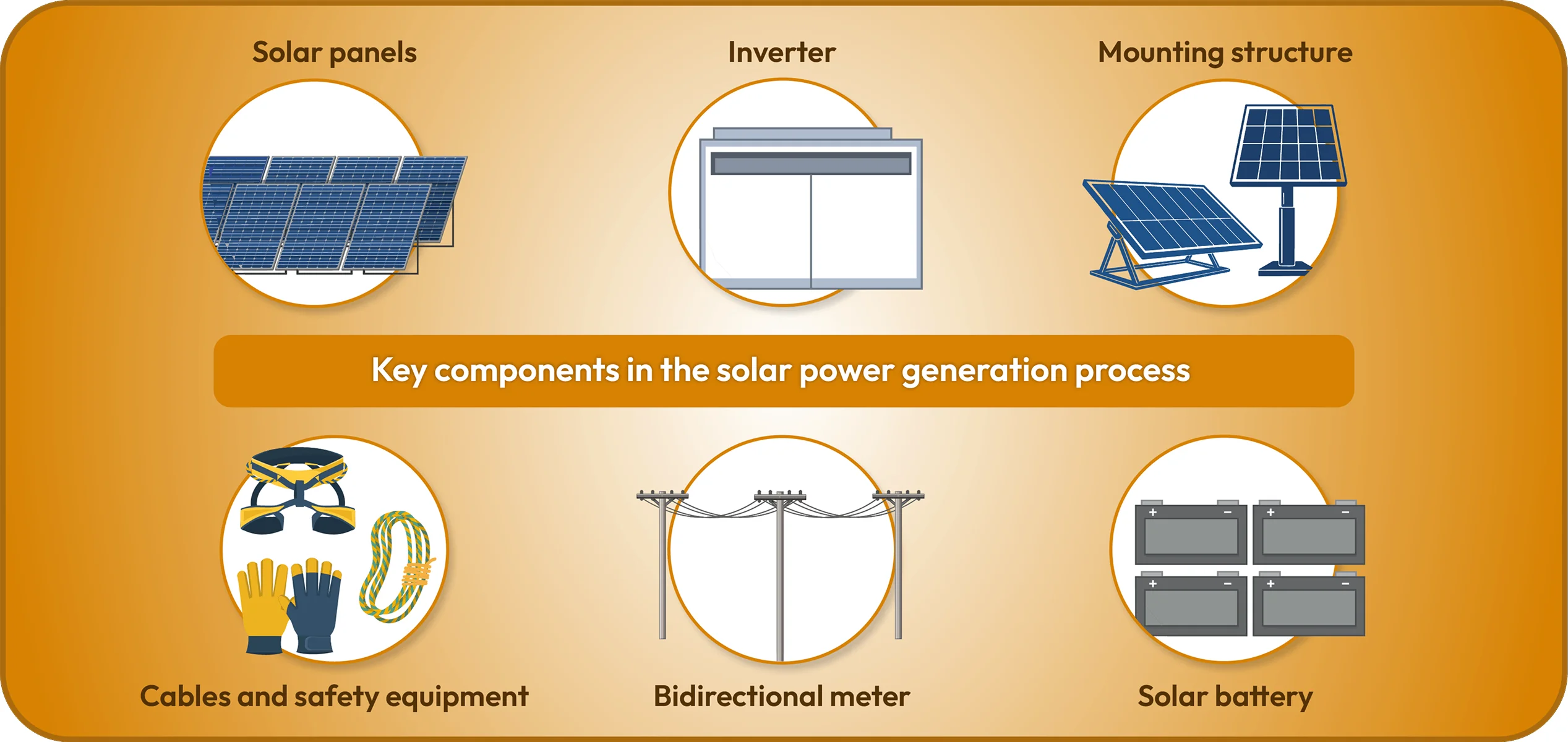
1. Vendor supplies and installs panels, inverter, and mounting structure.
2. Use only empaneled vendors and approved equipment.
3. Inform DISCOM after completion to schedule inspection.
Net metering & commissioning
1. DISCOM inspects the installed system.
2. Replaces your meter with a net meter.
3. Issues a commissioning certificate once connected to the grid.
Submit for subsidy disbursement
1. Log in to the portal and update installation details (date, capacity)
2. Provide bank account details (account no, IFSC, cancelled cheque)
3. Upload the commissioning certificate and project report.
Receive the subsidy amount
1. DISCOM and MNRE verify your documents.
2. Subsidy (central CFA + state top-up) is credited directly to your bank account within 30 days.
3. You’ll get an SMS/email confirmation when it’s credited.
By following these steps carefully, homeowners can easily complete their solar subsidy application in Maharashtra without hassle. Taking advantage of this subsidy not only makes solar power more affordable but also contributes to a greener Maharashtra. So, start your application today and take a confident step towards sustainable energy savings!
Other central govt. solar subsidies in Maharashtra
PM-KUSUM
PM-KUSUM makes solar irrigation affordable for Maharashtra’s farmers. Under Component B, new standalone solar pumps (3–7.5 HP) are provided at 5%–10% of the cost, with the rest covered by central and state subsidies plus concessional loans or grants, forming a key part of the PM Kusum scheme Maharashtra. Under Component C, existing grid-connected pumps are solarized so farmers can sell surplus power to DISCOM for additional income.
In Maharashtra, Component C is implemented through the Mukhyamantri Saur Krushi Vahini Yojana, which installs solar plants to supply daytime power for agriculture while enabling farmers to earn from excess generation. Farmers can apply for the solar pump subsidy Maharashtra via the Maharashtra Saur Krushi portal or through District Agriculture Officers.
PM KUSUM Component-A (Small solar power plants)
Another opportunity under PM KUSUM allows rural entrepreneurs or farmer groups to set up decentralized solar power plants (up to 2 MW) on barren land and sell power to the grid. The government offers guaranteed offtake and facilitation, though not an upfront subsidy, and DISCOMs get incentives to buy this power. In Maharashtra, this is being promoted to increase farm incomes - farmers can lease their land or use part of it for solar farming. It’s a more involved scheme but with long-term revenue potential.
State tax exemptions
While not a direct subsidy, the Maharashtra government provides some incentives like property tax rebates for solar-equipped homes in certain municipalities and electricity duty exemptions for solar generation. These add minor financial benefits to solar owners. Check your local civic body’s policy. E.g., Pune offers up to 5% property tax rebate for properties with solar, which is a nice perk.
Net metering and generation incentives
Maharashtra supports net metering up to 500 kW for rooftop solar, ensuring you get credited for excess generation (at retail tariff rates). This isn’t a cash subsidy, but it greatly affects the economics in your favor by eliminating bills and even letting you carry credits forward. In some past years, there were limited Generation-Based Incentives (GBI) from state/central agencies (like ₹1–2 per unit for initial years) for early adopters, but the current focus has shifted to an upfront subsidy instead of GBI. Keep an eye out for any new GBI or incentives that are announced for special consumer categories.
Tata Power’s contribution to Maharashtra’s solar journey
Channel partner & solar installer
Tata Power Solar, the company’s renewable arm, is an MNRE-approved vendor that has installed thousands of rooftop systems nationwide. In Maharashtra, Tata Power has leveraged its vast presence to facilitate residential solar installations under the subsidy program. They offer end-to-end solar solutions - from site assessment to installation and maintenance, making it easier for consumers to adopt solar with confidence.
Innovation and financing
Tata Power introduced the “Ghar Ghar Solar” campaign in 2025 to boost rooftop uptake in Maharashtra. Through this initiative, they offer solar systems at ultra-low upfront costs (allowing households to pay only ~1/3rd of the cost in easy installments) to complement the government subsidy. This innovative model, alongside tie-ups with over 20+ banks/NBFCs for solar loans, addresses the remaining financial barrier after subsidies. Tata Power’s approach has provided easy financing, insurance, and long-term service to solar customers, ensuring the systems perform optimally for 25 years.
Reach and impact
Tata Power’s distribution companies serve about 12.8 million consumers across Mumbai, Delhi, Odisha, and Ajmer; in Maharashtra, its Mumbai distribution unit supplies over 7.6 lakh consumers. Through Tata Power Solaroof’s network of 500+ partners across 275+ districts, the company deploys rooftop systems statewide and beyond.
As of July 2025, it had installed roughly 775 MWp of rooftop capacity in Maharashtra, serving 27,910 customers. Backed by 30+ years of solar EPC experience, Tata Power continues to scale adoption.

Bottomline
Here is the big picture: sunlight is free, and now the path to using it is simple. With the solar subsidy in Maharashtra, a rooftop system costs less, pays back faster, and shields you from bill shocks. You get cleaner power, steady comfort during outages, and the quiet pride of making your own electricity. The steps are straightforward. Check the MNRE portal, review your DISCOM checklist, and talk to a trusted installer. One small start today can unlock years of savings and a lighter footprint. Say yes to a roof that earns its keep and a future that runs on sunshine.
Frequently asked questions
The frequently asked questions section is a reliable source for unlocking answers to some of the most crucial inquiries. Please refer to this section for any queries you may have.
- FAQ
It depends on your charging access and driving. EVs have an advantage in terms of per-km cost, maintenance, and taxes, since GST on EVs is 5 percent. Hybrids work well if you cannot install a charging station yet or do long highway trips. Central purchase incentives today focus on EVs under the PM E-DRIVE scheme.
Conventional hybrids (HEVs) do not need to be plugged in. Their batteries charge from braking and the engine. Plug-in hybrids (PHEVs) can be charged from a socket or public charger and then switch to petrol when the battery is low.
There is a difference in the EV vs hybrid maintenance cost in India. EVs usually have lower maintenance costs because there is no engine oil, fuel system, or exhaust, and regenerative braking reduces pad wear. Multiple analyses and explainers note meaningful savings compared with petrol vehicles. Hybrids still have engine maintenance needs. Your actual costs vary by model and usage.
India follows BIS IS 17017 standards for AC and DC charging. Most new passenger EVs support CCS-2 for DC fast charging. Bharat DC-001 exists for some earlier vehicles. Public stations typically offer a mix of AC posts and DC fast chargers to cover different cars.
Yes, slow home charging using a standard single-phase supply is common, although a dedicated wall box is safer and faster. India’s updated Ministry of Power guidelines support private, semi-public, and public charging roll-outs nationwide. Check with your housing society or DISCOM for practical installation steps for EV charging at home in India.
Most companies offer EV battery warranties in India. Tata Motors now provides a lifetime HV battery warranty for specific models like Curvv.v and Nexon.ev 45 kWh, while many others list around 8 years or 160,000 km. Always check the specific model’s terms before buying.
Global assessments show EVs have the lowest life-cycle greenhouse gas emissions, even on grids that still have coal. PHEVs reduce emissions compared with petrol cars, and the gap grows as electricity gets cleaner and as PHEVs run more of their kilometers on electricity.
Sources
1. PM-KUSUM (Pradhan Mantri Kisan Urja Suraksha evam Utthaan Mahabhiyan) Scheme
2. Top Five Solar Panel Government Subsidies to Avail in India
3. ESR’s claim of beneficiaries of property tax discount for green buildings norms compliance doubling under PMC questioned
4. STANDARD OPERATING PROCEDURE (SOP) For INSTALLATION & COMMISSIONING Of ROOFTOP SOLAR SYSTEM
5. Guideline for claim of Generation Based Incentive (GBI)
6. Tata Power launches ‘Ghar Ghar Solar’ in Pune
7. https://cdnbbsr.s3waas.gov.in/s3716e1b8c6cd17b771da77391355749f3/uploads/2025/08/20250813106816407.pdf
Keep reading...
View all