Introduction

Electric vehicles are changing how we think about mobility, but charging efficiency and battery health remain key concerns for most owners. Simple habits such as maintaining the right charge range, avoiding extreme temperatures, and using reliable charging equipment can significantly improve performance over time. Many drivers also look for practical tips to reduce EV charging time so that charging fits smoothly into their routine without unnecessary delays.

Understanding how to reduce EV charging time is not just about speed. It is about smarter charging choices that protect your battery while improving convenience. In the following guide, we break down practical, easy-to-follow steps that can help you charge smarter and drive with greater confidence.

Different ways to charge an electric vehicle the right way

Charge speed determines how seamlessly your EV integrates into your life. If you’re charging overnight at home, speed might not matter. But if you drive long distances or use your EV for work or need to rely on public chargers, speed matters greatly. When faster charging reduces your EV charging time, you spend less time waiting and more time driving, making long trips easier, schedules predictable, and EV ownership far more stress-free.

Knowing how long your ev charging time will be can help you determine where to stop and how long you should break for each leg of your trip. Charging speed also translates directly into peace of mind when owning an EV.

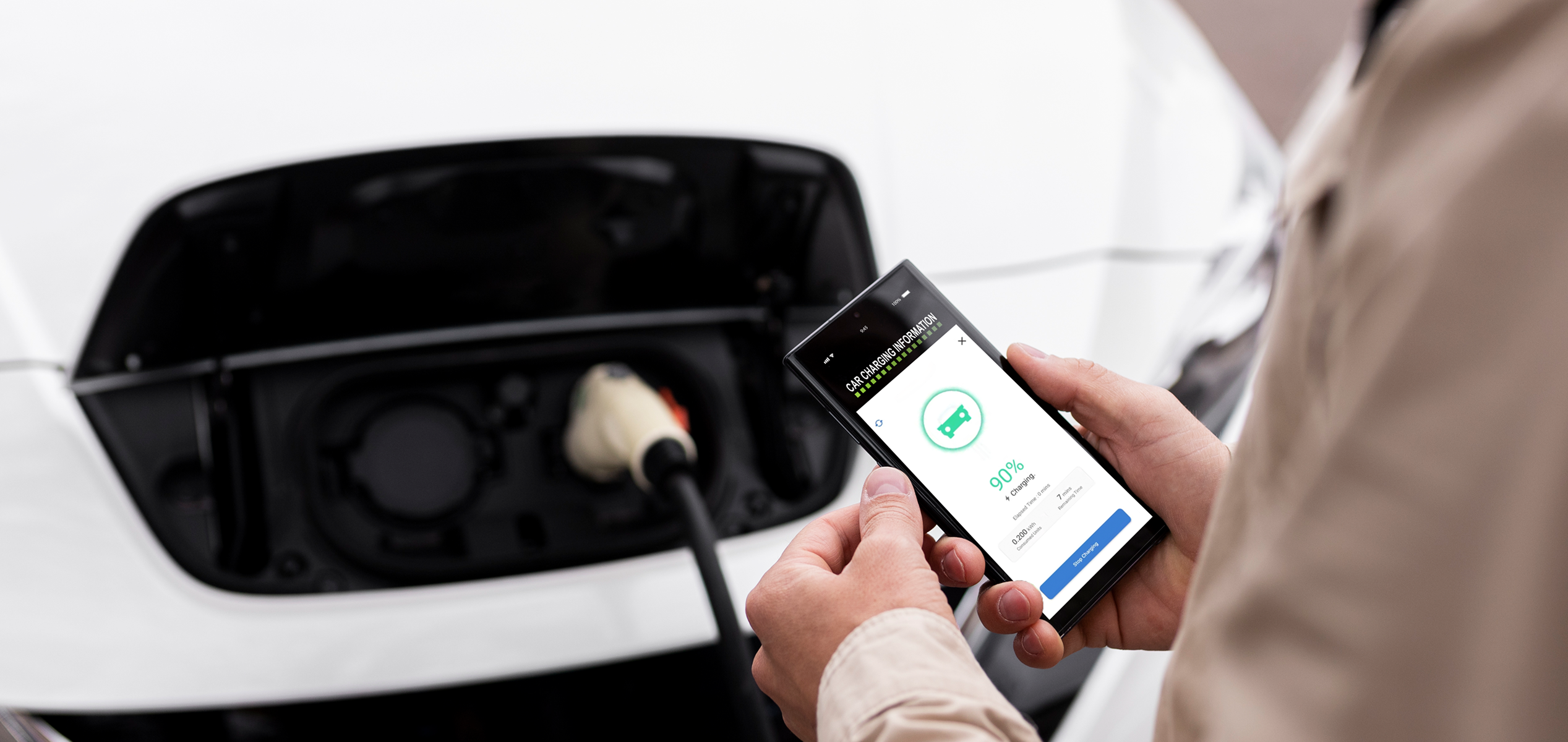
EV charging status displayed during charging session

Key factors that determine EV charging time

What affects EV charging time

EV charging time changes from one situation to another. It depends on your charger, your car, and even the conditions around you. To understand why charging feels fast some days and slow on others, you need to look at the real-world factors that control it.

Power of EV chargers – Chargers operating at a higher kilowatt level will charge faster than lower kW chargers. A Level 1 or slow AC charge at home (3.5 kW) might require overnight charging. Charging with a fast DC charger (50 kW+) will reduce charging time significantly.

Battery capacity and design – Large batteries store more energy but also require more charge. It will likely take less time to fully charge the smaller battery of a basic EV compared with a larger battery used to increase the range of an SUV, for example.

State of charge of battery – Charging an EV battery is not a constant rate. The first 0-80% charge will happen much quicker. As you get closer to 100%, the charging process will slow down to help prolong the life of the battery.

Car charging capacity – If the fastest charge rate your EV accepts is 50 kW, but you plug into a 150-kW charger, your charging rate will be limited to 50 kW. The vehicle will only draw what it is configured to accept.

Ambient temperature - Temperature subtly affects how quickly a battery can accept charge. Excessive heat or cold can slow down charging, either to prevent damage to the battery or due to slower chemical reactions inside. As such, ev charge time is often fastest during temperate, consistent weather.

Different ways to reduce EV charging time

EV charging does not have to be a waiting game. With a few thoughtful choices, you can make your charging routine faster and more predictable. These simple habits help you get more driving and less downtime from every charge.

Choose the right charger for your routine - A dedicated home charger (up to 22 kW AC) is much faster than a basic socket and makes overnight charging efficient.

Avoid charging to 100 percent - Charging gets slower when above 80 percent. Charging only as much as you need for the next day keeps turnaround times shorter.

Plan fast charging stops for long trips - DC fast chargers available at public stations provide large amounts of power. They can significantly reduce total charging time when compared to AC charging.

Time your charging - Heat can reduce charging efficiency. Charging overnight or early morning allows for cooler temperatures.

EV battery care - Proper battery maintenance, including avoiding repeated deep discharges, will help you maintain optimal charge efficiency.

The goal isn’t faster charging alone; it’s making ev charging so effortless that it never dictates your day

How long does it take to charge an EV?

EV charging time plays a key role in shaping the overall ownership experience, setting expectations around convenience, planning, and daily usability.

Actual ev charging time varies based on the charger used and the vehicle being charged. When plugged into a slow AC adapter at home, such as a wall socket, a full charge often requires leaving the vehicle plugged in overnight, mostly 8-12 hours. Home charging using a dedicated wall box or public AC station (usually ranging from 7 kW to 22 kW) can reduce charging time to approximately 3–6 hours for most vehicles. Charging from a DC fast charger through a network like Tata Power EZ CHARGE will charge most EV batteries to about 80 percent capacity in about 30 to 60 minutes, depending on the vehicle, charger power, battery capacity, and ambient temperature.

Comparing charging time across EVs

Smaller EVs with smaller battery packs generally charge faster than large SUVs. For example, a small city EV might charge from empty to full in 4-6 hours at home and less than an hour using fast charging. A larger long-range EV with a larger battery may require 7-9 hours of charging at home, but can still typically charge to 80 percent capacity in around 40-50 minutes using fast chargers. Performance EVs that offer support for high-power charging can charge to 80 percent in less than 30 minutes when using compatible chargers. Charger speed isn't everything; vehicle configuration plays a role, too.

ModelBattery size (approx.)Home/AC charging (to 100%)DC fast charging (to ~80%)
Tata Nexon EV45 kWh~6 h 30 min (7.2 kW AC)~56 min @ 50 kW DC fast charger
Hyundai Kona Electric39.2 kWh6 h 10 min~57 min @50 kw DC fast charger
Tata Tiago EV24 & 19.2 kWh~2.6 hours (19.2 kWh) to 3.6 hours (24 kWh) (10% to 100%) - 7.2 kW AC
~6 hours 54 mins (19.2 kWh) to 8 hours 40 mins (24 kWh) (10% to 100%) - 15a home socket AC charger
~58 min @50 kW DC fast charger
Mahindra BE 659 & 79 kWh~8.7 hours (59 kWh) to 11.7 hours (79 kWh) - 7.2 kW AC charger~20 min @ 140 kW DC fast charger
Mahindra XEV 9e59 & 79 kWh~8.7 hours (58 kWh) & ~11.7 hours (79 kWh) (7.2 kW AC charger)~20 min @ 140 kW DC fast charger
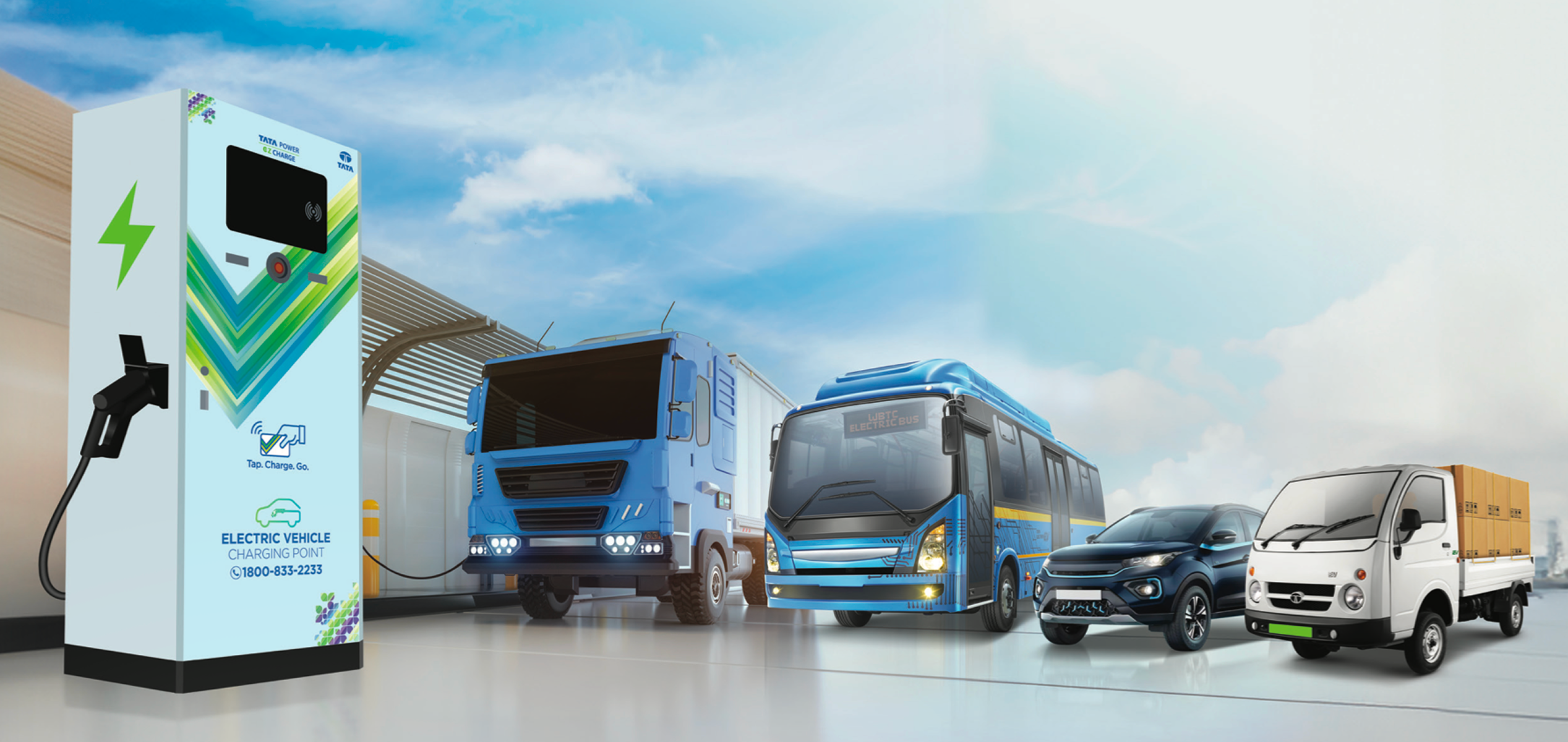
Tata Power EZ Charge public EV charging station

Find the charging level that fits your EV needs

Which charging level suits you best?

Each charging level is not ideal for everyone. It all depends on your commute distance, parking location, and time you typically have to charge. Owning an EV can be pretty effortless when you find the right charging configuration that works with your lifestyle.

Level 1 (Slow AC) - Household electrical outlets. Ideal if you drive less miles and can charge overnight. However, this will take the longest amount of time to charge an EV.

Level 2 (Fast AC) - Residential home chargers or workplace chargers that are up to 22 kW. These are great options for when you need a medium of charging time and convenience.

Level 3 (Fast DC) - Public charging that provides high amounts of direct current. Ideal if you need to charge quickly on long trips or if you have a fleet of EVs that you want to charge quickly.

Choosing the right combination depends on your daily distance, parking situation, and charging network access.

The best way to calculate EV charging time

If you want a ballpark estimate of how long it'll take to charge your vehicle, there's a simple calculation you can use. It'll provide you with an estimate that you can use to better plan your day and eliminate any unexpected surprises.

EV charging time formula

Battery capacity (kWh) ÷ Charger power (kW) = Approximate charging time (hours)

Step 1 - Know your battery capacity

Check your vehicle battery capacity in kilowatt hours. For instance, a typical EV battery size is around 40 kWh.

Step 2 - Know your charger wattage

Determine the charger wattage rating you are using, typically noted in kilowatts. A standard residential charger wattage is about 7 to 8 kW.

Step 3 - Divide capacity by charger watts

Take the battery capacity and divide by your charger wattage. Example - 40 kWh ÷ 8 kW = ~5 hours.

This will give you an ideal time frame. Keep in mind that most charging slows considerably as the battery reaches closer to full, typically at 80 percent.

Real world conditions will vary because charging speed changes through the session, especially around higher state of charge percentages. This method helps create a basic expectation of how long your car will need energy.

Bottomline

Understanding ev charging time demystifies one of the biggest concerns for new EV buyers. Charging is not one fixed value, but a range of experiences shaped by your vehicle, the charger you use, and how you drive each day. With India’s EV infrastructure expanding rapidly, public fast chargers and well-planned home charging setups make EV ownership smooth and practical. Knowing what affects charging and how to optimize it puts you in control of your EV journey.

Disclaimer

The information provided in this blog has been compiled from multiple sources, including official company websites and other publicly available open-source platforms, believed to be reliable at the time of publication. However, such information may change over time, may not always reflect the most current developments, and may become outdated.

This content is intended solely for general informational purposes and should not be construed as professional, technical, financial, or legal advice. Tata Power does not guarantee the accuracy, completeness, or reliability of the information presented and shall not be held responsible for any loss or damage arising from reliance on this content.

Readers are advised to independently verify information from relevant official sources and conduct their own due diligence before making any decisions based on the content of this blog.

Frequently asked questions

The frequently asked questions section is a reliable source for unlocking answers to some of the most crucial inquiries. Please refer to this section for any queries you may have.


The charging time for an ev car using fast DC chargers can be reduced significantly for most electric vehicles. Fast charging can typically recharge batteries up to 80 percent in about 30 minutes to 1 hour. Drivers can take a break or stop for food while still receiving a large boost of range. Fast chargers can come in handy while traveling on highways or just charging your EV for long journeys.


Level 1 or home AC chargers offer consistent and lower power chargers for overnight charging or daily commuting needs. These chargers will typically take many hours to fully charge an EV's battery. Level 2 or DC fast chargers supply more power, which reduces the time required to charge an EV. Instead of using the vehicle's onboard limitations, these chargers supply direct current for charging.


Most daily commuters will be well-served with a home charger (>7 kW). This allows for faster overnight charging than a standard outlet and avoids fees associated with public chargers. This allows less reliance on public DC Fast Chargers and keeps ev charging time reasonable for daily driving.


Most current Tata EV models, including the Tiago EV, Nexon EV, and Tigor EV, support DC fast charging to varying degrees. They typically reach about 80 percent state of charge in under an hour on 50 kW to 60 kW chargers, helping reduce ev charging time significantly compared to AC charging.


Yes. Networks like Tata Power EZ CHARGE are growing across Indian cities and highways, offering both home and public charging options. These networks support a range of charger types from slow AC to fast DC units that help reduce ev charging time for both daily users and long-distance travelers.


Yes. Fast Charging tends to slow down in hotter weather. When temperatures reach a certain level, charging slows down so the battery cooling fans can kick in and cool down the cells. The inverse is true for cooler climates. This has a slight effect on ev charging time/driver expectations, depending on where you live.


Heat and voltage are controlled when the battery is charged to full capacity. Charging time slows down after approximately 80 percent capacity in order to ensure battery maintenance and life span. Although it does make the last bit of the ev charging time longer, it saves battery efficiency over time, allowing for a better ownership experience.