

 Contact us
| Benefit source | What it can provide | Depends on |
|---|---|---|
| Central government | PM E-DRIVE demand incentive | Vehicle category and scheme eligibility |
| State government | Purchase incentives, road tax and registration fee exemptions | State policy and vehicle eligibility |
| Tax system | Applicable GST treatment | Vehicle category and prevailing tax rules |


Sections
- Introduction
- Are EV subsidies and incentives available in India?
- What is the difference between an EV subsidy and an EV incentive?
- What central government incentives are available for EVs in 2026?
- How does the EV subsidy vary by state in India?
- Is there an electric car subsidy in India in 2026?
- How is Tata Power making EV charging more accessible?
- Bottomline
- FAQs
- Sources
Introduction
Are there EV subsidies in India in 2026? Yes, though there isn't one universal subsidy. Central government support comes mainly through PM E-DRIVE, a demand incentive scheme for select EV categories, while state governments layer on their own purchase incentives, road tax waivers and registration fee exemptions, so the benefit any individual buyer receives depends heavily on the vehicle and the state of purchase.
India's EV market grew 43% year on year in the first half of 2026, a period that overlapped with several new state policies coming into force. Here's a breakdown of what's currently available.
Are EV subsidies and incentives available in India?
EV subsidies and incentives in India are the financial and fiscal benefits, ranging from direct purchase discounts to tax exemptions and fee waivers, that lower the cost of buying or owning an electric vehicle. EV incentives in India come from three broad sources: central government schemes, state-level policies and tax-related benefits. The scope and value of each benefit depend on the vehicle, location and applicable rules.
What is the difference between an EV subsidy and an EV incentive?
An EV subsidy is a direct financial benefit that reduces the purchase price of the vehicle, most commonly the demand incentive paid out under a scheme like PM E-DRIVE. An EV incentive is the broader term, covering subsidies as well as tax benefits, road tax waivers, registration fee exemptions and other concessions that don't necessarily touch the sticker price directly.
| EV subsidy | EV incentive | |
|---|---|---|
| Cost impact | Can reduce the purchase cost | May reduce taxes, fees or ownership costs |
| Example | PM E-DRIVE demand incentive | Road tax or registration fee exemption |
| Provider | Usually offered under a specific government scheme | Can be offered through central or state policies |
| How it is received | May be adjusted at purchase or paid after eligibility checks | May be applied as a discount, waiver, exemption or reimbursement |
| Scope | Usually linked to a specific scheme | Can include subsidies, tax benefits, fee waivers and other support |
Electric vehicles attract a 5% GST rate, while conventional passenger vehicles are generally subject to a higher GST rate along with applicable compensation cess. That gap is a tax benefit rather than a subsidy, but it still lowers the total cost of ownership meaningfully.
What central government incentives are available for EVs in 2026?
The central government's incentive for EVs in 2026 is PM E-DRIVE, a demand incentive scheme run by the Ministry of Heavy Industries, working alongside the flat 5% GST rate applied across every EV category.
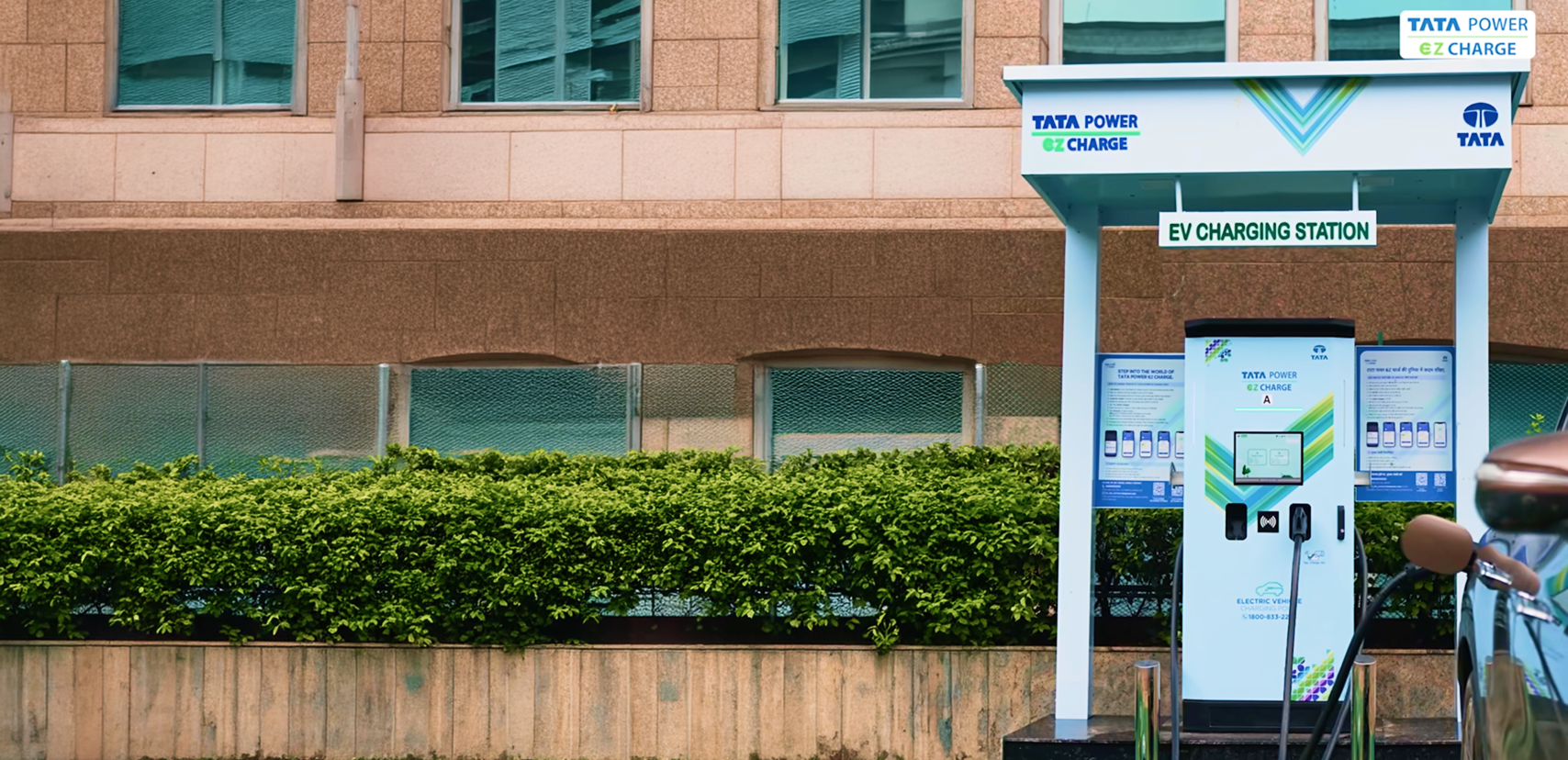
EV subsidies in India make switching to electric more affordable
What is PM E-DRIVE?
PM E-DRIVE, the PM Electric Drive Revolution in Innovative Vehicle Enhancement scheme, is the central government's current electric mobility programme, approved with an outlay of Rs. 10,900 crore and effective from 1st October 2024.
Which EVs are covered, and how much is the incentive?
PM E-DRIVE covers electric two-wheelers, three-wheelers including e-rickshaws and e-carts, e-ambulances, e-trucks and e-buses, plus a dedicated allocation for public charging infrastructure. Passenger electric cars are not covered, under this central subsidy. The incentive itself varies by category and is revised periodically. The L5 three-wheeler segment closed in December 2025 after hitting its target. As eligibility and incentive amounts may change by vehicle category, buyers should verify the latest scheme conditions on the official PM E-DRIVE portal before making a purchase.
| Vehicle type | Central PM E-DRIVE support | Key consideration |
|---|---|---|
| Electric 2-wheelers | ₹2,500 per kWh, capped at ₹5,000 per vehicle, subject to current scheme conditions | Eligible model, battery capacity and purchase date |
| Electric 3-wheelers | Applicable incentive varies by vehicle category and scheme conditions | Vehicle category, commercial use and eligibility |
| Electric cars | No universal central demand incentive | State policy, vehicle price and eligibility |
| Electric buses | Support available under relevant PM E-DRIVE components | Scheme, category and deployment conditions |
| Electric trucks | Support available under relevant PM E-DRIVE components | Vehicle category and scheme eligibility |
| E-ambulances | Support available under PM E-DRIVE | Scheme-specific eligibility |
How does it work, and how long is it available?
The incentive is processed through the PM E-DRIVE system as an upfront reduction in the purchase price, using an Aadhaar authenticated e-Voucher, rather than requiring the buyer to submit a separate reimbursement claim. The scheme has different timelines and allocations across vehicle categories, and individual categories may close earlier once their allocation is met. Buyers should check the latest PM E-DRIVE notification for the applicable category before making a purchase.
How does the EV subsidy vary by state in India?
State governments have their own EV policies, which may include purchase incentives, road tax or registration fee exemptions, scrappage benefits, or support for commercial EVs and charging infrastructure, and not every state offers all of these.
| State | Key EV benefit in 2026 | Benefit type |
|---|---|---|
| Delhi | 100% road tax and registration fee exemption on EVs priced up to Rs. 30 lakh, plus a Rs. 1 lakh scrapping incentive for the first 1 lakh eligible applicants | Tax and fee exemption, plus scrapping |
| Maharashtra | 100% road tax and registration fee exemption plus toll waivers on key expressways for all EVs; private car buyers no longer get a cash purchase subsidy, which is now reserved for commercial and taxi four-wheelers, up to Rs. 2 lakh | Tax and fee exemption (all buyers); purchase incentive (commercial only) |
| Gujarat | The per kWh purchase subsidy from the 2021 policy was discontinued in 2024; EVs currently pay a reduced 1% motor vehicle tax rather than a full exemption | Reduced tax rate |
| Karnataka | Rolled back its 100% road tax exemption on electric cars in April 2026; cars now pay a lifetime tax of 5 to 10% based on price, though electric two-wheelers remain exempt | Partial exemption (2W only) |
| Tamil Nadu | 100% road tax exemption on all EVs, extended through 31 December 2027 | Tax exemption |
| Uttar Pradesh | Road tax and registration fee exemption, but since October 2025 restricted to EVs manufactured, sold and registered within the state | Conditional tax and fee exemption |
| Odisha | Purchase incentive of up to Rs. 1.5 lakh for electric cars plus 100% road tax and registration exemption, currently extended to 30 September 2026 | Purchase incentive plus tax exemption |
| Assam | Purchase incentive of up to Rs. 1.5 lakh depending on vehicle category, plus a 5 year road tax exemption | Purchase incentive plus tax exemption |
Because state policies can change independently of central schemes, and sometimes move backward rather than forward as Karnataka and Gujarat show, buyers should verify the applicable incentive and eligibility conditions with their state transport department before purchase.
Is there an electric car subsidy in India in 2026?
There is no universal central purchase subsidy for electric cars in India in 2026, since PM E-DRIVE's demand incentives are limited to two-wheelers, three-wheelers, ambulances, trucks and buses.
State governments may still offer benefits for eligible electric cars, such as purchase incentives, road tax exemptions, registration fee waivers or scrappage incentives, though these vary widely, as the state comparison above shows.
But buying an EV is only the beginning. Knowing how to charge it matters too.
How is Tata Power making EV charging more accessible?
Subsidies can make an EV more affordable, but owning one also means having reliable access to charging. Tata Power EZ CHARGE addresses this need through a growing public charging network and solutions that support different EV use cases.
- Public charging through EZ CHARGE, with 5,500+ charging points across 550+ cities and towns.
- Reliable charging support with round-the-clock assistance and a focus on high charger availability.
- Charging infrastructure for businesses through EV Mitra, Tata Power's initiative with the State Bank of India, which supports businesses, fleet operators, property owners and fuel stations looking to set up EV charging stations.
For EV adoption to scale, making vehicles more accessible and making charging easier need to go hand in hand.
Whether you’re looking to charge at home, support a fleet or set up charging infrastructure for a business, the right solution depends on your requirements.

Your EV needs the right charging setup
Looking for charging at home, work or across a fleet? Let’s talk about what fits
Bottomline
Between a central scheme that keeps evolving, state policies that can move in either direction, and a GST rate that applies quietly in the background, the incentive available to any one buyer depends on the vehicle, the state and the date of purchase, not a single national number.
Before finalising a purchase, check the current status on the PM E-DRIVE portal and your state's EV or transport department website, since both are updated far more frequently than most secondary sources, including this one.
Frequently asked questions
The frequently asked questions section is a reliable source for unlocking answers to some of the most crucial inquiries. Please refer to this section for any queries you may have.
- Solaroof
No, PM E-DRIVE does not currently provide a demand incentive for electric cars. The scheme covers eligible electric two-wheelers, three-wheelers, e-ambulances, e-trucks and e-buses, along with charging infrastructure and testing agencies.
For eligible PM E-DRIVE vehicles, the dealer typically handles the e-voucher process digitally as part of the purchase. The dealer verifies the vehicle and buyer’s eligibility, collects the required details, generates the e-voucher and completes the required authentication or consent process. The applicable incentive is then processed through the dealership and reflected in the purchase transaction. Buyers should confirm the incentive amount and its treatment with the dealer before completing the purchase.
Yes, you may be able to combine a central EV subsidy with a state incentive on the same vehicle, if both schemes allow it. Eligibility and the conditions for combining benefits depend on the specific central and state policies applicable when you purchase and register the EV.
If an EV subsidy changes after you book your vehicle, the benefit you receive will generally depend on the scheme rules and the vehicle's eligibility on the relevant purchase or registration date. A booking by itself does not necessarily lock in the subsidy, so confirm the applicable terms with the dealer before completing the purchase.
Yes, commercial and private EVs can have different subsidy eligibility depending on the scheme and vehicle category. For example, under PM E-DRIVE, privately or corporately owned registered electric two-wheelers can qualify, while eligible electric three-wheelers are restricted to commercial use.
An EV subsidy applies separately from the 5% GST rate, so an eligible vehicle can receive a subsidy while also attracting the applicable GST rate. The 5% GST treatment is a tax measure, not a replacement for a direct electric vehicle subsidy.
State EV subsidy claims may require documents such as the purchase invoice, registration certificate, identity and address proof, bank details and proof of eligibility. The exact requirements vary by state and scheme, so check the relevant state portal or confirm the document list with the authorised dealer before applying.
Eligibility for an EV subsidy in India varies by scheme, and there's no single set of criteria that applies everywhere. Before applying, check whether you meet the relevant criteria.
Eligibility may depend on:
- Vehicle category
- Eligible vehicle model and manufacturer
- Vehicle price
- Battery capacity or technical specifications
- Purchase and registration date
- State of registration
- Private or commercial use
- Scheme availability and validity
Sources
- PM E-DRIVE Scheme, Ministry of Heavy Industries, Government of India
- Cabinet approves PM Electric Drive Revolution in Innovative Vehicle Enhancement (PM E-DRIVE) Scheme with an outlay of Rs.10,900 crore over a period of two years, PIB / PM India
- FAME India Scheme, Phase I and Phase II outlay and dates, PIB India
- India extends e-2W incentives under PM E-DRIVE scheme, increases total outlay, electrive.com
- Delhi EV Policy, Delhi Transport Department
- New Maharashtra EV Policy 2025: car subsidies, toll waivers explained, Autocar India
- Gujarat EV Policy 2026: Subsidies, Tax & Benefits Guide, Ecozaar
- Karnataka Govt Ends EV Tax Exemptions; Two-Wheelers Remain Unaffected, Angel One
- Breather for EV buyers: Full road tax exemption for EVs in Tamil Nadu extended by two years, Business Today
- Uttar Pradesh EV Policy 2026: Complete Guide to EV Incentives & Subsidies, Bolt.Earth
- EV Subsidy in Odisha 2026, MeraEV
- Assam EV Subsidy 2026, Cars, Scooters & Road Tax, EVSelect.in
- Electric Vehicle Incentives, NITI Aayog, e-AMRIT
- New report shows India's EV market grew by 43% YoY in 2026, EV Infrastructure & Energy News
Keep reading...
View all