


 Contact us
| Aspect | Details |
|---|---|
| Cost of solar power | ₹2.5–₹3 per kWh for residential solar energy |
| Cost of grid electricity | ₹8–₹9 per kWh on average for homes |
| Savings potential | Up to 60–70% reduction in charging costs by using solar energy instead of the grid |
| Payback period | Typically 4–6 years depending on system size and energy usage |
| Incentives and rebates | Government subsidies, net metering credits, and tax benefits available in many states |
| Base (Resource used to create) | Renewable energy and water are both widely available in India. |
| Future outlook | Increasing EV adoption and falling solar installation costs make solar EV charging increasingly cost-effective and sustainable |


Introduction
Did you know India gets more than 300 sunny days a year? That is a huge opportunity to harness the sun’s energy and charge your electric vehicle using solar power. Solar EV charging is more than just a technology trend; it is a practical solution to reduce electricity costs, lower carbon emissions, and gain energy independence. With the right setup, your rooftop or carport can power your EV sustainably while supporting India's clean mobility transition.
By combining solar panels for EVs with smart charging systems, homeowners and businesses can efficiently power their rides, making a significant impact on the environment and paving the way for a sustainable transportation future in India.
What is solar EV charging?
Solar EV charging is the process of using solar energy to charge electric vehicles. Instead of relying solely on electricity from the grid, solar panels capture sunlight and convert it into electricity that can power your car. This approach not only reduces charging costs but also lowers your carbon footprint, making it a sustainable alternative for daily commuting and long drives.
In India, solar EV charging can be implemented at home with rooftop solar panels or at public charging stations powered by solar arrays. Some innovative solutions include solar-powered carports and mobile units, providing flexibility for residential, commercial, and off-grid applications. By integrating solar energy and electric vehicles, you are not just charging a car, you are contributing to a cleaner, more efficient, and energy-independent future.
How does solar energy power EVs?
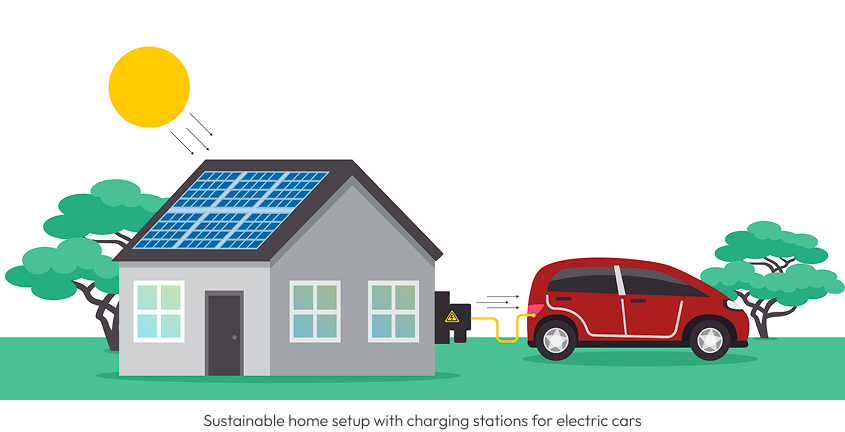
Whether you’re using rooftop solar for EV charging for your business, installing a solar-powered charging station, or exploring home solar EV charging, the core process remains simple: sunlight is converted into usable electricity that powers your electric vehicle. Here’s how the system works and the different ways it can operate once installed.
1. The process: How solar energy powers electric vehicles
Solar EV charging works through a straightforward energy conversion process:
- Solar panels for electric cars capture sunlight and convert it into direct current (DC) electricity.
- This DC power is routed through an inverter, which converts it into alternating current (AC) suitable for household use and EV chargers.
- The EV solar charger (or wall box) then channels this AC electricity into the vehicle’s battery.
- The result is clean, solar-powered EV charging that reduces reliance on grid electricity and lowers charging costs.
This setup enables a seamless transfer of solar energy to electric vehicles, making the charging process both sustainable and efficient.
2. How solar EV charging works after setup
Once your system is installed, solar charging for EVs can operate in several convenient ways:
- Home solar EV charging: Rooftop solar panels paired with smart EV chargers automatically use solar power first and switch to grid power when needed.
- Solar-powered charging station: Solar carports combine parking shelters with panels, generating energy while maximizing unused outdoor space.
- Off-grid or mobile solar-powered electric vehicle charging: Portable units with panels, batteries, and integrated chargers are ideal for remote or temporary locations.
- Hybrid solar + grid charging: Systems blend solar generation with grid backup, ensuring reliable charging during cloudy days or at night.
- Wireless solar-powered EV charging (emerging): Future-ready setups use solar-fed coils to deliver power without cables.
These different configurations of solar-powered EV charging offer flexibility, convenience, and long-term sustainability while supporting India’s shift toward clean mobility.
Why use solar to charge EVs?
Charging electric vehicles with solar energy is a practical and sustainable way to power your vehicle while reducing costs and environmental impact. Using sunlight to generate electricity allows homeowners and businesses to rely less on the power grid, achieve energy independence, and control their transportation energy needs. It also helps cut greenhouse gas emissions, supporting a cleaner and healthier environment.
Benefits of solar EV charging
By adopting solar EV charging, individuals and businesses can contribute to a cleaner, more sustainable future while enjoying practical advantages every day. The benefits of using solar power to charge electric vehicles include:
- Drastic carbon footprint reduction: Solar energy produces clean electricity, and EVs produce no tailpipe emissions, together significantly reducing carbon output.
- Cost savings: Solar energy is free, so charging your EV can reduce electricity bills compared to relying solely on grid power.
- Energy independence: Generate your own electricity and avoid fluctuations in grid prices or power outages.
- Cleaner air and healthier surroundings: Reduced reliance on fossil fuels improves urban air quality and public health.
- Sustainable use of renewable resources: Minimizes strain on non-renewable resources and supports a circular energy economy.
- Grid support: Bidirectional chargers and net metering allow excess energy to be fed back into the grid.
- Flexible charging locations: Systems can be installed at home, workplaces, or public spaces for convenient access.
- Backup power capability: Some setups allow your EV to supply power to your home during outages.
- Reduced fossil fuel dependence: Using solar for EVs lowers dependence on fossil fuels for transportation and electricity.
- Long-term savings: Initial setup costs are offset over time through reduced energy bills and government incentives.
- Supports India’s clean energy mission: Promotes green mobility and contributes to India’s renewable energy goals.
How many solar panels do you need to charge an EV?
The number of solar panels required to charge an electric vehicle depends on a few key factors, including:
- EV battery size
- Daily driving distance
- Solar panel wattage/output
- Local sunlight availability
For example, an EV with a 40-kWh battery typically needs around 10–12 standard solar panels to achieve a full charge in one day of good sunlight.
If you have a larger battery or drive longer distances daily, more panels will be necessary to meet your energy needs. Additionally, pairing your solar system with a home battery allows you to store excess energy generated during the day for charging at night or on cloudy days, ensuring your EV is always ready to go.
Do you need a special charger to use solar power?
Yes, to efficiently charge an electric vehicle using solar energy, you typically need an EV charger that can handle input from your solar panels. Most home solar systems generate direct current (DC) electricity, which is converted to alternating current (AC) by an inverter for use in standard EV chargers.
Key elements of a solar-compatible EV charging setup:
- EV solar charger / wall box: Designed to work with solar power and optimise charging.
- Solar inverter: Converts DC electricity from panels into AC power for the charger.
- Smart charging controls: Manage solar power, grid input, and home battery storage.
- Bidirectional capability (optional): Allows power to flow from the EV back to the home or grid.
- Load management features: Prevents overloading and ensures efficient use of available solar energy.
With the right charger, solar EV charging becomes seamless, reliable, and cost-effective. But the question arises, which type of charger to choose from the different types of solar EV charging systems in India. .
Solar EV Charging in India: Cost trends and savings
India is rapidly embracing clean energy as electric vehicles become more popular and solar technology grows more accessible. Rising electricity costs and environmental concerns are driving homeowners and businesses to explore solar EV charging as a sustainable alternative. By generating electricity from solar panels, EV owners can reduce reliance on the grid, lower their carbon footprint, and save on energy bills. In 2025, with falling solar costs, improved charging infrastructure, and supportive policies, solar-powered EV charging is both an eco-friendly and cost-effective solution for Indian consumers.
Investing in solar EV charging in India offers long-term financial savings, energy independence, and supports the country’s clean energy goals. Transitioning to solar-powered EVs is becoming more feasible and economically attractive in 2025.
Bottomline
Solar EV charging is a practical and sustainable way to power your vehicle using clean, low-cost energy. With options ranging from home rooftop systems to solar carports and commercial stations, it offers flexibility, long-term savings, and reduced environmental impact. As India accelerates its shift toward renewable energy and EV adoption, integrating solar into your charging routine is one of the easiest ways to move toward a cleaner and more independent energy future.
Frequently asked questions
- FAQs
Yes, solar EV charging is cost-effective in India. Because electricity tariffs are rising while the cost of rooftop solar has decreased, charging an electric car with solar panels for electric cars can significantly reduce lifetime charging expenses. Once installed, the per-unit cost of solar energy becomes very low, making solar charging for EVs an economical long-term option.
Home solar EV charging typically costs between ₹1.2 lakh and ₹2.5 lakh in India. The price depends on system size (1.5–3 kW for basic use), quality of the EV solar charger, and whether you add a hybrid inverter or battery backup. A rooftop solar for EV charging setup can vary by location and load requirements, but most homes fall within this cost range.
Yes, EVs can run fully on solar energy when the solar system generates enough power to match daily charging needs. A 3–5 kW system can typically provide enough solar energy for many electric vehicles used for regular city driving. While cars don't usually have solar panels built-in, a home-based solar powered EV charging setup can comfortably power most daily commutes.
The main limitations of solar EV charging are dependence on sunlight, space requirements, and slower charging speeds. Solar powered charging stations generate less power during cloudy weather, require sufficient rooftop area, and may not support very fast charging unless paired with grid power or storage. Despite these limits, the benefits of solar EV charging systems still outweigh drawbacks for most households.
Yes, solar-powered EV charging systems are well-suited for Indian homes. India’s high solar irradiation makes solar energy and electric vehicles a strong combination, especially in cities with good rooftop space. Most detached homes and independent floors can easily install solar panels for electric cars along with a standard home EV solar charger.
Solar-powered charging stations still work during cloudy days but at reduced efficiency. Output may drop by 30–60%, depending on conditions. Many households use a hybrid inverter so the system automatically switches between solar power and grid electricity, ensuring you can still charge an electric vehicle reliably even with weak sunlight.
An EV charges at the same speed as your charger rating allows, but solar power may limit the available output. A 3–7 kW home charger typically gives standard charging speeds, but if the solar output is lower than the charger’s demand, grid electricity fills the gap. A fully solar powered electric vehicle setup can deliver consistent charging if the system size matches daily usage.
Keep reading...
View all