


 Contact us
| Information | Details |
|---|---|
| Date | 9 September 2026 |
| Day | Wednesday |
| Theme | Switching Electric: driving down the cost of motoring |
| First observed | 9 September 2020 |
| Founder | Ade Thomas / Green.TV |
| Launch Partner | ABB |
| Nature of the campaign | Global, non-government-led campaign |
| 5 Cities initiative | Five cities are recognised as official World EV Day cities, working with city authorities and corporate partners on local events and activities |


Sections
- Introduction
- What is World EV Day?
- World EV Day 2026 at a glance
- When is World EV Day 2026?
- What is the theme for World EV Day 2026?
- What is the ‘5 Cities’ initiative for World EV Day 2026?
- Who founded World EV Day, and why?
- Why is World EV Day celebrated?
- How is India's EV landscape evolving?
- What can you do on World EV Day 2026?
- Tata Power and the journey towards electric mobility
- Bottomline
- FAQs
- Sources
Introduction
World EV Day, marked worldwide every September, has grown from a pandemic-era awareness campaign into one of the mobility sector's most closely watched annual moments, its origins, theme, and relevance to India all part of the story. The 2026 edition turns the spotlight on affordability, from running costs to the charging infrastructure that makes ownership practical, as India's own EV adoption curve steepens by the month.
India registered its highest-ever monthly EV sales in July 2026, with 3,27,901 units retailed, a jump of more than 66 percent over the previous year, enough that nearly one in every eight vehicles sold that month ran on a battery, according to FADA data. That kind of monthly acceleration, arriving as fuel prices stay volatile, is exactly the backdrop against which World EV Day 2026 unfolds.
What is World EV Day?
World EV Day is a global campaign built to accelerate the shift away from fossil fuel transport. It brings together automakers, policymakers, charging companies, and everyday drivers under one shared goal: moving electric mobility from a niche interest to the default choice.
World EV Day 2026 at a glance
World EV Day is a global campaign built to accelerate the shift away from fossil fuel transport. It brings together automakers, policymakers, charging companies, and everyday drivers under one shared goal: moving electric mobility from a niche interest to the default choice.
When is World EV Day 2026?
World EV 2026 will be observed on 9 September, like every year since 2020. In 2026, the campaign enters its seventh year, falling on a Wednesday, and draws on a following that has grown to include political attention as far afield as the UK Parliament and the White House's climate office.
Unlike many awareness days, World EV Day isn't tied to a single government or brand. It functions as a shared calendar fixture that the entire e-mobility ecosystem, from two-wheeler makers to national grid operators, chooses to show up for.
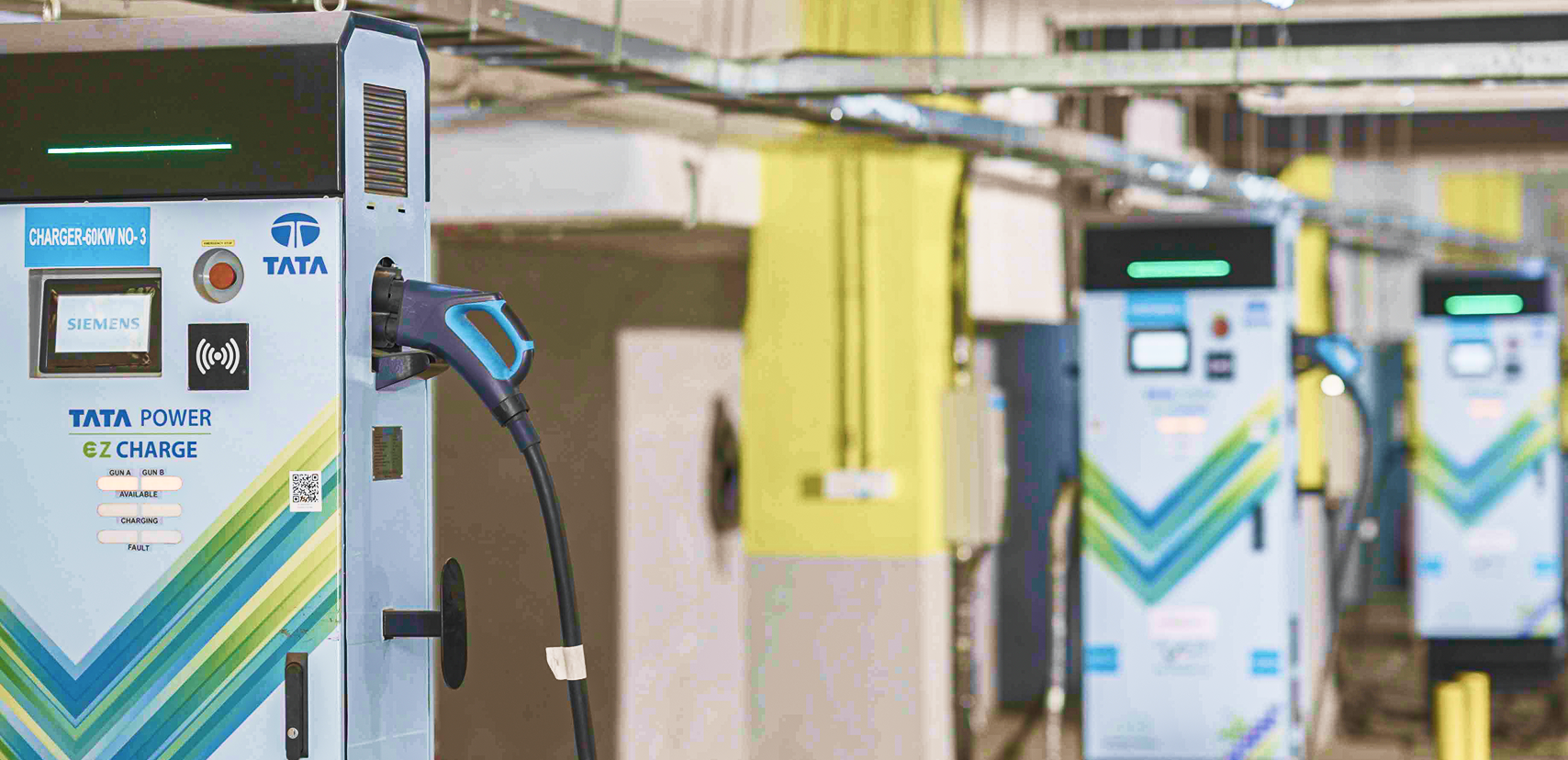
Marking World EV Day with a step towards electric mobility
What is the theme for World EV Day 2026?
The theme of World EV Day 2026 is “Switching Electric: driving down the cost of motoring”. This marks a deliberate shift from the more aspirational framing of previous years toward something rooted in household economics.
Oil prices have stayed volatile through 2026, and for many buyers, the decision to go electric now hinges less on environmental conviction and more on a straightforward comparison: the cost per kilometre of running a petrol vehicle against an electric one. The 2026 campaign leans into that arithmetic, reinforced by falling battery pack costs and a wider spread of affordable EV models than existed even two years ago. Whether the vehicle in question is a two-wheeler in a smaller city or a family SUV, the argument this year rests less on EVs being the responsible choice and more on them simply being the cheaper one.
What is the ‘5 Cities’ initiative for World EV Day 2026?
New for 2026 is the campaign's “5 Cities” initiative, which pairs five officially recognised World EV Day cities each year with corporate sponsors, translating the global campaign into locally led events, branding, and on-ground activations. Each participating city is expected to deliver three distinct events: one led by the city authority, one aimed at businesses, and one aimed at everyday drivers, all run jointly with the five corporate sponsors attached to that city.
The initiative brings the global campaign closer to local communities, with city-level events designed to turn the 2026 affordability theme into practical conversations and experiences around electric mobility.
Who founded World EV Day, and why?
World EV Day was founded in 2020 by the sustainability media platform Green.TV, in partnership with the technology company ABB. The timing was unusual: the campaign launched in the middle of a global pandemic, at a point when much of the world had just witnessed, briefly, what quieter streets and clearer skies could look like during lockdown. That image proved persuasive, and Green.TV and ABB used the moment to formally establish a recurring campaign built around it. The founders' intent was straightforward: raise public awareness of electric transport, and give policymakers, manufacturers, and consumers a shared occasion to commit to it, year on year, rather than treating the transition as a background trend with no fixed checkpoint.
Why is World EV Day celebrated?
World EV Day is celebrated to raise awareness about electric mobility and keep the transition towards cleaner transport in focus. Its relevance goes beyond EV adoption itself, touching on several environmental, economic and technological priorities.
Transport remains one of the largest contributors to pollution in dense cities, and electric vehicles remove tailpipe emissions from that equation entirely.
Air quality
Widespread EV adoption supports national and global targets to cut carbon output from road transport, one of the hardest sectors to decarbonise
Climate commitments
Reducing dependence on imported oil insulates economies, India included, from the price shocks that follow global supply disruptions
Energy security
Each edition of World EV Day tends to coincide with genuine advances in battery cost, charging speed, and vehicle range, rather than incremental marketing claims
Technology progress
With fuel prices behaving unpredictably, the monthly cost of running an EV against a petrol vehicle has become one of the more persuasive arguments for switching, sitting alongside the environmental case rather than competing with it
Household economics
How is India's EV landscape evolving?
India's EV story has moved well past the question of whether the technology will catch on. Electric vehicle sales crossed 24.5 lakh units in FY2026, growing roughly 25 percent year on year, with electric passenger cars alone surging over 80 percent and two-wheelers continuing to lead in absolute volume. Government support has played a genuine role in this shift, through schemes such as FAME (Faster Adoption and Manufacturing of Electric Vehicles) and production-linked incentives aimed at building domestic battery and vehicle manufacturing capacity. The more telling change, though, is happening on the ground. India's public charging network crossed 27,000 stations in 2026, nearly four times what it stood at just three years earlier. That growth remains uneven, concentrated in a handful of states, with Karnataka and Maharashtra leading on density. The direction, though, is unmistakable: charging infrastructure has stopped being the constraint it once was and has started becoming a genuine enabler of adoption, particularly as operators shift focus toward keeping chargers reliably functional rather than simply installed.
For someone weighing all this for the first time, though, the infrastructure conversation can still feel abstract, charger types, speeds, and where to actually plug in are details that rarely make it into headline numbers. If you think you know everything there is to know about EV charging in India, here is a guide that will challenge you.
What can you do on World EV Day 2026?
Participating doesn't require owning an EV, or even planning to buy one soon. A few simple options make the day easy to engage with, wherever you are.
- Attend a test drive: Many cities host pop-up test drive events around 9 September, offering a low-pressure way to experience an EV for the first time.
- Look out for charging offers: Charging point operators frequently run free or discounted charging promotions on the day itself.
- Join an awareness event: Colleges, workplaces, and public spaces often host talks or exhibitions on electric mobility around the same window.
- Talk to an EV owner: Real experiences, on savings, charging routines, or daily range, tend to shift opinion more effectively than most campaigns manage on their own.
- Explore your options online: This is as good a week as any to compare models, running costs, and charging access before making a decision.
Tata Power and the journey towards electric mobility
India's transition to electric mobility is about more than getting more EVs on the road. It also depends on building charging infrastructure that makes electric mobility practical for everyday use, longer journeys and different charging needs. Tata Power EZ CHARGE is helping support this transition with a network designed around accessibility, convenience and reliability:
- Wherever you drive, a charger is rarely far away: Public, semi-public, and fleet charging points now span more than 700 cities and towns across India.
- One app for every kind of charging: Home installation, public stations, and highway fast-chargers are all managed through a single network, so there's no juggling between providers.
- Works with most EVs on Indian roads: Standard AC and DC connectors support a wide range of brands, so the network isn't locked to any one manufacturer.
- Built for real journeys, not just city driving: Live charger status, advance slot booking, and a trip planner help map out charging stops before a long drive, not during one.
- Backed by decades of power infrastructure experience: With round-the-clock monitoring and support behind the network rather than a rented-out grid of unmanaged chargers.
As EV adoption grows, this infrastructure will play an important role in making the transition to cleaner transport easier to embrace and sustain. Through its charging network and solutions for different use cases, Tata Power EZ CHARGE is helping bridge the gap between the ambition of electric mobility and the practical needs of the people and businesses adopting it.

Ready to make the green switch?
Find a reliable EV charging solution that fits the way you live, work, and travel everyday
Bottomline
World EV Day will not, on its own, fix urban air quality or make petrol prices irrelevant. What it does, reliably, is force a once-a-year reckoning with how far electric mobility has actually come. This year, with the cost argument finally tilting in EVs' favour, that reckoning feels less aspirational and more overdue. Whether the next vehicle in your driveway is still a few years away or already under consideration, 9 September 2026 is as good an occasion as any to take stock.

Frequently asked questions
The frequently asked questions section is a reliable source for unlocking answers to some of the most crucial inquiries. Please refer to this section for any queries you may have.
- FAQ
Yes, World EV Day is held on 9 September every year. While the date remains the same each year, the campaign's theme, initiatives, activities and participating organisations may vary.
The first World EV Day was celebrated in 2020. It was launched by Green.TV in partnership with ABB to raise awareness about electric mobility and encourage the transition to electric transport.
Yes, World EV Day covers all forms of electric mobility, including electric two-wheelers, passenger cars and commercial vehicles. The campaign looks at the wider transition to electric transport rather than focusing on a particular vehicle category.
Businesses can participate in World EV Day by organising awareness activities, showcasing electric mobility solutions, hosting EV-related events or supporting charging initiatives. Companies can also use the occasion to engage employees, customers and other stakeholders in conversations around electric mobility.
World EV Day is not an official government or United Nations observance. It is a global campaign initiated by Green.TV and supported by organisations across the electric mobility ecosystem, with participation from businesses, policymakers and other stakeholders.
Sources
- World EV Day, Official Site
- About World EV Day
- World EV Day launches '5 Cities' initiative for 2026, Electric Drives
- India records highest monthly EV sales in July 2026, up 66% YoY: FADA, The Tribune
- EV Charging Stations India 2026: State-Wise Map, MeraEV
- India EV Sales FY26: Record 24.5 Lakh Units Sold, EVINDIA
Keep reading...
View all