


 Contact us
Tata Power combines rooftop solar and storage for greater energy control


Sections
- Introduction
- When rooftop solar begins working beyond daylight hours
- What makes battery storage an important part of the equation?
- Storage designed around different energy requirements
- Tata Power’s PowerHub takes storage to larger businesses
- Why long-term solar value extends beyond installation
- Making the transition financially easier for businesses
- PM Surya Ghar is taking solar adoption to more homes
- Bottomline
- FAQs
Introduction
Independence has always been about having greater control over the choices that shape our lives. Today, that idea is extending to something every home and business depends on daily: energy.
As India celebrates its 79th Independence Day, a new opportunity for energy independence is taking shape. Rooftop solar already allows consumers to generate electricity where they use it. Add battery storage, and that solar power can also be saved for later, giving households and businesses greater control over when and how their clean energy is used.
By bringing rooftop solar together with advanced battery storage solutions, Tata Power Solaroof is helping consumers generate, store and consume more of their own clean electricity, while reducing dependence on the grid and conventional backup systems. Tata Power Solaroof currently serves more than 5 lakh rooftop solar consumers across India and aims to reach 30 lakh consumers by 2029.
When rooftop solar begins working beyond daylight hours
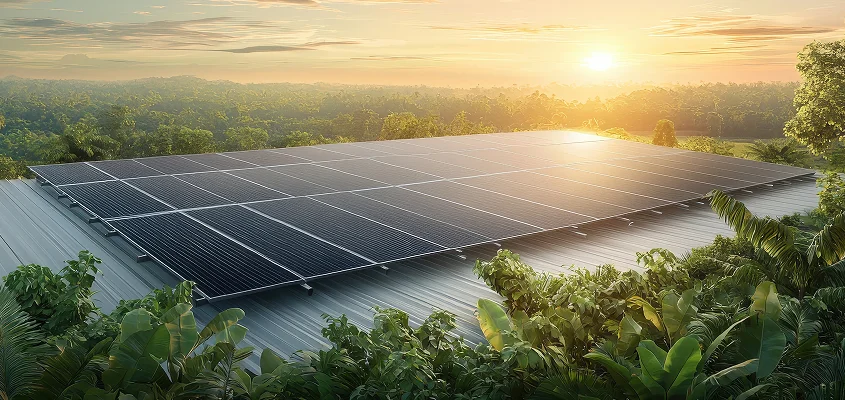
Rooftop solar has already changed how consumers meet part of their electricity needs by allowing power to be generated where it is consumed. Battery storage takes that proposition further.
With rooftop solar and battery storage, surplus solar electricity generated during the day can be stored instead of being exported entirely to the grid. That stored electricity can then be used after sunset or during power outages, helping consumers maximize the value of the solar energy generated on their rooftops.
The combination brings together two complementary capabilities. Solar generates clean electricity, while batteries give consumers greater flexibility over when electricity can be used. For homes and businesses, this can mean lower dependence on grid electricity and diesel-based backup, greater energy resilience, and more reliable access to power when it matters.
This idea of having greater control over energy sits at the heart of Tata Power's approach to energy independence.
"Energy independence is a national need - it's something every home and business can now achieve," said a Tata Power Spokesperson. "With rooftop solar and battery storage working together, consumers no longer have to choose between clean energy and reliable power; they get both. More importantly, they can invest with confidence. Solar is a lifelong investment, and with Tata Power's trusted quality, genuine warranty, and nationwide service network, consumers have the assurance that their clean energy investment will continue delivering value for decades."
What makes battery storage an important part of the equation?
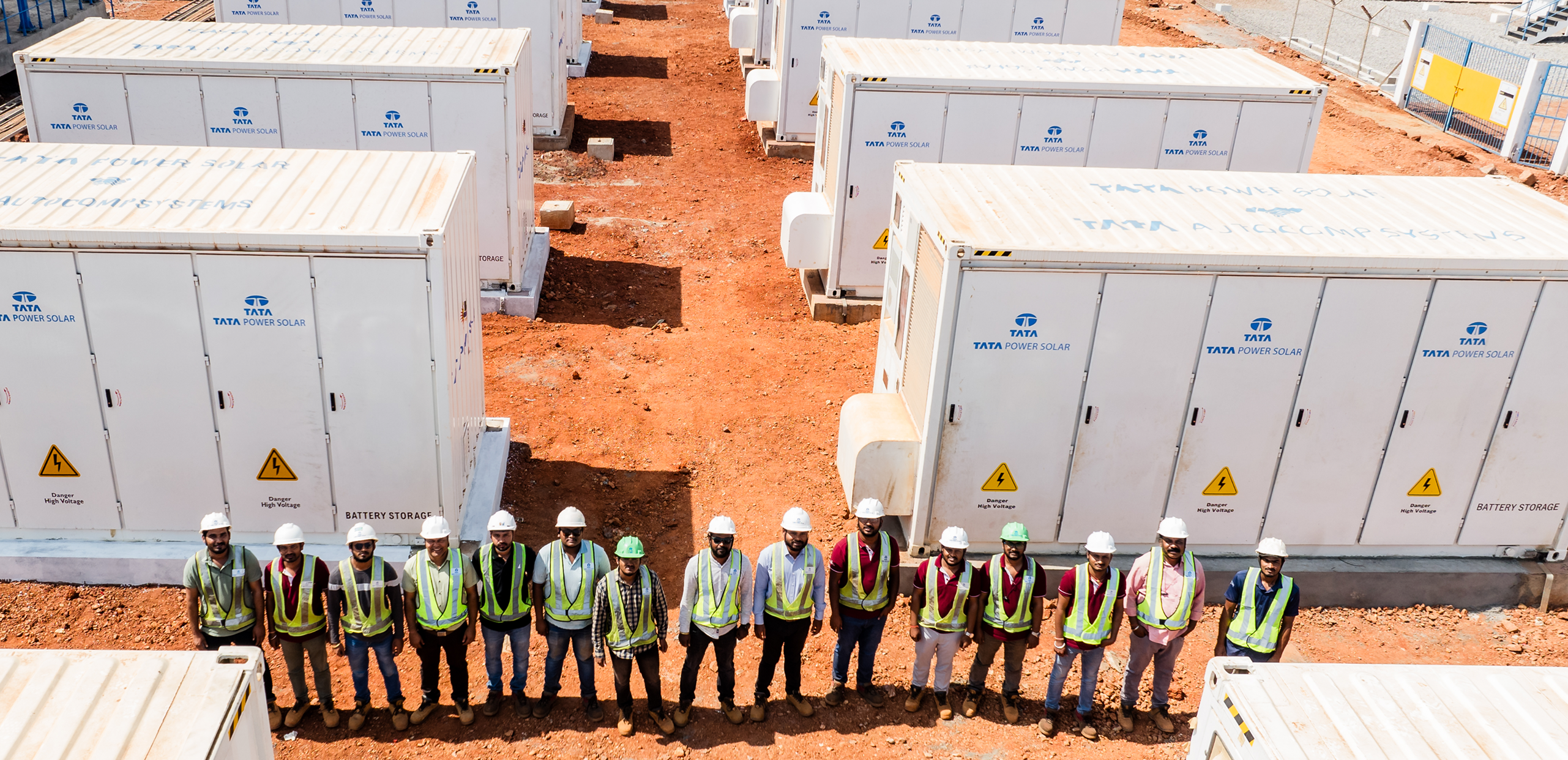
The role of battery storage goes beyond conventional backup. By storing electricity for later use, a battery energy storage system can help consumers use more of the solar electricity generated on-site instead of limiting solar consumption to daylight hours.
Designed for Indian operating conditions, Tata Power’s battery energy storage solutions use Lithium Iron Phosphate (LFP) technology. These systems offer an operating life of up to 10 years, faster charging, higher efficiency, and significantly lower maintenance compared with conventional lead-acid inverter batteries.
They also incorporate intelligent battery management, silent operation, and seamless automatic switchover during grid outages. This provides backup power without the noise, emissions, and recurring fuel requirements associated with diesel generators.
For consumers evaluating Tata Power’s solar battery storage solutions, this means the battery is not simply an add-on to a rooftop solar installation. It becomes part of an integrated energy system designed to make solar electricity available across a wider part of the day.
Storage designed around different energy requirements
The electricity needs of a household, shop, or clinic are very different from those of a commercial facility or industrial operation. Battery storage therefore needs to be scaled according to connected load, desired backup duration, and the nature of the application.
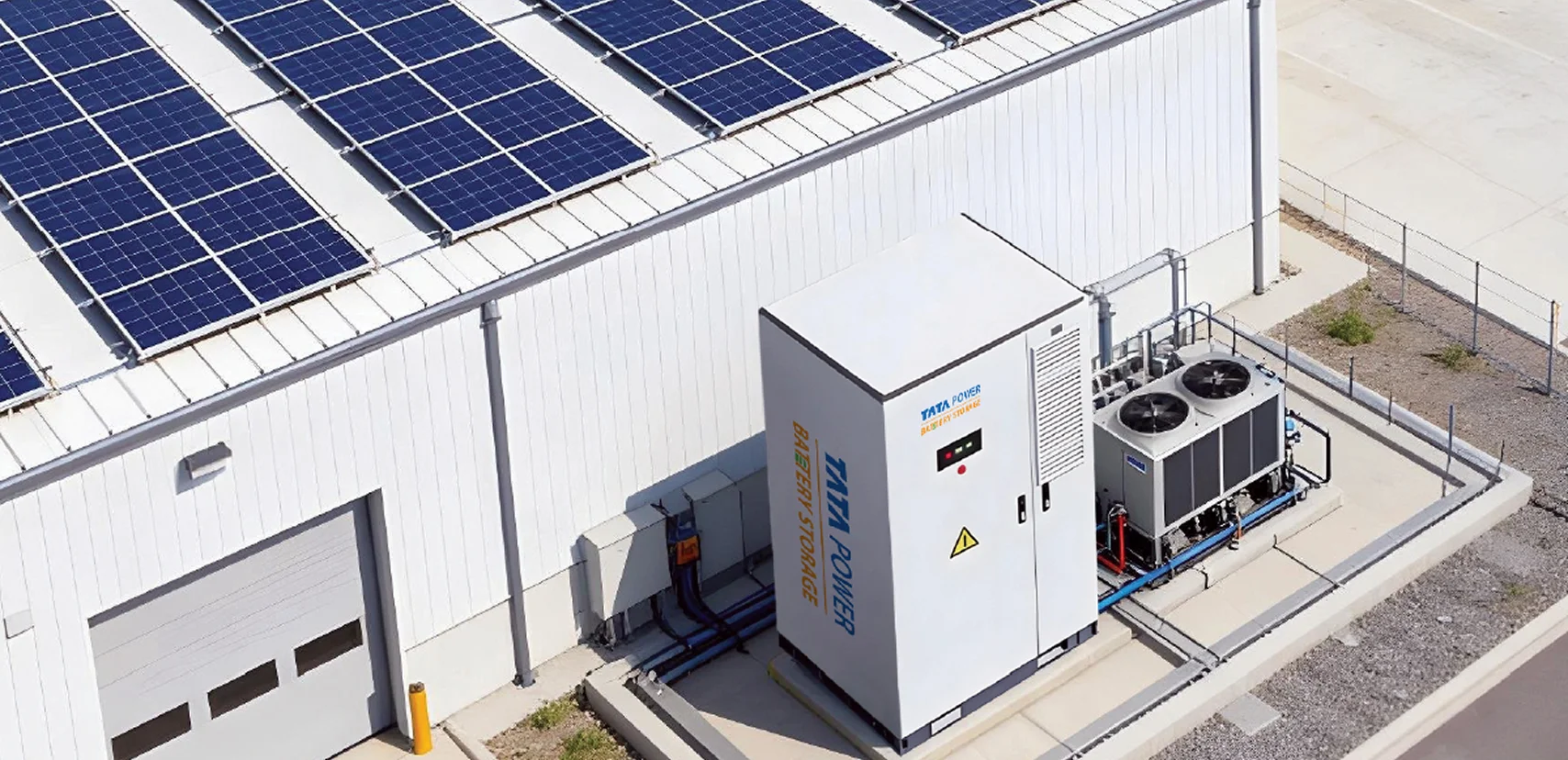
Tata Power's battery storage solutions begin at 5 kWh for residential consumers and small businesses and extend to 200 kWh and beyond for larger commercial establishments. Installations incorporate BIS-compliant battery cells, intelligent battery management systems, and LFP battery chemistry as part of a safety-first architecture.
Within the wider storage portfolio, Tata Power MySine Prime Plus caters to homes and businesses that require greater backup capacity, with scalable battery configurations from 10 kWh to 60 kWh. Tata Power positions the solution for applications where maintaining reliable power during interruptions is particularly important.
This scalability enables consumers to choose storage according to their actual requirements instead of approaching battery backup as a one-size-fits-all proposition.
Tata Power’s PowerHub takes storage to larger businesses
For Commercial and Industrial consumers, battery storage can support a broader set of priorities. Along with improving backup availability, businesses can use storage to integrate renewable electricity more effectively, strengthen power reliability, and improve operational resilience.
The Tata Power PowerHub portfolio is designed for different C&I applications and load requirements.
| Solution | Battery storage capacity |
|---|---|
| PowerHub Core | 60 kWh to 600 kWh |
| PowerHub Pro AC Plug & Play | 261 kWh |
| PowerHub Pro DC Configurable | 261 kWh to 2.5 MWh |
| PowerHub Max | 3 MWh to 5 MWh |
Together, these configurations allow businesses to adopt storage at a scale appropriate to their operations, from smaller commercial requirements to multi-MWh energy storage applications. Tata Power states that the portfolio can help businesses optimize energy costs, enhance power reliability, integrate renewable energy and strengthen operational resilience.
Why long-term solar value extends beyond installation
Installing rooftop solar is a long-term investment. The value of that investment therefore depends not only on the system installed on day one, but also on the quality, warranty, and service support available throughout its operating life.
Tata Power Solar modules are manufactured at a BIS, IEC, TÜV Rheinland and UL-certified manufacturing facility and are designed to meet global standards for durability, safety, and long-term performance.
Tata Power backs its rooftop solar systems with warranties of up to 25 years on solar modules, along with a minimum five-year comprehensive system warranty covering product and workmanship. Lifecycle support is available through more than 275 service centers across over 700 cities, backed by 37 years of Tata Power's experience in India's solar sector.
For consumers, this end-to-end approach means the decision to adopt rooftop solar and storage is supported beyond installation through warranty and after-sales service.
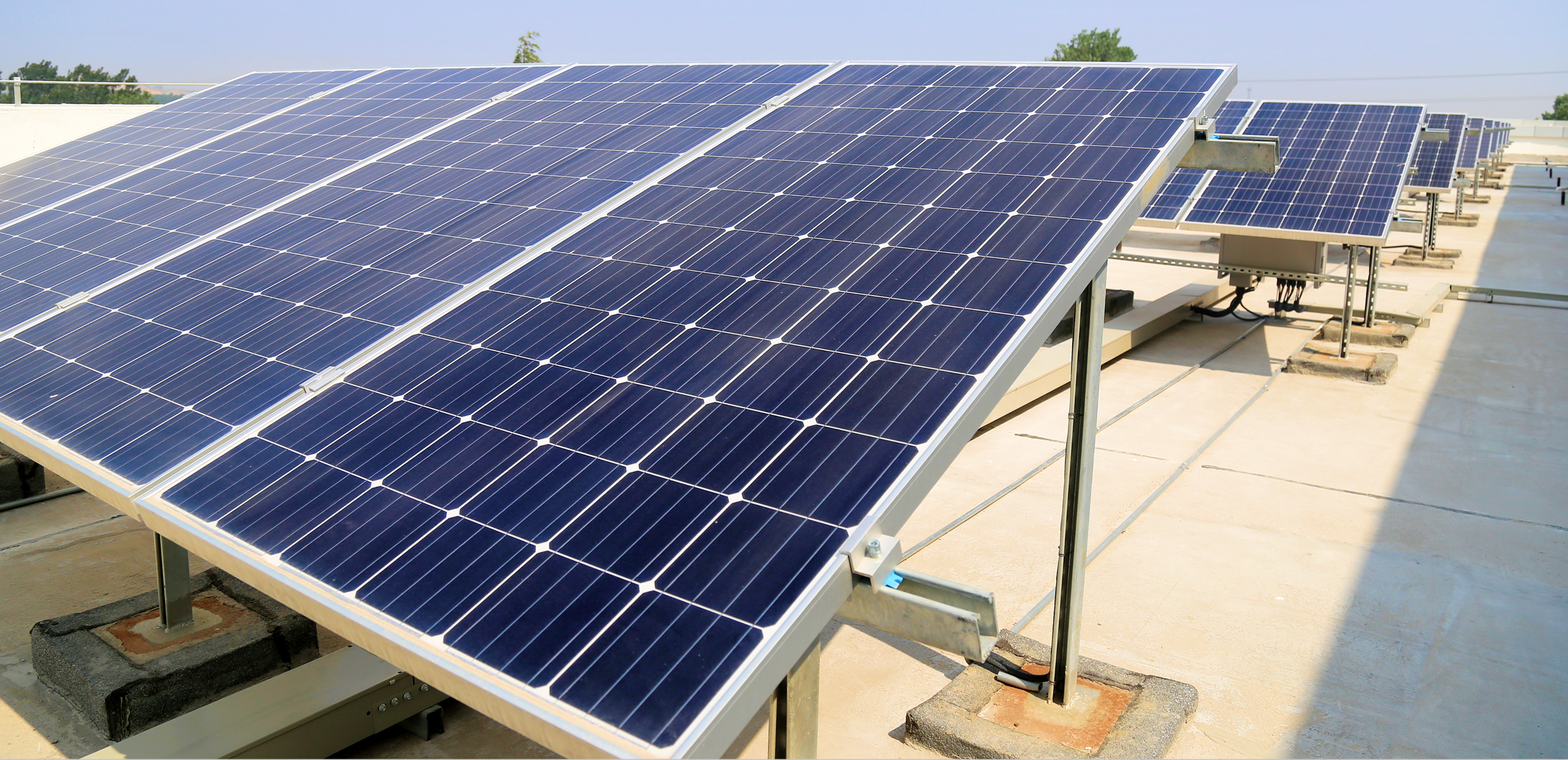
Tata Power backs rooftop solar with long-term warranties and continued support
Making the transition financially easier for businesses
For Commercial and Industrial consumers, the business case for solar can also depend on how the initial investment is financed.
Tata Power's SunSmart Flexi Scheme - Pay as You Save is designed to provide C&I customers with greater financial flexibility while investing in rooftop solar. The scheme offers financing of up to 85% of the project cost, collateral-free funding, and flexible repayment tenures of up to seven years. EMIs or lease rentals can also be structured to be lower than projected monthly solar savings.
By aligning repayments more closely with expected solar benefits, the model can help businesses manage cash flows while moving ahead with their renewable energy plans.
This combination of technology and financing can make the transition more accessible to businesses seeking to reduce energy costs, improve resilience, and advance their sustainability objectives without placing the entire investment burden upfront.
PM Surya Ghar is taking solar adoption to more homes
The Government of India's PM Surya Ghar Muft Bijli Yojana is accelerating residential rooftop solar adoption by making systems more accessible to households across the country.
Battery storage can build on this progress by allowing households to increase self-consumption of the electricity generated by their rooftop solar systems and retain stored power for use during grid outages.
Importantly, hybrid rooftop solar systems integrating battery storage are also eligible for Central Financial Assistance under the scheme, helping bring integrated solar and battery systems within reach of more consumers.
For households, this represents an important evolution. The rooftop is no longer the only place to generate electricity during the day. With storage integrated into the system, it can become part of a more flexible energy setup that continues supporting household needs even after solar generation reduces.
Scratch. Reveal. Learn
Curiosity has its rewards
Bottomline
India’s journey towards a cleaner and more self-reliant energy future will depend not only on generating more renewable electricity, but also on giving consumers greater control over how that electricity is used.
By combining solar generation with battery storage, Tata Power Solaroof is bringing generation, storage, reliability and long-term support into one integrated proposition for homes and businesses. From smaller residential systems to multi-MWh C&I solutions, the approach allows energy independence to scale with the needs of the consumer.
On this Independence Day, the message is clear: clean energy is only the beginning. With the ability to store and use power when needed, homes and businesses can move closer to true, lasting energy independence.

Frequently asked questions
The frequently asked questions section is a reliable source for unlocking answers to some of the most crucial inquiries. Please refer to this section for any queries you may have.
- FAQ
Certain Tata Power battery energy storage solutions are designed to scale as requirements change. Tata Power MySine Prime Plus, for example, uses modular battery architecture, while Tata Power also describes its hybrid storage systems as expandable for growing homes and businesses. This can be particularly useful when electricity consumption rises over time due to additional appliances, equipment or changing business operations, allowing storage requirements to evolve alongside the consumer
Yes. Tata Power solar battery storage solutions such as MySine offer app-based service, real-time monitoring and full control through mobile, helping consumers track and manage their energy system more conveniently. Tata Power also provides toll-free assistance and service support across 700+ cities and towns, so digital monitoring is backed by a wider customer-support ecosystem rather than being limited to the hardware alone.
A Tata Power Solaroof installation generally takes around four to eight weeks for physical setup and commissioning, while the complete journey from application to going live can take two to six months depending on approvals and site requirements. Once installation begins, the actual setup typically takes around three days. Tata Power supports this process through 575+ channel partners and 225 authorized service partners across 275+ districts.
Yes. Tata Power Solaroof works with banks and NBFCs to offer residential solar financing, including solar loans and EMI-based options. Tata Power lists low down-payment structures, collateral-free options under applicable schemes and financing tenures of up to 10 years for residential customers. Eligible households can also explore PM Surya Ghar-linked financing, helping reduce the upfront financial burden of adopting rooftop solar.
PM Surya Ghar Muft Bijli Yojana is a Government of India scheme aimed at installing rooftop solar across one crore households and enabling up to 300 units of free electricity per month. Eligible residential households can receive Central Financial Assistance of ₹30,000 per kW for up to 2 kW and ₹18,000 per kW for additional capacity up to 3 kW. This takes the maximum central subsidy to ₹78,000 for rooftop solar systems of 3 kW or above, helping reduce the upfront cost of residential rooftop solar adoption.
Keep reading...
View all