



 Contact us
| Myth | Truth |
|---|---|
| Charging in the rain will electrocute you or short-circuit your EV | Chargers run a safety handshake before any current flows, and a certified charger's RCCB cuts power within milliseconds if it senses a leak |
| EV batteries aren't built to handle water | Batteries are sealed to IP65–IP67, rated for water jets and even brief submersion |
| Charging cables and connectors are only meant for dry, indoor use | They carry IP54-or-higher ratings, designed for splashing water and outdoor dust |
| It's best to stop charging altogether during monsoon | Ordinary rain is exactly what this hardware is built for; only floodwater, damaged equipment or active lightning are genuine no-go situations |
| Public chargers are less safe than charging at home in wet weather | Public and workplace chargers meet the same IP and RCCB standards as certified home setups |


Sections
Introduction
Charging an electric vehicle during India's monsoon comes down to one question: is it safe to plug in while it's pouring outside? The short answer is yes, as long as you understand how EV chargers are built and where the real risks lie. This handbook walks through the safety basics, charging tips, and small habits that make monsoon charging worry free.
Rain itself isn't the problem, standing water and damaged equipment are. Once that distinction is clear, monsoon charging stops feeling like a risk and starts feeling like any other seasonal habit, something you simply adjust for and move on with.
Is it safe to charge an EV in the rain?
Yes, it is generally safe to charge an EV in the rain when you use certified, properly maintained charging equipment. EV chargers and connectors are designed to resist water, while safety systems such as the charging handshake and RCCB help prevent current from flowing when an unsafe condition is detected. This is why choosing a professionally installed and maintained charging setup, like Tata Power’s EZ CHARGE, can add an extra layer of confidence during the monsoon.
The main risks are not rain itself, but standing floodwater, damaged equipment, exposed wiring or severe thunderstorms. Check the charger and cable before use, avoid waterlogged areas, and stop charging if you notice any visible damage or electrical fault.
What are the common myths about EV charging in the rain?
Most hesitation around monsoon charging comes down to a handful of myths, usually born from comparing an EV charger to an ordinary household socket. Here's what's true.
Most of these myths come from treating an EV charger like a household appliance. The grounding, sealed connectors, and automatic cutoffs built into certified charging equipment make it a different category altogether.
What are the best tips for monsoon EV charging in India?
Once you know the safety systems are doing their job, the rest comes down to a few sensible habits. Here's what to keep in mind through the season.
Before charging
- Check the charging cable and connector for visible damage, cracks, or exposed wiring before use.
- Wipe down the plug if it feels wet; a dry connection simply seats better.
- Look at the ground around the charging point and avoid spots with pooling or waterlogged water.
- Confirm the charger's display or indicator light shows a normal status before connecting.
- If anything looks off, use a different charger rather than force the connection.
While charging
- Keep the connector securely connected and avoid touching electrical connections with wet hands.
- Keep the charging equipment out of standing water.
- Monitor the charger for unusual sounds, smells, sparks or error messages.
Charging your EV at home during heavy rain
- Run your charger on its own dedicated circuit, protected by an MCB and an RCCB, in line with IS 732:2019 wiring rules for EV chargers.
- Ensure the charger is properly earthed.
- Skip extension cords and adapters entirely; CEA guidelines treat them as non-compliant for EV charging, and they are not rated for EV loads or wet weather.
- Install the charger under a canopy or overhang if it sits outdoors, even if the unit itself is weatherproof.
- Keep the charging cable coiled and off the ground rather than letting it lie in a puddle.
- Get an electrician to inspect wiring and seals once before the season properly sets in.
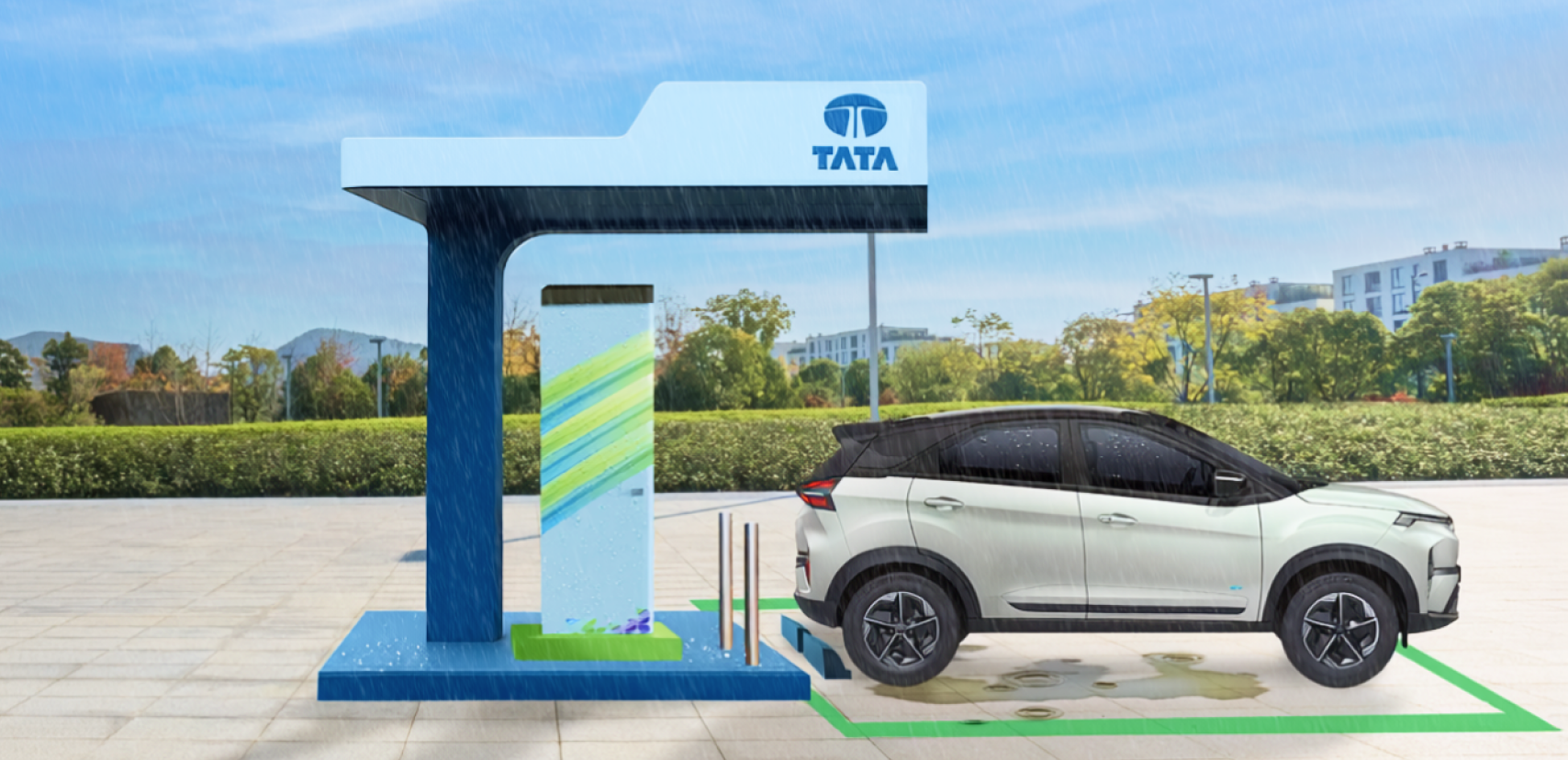
EV charging during monsoon calls for weatherproof equipment and a few simple safety precautions
Charging your EV in housing societies or shared parking during monsoon
- Get a written NOC from your housing society before installing a charger, and check whether the building's sanctioned load needs review under CEA safety norms.
- Have older buildings checked for thin or unearthed wiring before adding a charger; fuse-type breakers or missing earthing are a fire risk in wet conditions.
- Mount the charger off the ground and use IP-rated, weatherproof hardware, even in covered parking, since there might be leaks or drips.
Using a public EV charger during monsoon
- Public and workplace chargers are IP rated and built for outdoor, year round use.
- Avoid a unit that looks damaged or trips repeatedly, and report the issue to the operator.
- Handle the connector with dry hands where possible and avoid standing directly in puddles while charging.
Stop charging if
Ordinary rain or drizzle is generally not a reason to stop charging. The situations that call for extra caution are standing or rising water, damaged equipment and severe thunderstorms.
- Water starts rising around the charging equipment or the charger, cable or ground is submerged in floodwater.
- The cable or connector is damaged, or electrical components are exposed.
- The charger repeatedly trips or shows an error.
- You notice sparks, smoke or a burning smell.
- A severe thunderstorm with active lightning is nearby.
- The manufacturer or charging operator advises you to stop charging.
Taken together, this checklist takes less than a minute and needs nothing beyond your own eyes and a bit of common sense. Once it becomes second nature, monsoon charging feels exactly as routine as charging on any dry day. Charging safely is only half the picture, though; the rest comes down to understanding how EV charging operates through out the year. Looking for the full scoop?

A few extra habits keep your electric vehicle running smoothly through the wetter months.
- Check tyre tread depth and pressure regularly; worn tyres lose grip fast on waterlogged roads.
- Keep the battery between roughly 20 and 80 percent rather than routinely topping up to full.
- Avoid deep water crossings, even though most EVs handle splashes and puddles without issue.
- Wipe down charging ports and door seals periodically to prevent dirt and moisture buildup.
- Test wipers, headlights, and defoggers before the season peaks; visibility matters as much as charging does.
- Schedule a pre-monsoon service check to catch loose connections or worn insulation early.
None of this calls for special equipment, just a bit of seasonal awareness built into your routine. The other variable that shapes how easy monsoon charging feels is where you charge, and that's where a dependable network makes the difference.
Why choose Tata Power EZ CHARGE for monsoon charging?
All of this, the IP ratings, the RCCB protection, the sealed connectors, is exactly what a reliable charging network is built around. But hardware specifications only matter if the charger you actually pull up to has been installed, maintained and monitored properly, and that's the difference a trusted network makes during the season when things are most likely to go wrong.
Tata Power EZ CHARGE runs one of India's largest public charging networks, with stations built to IP and RCCB safety standards and many sited under canopies at malls, offices and highway stops, exactly the covered spots this guide recommends seeking out. Chargers are monitored and maintained year round, so faults get caught before they become a monsoon-day surprise, and the EZ CHARGE app shows live station status so you can check for issues before you even leave home. For home charging, Tata Power's certified installers handle the dedicated circuit, earthing and weatherproofing this guide talks about, so your setup is monsoon-ready from day one instead of something you have to figure out yourself.
For EV owners across India, that reliability matters most when the weather is at its least predictable.

Charge confidently, whatever the weather
Tata Power brings weatherproof charging to homes, workplaces, and highways across India
Bottomline
Charging your EV in the rain isn't the gamble it might feel like the first time you do it. Between IP-rated hardware, RCCB protection, and automatic safety handshakes, these systems are built specifically for this weather, not just tolerant of it. What actually needs your attention is simpler than most people expect: watch for standing water, skip the extension cords, get your wiring checked before the season starts, and use common sense during severe storms. Do that, and monsoon charging becomes just another routine part of owning an EV in India, rain or shine.
Frequently asked questions
The frequently asked questions section is a reliable source for unlocking answers to some of the most crucial inquiries. Please refer to this section for any queries you may have.
- Solaroof
Yes, you can charge your EV outside during the monsoon, provided the charger is certified, properly installed and in good condition. Choose a covered, well-drained spot where possible, and avoid charging where water is pooling or rising around the equipment
If the charging connector gets wet, wipe it dry before connecting it to the vehicle. Certified EV charging equipment is designed to handle normal exposure to rain, but you should not use a connector that is damaged, excessively wet or showing signs of an electrical fault.
Do not use the charger if water is rising around it or the charging equipment is submerged. Move to a safer charging point and, if you're already charging, stop the session if it can be done safely and report the issue to the operator.
Normal rain should not damage a properly sealed EV charging port. However, check the port for excessive moisture or debris before connecting, and have it inspected if you notice unusual behaviour or signs of damage during the rainy season.
Public EV chargers are designed to withstand outdoor conditions and exposure to rain, but “waterproof” does not mean they are safe to use when submerged. If you're wondering is it safe to use a public EV charger during monsoon, check for visible damage and standing or rising water before charging.
Sources
EV Charging in the Monsoon: Safety, Myths, and Best Practices, Bolt.Earth
Is it safe to charge in the rain?, Electric Vehicle Council (Australia)
Charging an electric car in the rain: how it works and why it's safe, Daze
Can You Charge an EV in the Rain?, Pod Point
Is It Safe to Charge an EV in the Rain?, Ekoenergetyka
Can You Charge An EV In The Rain?, Eleport
Monsoon-Proof Your EV Charger: Essential Protection for Rainy Seasons in India, Zevpoint
Navigating the monsoon: why modern EVs are safe and reliable in rainy weather, Economic Times Auto
Monsoon Care Guide for Electric Vehicles, GEV World
A Comprehensive Guide to Charging Your EVs During the Rainy Season, Quench Chargers
Can you charge an electric car in the rain? IP ratings explained, Huawei Digital Power
Can you charge your EV in the rain?, bp pulse (UK)
Can I charge my electric vehicle in the rain?, EVSE NZ
Keep reading...
View all
Disclaimer:
This blog is intended for informational and educational purposes only. The views, opinions, insights, and recommendations expressed in this blog are based on publicly available information, industry trends, and general observations at the time of publishing. While efforts have been made to ensure accuracy and relevance, no guarantee is provided regarding the completeness, reliability, or accuracy of the information. Readers are advised to independently evaluate the content and seek professional guidance wherever required. The company shall not be held responsible for any actions taken based on the information presented in this blog