

 Contact us
FDRE: Delivering renewable power when demand needs it most


Sections
- Introduction
- What is Firm and Dispatchable Renewable Energy (FDRE)?
- How does FDRE renewable energy work?
- What are the key benefits of FDRE in the renewable energy sector?
- What makes FDRE different from conventional renewable energy and RTC power?
- Why is FDRE important for India’s renewable energy transition?
- How is Tata Power helping scale FDRE adoption in India?
- Bottomline
- FAQs
Introduction
Solar panels follow the sun. Electricity demand follows a very different schedule. When homes switch on lights and businesses keep running after sunset, the grid still needs power. FDRE (Firm and Dispatchable Renewable Energy) helps bridge this timing gap by making renewable electricity available when it is scheduled, not only when it is generated.
The idea is simple: combine solar and wind with energy storage, then plan power delivery around demand. India's Central Electricity Authority projects 73.93 GW of energy storage capacity by 2031–32, highlighting the scale of this need. But how exactly does FDRE work, how does it differ from conventional renewable power, and what is Tata Power doing to scale it?
What is Firm and Dispatchable Renewable Energy (FDRE)?
Firm and Dispatchable Renewable Energy (FDRE) is a renewable power procurement approach designed to supply electricity according to an agreed schedule or demand profile. It can combine solar, wind, and energy storage or other suitable technologies to meet demand during specified hours, including peak periods.
The two words explain its purpose:
- Firm: Renewable electricity is supplied at agreed levels during specified periods, subject to contractual requirements.
- Dispatchable: Electricity is scheduled to match the buyer's agreed demand profile, rather than generation hours alone.
For example, daytime solar energy can be stored and supplied during evening peak-demand hours.
Simply put, FDRE aligns renewable electricity supply with when it is needed.
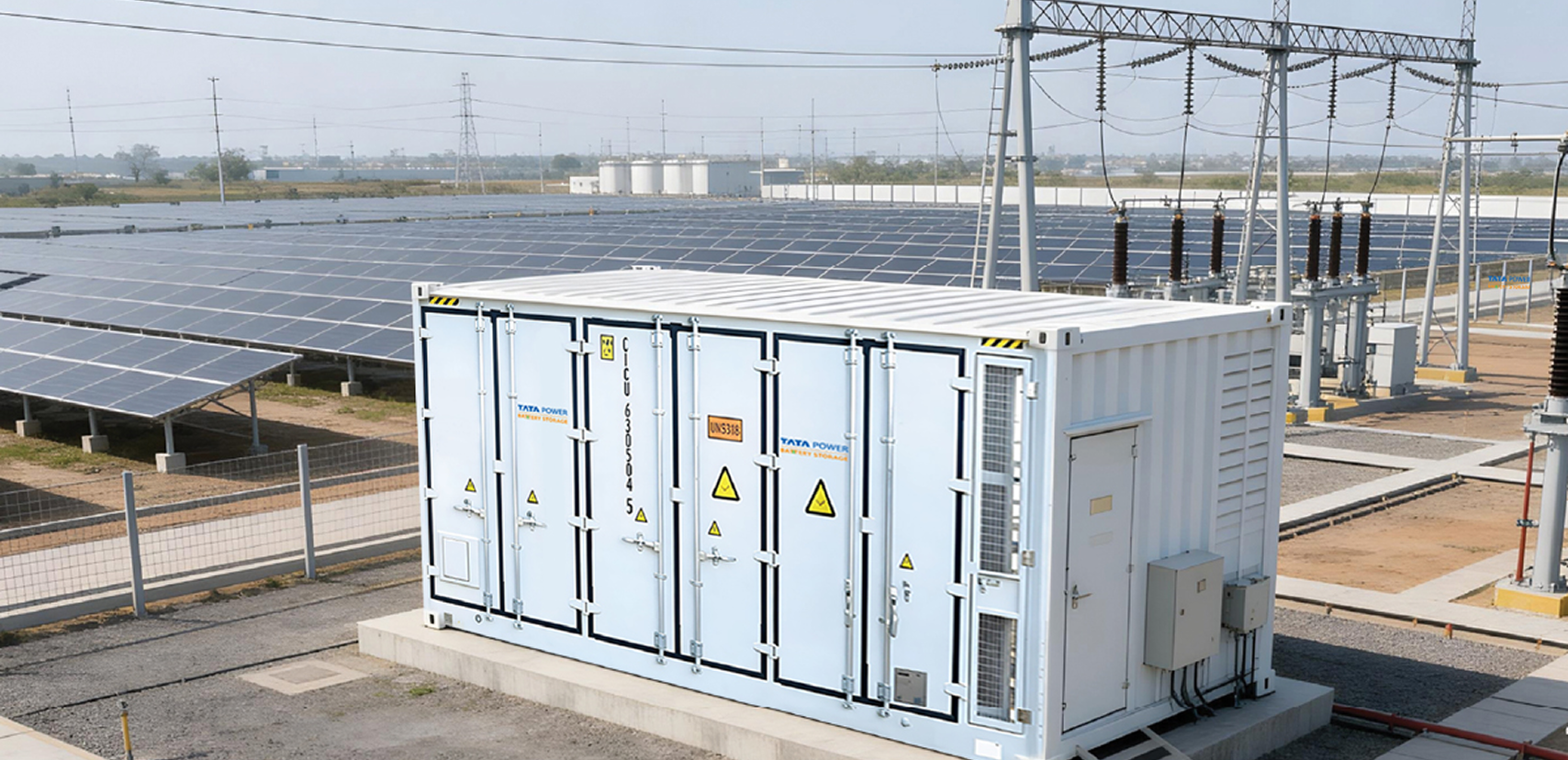
How does FDRE renewable energy work?
FDRE combines renewable generation, storage, and energy management to make the electricity supply more predictable. Although individual projects may use different technologies, the basic process follows six steps.
1. Renewable energy is generated - Solar panels, wind turbines, or a combination of renewable sources generate electricity based on available natural resources.
2. Different sources complement each other - Solar generation is concentrated in daylight hours, while wind generation may follow a different pattern. Combining them can help create a more balanced supply.
3. Surplus electricity is stored - Renewable electricity that is not immediately required can charge a Battery Energy Storage System (BESS) or another suitable storage system for later use.
4. Power delivery is scheduled: Energy forecasts, storage availability, and contractual requirements help determine how much electricity must be supplied during specified periods.
5. Stored energy supports peak demand: When renewable energy generation falls below the required supply, stored electricity can be dispatched to help meet the agreed demand.
6. Performance is monitored: Generation, storage, and actual electricity delivery are tracked to assess whether the project meets its contractual availability and scheduling requirements.
For example, consider a distribution company that requires renewable electricity between 6 PM and 10 PM. Instead of relying on solar generation alone, an appropriately designed FDRE project can use electricity stored earlier in the day, along with available wind generation, to supply power during those four hours.
The exact duration and quantity of supply depend on the project's design and contractual conditions.
What are the key benefits of FDRE in the renewable energy sector?
FDRE addresses an important challenge in the energy transition: generating more renewable electricity while ensuring that supply remains aligned with demand.
1. Better support during peak demand
Electricity consumption often increases during certain hours, including evenings when solar power generation declines. FDRE allows renewable electricity generated earlier to be stored and supplied during these high-demand periods, reducing the mismatch between generation and consumption.
2. Greater predictability for the power grid
Conventional solar and wind generation changes with weather conditions. By combining generation forecasts with energy storage, FDRE provides a more predictable supply profile. This helps grid operators plan electricity availability, although overall grid reliability still depends on transmission networks and other generation sources.
3. More effective use of renewable electricity
Renewable generation can sometimes exceed immediate demand or available grid capacity. Storage allows a portion of this electricity to be retained and used later, improving its usefulness across different periods of the day.
4. Better power procurement planning
Distribution companies (DISCOMs) must secure adequate electricity for different demand periods. FDRE offers a way to procure renewable power against defined delivery requirements, making it easier to plan for peak hours and other specified needs.
5. Support for India's clean energy transition
By making renewable electricity available beyond its immediate generation window, FDRE supports greater integration of solar and wind into the electricity mix. With India crossing 300 GW of installed non-fossil power capacity in July 2026, according to the Ministry of New and Renewable Energy, flexible power supply is becoming increasingly important. FDRE also helps eligible buyers meet applicable renewable energy procurement and storage-related obligations.
What makes FDRE different from conventional renewable energy and RTC power?
Solar and wind power depend on natural conditions, while electricity demand rarely follows the same pattern. FDRE and round-the-clock renewable arrangements help address this challenge through their distinct supply commitments.
| Parameter | Conventional renewable energy | FDRE | Round-the-clock (RTC) power |
|---|---|---|---|
| Primary purpose | Generate electricity from renewable sources | Deliver renewable electricity according to an agreed demand profile | Provide renewable electricity throughout the day and night |
| Power availability | Depends mainly on sunlight, wind and other natural resources | Designed to meet specified supply requirements | Designed for delivery across all hours, subject to contractual conditions |
| Generation sources | Solar, wind or other renewable technologies | Solar, wind or hybrid renewable systems combined with storage | Usually, a combination of renewable sources and storage; other RTC procurement frameworks may permit additional balancing sources |
| Energy storage | Optional and not part of every project | Integral to projects covered by India's FDRE procurement guidelines | Commonly used to support continuous renewable power delivery |
| Peak-hour supply | Not assured without additional arrangements | Can be specifically designed to meet peak-hour demand | Peak-hour supply forms part of the wider all-day delivery commitment |
| Power scheduling | Generation can be forecast and scheduled, but actual output varies with resource availability | Supply is planned around specified hours, demand levels or load-following requirements | Supply is scheduled across the full day according to the contract |
| Reliability commitments | Primarily governed by generation and other applicable PPA (Power purchase agreement) requirements | Defined by contracted availability and delivery obligations | Defined by contractual requirements for supply across all hours |
| Cost considerations | Generally simpler without additional storage requirements | Storage, system sizing and delivery commitments influence costs | Costs depend on the generation mix and resources required to support all-hour delivery |
| Best suited for | Adding renewable generation to the electricity mix | Meeting specified demand periods and improving supply flexibility | Buyers seeking renewable electricity across the day and night |
Why is FDRE important for India’s renewable energy transition?
India’s renewable energy focus is shifting from adding capacity to delivering electricity when demand rises.
In June 2023, the Ministry of Power introduced guidelines for procuring firm and dispatchable renewable electricity from grid-connected projects with storage. In February 2026, MNRE noted growing buyer preference for storage-backed and dispatchable renewable power.
This shift became clearer on 7 October 2026, when SECI issued an FDRE-X tender for 1,200 MW of assured power over four peak hours (4,800 MWh).
Three developments are driving FDRE in India -
1. Growing renewable capacity: More solar and wind create a greater need to manage variable generation.
2. Expanding energy storage: Batteries and pumped storage help shift supply to high-demand hours.
3. Demand-based procurement: Buyers increasingly seek renewable power tailored to delivery schedules.
Together, these changes are moving India from capacity-led renewable growth towards reliable, scheduled power, supported by coordinated investment in generation, storage, and grid infrastructure.

Powering the shift towards reliable, demand-driven renewable energy
How is Tata Power helping scale FDRE adoption in India?
As India moves towards more dependable renewable power, integrating energy storage with solar and wind is becoming increasingly important. Tata Power, through its subsidiary Tata Power Renewable Energy Limited (TPREL), is advancing this transition with FDRE projects designed to support scheduled electricity supply and grid reliability.
1. 460 MW FDRE project with SJVN Limited
Marking TPREL's first successful FDRE tender, this collaboration represents an important step towards delivering renewable electricity that better aligns with changing power requirements.
Key project highlights -
- Project capacity: 460 MW, with a PPA signed in May 2024.
- Technology: Integrated solar, wind, and battery storage.
- Annual generation: Nearly 3,000 million units of electricity.
- Environmental impact: Estimated reduction of approximately 2.2 million tonnes of CO₂ emissions annually.
2. Kalasar FDRE project in Rajasthan
Developed under the larger 460 MW SJVN arrangement, the Kalasar project marks TPREL's progress from FDRE project agreements to operational renewable energy infrastructure.
Key project highlights -
- Commissioning: 190.5 MW of solar FDRE capacity announced in August 2026.
- Latest reported configuration: 227.5 MW of solar capacity with a 101.2 MWh Battery Energy Storage System, as reported in October 2026.
- Power distribution: Supply to Haryana Power Purchase Centre (HPPC), Maharashtra State Electricity Distribution Company Limited (MSEDCL), and Noida Power Company Limited (NPCL)
- Technologies deployed: Integration of Battery Energy Storage System (BESS), Harmonic Filter Bank, and Static Var Generator (SVG) systems to support reliable power delivery and grid stability.
3. 200 MW FDRE project with NTPC Limited
This collaboration with NTPC Limited demonstrates Tata Power's focus on developing renewable energy solutions around specific peak-demand requirements.
Key project highlights -
- Project capacity: 200 MW, with a PPA signed in April 2025.
- Technology: Integrated solar, wind, and battery storage.
- Peak-power commitment: Four hours of supply with at least 90% availability during peak-demand hours.
- Annual generation: Approximately 1,300 million units of electricity.
- Environmental impact: Estimated reduction of over 1 million tonnes of CO₂ emissions annually.
Bottomline
The future of renewable energy is not just about how much clean electricity can be generated. It is also about whether electricity is available when people and businesses need it.
FDRE brings renewable generation and energy storage together to address that challenge. By enabling scheduled power delivery, it can support peak demand, improve supply predictability and help integrate more renewable electricity into India's power system.
As storage technologies expand and demand-based renewable procurement grows, FDRE has an increasingly important role to play. For India's energy transition, generating clean electricity is the starting point. Making it available at the right time is the next step.
Frequently asked questions
The frequently asked questions section is a reliable source for unlocking answers to some of the most crucial inquiries. Please refer to this section for any queries you may have.
- Solaroof
RTC renewable power can be a type of FDRE arrangement, rather than a separate technology. India’s June 2023 Ministry of Power guidelines recognize four configurations -
- Assured peak power: Supply during peak demand.
- Fixed-hour delivery: Supply at specified hours.
- Load-following supply: Matches demand patterns.
- Round-the-clock supply: Firm delivery throughout the day.
Conventional solar generates during daylight, while FDRE can supply power from 6 PM to 10 PM using storage. RTC extends delivery across all hours. The key difference: FDRE matches renewable supply with demand.
No. FDRE does not automatically mean an uninterrupted electricity supply throughout the day. An FDRE project may be designed to deliver power during specific peak hours, fixed periods, or in response to an agreed demand profile. Round-the-clock renewable power is one possible FDRE configuration. The actual delivery requirement, including availability levels and supply duration, is determined by the project's contractual conditions.
Battery storage allows renewable electricity generated during one period to be used later. For example, excess solar electricity produced during the afternoon can be stored and supplied during evening peak-demand hours. This flexibility helps FDRE projects meet scheduled delivery requirements when solar or wind generation is insufficient. The battery capacity required depends on the project's demand profile, supply duration, and overall generation mix.
Yes. FDRE projects can combine solar and wind generation with an energy storage system. Since solar and wind may generate electricity at different times, combining them can create a more balanced generation profile. Storage helps manage remaining gaps between generation and demand. The proportion of solar, wind, and storage depends on factors such as resource availability, location, delivery commitments, and project economics.
FDRE can cost more than standalone solar generation because it typically requires energy storage, additional equipment, and more complex energy management. However, the two products serve different purposes. Conventional solar primarily supplies electricity when sunlight is available, while FDRE is designed around specified delivery requirements. The final tariff depends on the project's storage capacity, supply duration, generation mix, financing, and contractual obligations.
FDRE supports grid reliability by making renewable electricity more predictable and available during specified demand periods. Storage can supply electricity when generation falls, while scheduled delivery helps grid operators, and DISCOMs plan their power requirements. However, FDRE does not independently guarantee uninterrupted electricity supply. Overall grid reliability also depends on adequate generation reserves, transmission infrastructure, distribution networks, and effective system operation.
Keep reading...
View all