
Introduction

With India’s solar capacity crossing 150.26 GW as of 31 March 2026 (Press Information Bureau of India), renewable power is no longer a side conversation for businesses. It is becoming central to how companies think about cost, control, and long-term energy security. But understanding how group captive solar works in India is not just about knowing the rules. It is about seeing how ownership, open access, PPAs, and power allocation come together. Before choosing this model, businesses need to understand what makes it work.

You might think group captive solar is just another route to renewable power. In practice, it works only when ownership, demand, and delivery are aligned from the start. So, before evaluating this model for your business, let’s break down what each step really involves.

A step-by-step process of how group captive solar works in India

The group captive solar model brings together ownership, regulation, and grid infrastructure, making it different from traditional power procurement. While it may seem straightforward, its success depends on how well the project is structured, how consistently compliance is maintained, and how efficiently power is delivered to participating consumers.

Project location planning for renewable energy

Project planning and location assessment

Group captive solar project SPV formation

Establishing the solar project SPV

Ownership planning for group captive solar model

Ownership planning and equity compliance

Grid enabled power transmission through open access

Grid-enabled power transmission model

Group captive solar regulatory compliance checks

Regulatory checks and compliance tracking

Long term PPA for predictable energy costs

Long-term tariff and PPA structure

Project planning and location assessment

1.  The process starts with selecting a project location that offers strong solar generation potential, reliable grid access, and a reasonably stable policy environment.

2. Land may be acquired or leased, depending on the project's tenure, investment structure, and long-term commercial expectations.

3. Environmental clearances and regulatory permissions play an important role in determining project timelines. If these approvals are delayed, project commissioning can also be pushed back.

4. Grid connectivity permissions are equally important, as they decide how effectively power can be evacuated from the plant and supplied to participating consumers.

5. Even small differences in irradiation levels, grid readiness, or state-level policy certainty can influence generation performance, project returns, and long-term bankability.

To assess solar potential better, understand how solar panels generate reliable, clean power. Explore more

Establishing the solar project SPV

1.  A separate legal entity, usually an SPV, is created to own and manage the project under the group captive solar power model.

2. This structure goes beyond basic administration. It allows several companies to invest in and receive power from the same project, while keeping their day-to-day business operations separate.

3. The SPV also helps ring-fence project-level financial, operational, and regulatory risks from the core business of each participating consumer.

4. It becomes the central entity responsible for governance, contracting, ownership structure, compliance management, and coordination between developers and consumers.

Ownership planning and equity compliance

1. Electricity is generally allocated in proportion to each participant’s ownership stake, making consumption planning an important part of how group captive solar works in India.

2. Participating businesses must ensure that collective consumption meets the required 51 percent threshold, while individual power offtake remains aligned with ownership and contractual arrangements.

3. If the contracted capacity is not matched properly with actual demand, the project can face underutilization, cost inefficiencies, or compliance-related risks.

4. This is why accurate load forecasting becomes critical. Businesses need to assess operational demand, seasonal variations, production cycles, and future electricity requirements before finalizing capacity.

Group captive solar model for renewable power ownership

Group captive solar model helps consumers co-own renewable power


Grid-enabled power transmission model

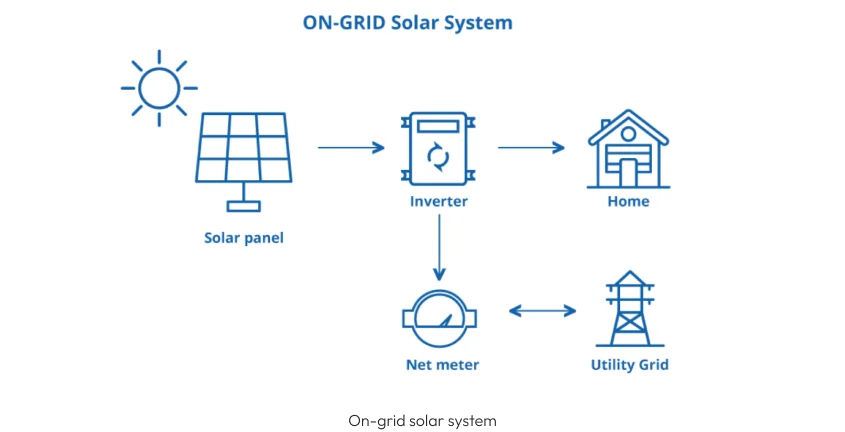
Power is supplied through the grid using the open access mechanism, which allows eligible consumers to procure electricity from a chosen source through existing transmission and distribution networks.

India’s cumulative installed solar open access capacity exceeded 30 GW as of December 2025, showing the growing relevance of this route for commercial and industrial consumers.

This usually involves -

1. Delivering power through state transmission networks

2. Managing banking provisions, where applicable

3. Paying transmission, wheeling, and other open access charges

The main advantage is that businesses can access competitively priced renewable power while continuing to use the existing grid infrastructure.

Long-term tariff and PPA structure

1.  Participants usually enter into long-term PPAs (Power purchase agreements) with the SPV, often for a period of 15 to 25 years.

2. These agreements define the tariff, power scheduling process, performance obligations, payment terms, and risk allocation between the parties.

3. For consumers, PPAs help convert uncertain and fluctuating electricity costs into more predictable long-term energy expenses.

For developers and the SPV, they provide revenue visibility and support project financing. This tariff certainty is one of the key benefits of group captive solar for businesses with high and steady power demand.

Regulatory checks and compliance tracking

1.  Compliance is a central part of the group captive solar model because it directly affects the project’s captive status and financial viability.

2.  Authorities periodically verify whether ownership and consumption conditions are maintained as required.

3.  This includes checking whether the minimum equity threshold is intact and whether the required percentage of generated power has been consumed by captive users.

Recent regulatory refinements have aimed to bring more clarity to ownership definitions and monitoring requirements, reducing ambiguity while increasing compliance responsibility.

As a result, even small deviations in equity holding, consumption ratios, or documentation can create regulatory risk. Compliance, therefore, needs to be managed throughout the year, not only during annual verification.

Scratch. Reveal. Learn

Curiosity has its rewards

Bottomline 

Group captive solar is where renewable ambition becomes a boardroom decision. For Indian businesses, it offers more than cleaner electricity. It creates a route to plan energy with sharper control, stronger cost visibility, and lower exposure to conventional tariff shocks. The opportunity is expanding as green energy open access has reduced the access threshold to 100 kW, making renewable procurement more practical for eligible consumers. But the model rewards preparation, not guesswork. Businesses that align demand, ownership and long-term planning from day one can understand how group captive solar works in India and turn it into a serious competitive edge.

Make your solar rooftop power your savings

Frequently asked questions

The frequently asked questions section is a reliable source for unlocking answers to some of the most crucial inquiries. Please refer to this section for any queries you may have.


Group captive solar is most relevant for commercial and industrial consumers with steady electricity demand and the ability to participate in shared project ownership. Under India’s captive framework, users must collectively meet the required ownership and consumption conditions to retain captive status. Green Energy Open Access rules also support renewable power procurement by eligible consumers through open access.


Group captive solar can help businesses access renewable power, reduce dependence on conventional grid tariffs, and plan long-term electricity costs more predictably. It is especially useful for companies with high and consistent power consumption. It also supports renewable purchase goals for businesses that fall under renewable consumption obligations or sustainability commitments.


Group captive solar users may need to account for open access charges such as transmission charges, wheeling charges, banking charges, where applicable, and other state-level levies. The exact charges depend on the state, voltage level, project location, consumer category, and applicable open access regulations. This is why landed costs should be assessed before signing the PPA.


The 26% rule in group captive solar means that captive users must collectively own at least 26% of the solar power plant to qualify it as a captive generating plant in India. Rule 3 of the Electricity Rules, 2005, also requires these users to consume at least 51% of the electricity generated annually. So businesses cannot buy power alone. They must have genuine ownership of the project, too.


In group captive solar, electricity is allocated according to each captive user’s ownership share in the project. Under Rule 3 of the Electricity Rules, 2005, users must collectively consume at least 51% of the power generated annually. For association-based captive projects, each user’s consumption must broadly match their equity share, with a permitted variation of 10%. This keeps allocation tied to genuine ownership, not just power purchase.


Yes. Multiple companies can share one solar project under India’s group captive structure. The Electricity Rules, 2005, allow captive generating plants to be owned by a group of captive users, provided they collectively hold the required ownership and consume the required share of generation. Under the 2026 amendment, in Association of Persons projects, each user may draw power based on operational needs, while captive eligibility is assessed against proportionate consumption requirements.


Yes, group captive solar can support renewable energy consumption targets for eligible consumers. The Ministry of Power has specified renewable consumption obligations for designated consumers, including open access consumers and captive power consumers. Businesses should still verify how their consumption is counted under the applicable state and central compliance framework.


Businesses should check their annual electricity demand, state open access rules, landed cost of power, project location, PPA terms, banking provisions, and captive compliance requirements. They should also review whether their consumption pattern is stable enough to support long-term offtake. A weak demand estimate can reduce savings and create compliance pressure later.


It depends on the business, location, and tariff structure. Group captive solar can be attractive when the landed cost of renewable power is lower than grid tariffs, and the business has a stable demand. However, grid supply may still be simpler for consumers with uncertain load, limited long-term visibility, or low electricity consumption.


Group captive solar arrangements are typically structured for the long term because the project, PPA, financing, and power offtake need stability. Many business PPAs are signed for several years, often aligned with the economic life of the project and the consumer’s power requirement. The exact tenure depends on the developer, state framework, and commercial structure.