


 Contact us
As India’s public EV charging network grows, thoughtful charging habits can help make every stop smoother


Sections
- Introduction
- How big is India's public EV charging network?
- How much does public EV charging cost in India?
- What types of EV chargers are available at public charging stations in India?
- Where can you find public EV chargers in India?
- How long does it take to charge an EV at a public station?
- How do you find the right public charging station in India?
- What charging etiquette should you follow at public stations?
- Why does the right charging station actually matter?
- Why choose Tata Power EZ Charge for public charging?
- Bottomline
- FAQs
Introduction
Public EV charging in India is becoming part of the everyday driving experience, whether you need a quick top-up in the city or a longer charge on a highway journey. But knowing that chargers exist is only the starting point. This blog looks at the public charging ecosystem in India, from charger types and charging times to finding the right station and using it well.
India’s public charging network is growing into a more visible part of the driving landscape. As of August 2026, 67,657 EV chargers had been installed across states and Union Territories, according to the Ministry of Heavy Industries. But a national number cannot tell you where the network is strongest, or how evenly that access is spread.
How big is India's public EV charging network?
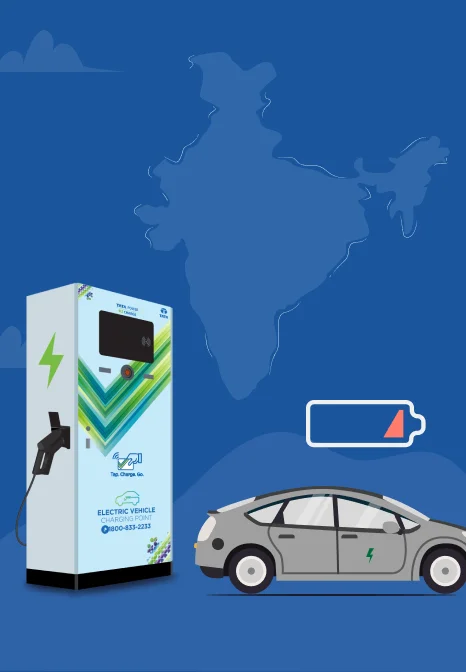
India's public charging network is expanding, but its reach is not yet uniform across the country. The vehicle-to-charger ratio has improved from roughly one charger for every 250 EVs to about one for every 175, indicating that charging access is becoming more closely aligned with the growing EV base. Here is how the network is shaping up:
Leading states
Maharashtra and Karnataka currently lead the country in charger density, followed closely by Uttar Pradesh, Tamil Nadu, and Telangana.
Metro concentration
Delhi NCR, Bengaluru, Mumbai, Chennai, and Hyderabad account for the highest concentration of fast chargers, largely because that is where EV ownership is currently highest.
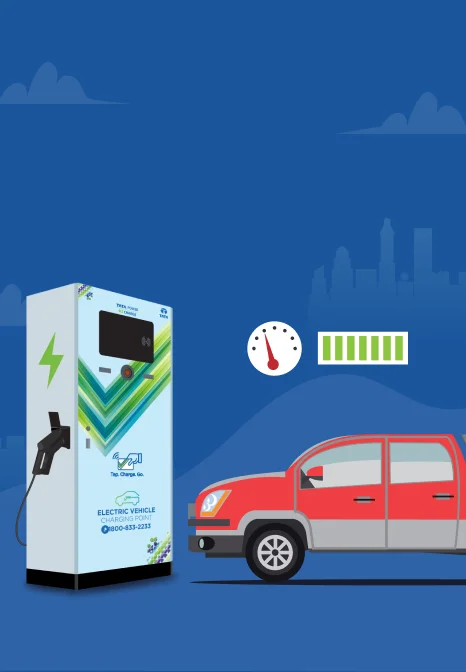
Highway and smaller towns
Still catching up to the metros, though this is an area receiving increasing policy attention.
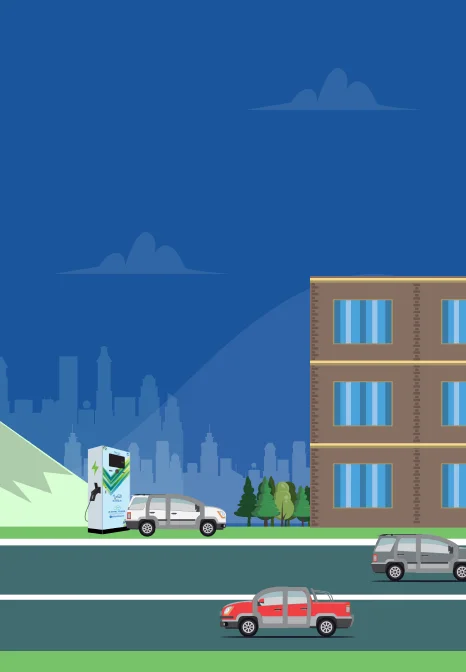
Policy support
Schemes like FAME-II and its successor, PM E-DRIVE, have directed dedicated funding toward public charging infrastructure, backed by a reduced 5% GST rate on EVs and chargers.
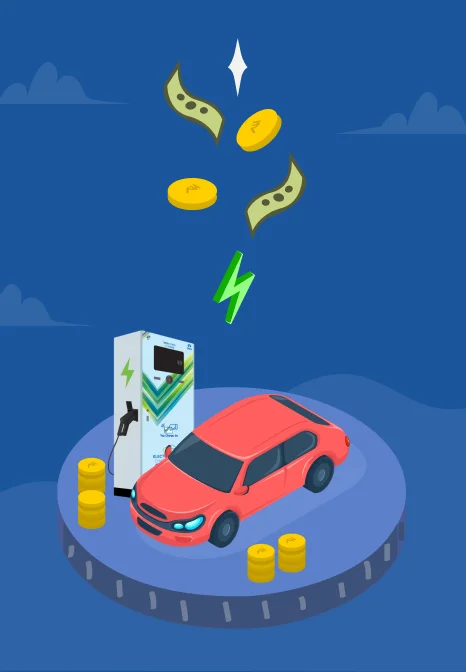
Improving accessibility
The growing charger base is helping narrow the gap between charging infrastructure and EV adoption, although availability still varies significantly by location.
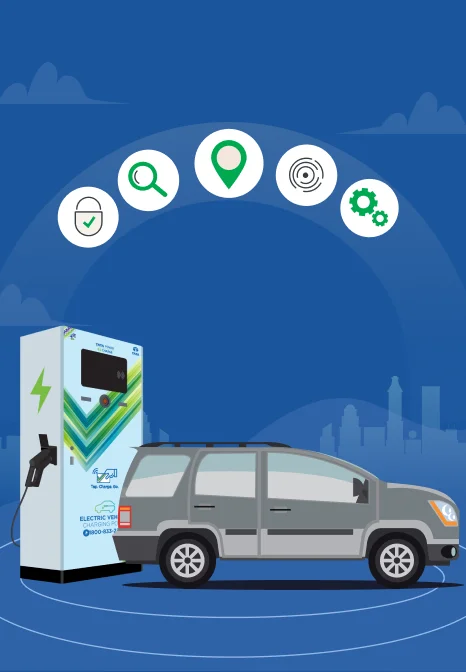
For drivers, however, the size of the network is only one part of the equation. What matters just as much is what it costs to use.
How much does public EV charging cost in India?
Public EV charging in India typically costs more per unit than charging at home, usually somewhere between the state's residential electricity tariff and roughly double that, depending on the operator, the city, and whether you are using AC or DC fast charging. DC fast charging usually sits at the higher end of that range, since it draws more power and is priced accordingly. Operators factor in real estate, equipment, and maintenance costs into their per-unit or per-session pricing, which is why rates can vary noticeably even between two stations in the same city. For most EV owners, home charging remains the cheaper default, and public charging becomes the practical trade-off for convenience: topping up during a longer trip, or charging without access to a home setup at all. What you actually plug into to get that charge, though, is its own question worth understanding.
What types of EV chargers are available at public charging stations in India?
Every public charging station in India uses either AC or DC charging. AC charging includes slower Level 1 and Level 2 options, while DC charging delivers power directly to the battery for a much quicker top-up. What you actually use on any given day comes down to your vehicle's connector, charging capability and the station's available output, and in India, charging standards have become fairly standardised.
CCS2 has emerged as the go-to connector for DC fast charging in passenger cars, while Type 2, GB/T, and Bharat AC-001 cover most Level 2 AC charging, all following technical guidelines the Ministry of Power laid out to bring order to what was once a fairly fragmented landscape. Connectors are also expected to meet IS-17017 safety and compatibility standards, so a station built to spec should work reliably regardless of which operator runs it.
Connector type and charging speed are related but separate questions. We have mapped out exactly how they connect, and what kind of speed to expect from each level. Explore EV charging speeds and levels
Where can you find public EV chargers in India?
Public chargers in India show up most often at malls, offices, hotels, hospitals, residential societies, and a growing number of highway corridors, with a mobile app usually the fastest way to spot one nearby.
- Malls and multiplexes: among the earliest adopters, since charging time pairs naturally with shopping or a movie.
- Office complexes and business parks: increasingly common for employees with longer commutes.
- Hotels, hospitals, and residential societies: added steadily as a convenience for visitors and residents.
- Highway corridors: the newest and fastest-growing category, key to making long-distance EV travel realistic.
- Charging apps: most show live station locations, real-time occupancy, connector types on offer, and let you start and pay for a session from your phone.
- Multiple networks: different operators run independent networks, so many drivers end up using more than one app, especially outside their home city.
- A unified platform on the way: under the PM E-DRIVE scheme, a single digital platform is being developed to let users locate, check, and pay across networks through one interface.
A practical habit worth building on longer trips is to never treat a single app's “available” status as the final word. Charger uptime varies, so keeping a backup option mapped within reasonable distance of your stop can save you an unpleasant surprise on routes where charging density is still thinner.
How long does it take to charge an EV at a public station?
Charging an EV at a public station in India can take anywhere from a few hours to under an hour, depending on the charger type, its power output, the vehicle's battery capacity and the battery's existing charge level.
Level 1 charging, the slowest option, using a standard household-style outlet, can take anywhere from 8 to over 24 hours for a full charge, which is why it rarely shows up at public stations and works better overnight at home. Level 2 AC charging, the kind you will find at most malls, offices, and residential complexes, typically takes a battery from low to full in 4 to 8 hours. DC fast charging, the option most public stations and highway stops are built around, can add a meaningful amount of range in just 20 to 60 minutes, which is why it is the default choice when you need a quick top-up rather than a full charge.
Battery capacity, the charger's actual power output, ambient temperature, and how full the battery already is when you plug in all affect the time and speed of your EV’s charge. Here is a detailed look at EV charging time and technology in India.
How do you find the right public charging station in India?
Finding the right public charging station comes down to matching a handful of factors, connector compatibility, charging speed, pricing, and station uptime, to your specific trip, rather than just picking whichever one is closest. Smaller details like parking access and nearby amenities matter too, and together they decide whether a station is genuinely convenient or just technically available.
If you’re not sure how to find the best public charging station for your EV, consider this checklist before you drive. Explore more
What charging etiquette should you follow at public stations?
Good charging etiquette in India comes down to a few simple habits: not overstaying once your vehicle is fully charged, being mindful of how you park relative to the charging bay, and reporting faulty equipment rather than leaving the next driver to find out the hard way. These small courtesies become even more important when stations are busy or charging bays are shared.
For the finer points of sharing a charger, managing your charging time, and being considerate of other EV drivers, see our complete handbook on EV charging etiquette in India
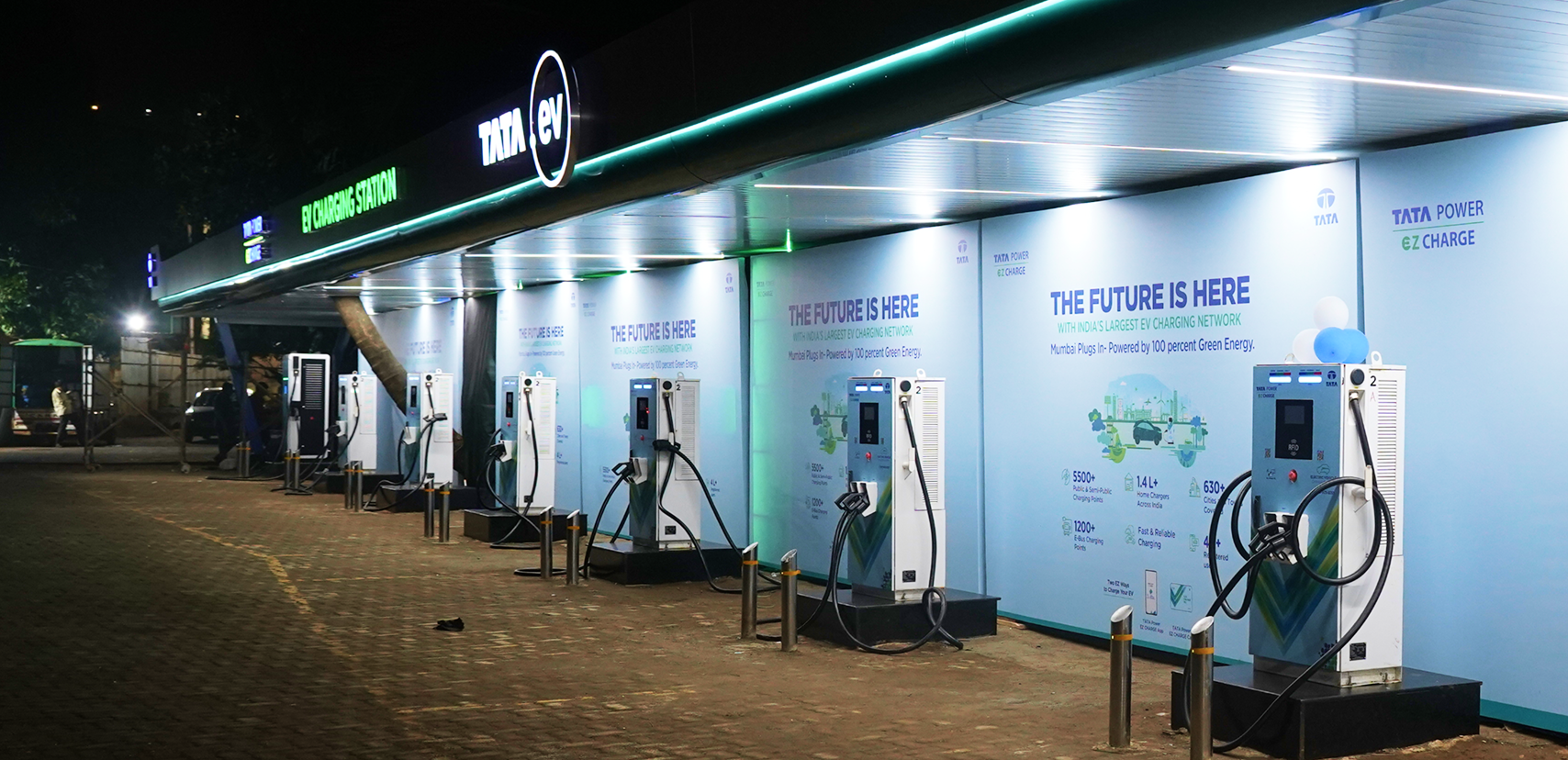
Why does the right charging station actually matter?
The right charging station matters more than it seems. Pick wrong, and you lose time, second-guess longer drives, and end up paying more than you need to over time. It is tempting to think one public charger is much like another, plug in, wait, drive off, but in practice the station you pick shapes almost everything about the experience.
- Time is the real cost: an occupied or out-of-service charger does not just waste minutes, it can derail a tightly planned trip, especially on intercity routes where backup options are still thin.
- Range anxiety fades with reliability: knowing a station will actually work when you arrive is often what decides whether someone takes an EV on a longer drive at all.
- Pricing adds up over time: per-unit rates vary meaningfully between operators, so a station chosen at random is not necessarily the most cost-effective one for regular use.
- Consistency simplifies ownership: sticking with a network you trust removes the guesswork of checking reviews or hoping a random station works, trip after trip.
- Not all networks are built the same: uptime, app experience, and spread across cities and highways vary widely between operators, and that gap is exactly what separates a good charging experience from a frustrating one.
This is precisely the gap a well-built, reliable network is meant to close, and it is why a name like Tata Power EZ CHARGE carries real weight for EV owners deciding where to plug in.
Why choose Tata Power EZ Charge for public charging?
A good public charging network does more than putting chargers on the map. It should make the entire charging experience easier, from finding a suitable station to starting a session and getting back on the road. That is the experience Tata Power EZ CHARGE has built its network around, bringing together a wide charging footprint with an app that helps drivers locate and use chargers with less guesswork.
- Reach that actually matters: Over 6,700 public, semi-public, and fleet charging points spread across more than 690 cities and towns, so the network shows up in more places than just the metros.
- Built for the full journey: Recent highway expansions along routes like the Delhi-Mumbai Expressway, NH-65 in Telangana, and NH-66 in Karnataka are extending fast charging into intercity corridors, not just city centres.
- A trusted, growing base: More than 5 lakh registered customers and over 2 lakh home chargers installed nationwide, backed by the same Tata Group standards of reliability customers already know.
- Reliability that has been independently noted: Third-party assessments of Indian charging networks have placed EZ CHARGE among the most consistently uptime-reliable options in the country, a meaningful reassurance on a route with no backup plan.
- A simpler charging experience: The EZ CHARGE app shows live station locations and real-time availability, with RFID and UPI-enabled payments for quick tap-and-charge access.
- Everywhere you actually need it: Chargers placed across malls, hotels, hospitals, offices, and residential societies, in addition to the growing highway network.
Whether it is a quick top-up between errands or a longer stretch on the highway, having a dependable charging network makes it easier to stay on the move. And when charging is available at a place you visit regularly, it becomes even simpler. No searching for a station or planning an extra stop. You can charge while you work, shop, live or go about your day. Tata Power EZ CHARGE can help bring that convenience to your location.

Better charging starts now
Stay ready for what’s next with charging built around the way you move
Bottomline
Public EV charging in India has moved a long way from being a niche convenience to becoming genuine, everyday infrastructure, and it is still very much a work in progress. The chargers are multiplying, the policy support is real, and the experience of finding, choosing, and using a station is steadily getting smoother, even if some gaps remain in smaller towns and along certain highway stretches. For anyone driving or considering an EV in India today, understanding how this ecosystem works, and knowing which network you can count on, makes the whole experience considerably less daunting.
Frequently asked questions
The frequently asked questions section is a reliable source for unlocking answers to some of the most crucial inquiries. Please refer to this section for any queries you may have.
- FAQ
Public EV charging is available across India, with chargers installed in cities, highways, commercial locations, workplaces, residential communities and other destinations. However, charging availability is more concentrated in major cities and some states, while smaller towns and certain highway stretches continue to see network expansion.
Public EV charging in India generally costs more than charging at home, with the final price varying by operator, location, charger type and applicable tariffs. DC fast charging is typically priced higher than AC charging because of the higher power output and infrastructure involved.
Charging an EV at a public station can take anywhere from around 20 minutes to several hours, depending on the charger, vehicle and battery. DC fast chargers can provide a substantial top-up in 20–60 minutes, while AC charging generally takes longer.
Not every electric vehicle can use every public charger because compatibility depends on the vehicle's connector, charging standard and supported power level. In India, Type 2 is widely used for AC charging and CCS2 is common for DC fast charging, but drivers should check their vehicle's specifications before choosing a station.
You generally do not need a subscription to use public EV chargers in India, although individual charging networks may offer memberships or plans with additional benefits. Most networks allow drivers to locate a charger, start a session and make a payment through an app or other supported payment method.
You can pay for public EV charging in India through methods such as mobile apps, UPI, RFID cards and other digital payment options supported by the charging operator. The available methods vary by network and station, so checking the payment options before starting a journey can help avoid delays.
You can check whether a public charger is available and operational through the charging network's app, where supported, before reaching the station. Live status, connector availability and occupancy information can help you choose a suitable charger, although actual availability can change by the time you arrive.
Public EV charging is generally safe in rain and hot weather when the charger, vehicle and installation meet applicable safety standards and are used correctly. Drivers should avoid using visibly damaged equipment, exposed connectors or flooded charging areas and should follow the charging operator's safety instructions.
Keep reading...
View all