



Introduction

Think solar panels just sit in the sun and print money? Not quite. Behind every steady kilowatt-hour is a team watching strings, chasing hotspots, and wiping away dust. This blog busts nine common solar O&M myths in India, shows what really happens in the field, and shares insights from Tata Power's O&M experts so your plant keeps performing for decades.

A field study at IIT Gandhinagar found that dust alone can trim solar output by about 0.37% every single day. Left unchecked, that adds up fast, which is why it pays to separate what solar O&M really needs from what people wrongly assume.

What are the most common solar operations and maintenance myths in India?

The nine most common solar O&M myths in India include beliefs that panels are maintenance-free, rain keeps them clean, and hotter weather improves efficiency. Here is what each misconception looks like, and the reality behind each.

9 solar O&M myths vs facts in India every plant owner should know about:

Solar panels requiring regular inspection and maintenance

Myth 1: Solar panels are maintenance free

Rainwater cleaning solar panels naturally

Myth 2: Rain keeps panels clean

Impact of high temperatures on solar panel efficiency

Myth 3: Hotter weather means higher module efficiency

Solar panel visual inspection and plant health monitoring

Myth 4: If the glass looks clean, the plant is healthy

Preventive maintenance for solar power plants

Myth 5: You only need a technician when something stops working

Drone-based inspection of large solar power plants

Myth 6. Large plants need people walking every row to find problems

Proper water pressure for solar panel cleaning

Myth 7: Any water and any pressure will do for cleaning

Shading and soiling impact on solar panel performance

Myth 8: One dirty or shaded panel shuts down the whole plant

Solar panel reliability and downtime management

Myth 9: Premium panels mean downtime hardly matters

Myth 1: Solar panels are maintenance free

Reality: Solar panels have no moving parts, so wear and tear is relatively low. But low maintenance does not mean zero maintenance. Dust and bird droppings can reduce output, while damaged cables and inverter alerts can signal faults that need attention. Regular visual inspections, performance monitoring and planned cleaning help identify issues early and keep the plant performing efficiently.

Myth 2: Rain keeps panels clean

Reality: Rain washes off light dust, but it leaves behind sticky residue and bird droppings. In dry or dusty regions, this layer builds up between showers and blocks sunlight. Cleaning schedules should follow local conditions such as dust levels, construction activity, and rainfall patterns. Tata Power also uses AI and ML tools to detect soiling on panels, so panel cleaning is based on data and not guesswork.

Myth 3: Hotter weather means higher module efficiency

Reality: This is one of the most common questions Tata Power's O&M team hears. Clients often wonder why generation does not rise with the heat. The answer is that output depends mainly on how intense the sunlight is, not on how hot the day feels. In fact, modules lose a little efficiency as they heat up. A bright, cool day can beat a hot, hazy one.

Myth 4: If the glass looks clean, the plant is healthy

Reality: A clean surface says little about what is happening inside the system. Hotspots, bypass diode issues, loose wiring, bird nesting under the array, or shade from growing trees can all hurt output while the panels look spotless. Tata Power's teams use thermal imaging and string current comparisons to find weak strings that the eye cannot see.

If you want to see what a complete O&M routine looks like beyond cleaning, let’s get started with the basics.
Myth 5: You only need a technician when something stops working

Reality: Waiting for a failure is one of the costliest habits in solar O&M. Many losses happen quietly, through an underperforming string or a slowly heating connection. Any electrical fault gives off heat, so thermography can catch it early. At Tata Power, drone-based thermal inspections have flagged abnormal strings and module heating before conventional alarms went off. Even small steps help, such as silicone coating on switchyard equipment and HT panels to prevent moisture-related tripping. Early action protects equipment life and avoids unplanned downtime, which makes O&M an investment and not just an expense.

Myth 6. Large plants need people walking every row to find problems

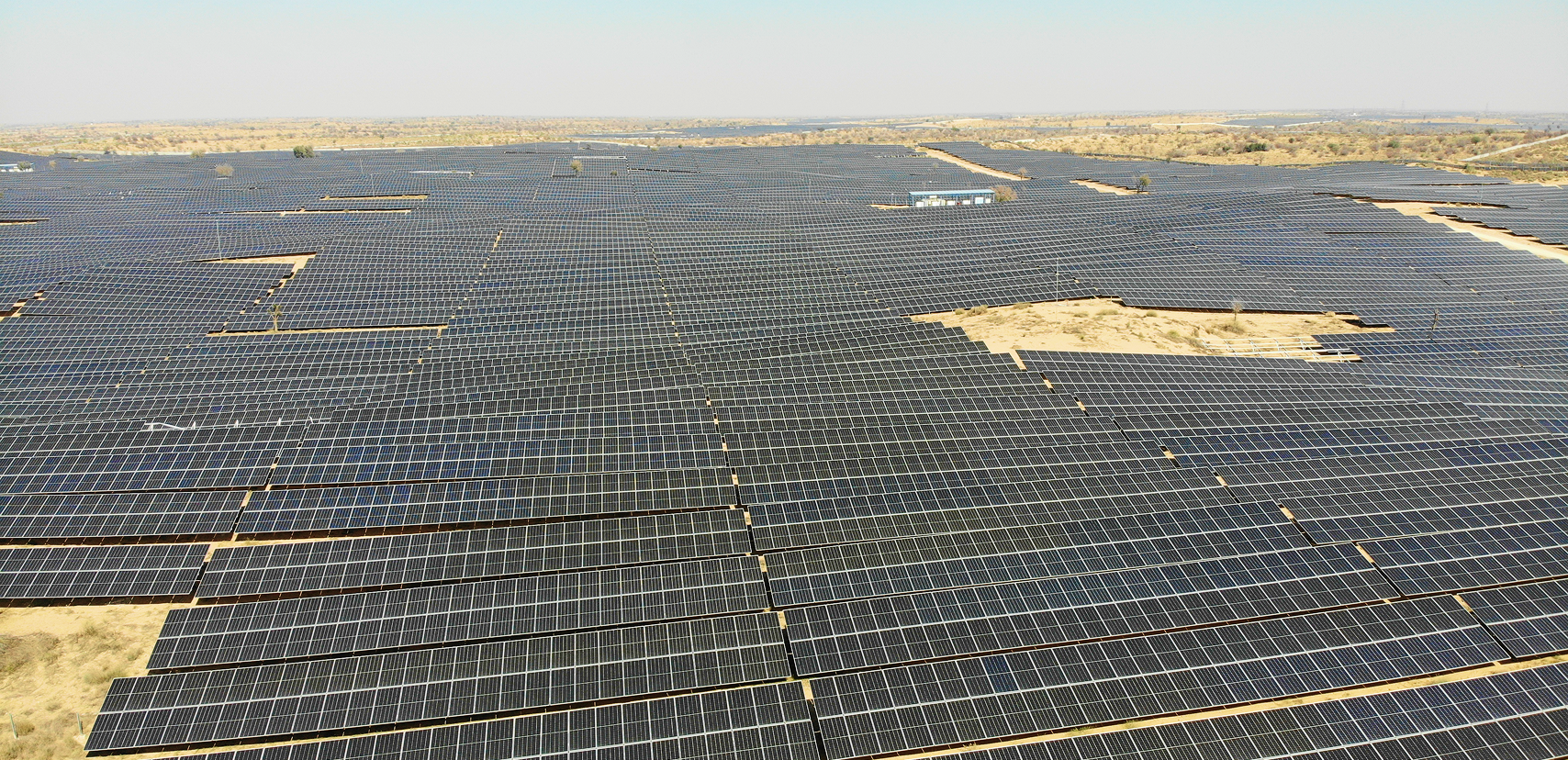
Reality: On sites spread over hundreds of acres, constant walk-throughs are neither practical nor efficient. Digital tools do much of this work now. SCADA gives teams a live view of the plant from a central room, down to individual clusters. CREAMS adds a wider view by comparing actual and expected generation across the portfolio. Tata Power's Central Control Room for Renewable Assets (CCRA) brings AI and ML-based monitoring of solar and wind assets into one place. Drones carry thermal cameras, and a web portal maps and geo-tags each anomaly for quick correction. Field teams also use a mobile app for work orders, checklists, and breakdown reports. On the planning side, AI-based forecasting improves day-ahead predictions and helps reduce DSM charges.

Tata Power’s Noorsar renewable energy project

Large solar plants need smarter monitoring, not just manual inspections 

Myth 7: Any water and any pressure will do for cleaning

Reality: High-pressure jets can damage cells and sealants, and they can push water into electrical parts. Household soaps often leave a film that attracts more dust. The safer approach is soft brushes with low TDS water, applied gently. Because rooftop work and DC wiring carry real risk, deeper servicing is best left to trained technicians.

Myth 8: One dirty or shaded panel shuts down the whole plant

Reality: Dirt or shade cuts output from the affected panel or string, not from the entire plant. Ignoring it is still costly. A shaded or dirty cell can overheat and form a hotspot, and a weak string can hold back the inverter input it feeds. Trimming trees, clearing debris, and using well-set trackers help reduce shading losses.

Myth 9: Premium panels mean downtime hardly matters

Reality: A high-efficiency panel earns nothing while it sits idle. If a plant waits days for a spare part or an inverter fix, the lost generation can wipe out the efficiency gain you paid for. Availability and response time matter as much as the datasheet. That is why Tata Power's O&M teams focus on critical spare management, clear outage procedures, and trained crews who can respond to emergencies quickly. This expertise has also earned TPREL recognition from the Government of Madhya Pradesh for the development, commissioning and O&M of its 330 MW Neemuch Solar Power Plant.

Look closely and all nine myths share one flaw. They treat a solar plant as something that can be set up once and left alone. In practice, steady attention is what keeps the energy coming. As opposed to popular belief, this maintenance cannot be done alone. It requires a robust team of professionals who understand what’s best for your setup.

If you are planning to go solar and want a system that is set up to perform for years, Tata Power might be the answer for all your needs.

Bring expert care to your solar journey from day one

Bottomline

Solar O&M is not about constant effort or heavy spending. It is about the right checks at the right time. Clean panels are only one part of the picture, and early detection through thermography, SCADA, and analytics does more to protect generation than reacting after a fault. With about 4,500 MW of renewable capacity under management, Tata Power's O&M teams see these patterns every day. Dropping these myths helps plant owners keep output steady, avoid surprise downtime, and get the most from every sunny hour.

Frequently asked questions

The frequently asked questions section is a reliable source for unlocking answers to some of the most crucial inquiries. Please refer to this section for any queries you may have.


A solar operations and maintenance (O&M) service typically includes panel cleaning, equipment inspections, performance monitoring, preventive maintenance, fault detection and repairs. It may also cover inverter and transformer checks, electrical testing, spare parts management and safety inspections. The scope depends on the system size, site conditions and service agreement.


Drones help inspect large solar plants quickly by capturing thermal images that reveal hotspots, abnormal module temperatures and underperforming strings. These inspections allow O&M teams to identify potential faults without manually checking every panel, reducing inspection time across large sites. When combined with geo-tagging and digital reporting, drone data helps teams locate anomalies and prioritise corrective action.


SCADA (Supervisory Control and Data Acquisition) monitoring improves solar plant performance by providing real-time visibility into generation, equipment status and system faults. It helps O&M teams identify abnormal readings, track performance and respond to issues before they cause prolonged downtime. By analysing plant data centrally, teams can improve fault detection, reduce generation losses and make maintenance decisions more effectively.


Preventive maintenance involves scheduled inspections and servicing to reduce the likelihood of equipment failure. Predictive maintenance uses performance data, sensors and tools such as thermography to identify potential faults before they cause downtime. Reactive maintenance takes place after a fault or breakdown occurs, which can lead to unexpected generation losses and higher repair costs.


A solar system may be underperforming if its energy generation consistently falls below expected levels under comparable sunlight and weather conditions. Check your monitoring app or inverter data for declining output, unexplained shutdowns, error alerts or differences between strings. Dust, shading, damaged cables, inverter faults and equipment degradation can all contribute to lower generation, so persistent drops warrant a professional inspection.


No, a higher module efficiency rating does not eliminate the need for solar operations and maintenance. Efficiency indicates how effectively a panel converts sunlight into electricity under specified conditions, but dust, shading, wiring faults and inverter issues can affect any module. If you’re still thinking whether O&M can be beneficial for you, here is a blog that can help: 9 reasons why solar O&M is important for your business.

Sources

1. IIT Gandhinagar, Solar Energy, vol. 204, 2020. Low-cost solar PV soiling sensor validation and size resolved soiling impacts

2. LinkedIn, 4 solar O&M myths that could be hurting your returns

3. PowerFactors, Myth 1, solar O&M is easy

4. PowerFactors, 7 solar O&M myths we need to stop believing

5. Nettoyage Panneau Solaire, Solar panel maintenance, stop the misconceptions

6. Sunlimited, Solar panel servicing myths, facts, and maintenance guide

7. iFBOT, Solar panel cleaning myths debunked

8. In-Tec Energy, Solar operations and maintenance efficiency

Disclaimer
*The information provided in this blog has been compiled from multiple sources, including official company websites and other publicly available open-source platforms, believed to be reliable at the time of publication. However, such information may change over time, may not always reflect the most current developments, and may become outdated.
This content is intended solely for general informational purposes and should not be construed as professional, technical, financial, or legal advice. Tata Power does not guarantee the accuracy, completeness, or reliability of the information presented and shall not be held responsible for any loss or damage arising from reliance on this content.
Readers are advised to independently verify information from relevant official sources and conduct their own due diligence before making any decisions based on the content of this blog.