


 Contact us
EV charging solutions for offices support everyday EV commuting


Introduction
A workplace EV charging solution in India is quietly becoming the backbone of everyday EV usage. According to NITI Aayog’s EV adoption analysis (2025), India’s EV market has scaled rapidly from under 50,000 vehicles in 2016 to over 2 million annually, with penetration in this sector steadily rising. The real challenge is no longer the adoption of EVs. It is access to consistent, convenient charging during the day.
Offices are uniquely placed to solve that gap because vehicles stay parked for longer hours there than almost anywhere else. That makes the workplace charging one of the most practical ways to support EV users without disrupting daily routines. If you are planning to bring EV charging into your workplace, this blog will walk you through what actually matters and how to get it right.
What does a complete workplace EV charging solution include?
A complete workplace EV charging solution starts with understanding employee demand and setting up the right infrastructure. It then moves into running reliable corporate EV charging stations day to day, and scales through clear policies and smart EV charging for workplaces. When done right, an EV charging solution for offices becomes easy to use, efficient to manage, and built for future growth.
1. Build your EV-ready workplace
An EV charging solution for offices works only when it is planned around actual demand and infrastructure realities.
Start with the demand for clarity. Identify how many employees currently own EVs, how many are likely to switch in the next few months, and whether new hires own or plan to own an electric vehicle. This helps determine the number and type of chargers required.
Then focus on infrastructure readiness:
- Power capacity assessment of the building
- Selection between AC chargers (3.3–7 kW) and DC fast chargers
- Parking space allocation for EVs
- DISCOM coordination for load upgrades
The Ministry of Power, Government of India, states, “Charging of electric vehicles is a de-licensed activity.” This means businesses can set up corporate EV charging stations without complex approvals, as long as technical standards are followed.
Another clarification from the Ministry of Power is that “EVs can be charged using existing electricity connections at workplaces, which reduces both setup complexity and cost.”
The key is to plan for scale. EV adoption is rising quickly, so your system should expand without requiring a complete redesign.
2. Ensure reliable performance of workplace EV chargers
Installing corporate EV charging stations is only the starting point. Performance over time determines whether the system actually works.
Here are simple ways to keep things running smoothly -
- Routine servicing: Schedule periodic technical checks
- Software updates: Keep charging systems updated for performance
- Usage monitoring: Track how often chargers are used
- Fault reporting system: Allow employees to report issues quickly
Standards such as IS 17017 define safety and performance benchmarks for EV charging infrastructure in India. Following these standards ensures both compliance and reliability.
This is where smart EV charging for workplaces becomes essential. Smart systems allow businesses to -
1. Track energy consumption
2. Balance electrical load across chargers
3. Optimize charging schedules during peak hours
Maintenance is not reactive. The goal is to prevent downtime before it happens.
3. Enable seamless charging with clear workplace policies
A good policy defines how employees use the chargers. It should cover parking rules, charging duration, and payment structure if applicable.
For example, some companies offer free charging, while others charge per session or unit of electricity. The approach depends on your business goals and costs.
Key elements of a strong policy -
- Access rules: Who can use the chargers
- Time limits: Prevent long occupancy of charging spots
- Cost structure: Free, subsidized, or paid charging
- Booking system: Optional but useful for high demand
Workplaces should treat policies as evolving systems. They should update rules based on actual usage patterns instead of fixed assumptions.
4. Unlock business value & benefits through workplace EV charging
A workplace EV charging solution in India delivers both immediate and long-term value when executed correctly.
Immediate benefits
1. Removes range anxiety for employees
2. Makes EV ownership more practical
3. Improves overall workplace convenience
Strategic impact
1. Aligns with India’s EV adoption targets and sustainability goals
2. Strengthens ESG positioning and brand perception
3. Positions the company as future-ready
Operational advantages
1. Optimizes electricity usage through smart EV charging for workplaces
2. Reduces long-term fuel dependency
3. Prepares infrastructure for scaling EV demand
Companies that install corporate EV charging stations early are not just supporting employees. They are building an ecosystem advantage that compounds over time.
A workplace EV charging solution is one piece of a much larger EV infrastructure puzzle. To explore the full picture - Unlock the full EV charging playbook
Power Your Knowledge!
Choose correct statement.
What does a real-world workplace EV charging ecosystem look like?
India’s EV ecosystem is already moving toward integrated charging networks.
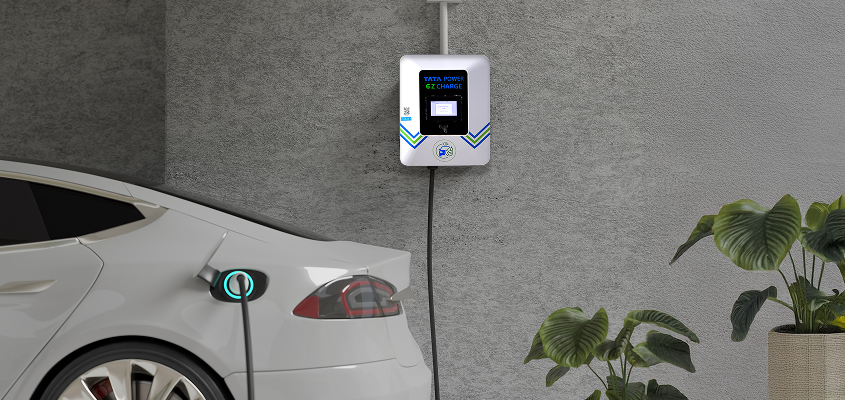
Tata Power EZ CHARGE has built one of India’s largest EV charging networks across homes, highways, and workplaces with more than 5,500 charging stations across the country. This shows that an EV charging solution for offices works best when it is part of a connected ecosystem rather than a standalone installation.
In practice, this means employees can charge at home, top up at work, and rely on public infrastructure when needed. Workplace charging becomes a critical middle layer in this journey.
Clean energy is no longer a leap, it is just a stop along the way with EZ CHARGE stations in India
Where workdays meet smarter EV charging
Make EV charging a daily habit with seamless, scalable workplace solutions.
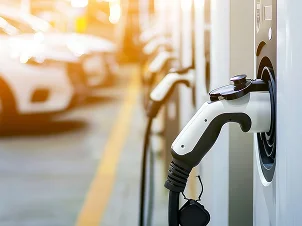
Start smart. Scale faster
Assess demand, plan power, deploy chargers built for future growth.
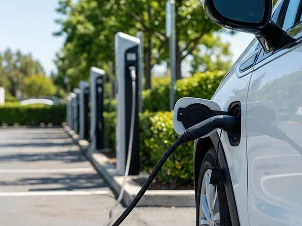
Make every charge count
Maintain uptime with smart monitoring, updates, and reliable system performance
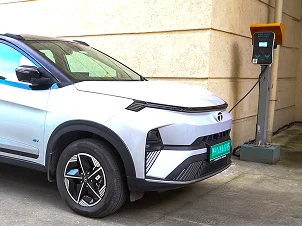
Rules that keep the EVs moving
Set clear access, timing, and pricing for smooth daily usage
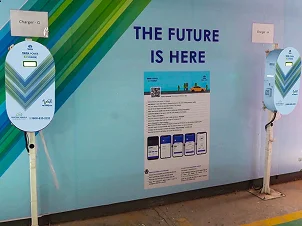
More than just charging
Boost satisfaction, sustainability, and brand value while preparing for EV growth

Bottomline
A successful workplace EV charging solution in India is defined by execution across four areas: demand planning, infrastructure setup, operational reliability, and policy clarity. Businesses that get this right create a system that works daily without friction. This improves employee experience, strengthens sustainability goals, and prepares operations for the next phase of EV growth. The real advantage is not installing chargers. It is in building a system that scales, performs consistently, and integrates seamlessly into everyday workplace operations.
Frequently asked questions
The frequently asked questions section is a reliable source for unlocking answers to some of the most crucial inquiries. Please refer to this section for any queries you may have.
- FAQ
Workplace charging fills a critical gap between home and public charging. With EV adoption rising faster than infrastructure, workplaces provide a reliable charging point during the day. This reduces dependency on public stations and supports daily commuting needs. A strong network of workplace EV charging solutions will be key to achieving India’s EV adoption targets.
The cost to set up corporate EV charging stations varies based on charger type, installation complexity, and electrical upgrades. AC chargers are relatively affordable, while DC fast chargers are more expensive. Additional costs may include wiring, civil work, and load upgrades.
Most offices might prefer AC chargers because they are cost-effective and suitable for long parking durations. DC fast chargers are useful for quick top-ups but require higher investment and power capacity. The right EV charging solution for offices depends on employee usage patterns, available power, and budget. A mix of both is often the most practical approach.
Yes, workplace EV charging can reduce operational costs, primarily through lower energy and maintenance expenses. In India, EVs typically cost around ₹0.80–₹1.50 per km to run, compared to ₹6–₹8 per km for petrol vehicles, significantly reducing fuel spend. When combined with smart charging and controlled electricity usage, businesses can further optimize energy costs and improve long-term cost efficiency.
Yes. As per the Ministry of Power guidelines, setting up EV charging infrastructure is a delicensed activity. Any business can install chargers without needing a special license, provided they follow technical and safety standards. This has made it easier for companies to adopt EV charging solutions for offices and support employee EV usage.
It is not mandatory for all offices, but several states like Delhi, Maharashtra, and Karnataka have policies encouraging or mandating EV charging infrastructure in new commercial buildings. These policies aim to support EV adoption and reduce pollution. Businesses are encouraged to integrate charging points early to stay compliant with evolving regulations and future-proof of infrastructure.
Many urban employees lack dedicated parking or home charging access. Workplace EV charging provides a reliable alternative, making EV ownership practical for them. Studies and government-backed guides highlight that access to workplace charging reduces dependence on public infrastructure and supports daily commuting needs more effectively.
Yes, when installed as per proper standards. EV chargers must comply with safety norms set by agencies like the Bureau of Indian Standards and the Central Electricity Authority. Regular inspections, proper earthing, and certified equipment ensure safe daily operation and reduce risks such as electrical faults or overheating.
The number of chargers depends on employee demand, parking availability, and charging duration. Government-backed workplace charging guides suggest assessing current EV users and future adoption trends before installation. A mix of AC and DC chargers is often recommended to balance cost and efficiency, especially in offices with varying charging needs.
Sources
1. Electric vehicle owners can now use existing connections at home, office for charging
2. Workplace Charging Guidebook
3. Still unregulated: Know how to navigate stations
4. A guidebook for employers on planning, installing, and managing electric vehicle charging at the workplace in Delhi
5. India’s EV Revolution Accelerates | 2.3 Million EVs Sold in 2025, Emerging as Global EV Tech Hub
Keep reading...
View all