


 Contact us
Round-the-clock renewable energy production, now backed by solar power


About Usha Spincoat
Usha Spincoat Pvt. Ltd. is a spinning and textile manufacturer that runs power-intensive processes around the clock. As the company scaled capacity, it set a clear objective: secure energy that is dependable, predictable, and safe so that production lines can run without avoidable interruptions and without rising electricity costs undermining margins.
Background
With growth came a sharp rise in electricity demand. Grid tariffs were increasing, and supply variability could cascade through heavy machinery. Usha Spincoat’s team evaluated clean energy options that would give greater control over availability and cost. Rooftop solar emerged as the most practical pathway to lower bills, stabilize day-to-day operations, and build long-term energy independence. Usha Spincoat partnered with Tata Power to engineer and support a utility-grade Solaroof system optimized for an industrial campus with mixed roof types.
The challenge
Running an active spinning and textile unit involves substantial energy consumption, continuous operations, and strict infrastructure constraints. Usha Spincoat faced several hurdles that needed to be addressed before transitioning to solar power -
1. Continuous high energy demand - The plant’s spinning and ancillary equipment require steady, high-quality power, which leaves little room for fluctuations. Any instability can impact throughput and downstream processes.
2. Escalating grid costs - Rising tariffs were directly affecting unit economics. The company needed a solution that would meaningfully reduce the energy line item and improve planning certainty.
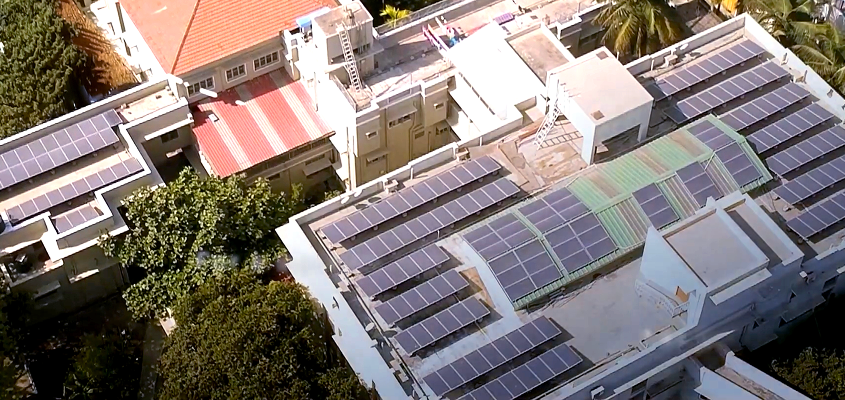
3. Complex rooftops - The site combines RCC and metal roofs. Each surface needs a different mounting approach and careful layout planning to protect the roof and maximize solar yield.
4. Zero production disruption - Installation had to proceed while the factory remained fully operational. Work scheduling, access management, and safety controls needed to be designed so that production never paused.
5. Strict safety protocols - Maintenance access must be safe for technicians. The plant also needed built-in measures that protect people and assets over the system’s life.
6. A clear business case - The investment had to deliver payback at an industrially acceptable pace and leverage available incentives so that the project met financial expectations.
The decision
Usha Spincoat ran a rigorous evaluation to identify a partner with industrial credentials. Tata Power was selected for its ability to design site-specific systems, execute in active plants without disruption, and provide long-term service support. The team valued the combination of engineering depth, safety culture, and performance assurance.
“We’re happy with our decision,” said the Usha Spincoat team, reflecting confidence in both delivery quality and early results.
The Tata Power solution
Usha Spincoat undertook a rigorous evaluation process to identify the right solar partner, one that could balance technical expertise, execution capability, and post-installation service.
Tata Power proposed a rooftop solar plant engineered to industrial standards and aligned to Usha Spincoat’s operational goals. The solution balanced output, safety, and maintainability. It was designed for the site’s mixed RCC and metal roofs, integrated with net metering, and supported through preventive maintenance and performance tracking so that yield remains consistent over time.
While this solution delivers measurable performance, understanding how solar panels generate and manage power can add valuable perspective, explore everything you need to know about solar panels in India.
The Implementation
The project was planned to protect production, people, and roofs at every step. Work advanced during live operations with controlled access and clear methods to achieve operational goals
1. Installed capacity - The plant totals 1,197.8 kW (about 1.20 MW), sized to make a visible dent in daytime demand while fitting available roof contours responsibly.
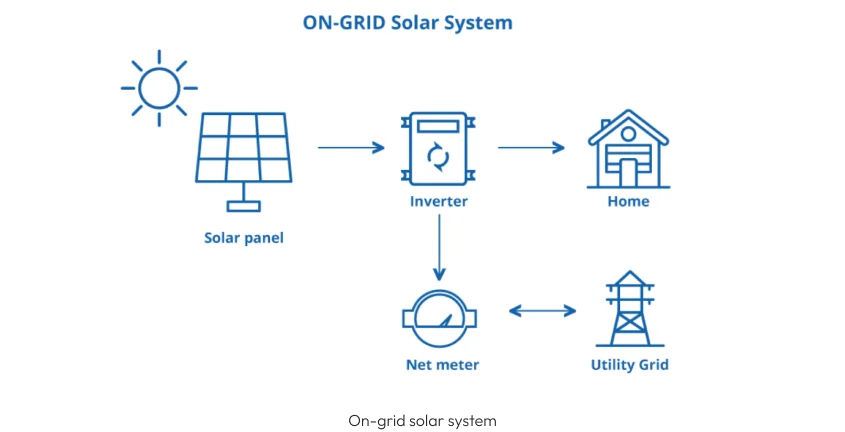
2. System type - A grid-connected, net-metered rooftop system allows the plant to consume solar power first and export surplus as permitted, improving overall economics.
3. Installation surface - Arrays span mixed RCC and metal rooftops, using mounting structures tailored to each surface so that roof integrity and drainage are maintained.
4. Annual generation - The system is designed to produce 1,564,127 units per year, which supports core process loads and reduces dependence on the grid during solar hours.
5. Execution - Installation completed without production delay by sequencing work zones, limiting noisy activities to approved windows, and coordinating closely with plant teams.
6. Safety infrastructure - Walkways and safety lines provide secure access for inspection and cleaning, lowering the risk of slips, trips, and falls during routine upkeep.
7. Risk mitigation - Warranty and insurance coverage on inverters and modules reduce equipment risk and support predictable lifecycle costs for the plant.
Post-installation support - Preventive maintenance and performance monitoring were built into the plan so that the system remains healthy and output stays on track.
The impact
Operational reliability
1. Generates 1.56 million units annually, stabilizing daytime spinning loads and throughput.
2. Operates reliably in heavy rain and routine incidents, keeping production schedules intact.
3. Consistent solar output reduces daytime variability, enabling smoother, more predictable operations.
Safety and support
1. Walkways and safety lines enable safer cleaning and inspections for maintenance teams.
2. Warranty and insurance on modules and inverters reduce risk and speed resolutions.
3. Preventive maintenance with performance tracking sustains output and flags issues early.
Financial strength
1. Delivers an approximately five-year payback aligned with industrial ROI expectations.
2. Accelerated Depreciation and applicable schemes improve returns and cash flows.
3. The lower daytime grid cuts monthly energy costs and improves cost planning.
Next steps for scalability
Usha Spincoat’s partnership with Tata Power Solaroof shows that renewable energy can support a demanding, round-the-clock industry without compromising production. By turning rooftops into power assets, the company can reduce further risk, improve cost control, and strengthen business continuity for the long term. Here’s how:
1. Data-driven planning - Use generation and load profiles to shift more daytime processes toward solar supply and capture incremental savings.
2. Performance optimization - Review string-level trends to prioritize cleaning and corrective actions where they yield the most benefit.
3. Capacity options - Evaluate adjacent roofs and future load growth to plan the next tranche of capacity if business demand increases.
4. Lifecycle care - Continue scheduled preventive maintenance so that warranties remain valid and the system sustains target output year after year.
As industries across India look for ways to reduce costs and carbon impact, solar solutions like these are showing the way forward. By converting rooftops into renewable energy assets, Usha Spincoat has not only reduced its carbon footprint but also unlocked long-term energy security, one that future-proofs its spinning and textile operations against volatility and grid dependency.

Keep reading...
View all