


 Contact us


Sections
- Introduction
- What does the MSME landscape mean for rooftop solar in India?
- Why is MSME solar adoption in India still low?
- What are the key barriers to MSME solar adoption in India?
- What happens when MSMEs adopt solar at scale?
- What solutions are unlocking MSME solar adoption in India?
- How is Tata Power enabling SME solar solutions in India?
- How can MSMEs choose the right solar solutions in India?
- Bottomline
- FAQs
- Sources
Introduction
The MSME sector contributes around 30% to India’s GDP, over 35% of manufacturing output, and nearly 45% of exports (Ministry of Micro, Small & Medium Enterprises), while supporting livelihoods across the country. Yet despite its economic importance, MSME solar adoption in India remains limited even as solar deployment accelerates elsewhere.
This raises an important question. If solar has already scaled across India, why has that momentum not reached smaller businesses at the same pace? The answer may lie not in whether solar works, but in how easily it fits into the realities of MSME operations.
What does the MSME landscape mean for rooftop solar in India?
Why MSMEs think differently about energy
The gap is structural, not just awareness-led. Large corporates can evaluate solar through long-term savings, dedicated teams, and easier access to capital. MSMEs operate in a different reality, where decisions are owner-led, cash-flow driven, and risk-sensitive.
Even when SME solar solutions in India offer attractive payback, upfront costs, trust gaps and operational concerns often delay solar adoption despite the sector’s clear need and potential.
High energy dependence, low optimization
Despite their economic weight, many MSMEs operate in energy-intensive sectors such as textiles, metals and ceramics, together accounting for a sizeable share of India’s industrial energy use.
Unlike large industries, they often depend on grid supply at higher tariffs and with limited flexibility. This makes solar for small businesses in India financially compelling, but energy is still treated as an operating expense, not a strategic investment, leaving rooftop solar for MSMEs underused despite India’s rapid solar growth.
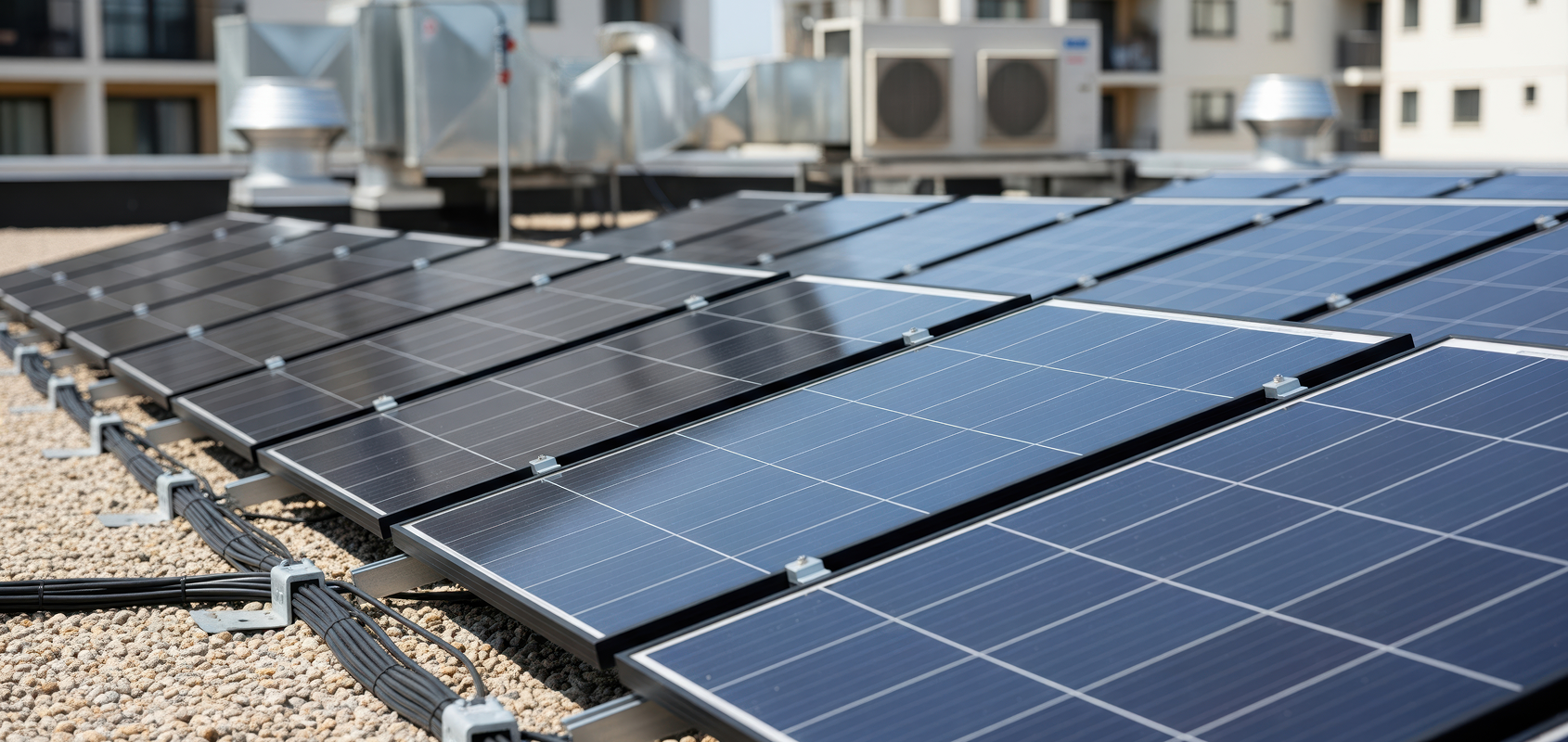 Solar for small businesses in India supports cost-smart growth
Why is MSME solar adoption in India still low?
Operational alignment that works in favor of solar
MSMEs are naturally aligned with how solar power is generated and consumed. Most units operate during daytime hours, allowing rooftop solar for MSMEs to directly offset grid electricity use without requiring storage or load shifting. This improves utilization and makes decentralized solar operationally relevant for the sector.
MSMEs also account for a significant share of industrial electricity demand, making them an important segment for India’s clean energy transition.
Cost pressure that makes solar financially compelling
Electricity is a major operating cost for MSMEs -
- Electricity costs account for 5–20% of operating expenses for MSMEs ORF, via Outlook Business)
- In energy-intensive clusters, this can rise to 20–40% (Source: PHDCCI)
- MSMEs consume a large share of industrial energy demand (Source: Roadmap for Green Transition of MSMEs, Niti Aayog)
This makes even small reductions in electricity costs financially meaningful. For many businesses, solar becomes less of a sustainability decision and more of a cost optimization strategy.
Unit economics with immediate savings
The economics of solar remain compelling -
- Rooftop solar tariffs: ₹3.8–₹6.5 per kWh (Source: Solar now)
- Grid tariffs: ₹5.6–₹9.9 per kWh (Source: Solar now)
This creates potential savings of ₹2–₹4 per unit, making SME solar solutions in India an attractive option for businesses operating on tight margins. Over time, these savings compound into meaningful cost reductions and improved competitiveness.
Large opportunity, limited adoption
Despite strong economics and operational alignment, adoption remains low.
- MSMEs hold an estimated 15–18 GW of untapped rooftop solar potential (Source: Horizon Renewable Power)
- Less than a fraction of this potential has been utilized due to financing and adoption barriers
MSMEs consume roughly half of industrial electricity while offering significant rooftop potential, yet deployment remains disproportionately low. This highlights the gap between the business case for rooftop solar for MSMEs and actual implementation.
What are the key barriers to MSME solar adoption in India?
Limited access to financing
For many businesses, the biggest challenge is not intent but capital.
- Upfront investment remains a hurdle under traditional CAPEX models
- Many MSMEs lack formal credit histories or collateral
- Small-ticket solar loans are often less attractive for lenders
As a result, viable projects frequently stall at the financing stage despite offering strong long-term returns.
Awareness and information gaps
Many businesses understand the concept of solar but lack clarity on:
- Savings potential and payback periods
- CAPEX versus OPEX models
- Available incentives and financing options
- Vendor selection and implementation pathways
Without trusted advisory support, solar for small businesses in India often remains a consideration rather than a decision. (Source: Climate Investment Funds, Deloitte)
Policy and regulatory complexity
Even when financing is available, businesses may face challenges related to -
- State-level variations in net metering policies
- Approval processes and documentation requirements
- Evolving regulatory frameworks
For smaller enterprises with limited internal resources, these complexities can delay adoption.
Operational constraints on the ground
Many MSMEs operate under practical limitations -
- Rented premises with limited rooftop control
- Shared industrial infrastructure
- Space constraints and fragmented demand
These challenges can make deployment difficult despite strong financial fundamentals.
Perceived risk vs immediate business priorities
At its core, the hesitation is behavioral as much as structural. MSMEs prioritize survival and liquidity -
- Investment decisions are short-term and cash flow-driven
- Solar is seen as a capital expense, not a strategic lever
- Limited internal bandwidth to evaluate and execute energy transitions
This is where SME solar solutions in India often fail to connect. The value proposition is long-term, while MSME decision-making is immediate.
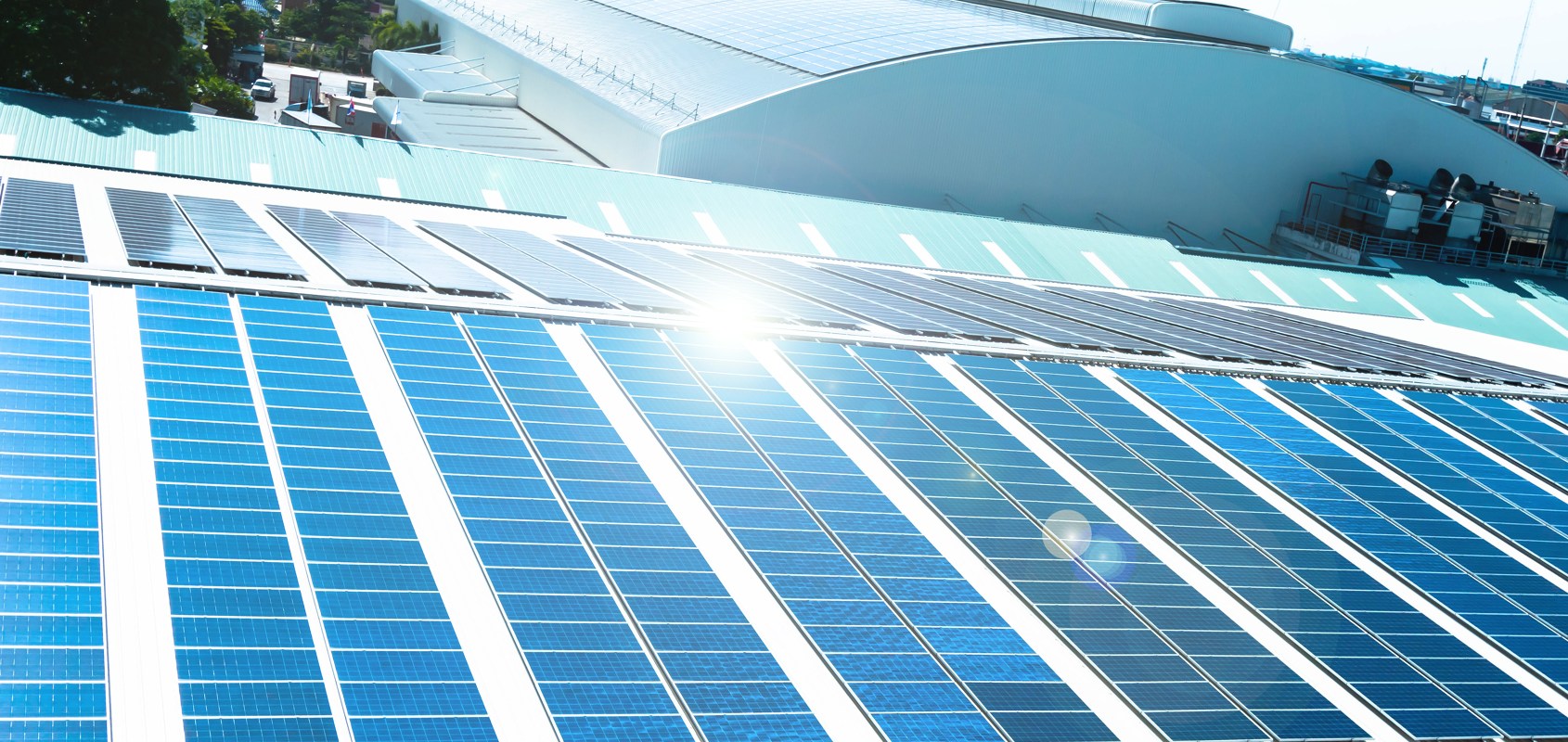 SME solar solutions in India need trust-led adoption support
What happens when MSMEs adopt solar at scale?
Stronger cost competitiveness and healthier margins
For MSMEs, the impact of solar begins with the balance sheet.
- Lower operating costs
- Improved competitiveness
- Reduced exposure to tariff volatility
For businesses operating on thin margins, even modest savings can create a meaningful advantage. This is where solar for small businesses in India moves beyond efficiency and becomes a competitive lever.
Measurable emissions reduction and ESG alignment
The environmental benefits are equally significant.
- MSMEs collectively contribute substantially to industrial emissions
- Rooftop solar reduces dependence on fossil-fuel-based electricity
- Solar adoption supports broader sustainability and climate goals
As supply chains increasingly prioritize sustainability, SME solar solutions in India can also strengthen long-term business relevance.
Accelerating India’s renewable energy ambitions
India is targeting 500 GW of non-fossil fuel capacity by 2030, with solar playing a central role.
- MSMEs hold 15–18 GW of untapped rooftop solar potential
- Unlocking this capacity can strengthen decentralized generation
- Wider adoption can help bridge the gap between targets and deployment
This makes MSME solar adoption in India important not only for businesses, but for the country’s energy transition.
Cluster-level transformation and industrial resilience
The greatest impact may emerge at the cluster level. Industrial hubs such as textile parks, foundries, and food-processing zones can benefit through -
- Shared infrastructure and aggregation models
- Lower collective energy costs
- Improved reliability and resilience
India added more than 5 GW of rooftop solar capacity in FY2025, highlighting growing momentum in decentralized energy adoption. If MSMEs participate at scale, they could become one of the strongest drivers of India’s clean energy transition. (Source: JMK Research, Annual India Solar Report Card FY2025).
What solutions are unlocking MSME solar adoption in India?
New financing models, digital platforms, and policy support are making solar adoption more accessible, helping convert strong solar economics into practical business outcomes for MSMEs.

OPEX and RESCO models reducing upfront burden

Demand aggregation and cluster-based deployment

Digital platforms simplifying adoption

Government schemes and subsidy evolution
OPEX and RESCO models reducing upfront burden
One of the biggest shifts in MSME solar adoption in India has been the emergence of OPEX and RESCO models.
- A third-party developer installs, owns, and operates the system
- MSMEs pay only for the electricity consumed
- Upfront investment and performance risk are significantly reduced
This makes rooftop solar more accessible to MSMEs, particularly for businesses with limited capital.
Demand aggregation and cluster-based deployment
Individually, MSMEs may be small, but collectively they represent a significant market opportunity.
- Cluster-based deployment allows multiple MSMEs to pool demand
- Standardized solutions reduce installation and transaction costs
- Bundled projects improve financing viability
These models directly address one of the biggest barriers to MSME solar in India: fragmented demand.
Digital platforms simplifying adoption
Digital tools are helping simplify the solar adoption journey by enabling -
- Feasibility assessments and savings estimates
- Vendor discovery and comparison
- Faster documentation and approval tracking
- Greater transparency in pricing and performance
By reducing process complexity, these platforms make solar for small businesses in India easier to evaluate and implement.
Government schemes and subsidy evolution
Policy support continues to improve project viability through:
- Capital subsidies
- Accelerated depreciation benefits
- Rooftop solar programmes
- Financing-focused initiatives
While implementation still varies across states, continued policy evolution is helping create a more supportive environment for SME solar solutions in India. As these solutions scale, the gap between solar potential and actual adoption is expected to narrow significantly.

Helping MSMEs turn solar economics into business advantage
How is Tata Power enabling SME solar solutions in India?
Tata Power's strength lies in its ability to operate across the entire solar value chain, from manufacturing and financing support to installation and maintenance.
A scaled, proven C&I and rooftop portfolio
Today, Tata Power has built one of India's largest rooftop solar portfolios -
- 3.6 GWp of rooftop solar capacity
- Nearly 3 GWp in the C&I segment
- More than 1.5 lakh rooftop installations
- Presence across 700+ cities
- Serving over 2.5 lakh customers
This positions Tata Power as a provider that understands the operational realities of businesses across industries and scales.
Solutions designed around MSME realities
Tata Power has focused on addressing one of the biggest barriers to MSME solar adoption in India: financing.
- Partnerships with institutions such as SIDBI support collateral-free financing opportunities
- Structured financing schemes help reduce entry barriers
- Turnkey execution models simplify project deployment
As Dr. Praveer Sinha, CEO & MD, Tata Power, noted - "MSMEs are the backbone of India's economy. They operate across industrial segments and are major consumers of electricity. Our strategic collaboration with SIDBI will facilitate the ease of opting for renewable energy in the MSME sector and power its quest to become more efficient and globally competitive."
Simplifying adoption through end-to-end delivery
For many MSMEs, complexity can be a bigger challenge than technology itself.
Tata Power helps reduce that complexity through -
- Site assessment and system design
- Installation and commissioning
- Regulatory approvals
- Operations and maintenance support
Trust and execution capability are often decisive factors for businesses evaluating rooftop solar for MSMEs, and end-to-end delivery helps reduce both risk and effort.
How can MSMEs choose the right solar solutions in India?
Cost vs savings: Looking beyond the upfront number
Solar should be evaluated on lifetime value rather than installation cost alone.
With rooftop solar tariffs ranging from ₹3.8–₹6.5 per kWh compared to ₹5.6–₹9.9 per kWh for grid electricity, the focus should be on long-term savings, payback periods, and energy cost reduction over 20–25 years.
CAPEX vs OPEX: aligning with cash flow realities
Choosing the right ownership model is critical.
- CAPEX offers ownership and higher long-term returns
- OPEX removes upfront investment and preserves liquidity
The right approach depends on how the business balances cash flow, risk, and investment priorities.
Site feasibility and load matching
Before installation, MSMEs should assess -
- Shadow-free rooftop availability
- Structural feasibility
- Rooftop ownership clarity
- Daytime energy consumption patterns
Since MSMEs account for a significant share of industrial energy demand, correct load matching is essential to maximize value from rooftop solar for MSMEs.
Choosing the right partner
Execution quality ultimately determines project success.
Businesses should prioritize partners with -
- Proven C&I installation experience
- End-to-end project capability
- Transparent pricing structures
- Long-term maintenance support
- Performance guarantees
The right partner not only installs a system but helps ensure that projected savings become measurable for business outcomes.
If you’re looking to understand the solar journey end-to-end before choosing the right partner, this guide to solar energy breaks it down step by step.
Word Guess
Bottomline
India’s solar journey is entering its most meaningful phase yet - not just scaling capacity but expanding impact. MSMEs sit at the heart of this shift, where every rooftop has the potential to become a growth engine. The economics already work. The solutions are getting simpler. And with trusted players like Tata Power enabling access, the path is clearer than ever. What was once seen as a long-term investment is quickly becoming a smart business move. And as that shift takes hold, MSMEs will no longer sit on the edge of India’s energy transition; they will be one of the forces driving it forward.

Frequently asked questions
- FAQs
Yes, MSMEs need DISCOM approval. Every rooftop solar for MSMEs project must get approval from the local DISCOM before installation. The process is now largely online through national or state portals, which has made things smoother than before. For MSME solar India projects, delays usually happen at this stage. Once approval is cleared, installation itself is relatively quick and straightforward with the right partner
For most MSMEs, the challenge is not “why solar” but “how to actually do it.” This is where players like Tata Power become relevant. By offering end-to-end support, from assessment to maintenance, they reduce the number of decisions a business needs to make. That shift turns solar from a complicated project into a manageable, almost plug-and-play business upgrade
If your system produces more electricity than you consume, the excess can be exported back to the grid through net metering, depending on state policies. This helps offset future electricity bills and improves overall savings. For MSMEs in India, this feature makes solar not just a cost-saving tool but also a way to optimize energy usage more efficiently.
System sizing is important for MSMEs when it comes to monetary returns. Many DISCOMs link system size to sanctioned load and consumption to prevent oversizing. For rooftop solar for MSMEs, oversizing can reduce efficiency and delay payback. The best-performing systems are not the biggest ones. They are the ones that match actual usage and maximize self-consumption
MSMEs typically operate during daytime hours, aligning closely with solar generation cycles. For solar for small businesses in India, this improves self-consumption and reduces dependence on storage. Combined with high electricity cost sensitivity, MSMEs are structurally one of the best-fit segments for solar, even though adoption has not yet caught up with this advantage
MSMEs are critical to India’s clean energy transition because they contribute nearly 45% of manufacturing output and consume over 25% of industrial energy in India. Even small efficiency gains or partial solar adoption across this segment can create large-scale impacts. Without MSMEs, India’s clean energy transition grows in capacity, but not in real economic penetration
Sources
2. As India's MSME sector matures, IDBI Bank's Sumit Phakka says the lending framework must keep pace
3. The Engine’s Primed: Energy efficiency awaits MSME leadership
4. Roadmap for Green Transition of MSMEs
5. How MSMEs can lead India’s Green Transition: Practical Sustainability Roadmap
6. rooftop-solar-energy-efficiency-vital-to-msme-decarbonization-niti-aayog
7. Solar Energy Solutions for Indian MSMEs: Benefits and Success Stories
8. IEEFA India: Scaling up rooftop solar finance
9. Drivers and Challenges for Rooftop Solar Loans to Small and Medium Enterprises in India
11. Scaling up of rooftop solar in the SME sector in India
12. India rooftop solar market outlook to 2030
14. ROOFTOP SOLAR DEVELOPMENT IN INDIA: MEASURING POLICIES AND MAPPING BUSINESS MODELS
15. Tata Power Renewables to Accelerate Rooftop Solar Adoption Among C&I Customers in Chhattisgarh
16. Tata Power Solar and SIDBI sign MoU to offer easy financing to MSMEs for solar adoption
Keep reading...
View all