1. Preventive maintenance
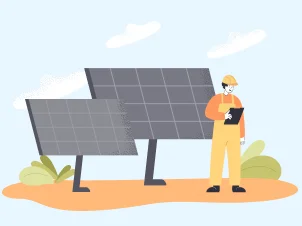
Preventive maintenance is the proactive, scheduled side of O&M which includes activities carried out at defined intervals to keep the system in good health and prevent issues from arising in the first place. It makes the biggest difference to long-term plant performance.
This includes solar panel cleaning, inverter filter checks and routine servicing, tightening of electrical connections, inspection of mounting structures for corrosion or loosening, vegetation management around the site, and routine testing of protection systems including circuit breakers and earthing. The number of times each activity is performed depends on plant's environment, size, and equipment type. For instance, a plant in a high-dust desert region requires much more frequent cleaning than one in a coastal setting. Plants with consistent, well-planned preventive maintenance programs typically sustain higher performance ratios, experience fewer unplanned failures, and carry lower lifetime repair costs.
2. Corrective maintenance
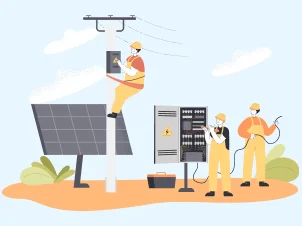
Corrective maintenance includes all the work carried out when something goes wrong. A fault detected through monitoring, a component that fails during operation, damage from a weather event, all of require corrective action. The goal is to diagnose the issue accurately and restore the affected component or system to working order as quickly as possible.
When it comes to corrective maintenance, response speed is critical. Even one hour of downtime can cause hours-worth of energy backlogs. Professional O&M providers structure their corrective maintenance protocols around fault severity: critical faults affecting significant generation capacity are escalated and addressed within hours, while lower-priority issues are scheduled for resolution within defined windows. This tiered approach ensures that the most impactful problems are never left waiting.
Corrective maintenance covers a wide range, from replacing a failed module or inverter to resolving wiring faults, fixing communication errors in monitoring systems, addressing storm-related physical damage, and replacing degraded cables or connectors.
3. Predictive maintenance
Rather than waiting for scheduled intervals or visible failures, predictive maintenance uses real-time data, AI-driven analytics, and advanced diagnostic tools to anticipate failures before they occur, allowing maintenance teams to intervene proactively rather than reactively.
- Thermal imaging (thermography) is one of the most powerful tools in this space. Thermal cameras can detect hotspots in solar modules long before they cause visible damage or measurable performance loss. •
- Similarly, SCADA systems continuously track voltage, current, and generation trends, flagging statistical anomalies that may signal a developing fault.
- Drone-based inspections allow large utility-scale plants to be surveyed efficiently, identifying issues across thousands of panels without the time and cost of manual row-by-row walkthroughs.




 Contact us